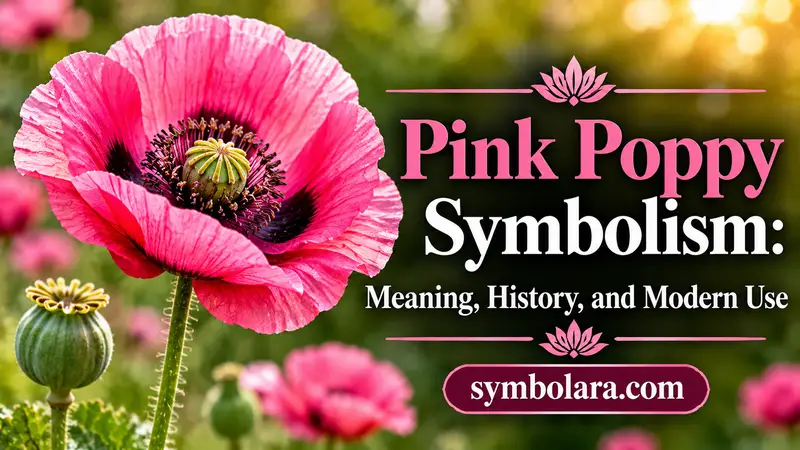
A pink poppy has delicate, often papery petals that give it a softer appearance than the familiar red field poppy. Depending on the variety, its flowers can range from pale blush to rose pink, with dark centers that make the petals stand out. These blooms appear in ornamental gardens, floral photographs, paintings, and decorative designs.
People often look up pink poppy symbolism because they want to understand what the flower might communicate in a bouquet, tattoo, artwork, or personal gift. Its color and shape suggest gentleness, affection, imagination, and quiet hope. However, it is important to distinguish these modern associations from the established history of red poppies and military remembrance.
In the United States, a pink poppy does not have one officially recognized meaning. Its interpretation usually comes from the combination of traditional poppy associations, the emotional qualities attached to pink, and the personal reason someone chooses the flower.
Quick Answer
Pink poppy symbolism most commonly represents gentle affection, tenderness, imagination, and quiet hope. These associations combine the poppy’s older connections with sleep, consolation, and remembrance with the modern use of pink to express warmth and caring.
TL;DR
- Pink poppies commonly suggest tenderness, affection, and gentle hope.
- Poppies have historical associations with sleep, dreams, and consolation.
- Red poppies became internationally recognized symbols of wartime remembrance.
- Pink flowers often communicate warmth, care, and appreciation.
- Pink poppies appear in gardens, tattoos, artwork, and floral designs.
- Their meaning depends on personal intention rather than an official code.
What Does a Pink Poppy Look Like?
A pink poppy is a flowering plant with thin, delicate petals that often look like crepe paper. Its flowers usually have four to six broad petals, although the number and shape can vary between species and cultivated varieties.
The most familiar ornamental poppies belong to the genus Papaver. Their colors include soft pink, salmon, coral, rose, and pink mixed with white. Some have dark purple or black centers, while others have lighter centers that blend into the petals.
Pink varieties are commonly grown in flower beds, cottage gardens, and ornamental borders. They also appear in botanical illustrations and floral photography because their open petals create an attractive, delicate shape.
The flower’s appearance contributes to its modern interpretation. Its thin petals can suggest sensitivity, while its open shape and fresh color can suggest growth and new beginnings.
What Does a Pink Poppy Mean Today?
The modern interpretation usually combines three things: the poppy itself, the color pink, and the setting in which someone uses the flower.
Several associations appear repeatedly in contemporary floral designs.
Gentle affection: Pink is commonly associated with warmth and caring. A pink poppy can therefore represent affection that feels thoughtful rather than dramatic. It may suit a friendship, a personal gift, or a quiet expression of love.
Tenderness and sensitivity: The flower’s delicate petals make it a natural image for emotional sensitivity. In artwork, it can represent someone who values kindness, patience, and understanding.
Imagination and creativity: Poppies frequently appear in paintings, illustrations, and dreamlike garden scenes. Their unusual petals and vivid centers make them suitable for expressing artistic thinking and an imaginative outlook.
Hope and renewal: A blooming flower can suggest a fresh start. A pink poppy in spring-themed artwork may communicate optimism, personal growth, or the beginning of a new chapter.
Remembrance and consolation: The poppy has an established connection with memory and loss, especially through its association with World War I. A pink version can be used personally to express gentle remembrance, although it is not the standard American military remembrance emblem.
These meanings are possibilities, not fixed definitions. Someone choosing a pink poppy for a memorial may have a different intention from someone using it in a romantic illustration.
Where Did Poppy Symbolism Begin?
The poppy’s older associations developed from its physical characteristics, medicinal history, and appearance in European and Mediterranean traditions.
One important connection is sleep. Certain poppy species contain compounds associated with sedative effects. The opium poppy (Papaver somniferum), in particular, has a long history of medicinal use.
In ancient Greek mythology, poppies were associated with sleep-related figures, including Hypnos, the god of sleep. Their appearance in ancient art and stories helped connect the flower with rest, dreams, and the boundary between sleep and death.
The poppy also became associated with consolation. Its connection with sleep offered an image of rest after suffering, while its ability to grow in disturbed ground gave it a place in later stories about recovery and remembrance.
However, these associations did not begin with pink flowers specifically. Much of the older symbolism concerns poppies as a group or particular species with their own histories.
That distinction matters when interpreting a pink variety. Its modern meaning is partly inherited from the wider history of the flower rather than from a separate, documented pink-poppy tradition.
Why Did Poppies Become Symbols of Remembrance?
The connection between poppies and wartime remembrance became especially important after World War I.
During the fighting in Belgium and northern France, disturbed soil created conditions where field poppies could grow. Their red flowers became a familiar sight in areas damaged by battle.
Canadian physician and military officer John McCrae wrote the poem In Flanders Fields in 1915. The poem described poppies growing among the graves of soldiers and helped establish the flower as an image of sacrifice and memory.
The remembrance tradition later spread through handmade artificial poppies, fundraising campaigns, and commemorative events. In the United States, poppies became particularly associated with veterans’ organizations and Memorial Day traditions.
The red poppy remains the most recognizable color in this setting. It is important not to assume that pink has exactly the same official or historical status.
A pink poppy can still communicate sympathy, respect, or personal remembrance. However, its use is generally a personal artistic or floral choice rather than a standardized military tradition.
What Does Pink Add to the Flower’s Meaning?
Color changes how people interpret flowers. A red poppy and a pink poppy may belong to the same botanical family, but they can create different emotional impressions.
In modern American design, pink is often used to communicate affection, kindness, appreciation, and gentleness.
Its lighter shades can suggest calmness and softness. Brighter pinks may feel more cheerful, expressive, or energetic.
The shade makes a difference:
- Pale pink: Suggests innocence, gentleness, and quiet affection.
- Blush pink: Can communicate warmth, appreciation, and tenderness.
- Rose pink: Often feels more romantic and expressive.
- Coral pink: Suggests friendliness, enthusiasm, and optimism.
- Pink with white: Can create an impression of sincerity, peace, and simplicity.
These are contemporary color associations, not an established historical dictionary in which every shade has one official definition.
The combination of pink with the poppy’s delicate form creates a flower that often feels more personal and intimate than a traditional red remembrance poppy.
How Is the Flower Interpreted in American Culture?
In the United States, people encounter poppies in gardens, floral artwork, memorial settings, and decorative products. However, different settings create different meanings.
In a home garden, a pink poppy may simply represent an appreciation for nature and seasonal beauty. A person growing ornamental poppies might choose them because they attract attention without requiring elaborate landscaping.
In floral artwork, the flower can communicate softness, creativity, or emotional reflection. Artists may place it beside pale backgrounds, butterflies, or other spring flowers to create a peaceful scene.
In personal gifts, the color can make the flower feel affectionate and considerate. It may be chosen for someone who prefers unusual flowers over conventional roses.
American remembrance culture requires a little more care. Memorial Day and Veterans Day are associated with military service and remembrance, and red poppies are more closely connected with established poppy traditions. A pink bloom may appear in personal memorial arrangements, but it should not automatically be presented as an official veterans’ symbol.
October brings another possible association. Pink is widely recognized in breast cancer awareness campaigns, especially through the pink ribbon. A pink poppy used during an awareness event may therefore combine floral beauty with a message of support. Still, the flower itself is not an official breast cancer awareness emblem.
This distinction helps explain why two people may look at the same design and understand it differently.
Does a Pink Poppy Have a Meaning in Different Cultures?
There is no single worldwide interpretation of pink poppies. The flower’s meaning changes according to local history, artistic traditions, and the importance given to particular colors.
Some documented poppy associations are much older than modern American floral design.
Ancient Greek traditions: Poppies were connected with sleep and rest through their association with Hypnos. This history helps explain why the flower can appear in artwork about dreams and peaceful rest.
European remembrance traditions: Following World War I, the red field poppy became an important memorial flower in Britain, Canada, and other countries. Its meaning developed through wartime poetry, remembrance ceremonies, and veterans’ organizations.
Victorian Britain and America: During the nineteenth century, flower dictionaries became popular. They assigned emotional messages to different flowers, including poppies. However, the dictionaries did not always agree, and meanings depended on the particular publication.
These traditions do not establish a universal pink-poppy meaning. It would be inaccurate to claim that every culture has historically treated pink poppies as symbols of love, peace, or remembrance.
For modern readers, the safest interpretation is to separate the flower’s documented history from the personal meanings people give it today.
Why Do People Connect With Pink Poppies Emotionally?
Flowers can communicate feelings that people find difficult to put into words. A pink poppy offers a gentle visual way to express affection, sympathy, or appreciation without making the message feel overly formal.
Its emotional appeal often comes from the contrast between its fragile appearance and its ability to bloom in a garden. The petals look delicate, yet the plant can produce a striking flower during its growing season.
This contrast can remind people of emotional resilience. Someone recovering from a difficult experience might choose the flower as a personal reminder that vulnerability and strength can exist together.
It can also represent the desire to remember someone without making grief the only focus. A soft pink flower in a memorial arrangement may express love, gratitude, and the continuing importance of a person’s memory.
There is no psychological rule that makes everyone respond to pink in the same way. Personal experiences, family traditions, and individual color preferences all affect how someone interprets the flower.
For one person, it may represent a peaceful garden from childhood. For another, it may remind them of a loved one who enjoyed growing flowers.
What Does a Pink Poppy Tattoo Represent?
A pink poppy tattoo can represent personal affection, remembrance, emotional sensitivity, or a fresh beginning. Its meaning often depends on the additional details in the design.
Common design choices include:
- A single pink bloom: Personal growth, independence, or gentle affection.
- A pink poppy with a name: A memorial for someone important.
- A flower with falling petals: Change, acceptance, or the passage of time.
- A pink poppy with leaves and stems: Growth, patience, and connection with nature.
- A group of pink poppies: Family relationships, friendship, or shared memories.
Placement can also influence the personal message. A small wrist tattoo may serve as a private reminder, while a larger floral design on the arm or shoulder may be intended as a visible expression of identity.
Some people choose a pink poppy because they appreciate its appearance rather than because they believe it carries a particular message. That is equally valid.
Before using it as a military memorial tattoo, it is worth considering whether the red poppy would better reflect the established remembrance tradition being honored.
Why Are Pink Poppies Used in Art and Home Decor?
Pink poppies work well in decorative designs because their open petals create a recognizable floral shape. Their color also fits several popular interior styles.
In cottage-style homes, they can appear in botanical prints, floral curtains, cushions, and painted ceramics. Their natural appearance complements wooden furniture, soft fabrics, and other garden-inspired details.
In modern interiors, a large pink poppy illustration can introduce color without making a room feel crowded. A single flower against a white or cream background often creates a cleaner appearance than a busy floral pattern.
Artists also use the flower to explore themes such as:
- The beauty of ordinary natural objects.
- The relationship between fragility and resilience.
- Memories connected with gardens and family homes.
- The arrival of spring and seasonal change.
- The contrast between bright flowers and quiet surroundings.
In digital illustrations, pink poppies often appear with butterflies, birds, soft clouds, or pastel backgrounds. These combinations can create a gentle, imaginative atmosphere.
The flower’s meaning in home decor is usually more about personal taste and mood than a fixed cultural tradition.
Can Pink Poppies Be Used in Gifts and Special Occasions?
Yes. Pink poppies can be included in floral gifts when the sender wants something less conventional than roses or carnations.
Their appearance makes them suitable for occasions where a gentle and thoughtful message is more important than a formal romantic gesture.
Some possible uses include:
Birthdays: A pink floral arrangement can communicate appreciation and cheerful affection, especially for someone who enjoys unusual garden flowers.
Friendship gifts: The soft color can suggest kindness and a warm personal connection without making the gift feel romantic.
Memorial arrangements: Pink poppies may be included to express personal remembrance and sympathy. The sender should consider the family’s preferences and any established memorial customs.
Spring celebrations: Their seasonal appearance can complement arrangements that represent new beginnings, growth, and fresh opportunities.
Creative milestones: An illustrated poppy card or floral print can make a thoughtful gift for someone interested in painting, writing, or gardening.
One practical point matters: not every poppy is suitable for cutting or arranging. Some ornamental varieties have short-lived petals, so their usefulness in bouquets depends on the species and how recently the flowers were cut.
Are There Misunderstandings About Pink Poppy Symbolism?
Several common assumptions can make the flower’s meaning seem more established than it really is.
Misunderstanding 1: Pink poppies have an official universal meaning.
They do not. There is no widely accepted international code assigning one specific meaning to every pink poppy. Most interpretations come from contemporary color associations and personal choices.
Misunderstanding 2: Every poppy represents war remembrance.
The connection is strongest with the red field poppy and the history of World War I. Other poppy species and colors have different botanical and cultural associations.
Misunderstanding 3: Pink poppies are official breast cancer awareness symbols.
Pink is strongly connected with breast cancer awareness in the United States, but the established emblem is the pink ribbon. A pink flower may be used in a related design without becoming an official awareness symbol.
Misunderstanding 4: Pink poppies always represent romantic love.
They can suggest affection, but they are not limited to romance. Friendship, sympathy, appreciation, creativity, and personal remembrance are also possible interpretations.
Misunderstanding 5: All poppies have the same medicinal properties.
This is incorrect. Different poppy species have different chemical properties. The opium poppy, Papaver somniferum, is particularly important in the history of opium and medicinal compounds. An ornamental pink poppy should not be assumed to have the same properties.
Separating botanical facts from decorative interpretations makes it easier to understand what the flower actually communicates.
How Has the Meaning Changed Across Generations?
The poppy’s meaning has changed as people have used it in different settings.
In ancient Mediterranean traditions, its associations with sleep and rest were connected to mythology and the properties of certain species.
During the nineteenth century, flower dictionaries introduced another way of interpreting blooms. Victorian readers could use flowers to communicate feelings through carefully arranged bouquets. However, these dictionaries offered different interpretations, and there was no single official system.
The early twentieth century brought a major change. World War I and the popularity of In Flanders Fields helped establish the red poppy as an emblem of remembrance.
Later generations encountered poppies through veterans’ events, memorial artwork, gardens, and popular floral designs.
In the late twentieth century and early twenty-first century, pink became especially visible in American awareness campaigns, fashion, consumer products, and digital design. This increased the number of possible associations people could make when seeing a pink flower.
By 2025–2026, the pink poppy can be interpreted through several overlapping ideas: gentle affection, natural beauty, personal remembrance, creativity, and hope.
Social media has also made floral symbolism more personal. People may select a flower for a tattoo, profile image, digital illustration, or memorial post based on an individual experience rather than an inherited tradition.
The important change is that modern interpretations are often flexible. People are less likely to treat every flower as a fixed message and more likely to consider the intention behind its use.
Pink Poppy Meaning in Different Everyday Contexts
The same flower can communicate different things depending on where it appears. The following table separates common modern interpretations from established historical traditions.
| Context | Meaning in USA | Common Associations | Notes |
| Tattoo | Personal affection or remembrance | Identity, memory, growth | Often designed around an individual story |
| Wedding flowers | Gentle affection and beauty | Romance, tenderness, celebration | A personal floral choice, not a traditional wedding requirement |
| Memorial artwork | Sympathy and personal remembrance | Love, consolation, memory | Red remains the established military remembrance color |
| Home decor | Natural beauty and calm | Creativity, spring, comfort | Common in botanical prints and watercolor art |
| Friendship gifts | Warm appreciation | Kindness, gratitude, connection | Less conventional than roses or carnations |
| Social media | Personal expression | Hope, aesthetics, self-expression | Meaning depends on the accompanying message |
This comparison shows why context matters more than color alone. A flower used in a memorial design carries a different message from the same flower printed on a birthday card.
FAQs
Is a pink poppy a positive or negative symbol?
It is generally used in a positive or comforting way. Its associations with affection, hope, and natural beauty are usually welcoming, although its connection with the wider poppy tradition can also bring thoughts of grief and remembrance.
Does a pink poppy have a religious meaning?
A pink poppy does not have one widely established religious meaning. Poppies appear in different historical artistic and mythological traditions, but using one in a modern floral arrangement does not automatically communicate a religious belief.
What does it mean to dream about a pink poppy?
There is no scientifically established meaning for dreaming about a particular flower. As a personal interpretation, someone might associate a pink poppy in a dream with a cherished memory, emotional comfort, or a desire for a fresh start.
What is the difference between a pink poppy and a red poppy?
The main difference is their common cultural association. Red poppies have a well-established connection with World War I remembrance, particularly in Britain, Canada, and other countries. Pink poppies are more commonly interpreted through modern associations with affection, gentleness, and ornamental beauty.
Can a pink poppy represent someone who has passed away?
Yes. A person can choose a pink poppy to remember a family member, friend, or someone who had a special connection with flowers. Its color may make the memorial feel personal and comforting rather than formal.
Is a pink poppy a good flower for a sympathy card?
It can be a thoughtful choice, particularly when the recipient appreciates floral artwork or gentle colors. However, personal and cultural preferences matter, so a traditional white flower or another familiar memorial flower may be more appropriate in some situations.
Conclusion
Pink poppy symbolism brings together several ideas, including gentle affection, tenderness, imagination, hope, and personal remembrance. Its meaning comes from the combination of the poppy’s historical associations with sleep and consolation and the modern emotional qualities often connected with pink.
Unlike the red poppy, which has a well-established place in military remembrance, the pink variety does not have one official historical meaning. Its interpretation depends on the setting, the person’s intention, and the memories attached to the flower.
A pink poppy on a memorial card, a garden wall, or someone’s wrist may communicate three different messages. What makes it meaningful is not simply its color, but the reason someone chooses to keep that particular flower close.