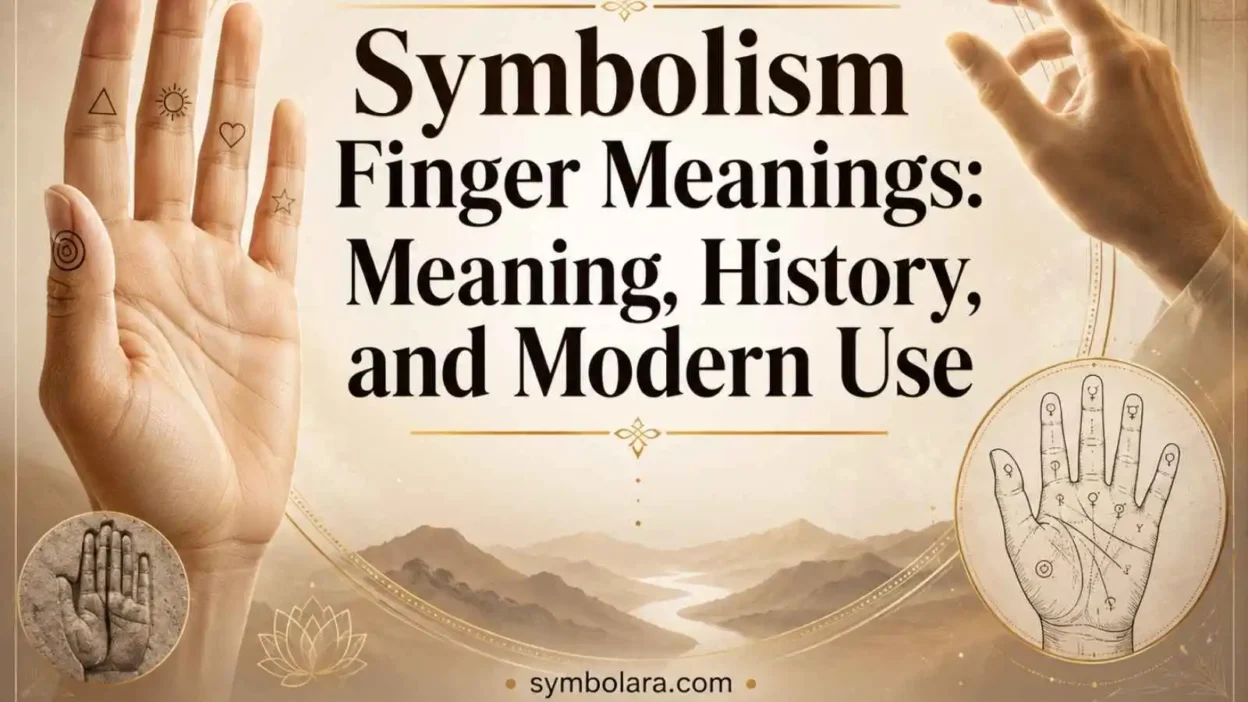
Finger symbolism is everywhere in American life, even when people do not think of it as symbolism. We point with one finger, wear a wedding ring on another, raise a thumb for approval, and make promises with a pinky. That is why Symbolism Finger Meanings is less about one secret code and more about how culture assigns meaning through everyday use.
In the United States, finger meanings mostly come from gesture, religion, jewelry traditions, and pop culture rather than from one universal ancient system. Some meanings are old, some are modern, and some change sharply across cultures, which is why finger symbolism can feel familiar in one setting and confusing in another.
People also care about finger meanings because hands are public. Unlike symbols hidden in private ritual or literature, fingers are constantly visible in conversation, fashion, ceremonies, and digital life. A ring, a raised finger, or even an emoji can signal love, authority, approval, rebellion, or trust in seconds.
Quick Answer
Symbolism Finger Meanings commonly represent social messages in modern American culture: the thumb often signals approval or independence, the index finger direction or authority, the middle finger disrespect, the ring finger commitment, and the pinky promise, status, or subtle identity. Historically, finger meanings also developed through religious gestures, marriage customs, and broader cultural traditions that gave certain fingers special roles.
TL;DR
• Thumb usually suggests approval, confidence, or independence.
• Index finger often symbolizes direction, teaching, or authority.
• Middle finger is widely read as insult or defiance.
• Ring finger is tied to romance and marriage.
• Pinky can suggest promises, style, or old-status signals.
• Meanings shift across cultures and contexts.
What the hand itself symbolizes
Before looking at each finger, it helps to understand why hands gather symbolism so easily. Hands do work, make contact, bless, swear, point, create, and threaten. Because of that, many societies treat the hand as a visible extension of intention. A finger does not just exist anatomically; it becomes meaningful when a culture repeatedly uses it for a specific action.
That is why finger symbolism is practical rather than abstract. The ring finger matters because it carries rings. The index finger matters because it points. The thumb matters because it stands apart from the other fingers and helps grip, signal approval, and shape recognizable gestures.
Why there is no single universal finger code
A lot of online content presents finger meanings as if every culture has always agreed on the same set of symbolic definitions. That is misleading. Gesture scholars and reference works consistently note that hand signals are culturally determined and can vary from one society to another. Even the same movement can be polite in one place and offensive in another.
In other words, finger meanings are real, but they are contextual. In modern American culture, the strongest meanings usually come from visible customs: thumbs-up, pointing, the middle-finger insult, wedding rings, pinky promises, and finger-based religious gestures. Those are much more reliable than claims that every finger has had one fixed mystical meaning since antiquity.
The thumb: approval, independence, and self-possession
In the United States, the thumb most often symbolizes approval. A thumbs-up is a quick way to say yes, good, approved, or all set. In digital culture, that same meaning carries over into emoji, reactions, and platform icons, which is one reason the thumb now feels like one of the most instantly readable positive symbols in American life.
The thumb also suggests independence because it stands apart from the other fingers and makes the human grip possible. That physical separateness has helped modern fashion and jewelry culture attach meanings like confidence, boldness, and self-direction to thumb rings, though those meanings are more contemporary style associations than ancient universal truths.
Still, even the thumb is not universal. Britannica notes that the thumbs-up gesture means approval in North America but can mean something quite different elsewhere, which is a useful reminder that finger symbolism depends on shared local understanding.
The index finger: direction, authority, and instruction
The index finger carries symbolic weight because it points. In ordinary American life, it is the finger of direction, emphasis, command, and instruction. People use it to indicate a person, an object, a path, or a warning, so it naturally becomes associated with focus and authority.
That authority can feel helpful or harsh depending on context. A teacher pointing to a line on a page, a parent pointing during a warning, and a political poster pointing at the viewer all use the same symbolic logic: the index finger directs attention and implies certainty. Psychological research coverage has even described pointing as a gesture that can signal knowledge and trustworthiness.
In American culture, this is why the index finger can symbolize leadership, correction, judgment, or accusation. It is less about the finger itself than about its repeated social role as the digit that singles something out.
The middle finger: insult, contempt, and open defiance
No finger in the United States has a more fixed negative meaning than the middle finger. In everyday use, raising it is an obscene gesture of contempt. Even dictionary entries now define “the finger” primarily through that insulting sense, which shows how complete the symbolic takeover has become.
Historically, the gesture is old. Classical evidence shows that versions of the middle-finger insult existed in ancient Greece and Rome, although its exact symbolism and social use changed over time. In modern America, though, the meaning is simple and direct: anger, rejection, mockery, or rebellion.
At the same time, U.S. pop culture sometimes turns the gesture into performance. Celebrities, musicians, and protest imagery have used it as a symbol of anti-authority attitude. That does not make it neutral, but it does show how a rude gesture can evolve into a visual shorthand for defiance.
The ring finger: love, commitment, and public relationship status
The ring finger is the clearest example of a finger gaining symbolic force through custom. In the United States, the fourth finger of the left hand is strongly associated with engagement and marriage. The meaning is public and social: wearing a ring there usually signals romantic commitment and recognized partnership.
Older explanations connected this finger to the heart through the so-called vein of love. That belief is not anatomically correct, but it helped support the tradition and gave the custom a romantic story that lasted. Britannica notes that ancient cultures and later Western traditions linked the fourth finger with marriage, even though the details varied by time and place.
In modern U.S. symbolism, the ring finger therefore stands for commitment, fidelity, and emotional seriousness. It can also symbolize social identity because rings announce life stage, marital status, and personal values without a word being spoken.
The pinky: promises, subtle status, and style
The pinky has a smaller physical presence, but its symbolism is surprisingly durable. In American childhood culture, the pinky is closely linked to the pinky promise. Hooking pinkies turns a verbal promise into something ceremonial, which is why the finger often symbolizes trust, sincerity, and personal loyalty. Evidence for pinky-swear traditions in America goes back at least to the 19th century.
The pinky also carries class and style associations through pinky rings and signet rings. Historically, signet rings were used to authenticate documents, and later pinky-worn signets became associated with family lineage, prestige, and old-fashioned masculine style. Those associations never disappeared completely, even if modern fashion has softened them.
Because of that, the pinky often symbolizes either intimacy or refinement in the United States. In one context it means “trust me.” In another it means legacy, polish, or a deliberate throwback to older status codes.
Why finger meanings often come from jewelry
Jewelry has shaped finger symbolism as much as gesture has. Once a culture repeatedly puts a certain kind of ring on a certain finger, that finger starts carrying social meaning beyond anatomy. The ring finger became the clearest case, but pinky and thumb rings have also developed recognizable style messages tied to identity, taste, and confidence.
This matters in the United States because jewelry is both decorative and communicative. It can mark marriage, family history, wealth signals, religious commitment, or personal independence. When people talk about finger meanings today, they are often responding to those visible codes rather than to folklore alone.
Finger Symbolism in Tattoos: Identity, Commitment, and Personal Expression
Finger tattoos have become a popular way to express identity because fingers are small but highly visible parts of the body. Unlike larger tattoos that can remain private, finger tattoos often communicate a message that others can quickly notice.
In American culture, finger tattoos commonly symbolize commitment, personal beliefs, relationships, creativity, or important life experiences. A small heart may represent love, a word on a finger may represent a personal reminder, and matching finger tattoos may represent friendship or partnership.
Some common symbolic choices include:
| Finger Tattoo SymbolCommon Meaning | |
|---|---|
| Ring tattoo | Commitment, marriage, or lifelong connection |
| Heart symbol | Love, affection, emotional bonds |
| Initials | Family, relationships, or personal identity |
| Words or phrases | Personal values, memories, or motivation |
| Minimal designs | Individual style and self-expression |
Finger tattoos also show how symbolism changes with modern culture. A symbol that once belonged mainly to jewelry traditions can now appear through permanent body art. The meaning comes not only from the design itself but also from the person wearing it.
Because fingers are visible during everyday interactions, these tattoos often become a form of silent communication. They allow people to display something meaningful without saying it aloud.
Finger symbolism in religion and sacred gesture
Finger symbolism is not limited to fashion or daily body language. In religious practice, the position of fingers can carry deliberate symbolic meaning. Britannica notes that in Christianity, the gesture of blessing can regulate finger position, and in the Latin rite the open five-fingered sign of the cross has been understood as symbolic of the five wounds of Christ.
Other traditions also assign meaning through hand position rather than through isolated finger personality. Britannica’s overview of religious symbolism notes that gestures and finger arrangements matter in Hindu and Buddhist meditation practices as well. That is important because it shows another pattern: many cultures give fingers meaning through ritual use, not by claiming that one finger always means one thing in every context.
For American readers, this matters most when religious symbols are borrowed into jewelry, tattoos, yoga culture, or social media without their original context. The symbolic meaning may shift once it leaves ritual life and enters personal style.
How Americans read finger meanings today
In the United States, people usually read finger meanings quickly and socially. A thumb reads as approval. A pointed index finger can feel instructional or accusing. A ring finger suggests marriage. A pinky promise feels intimate and innocent. A raised middle finger is confrontational. These readings are learned early and reinforced through family, school, media, and online communication.
American culture also rewards shorthand. Hands appear in emoji, advertisements, memes, selfies, and logos, so finger meanings stay highly visible. That visibility makes them feel natural, but they are still social conventions rather than biological truths.
Finger Symbolism in Hand Gestures and Body Language
Finger gestures are one of the fastest ways humans communicate without words. A simple movement can show agreement, disagreement, emotion, direction, respect, or frustration depending on the situation.
In the United States, many finger gestures have become instantly recognizable. The thumbs-up communicates approval, a raised index finger can signal a point or request attention, and crossed fingers often suggest hope or wishing for a positive outcome.
Common finger gestures include:
| Gesture | Meaning in American Culture |
|---|---|
| Thumbs-up | Approval, agreement, success |
| Pointing finger | Direction, focus, instruction |
| Crossed fingers | Hope, luck, or wishing for success |
| Finger heart gesture | Affection and positivity |
| Middle finger | Anger, insult, or rejection |
However, gestures are not universal languages. The same finger movement can carry different meanings in another country or community. This is why understanding cultural background matters when interpreting body language.
Finger gestures remain powerful because they combine movement with emotion. They transform a small physical action into a message that people can understand instantly.
Emotional and psychological meanings people attach to fingers
Emotionally, finger symbolism works because fingers externalize intention. A thumb says reassurance. An index finger can pressure or direct. A ring finger can reassure others about commitment. A pinky promise makes trust feel tangible. A middle finger turns anger into a visible message. The emotional effect often matters more than any old historical explanation.
This is also why finger-based symbolism shows up in tattoos and jewelry. People choose a finger or finger symbol when they want to communicate something concise about identity: loyalty, independence, love, rebellion, or belonging. The meaning works because the hand is constantly seen by other people and by the wearer.
Finger Symbolism in Dreams: Common Interpretations and Meanings
Dreams about fingers often connect to personal expression, control, relationships, and identity. Because fingers help people communicate and interact with the world, dream interpretations often focus on how a person feels about their ability to act, connect, or make decisions.
A healthy hand or strong fingers in a dream may represent confidence, capability, or a feeling of being prepared. A damaged or injured finger may reflect concerns about losing control, facing limitations, or struggling to express something important.
Different dream situations can create different meanings:
| Dream Symbol | Common Interpretation |
|---|---|
| Broken finger | Feeling limited, blocked, or unable to handle a situation |
| Missing finger | Fear of losing ability, identity, or connection |
| Ring on finger | Commitment, relationships, or personal promises |
| Pointing finger | Judgment, direction, responsibility, or attention |
| Extra fingers | Creativity, unusual abilities, or feeling different |
These interpretations are cultural and psychological associations rather than proven predictions. Dream meanings depend heavily on personal experiences, emotions, and the situation surrounding the dream.
For many people, finger symbolism in dreams works as a reflection of everyday concerns. Since fingers represent communication, connection, and action, dreams involving them often encourage self-reflection about relationships, choices, and personal confidence.
How meanings change across cultures
Finger meanings can look obvious until they cross borders. Britannica notes that a thumbs-up means approval in North America but may carry a rude meaning elsewhere, and the same two-finger sign that reads as peace in the United States can be offensive in the United Kingdom and Australia depending on palm direction.
That does not erase American meanings, but it does limit them. A person interpreting finger symbolism should ask where the symbol is being used, who is using it, and whether the context is religious, social, romantic, or political. Without that context, even familiar finger meanings can be misread.
Common misunderstandings and distorted meanings
One common misunderstanding is the idea that every finger has one ancient, fixed, spiritual meaning. The historical record supports something more uneven. Some finger meanings are strongly documented because they appear in repeated customs or gestures, while others are modern interpretations popularized by fashion, wellness culture, or social media.
Another misunderstanding is treating all finger symbolism as harmless. Some gestures are affectionate, but others are offensive, politically charged, or culturally sensitive. The middle finger is the clearest example, but even seemingly positive signs like thumbs-up can be misread outside the U.S.
How finger symbolism has evolved over time
The broad pattern is straightforward: finger symbolism moves from function to custom to social meaning. A finger first gains repeated practical use, then that use becomes ritualized, and eventually the finger itself starts carrying symbolic weight. Marriage customs made the ring finger symbolic. Pointing made the index finger symbolic. The thumb’s role in gestures made it symbolic.
Modern media speeds that process up. Once gestures become emoji, photographs, logos, and fashion statements, their meanings stabilize more quickly and spread farther. That is why finger meanings in 2026 feel both ancient and current at the same time: some are rooted in old practices, but many are reinforced by contemporary American visual culture.
Finger meanings at a glance
| Finger or context | Meaning in the USA | Common associations | Notes |
| Thumb | Approval, confidence, independence | Thumbs-up, confidence, assent | Can mean something different abroad. |
| Index finger | Direction, authority, warning | Pointing, teaching, command | Can feel helpful or accusatory. |
| Middle finger | Contempt, defiance, insult | Anger, rebellion, rejection | Strong negative meaning in U.S. culture. |
| Ring finger | Love, marriage, commitment | Wedding rings, engagement, fidelity | Rooted in long marriage customs. |
| Pinky | Promise, loyalty, refined style | Pinky swears, signet rings, subtle status | Meaning changes by setting. |
FAQs
What do finger meanings usually symbolize in the United States?
They usually symbolize social messages rather than hidden spiritual truths. In American culture, the thumb often suggests approval, the index finger direction or authority, the middle finger insult, the ring finger commitment, and the pinky promise or subtle status.
Does each finger have a fixed meaning in history?
No. Some meanings are well established because of custom, such as the ring finger and marriage, while others are much more dependent on modern culture, body language, or fashion. Meanings also vary across countries and religious traditions.
Why is the ring finger associated with marriage?
The association comes from long-standing wedding customs in which rings were placed on the fourth finger. Older traditions connected that finger with the heart through the “vein of love,” a romantic explanation that survived even after it was no longer scientifically accepted.
What does a pinky promise symbolize?
In American culture, it usually symbolizes trust, sincerity, and a promise that feels more binding because it is ritualized. The gesture is especially common in childhood and close relationships, which gives it an intimate and personal tone.
Is the middle finger always negative?
In the United States, almost always yes. It is widely understood as an obscene sign of contempt, though popular culture sometimes uses it theatrically to communicate rebellion or anti-authority attitude.
Do religious traditions give fingers symbolic meanings?
Yes, but usually through hand position and ritual gesture rather than simple one-finger labels. Christian blessings and the sign of the cross, as well as Hindu and Buddhist gesture traditions, show that finger arrangement can carry sacred meaning in worship and meditation.
Can finger symbols be misunderstood across cultures?
Very easily. A gesture that seems harmless or positive in the United States may mean something rude, different, or more formal elsewhere, so context matters whenever finger symbolism crosses cultural boundaries.
Why are fingers important symbols in human communication?
Fingers are important because people use them for gestures, promises, rituals, jewelry, and emotional expression. Their constant visibility makes them powerful tools for nonverbal communication.
Conclusion
Finger meanings matter because hands are among the most visible ways people communicate without speaking. In modern American culture, each finger gathers meaning from what people repeatedly do with it: approve, point, insult, commit, promise, bless, or display identity.
That is the clearest way to understand Symbolism Finger Meanings. They are not one ancient universal code hidden inside the body. They are living social symbols shaped by gesture, ritual, jewelry, and culture, then reinterpreted by each new generation.
[…] may represent freedom because people recognize the connection between chains and restriction. These meanings develop through history, communities, and shared […]
[…] jewelry and fashion, triangles often function the same way minimalist lettering does: they look modern while quietly carrying meaning. A plain metal triangle pendant can read as stylish even to someone who knows nothing about […]
[…] In U.S. culture, deer often symbolize gentleness or woodland calm. In the Japanese context, the meaning is more specifically tied to shrine history and holy […]