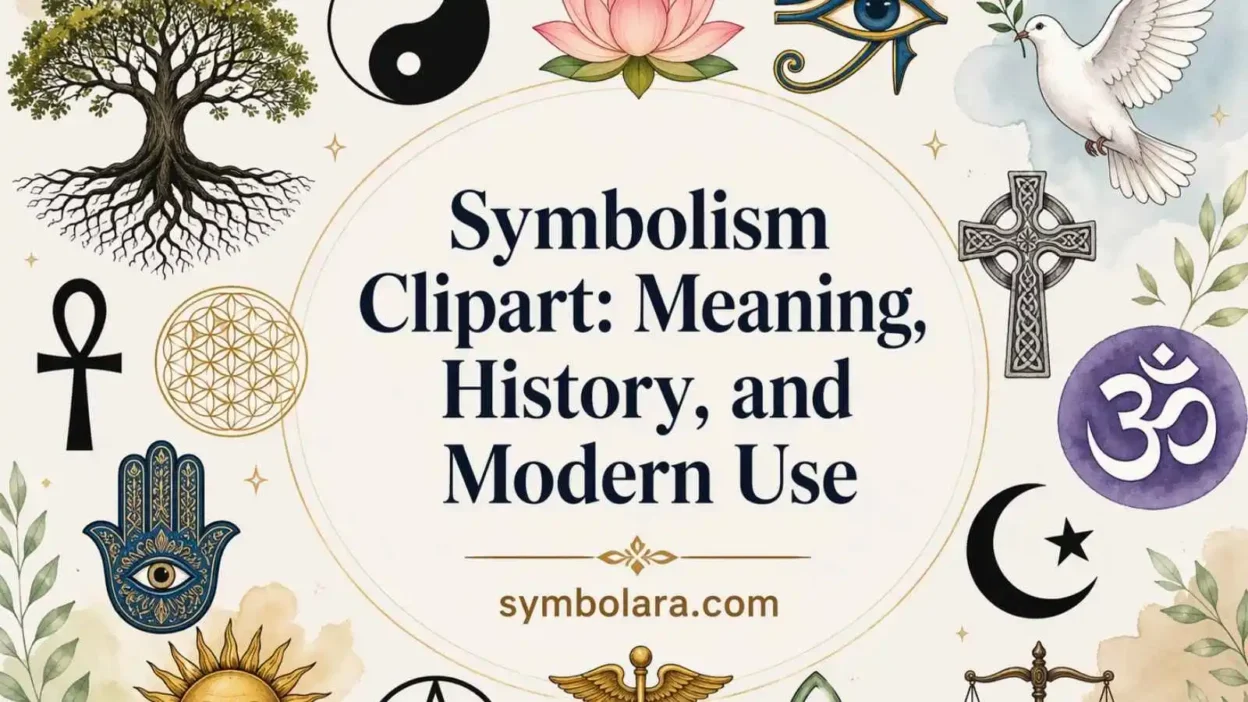
Symbolism Clipart is less about one ancient symbol and more about what a style of imagery has come to represent. People usually encounter clipart in school worksheets, office presentations, flyers, church bulletins, craft templates, social posts, and design platforms filled with ready-made icons. Because of that everyday role, many readers are really asking a broader question: what does clipart stand for in modern culture?
In the United States, clipart matters because it sits at the intersection of communication, convenience, and memory. It is not sacred in the way a cross, raven, owl, or butterfly might be. Instead, it has become a visual shorthand for simple explanation, friendly design, low-pressure creativity, and, for many adults, the look of early computer life.
That makes it worth interpreting carefully. The symbolism of clipart comes less from mythology and more from use. People gave it meaning by relying on it to teach, decorate, organize, and soften information.
Quick Answer
Symbolism Clipart commonly symbolizes simple communication, accessibility, and friendly visual explanation in modern American culture, especially in classrooms, offices, crafts, and digital design. Historically, it also came to represent ready-made creativity and the early desktop-computer era, which is why it now often carries a layer of nostalgia.
TL;DR
- Clipart usually symbolizes clarity, friendliness, and quick communication.
- Its roots are tied to print publishing and early desktop design.
- In the United States, it often signals education and office culture.
- Today it can feel practical, playful, or intentionally retro.
- Its meaning changes with style, quality, and context.
What Clipart Looks Like and Where People Encounter It
Clipart is made of ready-to-use images rather than one-of-a-kind artwork. It may appear as a black-and-white line drawing, a flat vector icon, a seasonal sticker, a cartoon apple for a worksheet, a church dove on a bulletin, or a simple heart added to a flyer. The look is usually direct and functional. It is meant to be inserted into something else.
That matters symbolically. A clipart image usually does not ask to be admired on its own the way a painting does. It asks to help. Its job is to make a page friendlier, clearer, quicker to read, or easier to remember.
In daily American life, people most often see clipart in educational handouts, small-business signage, classroom decorations, printable party materials, calendars, invitations, church programs, and template-driven digital graphics. In all of those places, the style suggests usefulness first.
What It Commonly Means in the United States
In the modern U.S. context, clipart most often symbolizes accessibility. It tells viewers that the message is meant to be understood quickly and by a wide audience. A polished illustration can feel specialized or elite. Clipart tends to do the opposite. It says, in effect, this is for everyone.
It also symbolizes friendliness. Many clipart sets use rounded shapes, bright colors, smiling faces, or simplified objects. That visual softness helps serious information feel less formal. A daycare flyer, elementary classroom poster, volunteer sign-up sheet, or church event page often uses clipart for exactly that reason.
A third major meaning is convenience. Clipart represents ready-made visual language. In American culture, that can be positive or negative. Positively, it suggests efficiency and practicality. Less positively, it can suggest generic thinking or low-effort design. Both readings exist at once.
Different Types of Clipart and Their Symbolic Meanings
Clipart does not have one single meaning because different styles and images communicate different ideas. The symbol often depends on the object shown, the design style, and the situation where people use it.
Educational Clipart Symbolism
School-related clipart such as books, pencils, apples, graduation caps, and backpacks usually represents learning, growth, achievement, and curiosity. These images simplify complex ideas and create a welcoming environment for students.
Nature Clipart Symbolism
Flowers, trees, leaves, suns, clouds, and animals often symbolize connection with nature, happiness, growth, and seasonal change. Their simple designs make emotional ideas easier to understand.
Business Clipart Symbolism
Office-related clipart such as charts, folders, clocks, computers, and arrows usually represents organization, progress, planning, and productivity. These images help people understand information quickly.
Holiday Clipart Symbolism
Christmas trees, pumpkins, hearts, eggs, and fireworks often symbolize celebration, tradition, and shared experiences. Their purpose is usually emotional rather than informational.
Cartoon Clipart Symbolism
Smiling faces, characters, and playful illustrations often represent friendliness, humor, and approachability. They reduce formality and make communication feel more personal.
Understanding clipart symbolism means looking beyond the picture itself. The same image can communicate different ideas depending on who sees it and where it appears.
Why Clipart Became Associated With Simple Communication
Clipart earned its symbolic role because it reduces ideas to their most recognizable form. A bell means announcement. A book means learning. A dove means peace. A cake means celebration. A clipboard means organization. The image does not ask the viewer to interpret much. It translates a concept into a quick visual cue.
That makes clipart especially powerful in settings where speed matters. Teachers use it to help children recognize categories. Offices use it to break up blocks of text. Community groups use it to make notices feel more readable. Designers use icon-style clipart when they want someone to scan a page fast.
So when people ask what clipart symbolizes, the most honest answer is often this: it symbolizes the wish to make information easier to enter. It is visual hospitality.
Historical Roots in Print and Publishing
Before clipart became a computer-era staple, the basic idea already existed in print culture. Publishers, printers, and designers used stock illustrations, ornament blocks, decorative borders, and reusable image sets long before modern software. These ready-made visuals saved time and made printed materials cheaper to produce.
That history shaped the meaning of clipart. From the beginning, it was associated with reproduction rather than singularity. It was built to be selected, inserted, and reused. The name itself reflects that older practice of clipping ready-made images and pasting them into layouts.
Because of those roots, clipart has long symbolized practicality over artistic uniqueness. It belongs to the world of communication design, not private masterpieces. Even today, that older logic survives whenever someone drops a simple icon into a poster or template to make the message work faster.
The Desktop Computer Era Changed Its Meaning
Clipart took on its strongest cultural identity during the desktop publishing boom and the rise of home and office computing. In the United States, many people met clipart through school assignments, church newsletters, home calendars, office memos, and software libraries built into word processors and presentation programs.
That period changed clipart from a publishing resource into a cultural memory. For many Americans, especially millennials and older Gen Z users, clipart now symbolizes the early digital years: family computer rooms, computer labs, PowerPoint projects, printable certificates, and homemade invitations.
This nostalgia matters. A 1990s-style or early-2000s-style clipart image may now communicate more than the object it shows. It can also signal innocence, amateur creativity, pre-social-media internet culture, and a time when digital design felt simpler and less polished.
Emotional and Psychological Meaning
Psychologically, clipart often signals emotional safety. Because it simplifies objects and reduces visual complexity, it can make a page feel less intimidating. That is part of why it works so well in early education, community notices, and family-oriented design.
It can also signal approachability. Highly stylized or luxury-oriented graphics create distance. Clipart shortens that distance. It often feels warm, unpretentious, and cooperative. Even when the artwork is not especially beautiful, it can still feel welcoming.
At the same time, clipart may also trigger skepticism in some viewers. In a corporate or luxury setting, it can suggest outdated taste, low budget, or lack of originality. So its emotional meaning depends heavily on context. In one place it feels cheerful and helpful. In another, it feels dated or careless.
What Does Vintage Clipart Symbolize?
Vintage clipart carries meanings that go beyond the images themselves. For many people, especially those who grew up during the early internet and desktop computer years, old clipart represents familiarity and digital nostalgia.
Images from older software collections, such as cartoon animals, decorative borders, smiling icons, and colorful office illustrations, often remind people of school projects, family computers, and early creative experiences.
Today, vintage clipart can also represent intentional simplicity. Designers sometimes use older styles because they feel playful, authentic, or different from highly polished modern graphics.
In this way, vintage clipart has gained a new symbolic role. It no longer represents only outdated technology. It can represent creativity, humor, nostalgia, and appreciation for earlier forms of digital expression.
How Americans Use It in Schools, Churches, and Community Life
Few visual styles are as tied to everyday American civic life as clipart. In schools, it commonly symbolizes encouragement, routine, and child-friendly learning. Apples, pencils, stars, buses, books, and seasonal cutouts do more than decorate classrooms. They create a visual atmosphere that says learning should feel manageable.
In churches and community groups, clipart often symbolizes invitation rather than prestige. A holiday bulletin with a dove, candle, manger, pumpkin, cross, or autumn leaf is not trying to impress anyone with design sophistication. It is trying to feel recognizable and warm.
In small-town and neighborhood life, clipart is also tied to volunteer culture. Bake sale flyers, school fundraiser sheets, PTA notices, sign-up forms, and recreation schedules often use it because it feels communal. It suggests that participation matters more than branding.
Clipart in Business and Office Culture
Office use gives clipart a different symbolic edge. In business settings, clipart often stands for efficiency, categorization, and basic explanation. Charts, icons, arrows, folders, calendars, phones, and envelope symbols help organize information on slides and forms.
But office culture also gave clipart its reputation for being generic. When people joke about clipart-heavy presentations, they are often reacting to a visual language that feels overused, obvious, or frozen in another era. A handshake icon, a lightbulb, or a rising arrow can feel helpful in one presentation and painfully stale in another.
That split is important. In U.S. business culture, clipart symbolizes both communication and cliché. It can clarify a message, but it can also expose when someone relies on borrowed visuals instead of sharper thinking.
A Quick Comparison of Common U.S. Meanings
| Context | Meaning in the USA | Common Associations | Notes |
| Elementary education | Friendly learning | apples, books, stars, crayons | Often signals approachability |
| Church and community flyers | Warm invitation | doves, candles, leaves, hearts | More communal than polished |
| Office documents | Quick explanation | arrows, folders, calendars, charts | Useful, but sometimes generic |
| Crafts and party printables | Playfulness | balloons, cakes, flowers, banners | Often family-centered |
| Retro digital culture | Nostalgia | pixel edges, old Office styles, flat icons | Strong for millennials |
Cross-Cultural Meaning and Why It Is Limited
Clipart does not carry the same kind of ancient cross-cultural symbolism that animals, celestial bodies, or religious signs do. Its meanings are largely modern and media-based. That said, the individual images inside clipart still carry broader symbolic traditions.
A clipart dove may draw on Christian or peace symbolism. A clipart lotus may borrow from South or East Asian religious traditions. A clipart sun may suggest warmth, life, or divinity depending on the audience. In those cases, the symbolic weight comes mostly from the object being depicted, not from clipart as a format.
So the better way to frame cross-cultural meaning is this: clipart is a delivery system. It packages older symbols into simplified modern forms. Its own symbolism is mostly about accessibility and mass use, while the symbols inside it may carry much older religious or cultural meanings.
Why It Appears in Tattoos, Decor, and Personal Style
Clipart-style imagery now shows up in tattoos, posters, digital stickers, scrapbooks, phone wallpapers, and fashion graphics. In those uses, the symbolism often shifts away from convenience and toward intentional simplicity.
A clipart-style tattoo, for example, may communicate humor, irony, nostalgia, or anti-pretension. It can reject the seriousness of highly elaborate tattoo design. A sticker-style heart, flame, smiley face, or star can say: this image is ordinary on purpose.
In decor and apparel, clipart-like visuals often signal playfulness and visual democracy. They suggest that not everything has to look luxurious or exclusive. In some design circles, that ordinary quality is exactly the appeal. What once looked cheap can later look honest, funny, or refreshingly direct.
Clipart in Social Media and Digital Culture
In current digital culture, clipart survives under newer names: icons, stickers, vectors, illustrations, emoji-adjacent graphics, and template elements. Many users no longer call them clipart, but the function is similar. They are still ready-made images meant to plug into communication.
That evolution has expanded its meaning. Today clipart-style graphics can symbolize speed, shareability, and visual literacy in online spaces. A creator adds a starburst, arrow, sparkles, check mark, or cartoon heart to guide attention instantly. The symbol is part information, part mood.
At the same time, internet culture has made retro clipart fashionable again. Old-school graphics can be used ironically, affectionately, or aesthetically. In that setting, clipart does not symbolize ignorance of design trends. It can symbolize awareness of them.
The Difference Between Clipart Symbolism and Icon Symbolism
Clipart and icons may look similar, but they serve different symbolic purposes.
Clipart usually focuses on illustration and decoration. It often adds personality, emotion, or visual interest to a page. A cartoon apple, smiling character, or seasonal image does more than provide information; it creates a mood.
Icons usually focus on quick recognition. A phone icon, search symbol, or menu button needs to communicate a specific action immediately. Their design is often cleaner and more minimal.
The symbolism also differs. Clipart often represents friendliness, creativity, and familiarity. Icons usually represent efficiency, navigation, and digital interaction.
However, modern design has blended the two categories. Many websites, apps, and social platforms now use illustration-style icons that combine the emotional warmth of clipart with the simplicity of modern digital symbols.
Common Misunderstandings About Clipart Symbolism
One common mistake is treating clipart like a single universal symbol. It is not. It is better understood as a visual category with recurring meanings attached to it.
Another mistake is assuming clipart always looks childish. Some clipart is clearly aimed at children, but much of it is built for signage, business documents, instructional materials, or minimalist digital interfaces. The same basic logic can produce playful school graphics or sleek modern icons.
A third misunderstanding is that clipart has no symbolic value because it is practical. In reality, practical things often gain meaning precisely because people use them so often. Repetition creates symbolism. Clipart became symbolic by appearing wherever Americans learned, organized, invited, celebrated, and explained.
Controversies, Distortions, and Misuse
The main problems around clipart are not ancient taboos but modern distortions. One issue is oversimplification. Clipart can flatten cultural or religious symbols into decorative shorthand, stripping away context. A sacred emblem used casually in a template may end up looking interchangeable with seasonal or party graphics.
Another issue is stereotype. Generic image libraries have often relied on limited or outdated visual shorthand for ethnicity, nationality, gender, family structure, or profession. When that happens, the symbolic message becomes narrow and exclusionary.
There is also the issue of professionalism. In some fields, relying on clipart can weaken trust if the imagery feels dated, generic, or careless. That does not mean clipart is bad. It means the symbolic message changes with audience expectations. What works in a classroom may fail in a law office or hospital campaign.
How Its Meaning Has Evolved in 2025–2026
By 2025 and 2026, clipart no longer sits only in the world of Word documents and printable worksheets. It has merged with modern illustration libraries, app icons, template platforms, sticker packs, creator tools, and social graphics. The old form has not vanished. It has been absorbed and redesigned.
As a result, clipart now carries two meanings at once. One is older: practical, generic, helpful, and familiar. The other is newer: curated, intentionally simple, and sometimes stylishly retro. The same basic visual idea can now read as educational, humorous, minimalist, or nostalgic depending on execution.
That is why clipart remains culturally interesting. Its symbolism did not disappear when software changed. It adapted. It still marks the human desire to explain something quickly with a picture, and that urge has not gone away.
Why People Still Use Clipart in the Age of AI and Modern Design
Even with advanced design tools and AI-generated images, clipart remains useful because people still need quick, understandable visuals. Modern communication often depends on speed, and simple images can explain ideas faster than long descriptions.
In classrooms, businesses, and online platforms, people continue using clipart-style graphics because they are easy to recognize. A simple check mark, warning symbol, arrow, or cartoon image can communicate a message within seconds.
AI has also changed the role of clipart. Instead of replacing simple visuals, newer tools often create more customized versions of the same idea. Users can now generate illustrations that feel personal while keeping the familiar clarity that made clipart popular.
Today, clipart symbolizes a balance between technology and simplicity. It represents the idea that better communication does not always require complicated design. Sometimes the clearest image is the most effective one.
Frequently Asked Questions
Is clipart a positive or negative symbol?
Usually it is neutral to positive. In most American contexts, clipart suggests clarity, friendliness, and practicality, though in high-end or highly professional settings it can also suggest outdated design.
What does clipart symbolize in tattoos?
In tattoos, clipart-style imagery often symbolizes humor, nostalgia, or deliberate simplicity. It can also suggest that the wearer prefers ordinary, familiar symbols over highly dramatic or ornate visual statements.
Does clipart have religious symbolism?
Clipart as a format is not religious on its own. Religious meaning usually comes from the image being shown, such as a cross, dove, halo, flame, or lotus, not from the fact that the image is rendered in clipart style.
Why does clipart feel nostalgic to so many Americans?
Many Americans associate it with school projects, early home computers, Office programs, church newsletters, and printable materials from the late 1990s and early 2000s. That repeated exposure turned it into a marker of early digital life.
Is clipart the same as an icon or sticker?
Not exactly, though they overlap. Clipart is a broader older category of ready-made insertable images, while icons and stickers are more specific modern forms that often serve similar visual and symbolic purposes.
Why can clipart sometimes feel unprofessional?
It can feel unprofessional when the imagery is outdated, overused, culturally tone-deaf, or visually disconnected from the seriousness of the message. In the right setting, though, the same simplicity can make information clearer and more welcoming.
Why is clipart associated with childhood?
Clipart became strongly connected with childhood because many people encountered it through school worksheets, classroom decorations, learning materials, and early computer projects.
Conclusion
Clipart does not symbolize one fixed spiritual idea. In American culture, it usually symbolizes easy communication, visual friendliness, and a ready-made way of making information feel more human. Its history in print, education, church life, office culture, and early desktop software gave it a meaning rooted in usefulness rather than myth.
That is what makes Symbolism Clipart worth taking seriously. It shows how ordinary design tools gather emotional and cultural meaning over time. Sometimes the symbols people live with every day tell us as much about a culture as the grander ones do.
[…] See also Symbolism Clipart: Meaning, History, and Modern Use […]