
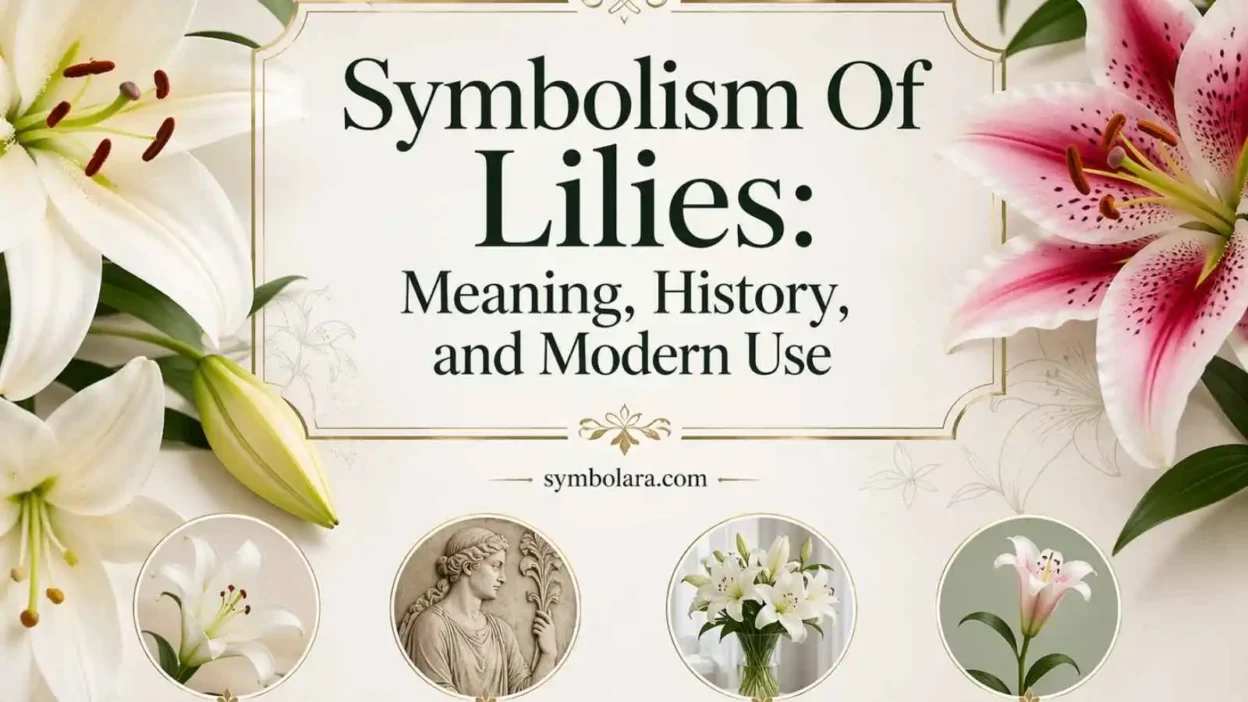
Lilies are among the most recognizable flowers in American life. People see them at funerals, in Easter displays, in wedding arrangements, on greeting cards, in tattoos, and in home decor. Because they appear in such different settings, many people want to know what they actually mean and why the same flower can suggest both celebration and loss.
Symbolism Of Lilies usually centers on purity, renewal, dignity, devotion, and remembrance. In the United States, that mix of meanings explains why lilies can feel equally appropriate in a church at Easter, a sympathy bouquet, or a formal white wedding arrangement.
Part of the answer lies in the flower itself. Lilies are visually striking: tall stems, open petals, strong fragrance, and a shape that feels clean and deliberate. Part of the answer also comes from history. Different lily varieties picked up different meanings over time, especially through Christianity, Victorian flower language, and modern gift culture.
Quick Answer
Symbolism Of Lilies most commonly represents purity, renewal, sympathy, and refined beauty in modern American culture, especially in funerals, Easter arrangements, weddings, and meaningful gifts. Historically, lilies also came to symbolize the Virgin Mary, innocence, resurrection, devotion, and, in some traditions, love and majesty.
TL;DR
- Lilies usually stand for purity, renewal, and remembrance.
- White lilies carry the strongest religious and sympathy meanings.
- Christian art linked lilies with Mary and Easter hope.
- In the U.S., lilies appear at funerals, weddings, and spring holidays.
- Color changes the message from innocence to pride or admiration.
- Modern use mixes faith, aesthetics, and personal identity.
What Lilies Look Like and Why People Notice Them
A lily is not a subtle flower. True lilies in the genus Lilium tend to have large trumpet, bowl, or recurved blooms, prominent stamens, and a formal, upright posture. Even people who do not know flower names often recognize lilies because the flower looks ceremonial. It feels designed for important moments rather than everyday filler.
That physical presence helps explain the symbolism. Flowers with tiny petals or soft shapes often suggest modesty or sweetness. Lilies do something different. They look clear, composed, and deliberate. Their open form can read as honest and pure, while their height and fragrance give them an air of dignity. That is one reason the flower moved so easily into religious art, public rituals, and formal floral design. This is an interpretation based on the flower’s appearance alongside how it has been used historically.
What Lilies Commonly Mean in the United States
In the United States today, lilies usually communicate one of four ideas: purity, sympathy, renewal, or elegant affection. Which meaning dominates depends less on the species name than on the setting. A white lily in a funeral spray says something very different from a pink lily in a Mother’s Day bouquet.
White lilies are the strongest carriers of innocence, peace, and reverence. They are widely used in sympathy arrangements because Americans often read them as respectful rather than romantic. Easter lilies lean toward spiritual renewal and hope. In weddings, lilies can signal formality, grace, and a clean, classic kind of beauty. In gift culture, brighter lilies may suggest admiration, confidence, celebration, or abundance instead.
Ancient Roots and Early Uses
Lilies are not a modern symbolic invention. They are among the oldest cultivated ornamental plants. Britannica notes that the Madonna lily was cultivated in Asia Minor in the 2nd millennium BCE and that Greeks and Romans also grew lilies for ornamental and medicinal purposes. That long cultivation history matters because flowers tend to gain symbolic meaning when they are repeatedly present in domestic, ritual, and artistic life.
Ancient people did not all agree on one single lily meaning, but the flower’s whiteness, fragrance, and dramatic bloom made it easy to connect with ideas such as beauty, fertility, honor, and sacred ceremony. Over time, later religious and literary traditions narrowed those meanings in more specific directions, especially toward purity and devotion in Christian Europe. That shift is part of why modern Americans often inherit “purity” as the default answer even though the flower’s earlier symbolic life was broader.
How Christianity Shaped Lily Symbolism
No tradition has done more to define lily symbolism in the West than Christianity. During the Middle Ages, the Madonna lily became closely associated with the Virgin Mary, especially in art of the Annunciation. Artists regularly placed a white lily near Mary or in Gabriel’s hand to represent virginity, purity, and divine favor.
That association stayed powerful for centuries. It is one reason many Americans still instinctively connect white lilies with church settings, moral innocence, and reverence, even if they could not explain the art history behind it. Christian symbolism also linked lilies with resurrection, which later helped make the Easter lily especially meaningful in the United States. The modern religious reading of lilies is not random decoration; it grew out of centuries of visual and devotional use.
Spiritual Meaning of Lilies in Different Traditions
Lilies have carried spiritual meanings across many traditions because of their appearance, fragrance, and connection with important ceremonies. Their symbolism often focuses on transformation, inner growth, purity, and the connection between beauty and deeper values.
In Christianity, white lilies are closely connected with purity, devotion, and resurrection. Their role in religious art helped establish the flower as a symbol of hope and sacred renewal.
Outside Christian traditions, lilies have also represented beauty, honor, fertility, and emotional transformation. Many cultures viewed flowers as reminders of life cycles because they bloom, fade, and return with the seasons.
In modern spiritual interpretations, people often associate lilies with personal growth, peace, healing, and fresh beginnings. These meanings are personal rather than universal rules, but they show why lilies continue to appear in ceremonies, memorials, and meaningful artwork.
The lasting appeal of lilies comes from their ability to represent both change and continuity: the end of one chapter and the beginning of another.
Why Easter Lilies Mean Hope and Renewal
In American culture, the Easter lily is one of the clearest examples of a flower carrying a seasonal religious message. The white bloom is commonly used at Easter to symbolize life, purity, innocence, joy, and peace. Because Easter centers on resurrection, the flower became a visible sign of hope after suffering and new life after death.
This meaning is still very active, not just historical. Churches decorate sanctuaries with Easter lilies, families buy them in spring, and people who may not think much about floral symbolism still recognize the flower as tied to Easter. In the U.S., that makes the lily a rare symbol that moves easily between religion and mainstream seasonal culture. It can signal faith for one person and spring renewal for another.
Why Lilies Are So Common at Funerals
Lilies are also one of the most familiar funeral flowers in the United States. Sympathy guides and funeral services consistently describe them as symbols of peace, purity, innocence, love, dignity, and the restored innocence of the departed soul. White lilies, in particular, are treated as appropriate because they feel respectful, quiet, and ceremonial rather than flashy.
This funeral meaning does not cancel the flower’s earlier religious meaning; it grows from it. If a flower already represents purity and resurrection, it makes sense that it would become a strong symbol in mourning. In American practice, lilies often express two things at once: grief for the living and hope or peace for the dead. That layered meaning is a big part of why the flower remains standard in memorial culture.
Victorian Flower Language and Social Meaning
The nineteenth-century language of flowers helped spread floral symbolism into everyday social life. Smithsonian Gardens notes that in Victorian culture, flowers were used to communicate feelings that could not be said openly, and guidebooks assigning meanings to flowers became widely popular.
That matters for lilies because many modern assumptions about bouquet meanings were reinforced during that era. Victorian floriography did not invent every lily meaning from scratch, but it gave people a social system for reading flowers as messages. The result was a more coded understanding of bouquets: white for innocence, certain varieties for majesty, and other colors for admiration, affection, or warmth. Americans still inherit some of that mindset when they choose flowers for occasions that need the “right” emotional tone.
How Color Changes the Meaning
Not all lilies say the same thing. Color matters, and modern U.S. flower culture often treats color as the fastest way to change the message.
| Context | Meaning in the USA | Common Associations | Notes |
| White lilies | Purity, sympathy, peace | Funerals, Easter, formal weddings | Strongest religious and memorial use |
| Pink lilies | Admiration, love, motherhood | Mother’s Day, affectionate gifts | Softer and more personal than white |
| Orange lilies | Pride, confidence, energy | Celebrations, bold decor, achievement | Can feel intense rather than gentle |
| Calla lilies | Beauty, elegance, rebirth | Weddings, memorials, luxury design | Not a true lily, but commonly grouped with lilies |
| Easter lilies | Renewal, resurrection, hope | Churches, spring displays, faith traditions | A seasonal American symbol |
This is one place where readers often get confused. A person may hear that lilies symbolize innocence and then wonder why orange lilies can suggest pride or passion. The answer is that “lily symbolism” is really a family of meanings shaped by color, variety, and occasion rather than a single fixed definition.
Lily Symbolism By Variety: What Different Types of Lilies Represent
Different lily varieties carry their own symbolic associations because people have used them in different cultural and emotional settings. While many lilies share themes of beauty and renewal, the type of lily can change the message a person wants to express.
Easter lilies are strongly connected with hope, resurrection, purity, and spiritual renewal in American Christian traditions. Their white petals and seasonal appearance make them one of the most recognizable symbols of Easter celebrations.
Calla lilies are often associated with elegance, beauty, and graceful transitions. Although they are not true lilies botanically, many people connect them with weddings, memorials, and sophisticated floral designs because of their smooth shape and refined appearance.
Tiger lilies often represent confidence, strength, and bold beauty. Their bright orange color and spotted petals give them a more energetic personality compared with traditional white lilies.
Stargazer lilies are commonly linked with admiration, ambition, and appreciation. Their dramatic appearance makes them popular in bouquets that are meant to feel luxurious or expressive.
Understanding the variety helps explain why “lily symbolism” does not have one single meaning. The flower’s type, color, and setting work together to create the message.
Weddings, Motherhood, and Formal Beauty
Outside religious and mourning contexts, lilies often symbolize polished beauty and important life transitions. Florists regularly use them in weddings because the flowers look formal, sculptural, and emotionally legible. White lilies or white calla lilies can suggest purity and commitment, while colored lilies soften that message into admiration, affection, or celebration.
Lilies also appear in Mother’s Day gifting, where some modern floral guides connect them with admiration, motherhood, and the divine feminine. In American terms, that usually means the flower is being used to signal respect, warmth, and elevated affection rather than youthful romance. It is a flower people choose when they want something beautiful and meaningful without seeming casual.
Emotional and Psychological Meaning
Psychologically, lilies often communicate emotional clarity. They do not usually suggest flirtation, wildness, or playful energy. Instead, they tend to signal seriousness, composure, and care. That is why the same flower works in spaces that ask for emotional discipline: churches, memorials, milestone celebrations, and formal interiors.
For many people, lilies also carry a “clean beginning” feeling. White lilies especially can evoke fresh starts, peace after turmoil, or beauty that does not need excess decoration. That reading fits their use at Easter and in sympathy rituals. It also helps explain why lilies appear in tattoos or personal imagery chosen after loss, recovery, religious recommitment, or a major life change. This is an inference drawn from common usage patterns and established symbolic associations.
Cross-Cultural Meanings Beyond the United States
Although the U.S. tends to emphasize purity, sympathy, and Easter renewal, lilies have broader meanings elsewhere. Some flower guides note calla lilies as signs of magnificent beauty, while broader cultural discussions connect lilies with beauty, womanhood, affection, and ceremonial honor. In East Asian media contexts, “lily” has also developed a specialized meaning connected to female-female romance, which is very different from mainstream American floral symbolism.
That variety matters because it keeps us from pretending there is one universal answer. Flowers do not carry meaning in the abstract; people assign meaning through religion, literature, etiquette, art, and repeated social use. The American reading of lilies is important, but it is still one cultural interpretation among several.
The Fleur-de-Lis and a Common Misunderstanding
One common confusion is the fleur-de-lis. Many people treat it as straightforward proof of lily symbolism in politics, royalty, or sports branding. The symbol is certainly named for the lily and has long been understood as a stylized lily in heraldry, but historians have also debated whether some early forms may have been closer to an iris.
That does not make the symbol meaningless. It just means readers should be careful. In modern culture, the fleur-de-lis often functions less as a flower message and more as an emblem of heritage, monarchy, place, religion, or team identity. So it belongs in the conversation about lily symbolism, but it should not be treated as simple evidence that all lily meanings are the same everywhere.
Modern Use in Tattoos, Decor, and Personal Style
Today, lilies appear far beyond florists and churches. In tattoo culture, a lily may represent purity after hardship, grief, femininity, motherhood, remembrance, or spiritual renewal. In home decor, white lilies often signal calm, elegance, and a polished interior style. On social media, lilies are frequently used in tribute posts, Easter visuals, wedding mood boards, and soft, refined aesthetic branding.
What holds these uses together is not one exact definition but a shared emotional range. Lilies tend to suggest meaningful beauty rather than casual prettiness. Even when used for style, they still carry echoes of ceremony, care, and transition. That makes them useful symbols for people who want a floral image that feels personal without seeming childish or overly sentimental. This section draws together the historical meanings above with current visual and gifting trends.
Are Lilies Good Luck Symbols?
Lilies are not traditionally considered universal good luck symbols in American culture, but many people associate them with positive qualities such as peace, hope, renewal, and prosperity.
Because lilies often appear during important life events, people may connect them with blessings and new beginnings. Wedding lilies can represent a hopeful future, Easter lilies can represent spiritual renewal, and gifted lilies can express admiration or encouragement.
In some cultural traditions, flowers similar to lilies have been linked with abundance, fertility, and good fortune. However, the meaning depends heavily on the culture, occasion, and personal interpretation.
Rather than representing luck in a simple sense, lilies are better understood as symbols of positive transformation, dignity, and meaningful change.
Controversies, Distortions, and Misuse
The main misuse of lily symbolism is oversimplification. People often say “lilies mean purity” as if that settles the matter. In practice, lilies can symbolize grief, resurrection, admiration, majesty, motherhood, or confidence depending on type and context. Reducing the flower to one trait flattens its actual cultural life.
Another source of confusion is mixing true lilies with plants that only borrow the name, such as calla lilies, peace lilies, daylilies, or lily of the valley. These plants have their own histories and are not botanically the same as Lilium. Still, in ordinary American speech, people group them together and transfer meanings across them. That is understandable, but it can muddy both botanical accuracy and symbolic interpretation.
How Lily Symbolism Changed Over Time
The meaning of lilies has not stayed fixed. Earlier traditions connected them with beauty, sacred ceremony, and cultivated value. Christian Europe strongly emphasized purity and Marian devotion. Victorian flower language then helped turn floral meanings into social messages. Modern American culture added sympathy etiquette, Easter symbolism, wedding aesthetics, and gift-driven color meanings.
So when people ask what lilies symbolize, the most honest answer is historical as well as emotional: the flower accumulated meanings because it kept appearing in places where people needed visible signs of innocence, hope, grief, beauty, and devotion. That long repetition is what made the symbolism stick.
FAQ
What do lilies symbolize most often?
Most often, lilies symbolize purity, renewal, sympathy, and refined beauty in current American usage. White lilies especially are tied to funerals, Easter, reverence, and formal occasions.
Are lilies a positive or negative symbol?
Usually they are positive, but the emotional tone depends on context. At Easter they suggest hope and new life, while at funerals they express peace, dignity, and remembrance rather than something negative.
What do white lilies symbolize in Christianity?
In Christianity, white lilies are closely associated with purity, the Virgin Mary, and resurrection. That meaning developed strongly in medieval and Renaissance religious art and still shapes church use today.
What do lilies mean in tattoos?
In tattoos, lilies often stand for remembrance, healing, femininity, spiritual renewal, or a fresh start after hardship. The exact meaning usually depends on color, accompanying symbols, and the wearer’s personal story.
Are funeral lilies only about death?
No. In American mourning culture, lilies often carry a message of peace, innocence, and hope as much as sorrow. Their funeral use comes partly from the belief that they express dignity and restored innocence, not just loss.
Do different lily colors mean different things?
Yes. White commonly suggests purity and sympathy, pink often suggests admiration or affectionate warmth, and orange can suggest pride, confidence, or high energy. Color changes the social message quickly.
Is the fleur-de-lis the same as a lily flower meaning?
Not exactly. It is a heraldic emblem traditionally understood as a stylized lily, but it carries political, religious, dynastic, and regional meanings of its own. Some historians also debate whether its earliest visual model may not have been a true lily at all.
What does a black lily symbolize?
Black lilies are often associated with mystery, transformation, strength, and dramatic beauty. Their meaning is usually based on modern artistic interpretation rather than traditional flower language.
Conclusion
Lilies endure because they can hold more than one human feeling at a time. They can express innocence without seeming naive, grief without becoming bleak, and beauty without feeling casual. In the United States, that is why they remain so visible in Easter services, memorial arrangements, weddings, and meaningful gifts.
At its core, Symbolism Of Lilies points to purity, renewal, dignity, devotion, and remembrance, with color and context shaping the exact message. The flower has lasted as a symbol not because its meaning is vague, but because it has been trusted for generations in the moments people most want beauty to say something clear.


[…] There is also a layer of confusion around the flower. Calendula is commonly called pot marigold or English marigold, but it is not the same plant as the Tagetes marigolds that many Americans associate with fall borders or Día de los Muertos imagery. That distinction matters, because the two flowers overlap in color and common name, yet they do not always carry the same symbolic history. […]