
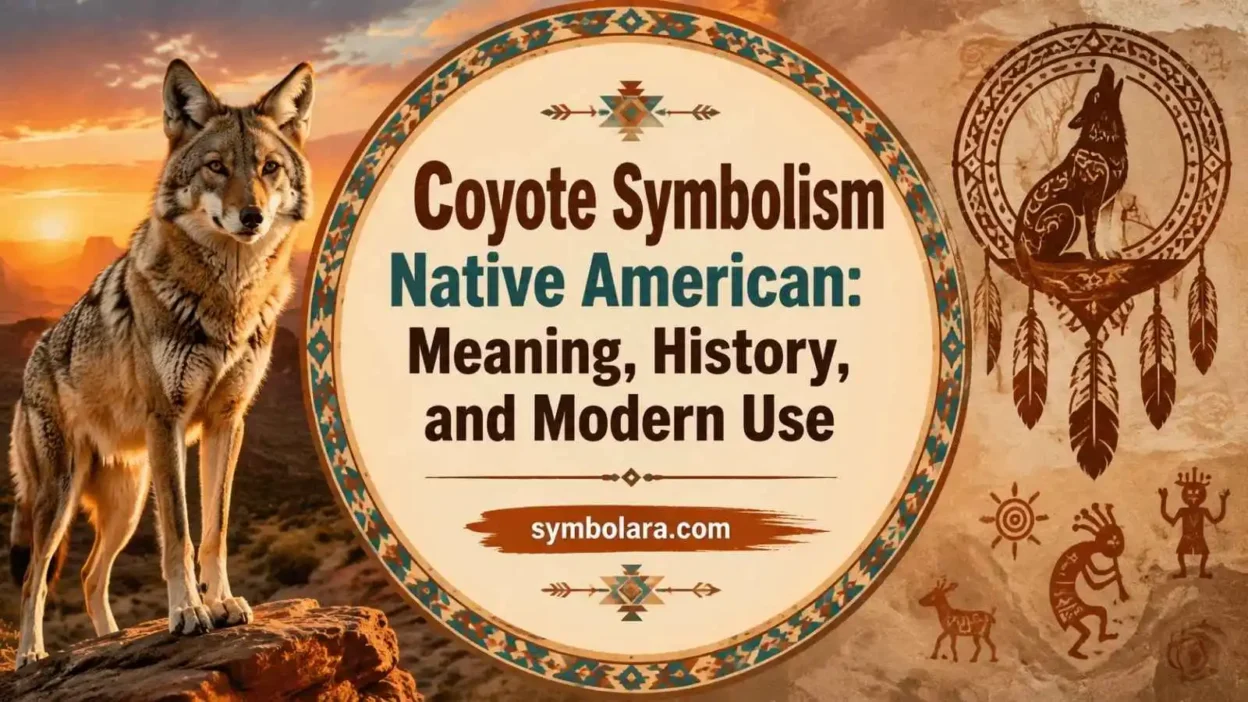
The coyote holds one of the most complicated and recognizable roles in Native American symbolism. Across many Indigenous traditions in North America, the animal appears as a trickster, teacher, survivor, creator, and disruptor. Unlike symbols that represent pure good or evil, the coyote usually reflects contradiction. It makes mistakes, bends rules, creates chaos, and still manages to reveal important truths about human behavior.
Interest in Coyote Symbolism Native American traditions has expanded far beyond tribal storytelling. Today, Americans encounter coyote imagery in tattoos, wildlife documentaries, Southwestern art, spiritual discussions, movies, and social media. Many people are drawn to the animal because it represents resilience and adaptability in uncertain situations.
At the same time, the coyote is often misunderstood. Popular culture sometimes reduces it to a simple “mischievous trickster,” but traditional meanings are much broader and more culturally specific. Understanding coyote symbolism requires looking at Native storytelling traditions, American cultural history, emotional symbolism, and the changing relationship between humans and the natural world.
Quick Answer
Coyote Symbolism Native American traditions commonly represents adaptability, intelligence, survival, and lessons learned through disruption or mistakes. Historically, many Indigenous cultures also viewed the coyote as a trickster and creator figure whose unpredictable behavior revealed truths about human nature, community rules, and survival.
TL;DR
- Coyotes symbolize survival and flexibility.
- Many tribes view Coyote as a trickster teacher.
- The symbol often reflects human imperfection.
- Modern Americans connect coyotes with resilience.
- Coyotes appear frequently in tattoos and art.
- Meanings differ between Native traditions.
Why the Coyote Became Symbolically Important
The coyote is native to North America and has lived alongside human communities for thousands of years. Smaller than wolves but highly intelligent, coyotes are known for adapting quickly to changing environments. They survive in deserts, forests, grasslands, farms, suburbs, and even major cities.
This ability to adjust made the animal symbolically important long before modern symbolism existed. Indigenous communities observed how coyotes hunted, scavenged, communicated, and avoided danger. Those real-world behaviors shaped the stories people told about them.
Coyotes became associated with:
- Cleverness
- Opportunism
- Persistence
- Flexibility
- Rule-breaking
- Survival during hardship
Unlike powerful predators that dominate through strength, coyotes survive through awareness and adaptability. That distinction remains central to their symbolism today.
The Trickster Role in Native American Stories
The coyote’s best-known role in Native American traditions is the trickster. In Indigenous storytelling, tricksters are complex characters who disrupt social rules, expose weaknesses, and sometimes create unexpected change.
Coyote stories often involve deception, humor, selfishness, curiosity, or impulsive behavior. Yet those actions usually lead to lessons rather than simple punishment.
In many traditions, Coyote:
- Tricks stronger animals
- Causes problems through arrogance
- Reveals human flaws
- Challenges authority
- Creates disorder that changes the world
Importantly, tricksters are not always evil figures. They reflect the reality that wisdom sometimes comes from failure, embarrassment, or unintended consequences.
This is one reason coyote symbolism feels emotionally realistic. The character behaves imperfectly, much like humans themselves.
Why There Is No Single Native American Interpretation
One of the biggest misunderstandings about Native symbolism is the assumption that all tribes shared identical beliefs. In reality, Indigenous cultures across North America are extremely diverse.
Different tribal traditions interpreted the coyote in different ways depending on geography, spirituality, oral storytelling customs, and local wildlife relationships.
For example:
| Tribal Region | Common Coyote Role | General Symbolic Themes | Tone of Stories |
| Southwest | Creator and trickster | Transformation, survival | Spiritual and instructional |
| Plains | Trickster teacher | Humor, consequences | Moral and entertaining |
| West Coast | Culture-shaping figure | World creation | Sacred storytelling |
| Desert regions | Survivor archetype | Adaptability, endurance | Practical and symbolic |
Some traditions treated Coyote primarily as comic relief. Others connected the figure to creation stories or sacred teaching. That diversity matters because modern discussions often oversimplify Native beliefs into a single interpretation.
Coyote Symbolism in Different Native American Tribes
Native American views of the coyote vary widely because each Indigenous nation has its own traditions, stories, and relationship with the natural world.
Among many Southwestern cultures, Coyote appears as a powerful figure connected with creation, transformation, and teaching. Stories often use Coyote’s mistakes to explain human behavior, natural events, and important community values.
In some Pueblo traditions, Coyote stories highlight the importance of humility and respecting natural balance. The character may act foolishly, but those mistakes reveal lessons about responsibility and consequences.
Among some Plains cultures, Coyote is often presented as a trickster who teaches through humor and unexpected events. The stories show that intelligence does not always come from strength or authority.
Some Indigenous communities also connect Coyote with survival because the animal thrives in difficult environments. Its ability to adjust reflects important cultural ideas about endurance, awareness, and living with change.
Because Native nations are diverse, there is no single “Native American coyote meaning.” The most respectful approach is to understand each tradition within its own cultural context.
The Coyote as a Creator Figure
While many people know the coyote as a trickster, fewer realize that some Native traditions also describe Coyote as a creator or world-shaping figure.
In several stories, Coyote helps organize the world, bring knowledge to humanity, or influence the structure of nature itself. Sometimes these actions are intentional. Other times they happen accidentally through reckless behavior.
This combination of creativity and imperfection is unusual compared with many Western religious traditions, where creators are often portrayed as morally flawless.
In Native storytelling, the coyote’s flaws can actually serve an important purpose. They explain why the world contains disorder, unpredictability, and contradiction.
That makes the symbol feel grounded in real human experience rather than distant perfection.
What Coyotes Symbolize in Modern American Culture
In modern American culture, coyotes are usually associated with resilience and independence. Because the animals survive in both wilderness and urban areas, many people see them as symbols of adaptation during difficult change.
Today, coyotes commonly represent:
- Self-reliance
- Survival instincts
- Outsider identity
- Intelligence under pressure
- Freedom from conformity
- Persistence despite obstacles
Americans often connect with the coyote because modern life itself feels unpredictable. Economic shifts, social changes, technology, and relocation all require adaptability. The coyote symbolizes surviving without complete stability.
This modern interpretation overlaps with older symbolism while also reflecting contemporary concerns about identity and resilience.
Emotional and Psychological Meaning of the Coyote
Psychologically, the coyote often represents a person navigating uncertainty without relying on traditional systems of control or authority.
People drawn to coyote symbolism may relate to:
- Independence
- Humor during hardship
- Emotional flexibility
- Rebellion against rigid expectations
- Survival after instability
The coyote also reflects human contradiction. It can be intelligent yet impulsive, resourceful yet reckless. That complexity makes the symbol emotionally believable.
In storytelling psychology, trickster figures frequently reveal truths that more orderly characters avoid. They expose hypocrisy, challenge pride, and force change through disruption.
The coyote’s symbolism works because it reflects messy reality rather than idealized perfection.
Coyote Dream Meaning and Symbolism
Dreams about coyotes are often interpreted through themes of adaptability, awareness, and personal challenges. Because the coyote is known for intelligence and survival, it may represent the ability to handle difficult situations with creativity.
A friendly coyote in a dream may symbolize confidence, independence, or learning to trust your instincts. A threatening coyote may represent uncertainty, hidden concerns, or a situation that requires more attention.
In symbolic dream interpretation, the coyote can also represent the trickster side of human nature. It may encourage reflection on personal habits, decisions, or situations where honesty and awareness are needed.
Dream meanings are personal and depend on the dreamer’s emotions and experiences. They should not be treated as fixed predictions but as opportunities for reflection.
Why Coyotes Appear in Tattoos and Personal Identity
Coyote tattoos have become increasingly popular in the United States, especially in Western regions and among people interested in wilderness symbolism or personal transformation.
The meaning often depends on the design itself.
Common tattoo interpretations include:
- Survival after difficult experiences
- Personal independence
- Adaptability
- Rebellion against social pressure
- Confidence in uncertainty
A howling coyote may symbolize communication, loneliness, or connection with nature. A running coyote often represents freedom and movement. Desert landscapes, moons, and stars are frequently added to strengthen themes of wilderness and nighttime survival.
For many people, the coyote symbolizes thriving outside conventional expectations.
The Influence of Pop Culture on Coyote Symbolism
Modern American understanding of coyotes has been heavily shaped by movies, cartoons, television, and Western storytelling.
Animated cartoons popularized the image of the coyote as endlessly determined, clever, and chaotic. Although humorous, those portrayals reinforced older trickster themes already present in Indigenous stories.
Coyotes also appear in:
- Western films
- Country music
- Southwestern tourism
- Outdoor clothing brands
- Horror stories
- Environmental campaigns
These portrayals helped transform the coyote from a regional wildlife symbol into a nationally recognizable cultural figure.
Today, the coyote often represents life at the edges of society — adaptable, alert, and difficult to control.
Coyotes and Urban Survival Symbolism
One reason coyote symbolism remains relevant is the animal’s surprising success in urban environments. Coyotes now live in or near many American cities, including Chicago, Phoenix, Denver, and Los Angeles.
Wildlife experts often describe coyotes as one of the most adaptable mammals in North America.
This has influenced their symbolism in modern culture. The coyote no longer represents only wilderness. It now symbolizes survival within human-made systems.
People increasingly see coyotes as examples of:
- Adaptation during environmental change
- Survival under pressure
- Intelligence in unstable conditions
- Coexistence with modern life
That symbolism resonates strongly in the twenty-first century, when flexibility often feels more valuable than strength alone.
What Does Seeing a Coyote Mean Symbolically?
A coyote sighting can carry different meanings depending on personal beliefs, cultural background, and the situation. In modern symbolic interpretations, many people view a coyote encounter as a reminder to stay flexible, alert, and prepared for change.
Because coyotes survive in many environments, people often connect sightings with adaptability and resilience. The animal can represent finding creative solutions when life becomes uncertain.
Some people also interpret a coyote appearance as a reminder to question assumptions. The trickster symbolism encourages people to look beyond simple answers and recognize hidden lessons in difficult situations.
However, a coyote sighting does not have one universal meaning. Traditional Native interpretations depend on specific tribal stories, while modern personal meanings often come from individual experiences and beliefs.
Spiritual Interpretations in Contemporary Culture
Modern spiritual communities sometimes interpret the coyote as a guide representing transformation, humor, unpredictability, or lessons learned through disruption.
These interpretations often blend Native symbolism with broader modern spirituality. While many people find personal meaning in the coyote, it is important to separate contemporary spiritual interpretations from specific Indigenous traditions.
Traditional Native beliefs were tied to individual tribal cultures and oral histories rather than generalized spirituality.
Respectful engagement means recognizing:
- Tribal traditions are diverse
- Stories have cultural context
- Not all meanings are universal
- Modern interpretations are often reinterpretations
The coyote can still hold meaningful symbolic value today without erasing its cultural origins.
Common Misunderstandings About Coyote Symbolism
Many people incorrectly assume the coyote symbolizes evil or destruction. In reality, the symbol is far more nuanced.
The coyote often creates problems in stories, but those problems usually expose human weakness, arrogance, or poor judgment. The figure teaches through disruption rather than simple morality.
Another misunderstanding is treating all Native traditions as identical. Different Indigenous cultures understood the coyote in different ways.
Some modern online interpretations also invent exaggerated “ancient meanings” that lack historical grounding. The coyote’s symbolism is already rich and complicated without adding fictional claims.
Understanding the symbol accurately requires respecting cultural specificity and historical context.
Positive and Negative Meanings of Coyote Symbolism
Coyote symbolism contains both positive and challenging meanings. Unlike symbols that represent only strength or purity, the coyote reflects the complicated nature of life.
Positive meanings of the coyote include:
- Adaptability during change
- Intelligence and problem-solving
- Survival through difficult times
- Independence and confidence
- Learning from mistakes
Challenging meanings include:
- Impulsiveness
- Trickery
- Unpredictable behavior
- Breaking rules without considering consequences
- Creating disorder
These opposite meanings are what make the coyote such a powerful symbol. The animal does not represent perfection. Instead, it represents learning, adjustment, and growth through real-life experiences.
How Coyote Symbolism Changed Over Time
The meaning of the coyote evolved alongside North American history.
Originally, coyote symbolism developed through Indigenous oral traditions shaped by direct observation of wildlife and community storytelling.
During westward expansion, many settlers viewed coyotes negatively as scavengers or threats to livestock. That changed public perception for a time.
In the twentieth century, entertainment media transformed the coyote into a recognizable pop culture figure associated with persistence and humor. More recently, urban wildlife research and environmental awareness have reshaped the animal once again.
Today, coyote symbolism combines:
- Indigenous storytelling traditions
- Frontier mythology
- Wilderness identity
- Environmental adaptation
- Psychological symbolism
- Modern individualism
Its meaning continues evolving because the animal itself continues adapting.
Why the Coyote Still Resonates With Americans
The coyote remains a powerful symbol because it reflects many realities of modern life that people recognize. Its ability to survive disruption, adapt quickly, move between different environments, and thrive without complete stability gives it a strong connection to resilience.
These qualities reflect contemporary American experiences, including relocation, economic challenges, shifting identities, and constant social change. Rather than representing perfection or complete control, the coyote symbolizes endurance in uncertain circumstances.
For many Americans, the coyote represents the ability to survive through intelligence, flexibility, and awareness rather than through dominance or physical strength. Its symbolism feels personal because it reflects the challenges of adapting and continuing forward in an unpredictable world.
FAQs
In many Native American traditions, the coyote symbolizes intelligence, survival, disruption, humor, and lessons learned through mistakes. Some tribes also portray Coyote as a creator or culture-shaping figure.
The coyote is usually a mixed symbol rather than purely positive or negative. It often represents contradiction, showing how wisdom and foolishness can exist together.
The coyote is called a trickster because many traditional stories portray it breaking rules, deceiving others, or causing chaos. Those actions often reveal important lessons about human behavior and social values.
A coyote tattoo commonly symbolizes resilience, independence, adaptability, and personal freedom. Some people also associate it with surviving difficult life transitions.
No. Indigenous cultures across North America have diverse traditions and beliefs. The coyote’s role changes depending on the tribe, region, and storytelling tradition.
Coyotes symbolize adaptability in a changing world. Their ability to survive in cities and wilderness alike has made them modern symbols of resilience and persistence.
The coyote is important because many Indigenous stories use the animal to explain human behavior, natural events, and life lessons. Its role can include trickster, teacher, creator, and survivor depending on the tradition.
Conclusion
Coyote Symbolism Native American traditions continues to resonate because the coyote represents survival in an imperfect world. Across many Indigenous stories, the animal appears as a teacher, creator, rebel, fool, and survivor all at once.
Modern Americans still connect with those meanings because the coyote reflects real human experiences: adapting under pressure, learning through mistakes, and finding ways to endure uncertainty. Its symbolism remains relevant not because it offers simple answers, but because it acknowledges how complicated life can be.
The coyote survives through flexibility rather than dominance, and that may be the most enduring meaning of all.
[…] See also Coyote Symbolism Native American: Meaning, History, and Modern Use […]
[…] Symbolism Bible commonly points to beauty, grace, balance, and joyful individuality in modern American interpretation, especially because of the bird’s pink color and elegant posture. Biblically, […]
[…] white egret is not only beautiful. It is also a bird with a real American history: hunted heavily for its feathers in the late 1800s, then protected through early conservation […]