
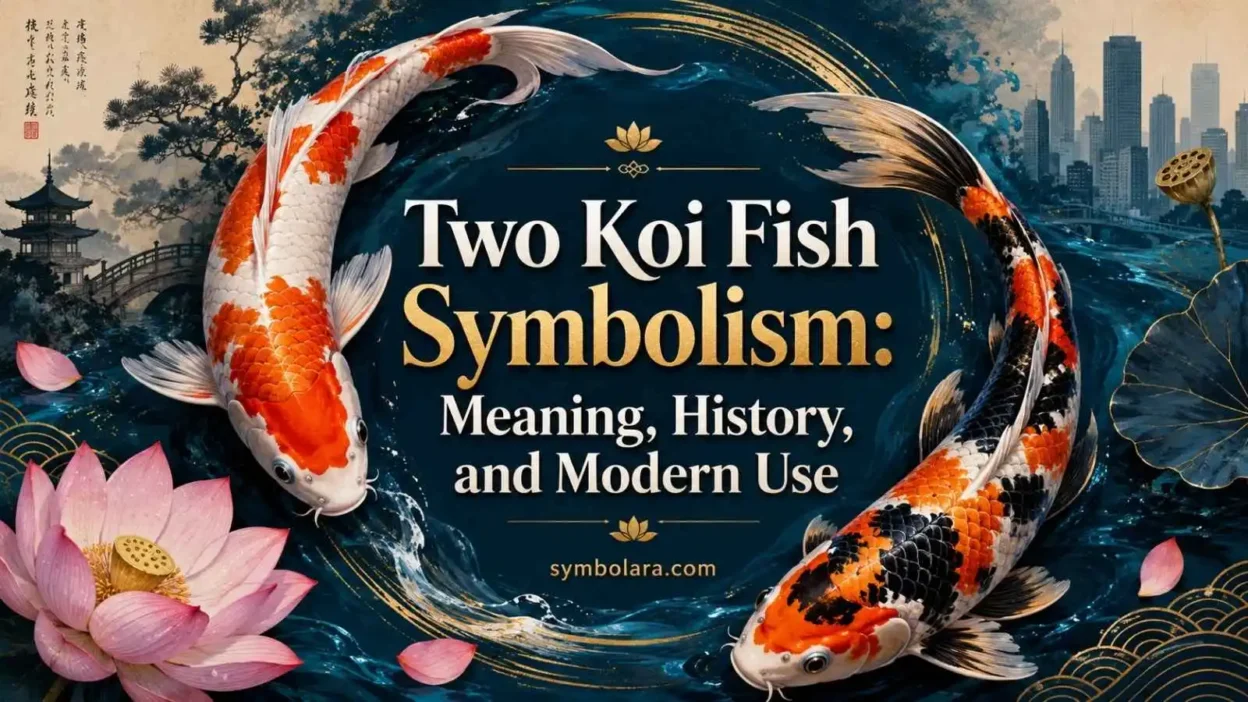
Two Koi Fish Symbolism is most often understood today as a sign of balance, partnership, perseverance, and harmony between opposing forces. The image usually shows two koi swimming together, often in a circle, creating a visual rhythm that feels calm, intentional, and connected.
People care about this symbol because it appears in places where meaning matters: tattoos, jewelry, garden ponds, wall art, wedding gifts, meditation spaces, and home decor. It is beautiful on the surface, but it also carries ideas about love, endurance, ambition, and emotional steadiness.
In the United States, the image is especially popular because it bridges several familiar themes: yin and yang, romantic partnership, personal growth, Japanese-inspired design, and the quiet appeal of water imagery. For many Americans, two koi suggest not only beauty but a way of moving through life with patience and purpose.
Quick Answer
Two Koi Fish Symbolism commonly represents balance, love, partnership, and harmony in modern American culture, especially in tattoos, home decor, and relationship imagery. Historically, koi are also tied to perseverance, prosperity, transformation, and the East Asian legend of the carp that overcomes a waterfall and becomes a dragon.
TL;DR
- Two koi often symbolize harmony and partnership.
- Their circular shape connects to yin and yang.
- Koi history includes Chinese and Japanese traditions.
- In tattoos, they suggest resilience and personal growth.
- In decor, they imply peace, fortune, and balance.
- Misuse often comes from treating the symbol as generic “Asian” art.
What Two Koi Fish Usually Look Like
The symbol typically shows two koi swimming near each other, often arranged in a circle or curved S-shape. One fish may be dark and the other light, echoing the structure of the yin-yang symbol. In other versions, the pair may be red and black, orange and white, gold and white, or painted in the bright patterns associated with ornamental Japanese koi.
Koi are not abstract fish. Their bodies are long and graceful, with flowing fins, whisker-like barbels near the mouth, and patterned scales. Their movement matters symbolically: they appear to glide, circle, rise, or swim upstream. That sense of motion gives the image much of its emotional force.
Americans most often encounter two koi in tattoos, framed prints, garden ponds, spa decor, yoga studios, Asian-inspired interiors, jewelry, and digital illustrations. The design can look traditional, minimalist, watercolor-like, geometric, or highly realistic.
What It Commonly Means in the United States
In the United States, two koi usually symbolize harmony between two people or two parts of the self. The image is often chosen by couples, close friends, siblings, or people who want a visual reminder that strength does not have to be harsh. The fish move together, but they are not identical. That difference is central to the meaning.
A single koi can represent ambition, courage, or endurance. Two koi add relationship and balance to that meaning. They suggest that life is not only about pushing forward alone but also about moving with another person, another force, or another side of one’s own nature.
This is why the pair often appears in wedding gifts, couple tattoos, and home decor meant to create a peaceful atmosphere. The symbol says, in effect, that two energies can remain distinct while still forming one pattern.
Balance, Yin and Yang, and Complementary Forces
The two-koi design is often connected with yin and yang, the Chinese philosophical idea that opposite forces can be complementary rather than enemies. In this reading, the fish represent contrast: dark and light, motion and stillness, strength and softness, independence and connection.
This does not mean that one fish is “good” and the other is “bad.” That is a common misunderstanding of yin-yang symbolism. The point is balance, interdependence, and movement. Each side helps define the other.
When two koi circle each other, the image suggests that harmony is not frozen. It has to keep moving. Relationships, families, careers, and inner emotional life all require adjustment. The circular motion of the fish gives the symbol a practical meaning: balance is something people return to again and again, not something they achieve once and keep forever.
Love, Partnership, and Mutual Support
Two koi are often read as a relationship symbol because they appear to move in partnership. They may swim side by side, chase each other in a circle, or mirror each other’s path. This makes the image especially appealing for couples who want a symbol of affection without using hearts, roses, or more obvious romantic imagery.
The relationship meaning is not limited to romance. Two koi can also represent friendship, family loyalty, or a bond between people who have endured difficulty together. The fish do not appear locked together. They remain separate beings, which makes the symbol useful for modern ideas of healthy partnership: closeness without erasure.
In American tattoo culture, this is one reason two koi are often chosen after major life transitions. They can mark a marriage, a long-term relationship, reconciliation, parent-child connection, or the memory of someone who helped the wearer survive a hard period.
Perseverance and the Dragon Gate Legend
Koi symbolism is strongly shaped by the East Asian legend of the carp that swims upstream and leaps over the Dragon Gate waterfall. In the story, the carp that succeeds is transformed into a dragon. The lesson is not quick victory. It is endurance, effort, and transformation earned through struggle.
This legend is especially important because it explains why koi are associated with ambition and courage. The fish is admired not because it dominates the water but because it keeps swimming against the current. Its strength is steady rather than loud.
When two koi appear together, that perseverance can become shared perseverance. The pair may symbolize two people facing hardship together, or two inner qualities working together: discipline and hope, courage and patience, effort and emotional balance.
Japanese Koi Traditions and Cultural Meaning
In Japan, koi are closely associated with strength, perseverance, good fortune, and beauty. Ornamental koi, known as nishikigoi, became especially admired for their colors and patterns. Over time, they became linked with garden design, wealth, refinement, and the calm pleasure of watching fish move through water.
Koi also appear in the Japanese tradition of carp streamers, or koinobori, displayed around Children’s Day. These windsock-like carp are connected with hopes that children will grow up healthy, strong, and resilient. The carp’s ability to swim upstream makes it a natural emblem of determination.
For American readers, it is important to understand that koi imagery is not just decoration borrowed from Japan. It belongs to living cultural traditions. Using the symbol thoughtfully means recognizing that it carries family, seasonal, artistic, and historical meanings beyond its modern tattoo or decor appeal.
Chinese Roots and the Meaning of Transformation
The Dragon Gate legend has Chinese roots, and the broader symbolism of carp in Chinese culture includes success, prosperity, persistence, and advancement. Because the carp becomes a dragon after overcoming the waterfall, the image became a metaphor for transformation through effort.
This matters for two-koi symbolism because the pair often combines Chinese and Japanese ideas. The circular design may draw on yin-yang concepts, while the fish themselves may draw on koi and carp traditions shaped in both China and Japan. In modern American use, these traditions are often blended, sometimes thoughtfully and sometimes casually.
The clearest historical thread is this: koi and carp became meaningful because they were seen as fish capable of movement against difficulty. They were not merely pretty. They represented a life path shaped by resistance, endurance, and eventual change.
Color Meanings in Two-Koi Designs
Color changes the emotional tone of the symbol. Not every artist or tradition interprets koi colors the same way, but certain associations are common in modern design and tattoo culture.
| Koi Color Pairing | Common Meaning in the USA | Common Associations | Notes |
| Black and white | Balance and contrast | Yin-yang, duality, harmony | Often used in circular designs |
| Red and black | Love and resilience | Passion, courage, survival | Popular in tattoos |
| Gold and white | Prosperity and peace | Fortune, success, clarity | Common in decor and art |
| Blue and orange | Calm and vitality | Water, creativity, movement | Often feels modern or artistic |
| Two multicolored koi | Shared growth | Joy, beauty, partnership | Less formal, more decorative |
Color symbolism should be treated as flexible rather than fixed. A red koi in one tattoo may represent love; in another, it may represent bravery, family, or personal energy. The meaning depends on context, placement, and the person choosing the design.
Why Two Koi Appear in Tattoos
Two koi tattoos are popular because they combine visual movement with personal meaning. The shape works well on arms, shoulders, backs, ribs, thighs, and calves because the fish can follow the body’s natural curves. A circular pair can fit neatly around a shoulder, while a vertical design can suggest swimming upstream.
Tattoo meanings often include overcoming hardship, honoring a relationship, finding balance after chaos, or marking a period of personal change. Someone may choose two koi after recovery, divorce, marriage, grief, immigration, career struggle, or a spiritual shift.
The design can also be adapted without losing its core meaning. Traditional Japanese-inspired tattoos may include waves, lotus flowers, peonies, clouds, or dragons. Minimalist versions may use only two clean fish outlines. Watercolor versions often emphasize emotion and fluidity rather than historical detail.
Two Koi Fish Direction Meaning: Swimming Up, Down, or Together
The direction of two koi fish can influence how people interpret the design, especially in tattoos and artwork. Although meanings vary between artists and traditions, movement often plays an important symbolic role.
Two koi swimming upward are commonly connected with progress, ambition, overcoming obstacles, and continuing forward despite challenges. This interpretation connects with the Dragon Gate legend, where the carp struggles against the current before reaching transformation.
Two koi swimming downward may represent returning to a peaceful state, accepting change, or moving through a reflective period. Some people choose this direction because it feels calmer and more connected with emotional balance.
Two koi swimming toward each other often represent connection, communication, and partnership. When they circle together, the image emphasizes harmony and the idea that different forces can exist together without losing their individuality.
For tattoo designs, direction is usually a personal choice. The strongest meaning comes from combining the movement, colors, placement, and personal story behind the artwork.
Home Decor, Gardens, and Everyday Design
In home decor, two koi usually suggest peace, prosperity, and balanced energy. Americans often place koi imagery in living rooms, entryways, meditation corners, bathrooms, garden spaces, or offices. The water association makes the symbol feel calming, while the paired fish add connection and movement.
Actual koi ponds carry another layer of meaning. They require care, patience, and attention to the environment. For homeowners, a koi pond is not only decorative; it can become a ritual of observation and maintenance. Watching koi move through water encourages stillness without complete inactivity.
Two Koi Fish Symbolism in Feng Shui and Home Placement
In feng shui-inspired home design, koi imagery is often associated with abundance, harmony, and positive movement. Two koi are especially popular because the pair suggests balance and cooperation rather than individual success alone.
Many people use koi artwork in living spaces, offices, or entry areas because the image combines water symbolism with ideas of growth and prosperity. The flowing movement of the fish can create a visual feeling of calm energy and continuous progress.
A pair of koi paintings or decorations may also represent relationship harmony. Some homeowners choose them because the two fish suggest partnership, mutual support, and shared goals.
However, feng shui interpretations vary among practitioners and cultures. Two koi should not be viewed as a guaranteed source of luck or wealth. Many people appreciate the symbol because it creates a meaningful reminder of balance, patience, and connection.
Emotional and Psychological Meaning
Emotionally, two koi often communicate steadiness under pressure. Unlike symbols that focus on victory or dominance, koi imagery suggests persistence with grace. The fish does not escape the water; it learns how to move through it.
Psychologically, the symbol can appeal to people who see themselves as resilient but not aggressive. It can represent the ability to keep going without becoming hardened. The second fish adds companionship, reminding the viewer that endurance is often relational. People survive through support, memory, faith, community, or love.
The circular version can also suggest emotional integration. One fish may stand for a visible self and the other for a hidden self, or for two competing needs: independence and intimacy, ambition and rest, logic and feeling. The symbol becomes a visual way to say, “Both parts belong.”
Two Koi Fish Symbolism in Dreams: Possible Meanings
Dreams about two koi fish often connect with themes already associated with koi symbolism: relationships, balance, emotional movement, and personal change. Because water commonly appears in dreams as a symbol of feelings and the subconscious, two koi swimming peacefully may reflect emotional harmony or a desire for stability.
If the koi swim together, some people interpret the image as a sign of connection, cooperation, or support from another person. A dream involving two koi may appear during times when someone is thinking about a relationship, family bond, friendship, or an important life partnership.
The condition of the fish can also influence the personal meaning. Healthy koi moving through clear water may suggest confidence, growth, or emotional balance. Struggling koi or troubled water may reflect stress, uncertainty, or challenges that require patience.
Dream symbolism is personal rather than universal. A two-koi dream does not predict the future, but it can encourage reflection on relationships, goals, emotions, and the changes happening in everyday life.
Spiritual and Religious Interpretations
Two koi do not belong to one specific religion, but they appear within several spiritual and philosophical traditions. Buddhist-influenced interpretations may view fish as symbols of freedom, fearlessness, or the journey through life’s challenges. Within Daoist-inspired symbolism, the yin-yang structure emphasizes balance, natural cycles, and the harmony of opposing yet connected forces.
Feng shui-inspired decor often uses koi imagery to represent abundance, prosperity, and positive flow. A pair of fish may suggest relationship harmony, cooperation, or balanced success. In many American contexts, these deeper cultural meanings are often simplified into broader ideas such as “good luck,” “harmony,” or “positive energy.”
The safest way to interpret the symbol spiritually is to avoid claiming one universal meaning. Two koi can be spiritual for one person, romantic for another, cultural for another, and purely aesthetic for someone else. The image is flexible, but its flexibility should not erase its Asian cultural roots.
Modern Pop Culture and Digital Use
In modern American culture, two koi appear in social media art, phone wallpapers, stickers, enamel pins, fantasy illustration, anime-inspired designs, and wellness branding. The image works well digitally because it is instantly readable: two curved fish, a sense of motion, and a balanced composition.
The symbol also fits the current interest in “soft strength.” Many people are drawn to images that express resilience without militarism or harshness. Koi offer an alternative to lions, eagles, swords, or flames. They suggest endurance, but in a quieter visual language.
Digital culture has also made the symbol more global and more vulnerable to flattening. A person may encounter two koi as a tattoo idea on Pinterest before learning anything about the Dragon Gate legend, Japanese gardens, koinobori, or yin-yang philosophy. That does not make the symbol unusable, but it does make context important.
Common Misunderstandings About Two Koi
One common misunderstanding is that two koi always mean romantic love. They often can, but they do not have to. The pair may represent balance, family, duality, friendship, personal healing, or perseverance.
Another misunderstanding is that koi are purely Japanese symbols. Japanese culture has shaped modern koi imagery deeply, especially through nishikigoi, gardens, festivals, and tattoo traditions. But the Dragon Gate legend and yin-yang associations also point to Chinese cultural and philosophical roots.
A third mistake is treating the symbol as a generic “Asian aesthetic.” This can lead to designs that mix unrelated scripts, religious icons, and decorative motifs without understanding them. A thoughtful two-koi design does not need to be overly scholarly, but it should avoid turning living traditions into random ornament.
Two Koi Fish Symbolism vs One Koi Fish Meaning
The difference between one koi and two koi mainly comes down to the role of connection. A single koi usually focuses on personal qualities such as determination, courage, ambition, and overcoming challenges.
Two koi expand that meaning by adding ideas of relationship and balance. The pair can represent romantic love, friendship, family bonds, emotional harmony, or the relationship between different parts of the self.
A single koi may tell the story of one person’s journey. Two koi often tell the story of interaction: two people growing together, two forces finding balance, or two experiences existing side by side.
Neither design has a universally fixed meaning. The symbolism depends on the person, the cultural influences, the colors, and the purpose behind choosing the image.
Cultural Respect and Modern Misuse
Two koi imagery is widely used in the United States, and most uses are not controversial by themselves. The symbol has become part of global visual culture. Still, problems can arise when the image is used carelessly, especially in tattoos, branding, or products that claim ancient authority without understanding the traditions involved.
Misuse often happens in three ways. First, people may attach fake meanings to colors or directions and present them as strict ancient rules. Second, they may combine koi with inaccurate characters or symbols from unrelated cultures. Third, businesses may use koi imagery to imply authenticity while having no connection to the cultures they are borrowing from.
Respectful use begins with accuracy. It is fine to appreciate the beauty of two koi. It is better to know why the fish matter: perseverance, transformation, balance, family hopes, prosperity, and the movement of life through difficulty.
How the Meaning Has Changed Over Time
The meaning of koi has continued to expand as the image has traveled across regions and cultures. In traditional East Asian contexts, carp and koi became associated with endurance, achievement, strength, family hopes, prosperity, and personal transformation. Japan’s appreciation of ornamental koi also connected these fish with beauty, refinement, status, and careful cultivation.
Within the United States, the two-koi image has taken on a more personal and emotional meaning. Many Americans interpret it through themes such as relationships, self-improvement, inner balance, and tattoo storytelling. The symbol has gradually moved from a shared cultural tradition into a form of personal expression and identity.
This kind of transformation happens with many symbols as they cross cultural boundaries. New interpretations often develop while older connections remain visible. For two koi, the central ideas continue to revolve around movement, balance, perseverance, harmony, and transformation.
When Two Koi May Be the Right Symbol
Two koi may be a fitting symbol for someone who wants to express harmony without sameness. It is especially meaningful for people who value partnership, resilience, emotional balance, or the ability to keep moving through difficult circumstances.
It may also fit someone who feels drawn to water symbolism. Water can represent emotion, adaptation, memory, and change. Koi add agency to that water image. They do not merely drift; they swim.
For tattoos, it is worth thinking carefully about direction, color, cultural style, and added elements. For decor, consider whether the image is being used as a calm focal point, a prosperity symbol, or a reminder of relationship harmony. The strongest use is usually the one where the meaning and the setting work together.
FAQs
What do two koi fish symbolize?
Two koi usually symbolize balance, harmony, partnership, and perseverance. When arranged in a circle, they often suggest complementary forces moving together rather than opposing each other.
Do two koi fish always represent yin and yang?
Not always, but the connection is common. A circular pair, especially one dark and one light, strongly suggests yin and yang, while other two-koi designs may focus more on love, family, prosperity, or shared endurance.
What does a two koi fish tattoo mean?
A two-koi tattoo often represents resilience, emotional balance, or a meaningful relationship. Many people choose it to mark a difficult life chapter, a partnership, or the desire to keep moving forward with patience.
Are two koi fish a good luck symbol?
Yes, they are often treated as symbols of good fortune, prosperity, and positive movement. In modern American decor, they commonly suggest peaceful abundance rather than sudden luck.
What is the difference between one koi and two koi?
One koi usually emphasizes individual perseverance, ambition, and transformation. Two koi add the meanings of harmony, partnership, duality, and balanced movement.
Is it disrespectful to use two koi fish imagery?
Using koi imagery is not automatically disrespectful, but careless use can be. It is best to avoid fake translations, random cultural mixing, or claims that oversimplify Chinese and Japanese traditions.
What colors are best for two koi symbolism?
Black and white are common for balance, red and black for love and resilience, and gold or yellow for prosperity. The best colors are the ones that match the meaning and mood you want the design to carry.
Why are koi fish considered symbols of strength?
Koi are considered symbols of strength because of the Dragon Gate legend, where a carp overcomes a difficult journey and transforms. The story highlights persistence, effort, and resilience rather than instant success.
Conclusion
Two koi fish bring together several ideas that still feel relevant: partnership, balance, perseverance, prosperity, and transformation. The image works because it is both simple and layered. Two fish moving through water can suggest romance, family, self-understanding, or the courage to continue through difficulty.
The history behind the symbol matters. Chinese philosophy, the Dragon Gate legend, Japanese koi traditions, ornamental ponds, and modern tattoo culture all help explain why the image carries more than decorative charm.
At its clearest, Two Koi Fish Symbolism is about movement with purpose. It reminds us that harmony is not stillness, and strength is not always force; sometimes it is the grace to keep swimming beside what matters.


[…] koi fish remains one of the most requested Japanese-inspired tattoo designs. Many people choose koi to […]