
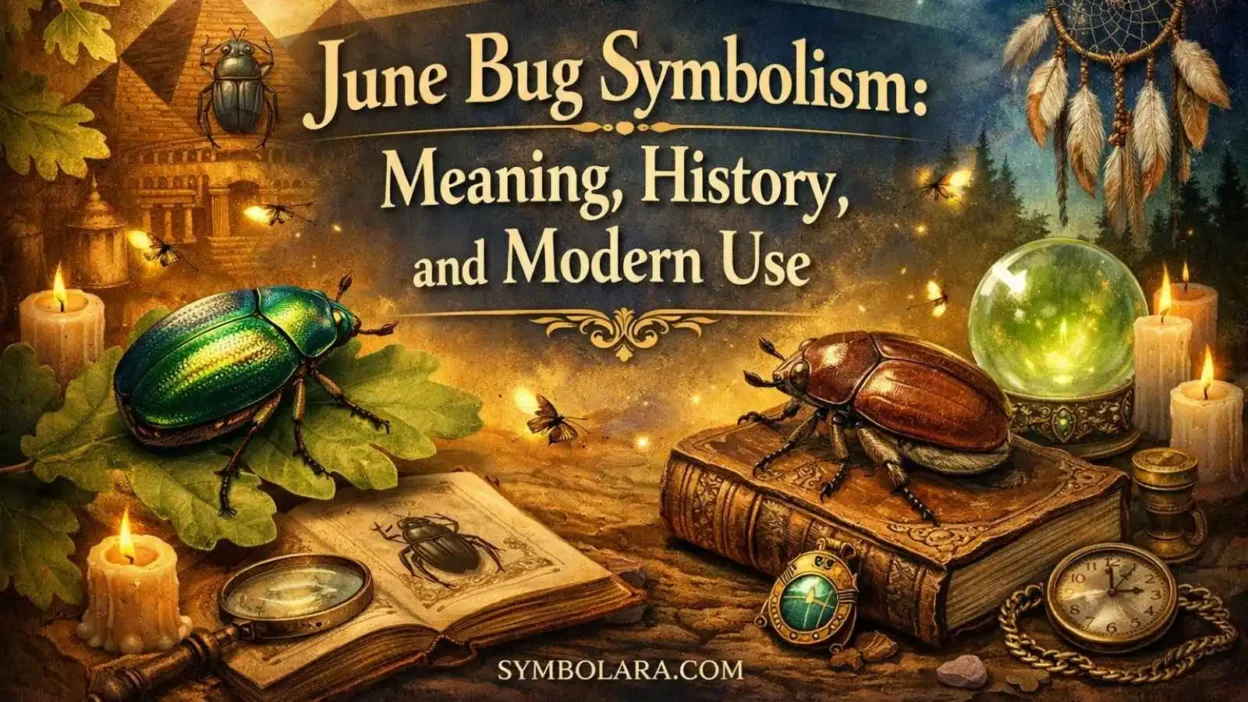
Last Updated: September 2, 2026
June Bug symbolism often connects this common summer beetle with renewal, persistence, attraction to light, and the natural cycles of life. In the United States, June bugs are familiar sights during warm evenings, especially around gardens, outdoor lights, and rural landscapes.
Although many people see them simply as seasonal insects, their presence has inspired different interpretations. Their short active season, unusual movements, and connection with summer have given them symbolic associations with change, endurance, and adaptation.
Understanding the meaning behind this insect helps explain why June bugs appear in folklore, personal reflections, artwork, and modern nature-based symbolism.
Quick Answer
June Bug symbolism commonly represents renewal, persistence, and connection with nature in modern American culture, especially through ideas of summer, growth, and seasonal change. Historically, beetles have also been associated with transformation, protection, and survival in various cultural traditions.
TL;DR
- June bugs symbolize summer, renewal, and natural cycles.
- Beetle meanings developed through ancient folklore and observation.
- Americans often connect them with childhood and outdoor memories.
- Their attraction to light represents curiosity and movement.
- Modern uses include art, tattoos, and nature themes.
What a June Bug Is and Why Its Appearance Matters
June bugs are a group of beetles commonly seen across North America during late spring and summer. In the United States, the name usually refers to several species of scarab beetles that become active around June.
These insects have rounded bodies, hard wing covers, and colors ranging from brown and reddish tones to green or metallic shades depending on the species. They are often noticed flying around porch lights or outdoor gatherings during warm evenings.
Their physical traits influence their symbolism. The hard outer shell suggests protection and resilience, while their seasonal appearance connects them with temporary but meaningful moments in nature.
What June Bugs Commonly Mean in the United States
In American culture, June bugs are mostly connected with the arrival of summer and the rhythms of the natural world. They appear when gardens grow, evenings become longer, and outdoor activities increase.
Many people associate them with:
| Context | Meaning in the USA | Common Associations | Notes |
| Summer appearance | Seasonal change | Warm weather, outdoor life | Often linked with childhood memories |
| Beetle behavior | Persistence | Survival, adaptation | Reflects natural endurance |
| Night activity | Curiosity | Exploration, attraction to light | Seen around lamps and homes |
| Nature symbolism | Connection | Growth, ecosystems | Represents balance with the environment |
Unlike some symbolic animals that carry strong religious or cultural meanings, June bugs usually have a more personal and nature-based interpretation in American life.
Ancient Roots of Beetle Symbolism
The symbolic meaning of beetles existed long before the modern association with June bugs. Across different civilizations, beetles represented ideas connected with survival, transformation, and natural forces.
The most famous example comes from ancient Egypt, where the scarab beetle represented renewal and the movement of the sun. Egyptians viewed the scarab as a symbol of creation and rebirth because of its connection with cycles in nature.
Although American June bugs are not the same as ancient Egyptian scarabs, they belong to the broader beetle family, which explains why some general beetle symbolism influences modern interpretations.
How June Bugs Became Connected With Summer Memories
For many Americans, June bugs are less about mythology and more about personal experience. Generations of children have encountered them during summer evenings, catching them in yards or watching them circle outdoor lights.
Because they appear during school vacations, family gatherings, and warm-weather activities, June bugs often symbolize:
- childhood memories
- freedom outdoors
- simple experiences
- seasonal happiness
Their meaning often comes from emotional associations rather than formal traditions.
A person who grew up seeing June bugs around a family home may view them as reminders of comfort, home, and familiar places.
Transformation and Life Cycles in June Bug Symbolism
Like many insects, June bugs go through complete metamorphosis. They begin life as eggs, develop into larvae underground, and later emerge as adult beetles.
This natural process contributes to their symbolic connection with transformation. The insect’s hidden growth beneath the soil before appearing above ground can represent unseen development and personal change.
People may use June bugs as symbols when reflecting on:
- personal growth
- new beginnings
- patience during difficult periods
- changes that happen gradually
The symbolism comes from observing nature’s process rather than from a universal belief system.
Persistence and Adaptation as Symbolic Meanings
June bugs are often viewed as symbols of persistence because of their ability to survive through different stages of life. Their underground larval stage may last longer than their visible adult period, showing that important growth can happen quietly.
This idea connects with modern interpretations of resilience. A June bug can represent someone who continues moving forward despite challenges or someone who develops strength over time.
In personal symbolism, the insect may remind people that progress is not always visible immediately.
Emotional and Psychological Associations
Animals often become meaningful because of the emotions they create. June bugs can bring feelings connected with nostalgia, curiosity, and connection to the outdoors.
Psychologically, they may represent:
- appreciation for small moments
- acceptance of natural change
- curiosity about the world
- comfort from familiar experiences
Their nighttime activity also creates an association with exploration. Flying toward lights can symbolize searching, discovery, or following interests even when the path is uncertain.
June Bug Spiritual Meaning and Symbolic Messages
Many people look for deeper meanings when they repeatedly notice animals in their daily lives. A June bug may inspire symbolic thoughts about patience, growth, and connection with the natural world.
From a spiritual symbolism perspective, the June bug is often associated with:
- Renewal and fresh beginnings: Its appearance during summer connects it with seasonal growth and new phases of life.
- Personal transformation: Its life cycle reflects the idea that change can happen slowly before becoming visible.
- Inner strength: The beetle’s protective shell can represent emotional protection and resilience.
- Following curiosity: A June bug’s movement toward light is sometimes interpreted as a reminder to seek knowledge, purpose, or personal direction.
These meanings are personal interpretations rather than universal spiritual rules. Different cultures and individuals may understand the June bug in different ways based on their beliefs and experiences.
For many people, seeing a June bug serves as a simple reminder to appreciate nature, accept change, and recognize the hidden growth happening throughout life.
What Does It Mean When You See a June Bug?
Seeing a June bug usually has a practical explanation: these beetles become active during warm months and are common around gardens, trees, and outdoor lights. However, some people also attach personal or symbolic meanings to these encounters.
A June bug sighting may remind people of:
- Seasonal transitions: The insect appears during a period of warmth, growth, and outdoor activity.
- Patience: Its life cycle shows that important changes often develop slowly.
- Resilience: The beetle’s ability to survive underground before emerging can symbolize endurance.
- Appreciation of simple moments: For many Americans, June bugs bring memories of summer evenings and childhood experiences.
Some traditions view animal encounters as meaningful signs, but there is no single accepted interpretation for seeing a June bug. The meaning often depends on personal beliefs, memories, and the situation surrounding the encounter.
June Bug Symbolism in Tattoos and Personal Style
While June bug tattoos are less common than butterfly or moth designs, some people choose beetle imagery because of its connection with nature and transformation.
A June bug tattoo may represent:
- personal growth
- summer memories
- resilience
- appreciation for insects and ecosystems
- connection to rural or outdoor life
Design choices often influence the meaning. A realistic beetle may emphasize nature, while a decorative design may focus more on beauty, individuality, or artistic expression.
June Bug Symbolism in Dreams
Dreams about June bugs may reflect themes connected with change, growth, curiosity, and personal experiences. Because insects often represent transformation in symbolic traditions, a June bug appearing in a dream may encourage reflection on life changes or hidden progress.
Possible symbolic interpretations include:
- A new stage of life: A June bug may represent entering a different season or personal chapter.
- Hidden growth: Its connection with underground development can symbolize progress that others cannot yet see.
- Emotional memories: For some people, June bugs may bring back feelings of childhood, home, or summer experiences.
- Seeking direction: A beetle near light may represent curiosity or searching for clarity.
Dream symbolism is highly personal. A June bug dream may mean something different depending on the dream setting, emotions, and the dreamer’s own experiences.
June Bugs in American Folklore and Everyday Life
June bugs appear frequently in local stories, childhood memories, and regional conversations across the United States. They are especially familiar in rural areas and places with gardens, forests, or open outdoor spaces.
Some people view them positively as signs of summer, while others see them as garden pests because their larvae can damage plant roots.
This contrast shows how symbols depend on personal experience. The same insect can represent joy for one person and inconvenience for another.
Cross-Cultural Beetle Meanings
Beetles have different meanings around the world. Ancient Egyptian scarabs were connected with renewal and spiritual protection. In some Indigenous traditions, insects are understood through relationships with ecosystems, seasons, and the natural environment.
These traditions do not create one universal meaning for every beetle species. Instead, they show how humans often use observations of nature to develop symbolic ideas.
June bug meanings in the United States are usually more connected with seasonal experience than formal religious symbolism.
June Bug Symbolism Compared With Other Beetle Meanings
June bugs share some symbolic connections with other beetles, but their meanings are often shaped by their specific appearance, behavior, and cultural associations.
| Beetle Type | Common Symbolic Associations |
|---|---|
| June Bug | Summer, renewal, persistence, nature connection |
| Scarab Beetle | Rebirth, creation, protection, transformation |
| Ladybug | Luck, happiness, protection, good fortune |
| Stag Beetle | Strength, power, determination |
Unlike the scarab beetle, which has strong historical associations with ancient Egyptian culture, June bugs are usually connected with everyday experiences such as summer evenings, outdoor memories, and seasonal change.
Their symbolism tends to feel more personal and nature-focused rather than connected to formal religious traditions.
Modern Uses of June Bug Imagery
Today, June bug imagery appears in several creative areas, including:
- nature artwork
- jewelry designs
- home decorations
- educational materials
- insect photography
- outdoor-themed products
Modern audiences often appreciate June bugs because of growing interest in biodiversity and environmental awareness.
Rather than viewing insects only as pests, many people now recognize their role in ecosystems and their importance in understanding the natural world.
Common Misunderstandings About June Bug Symbolism
One common mistake is assuming that every beetle carries the same meaning. While beetles share some broad symbolic themes, individual species and cultures create different interpretations.
Another misunderstanding is believing that seeing a June bug always predicts a specific event. Some folklore connects animals with signs or omens, but these beliefs vary widely and are not universal.
The most reliable modern interpretation focuses on nature, seasonal change, and personal meaning.
How June Bug Meaning Has Changed Over Time
The meaning of June bugs has shifted from traditional insect observation toward more personal and environmental interpretations.
Earlier views often focused on practical concerns, such as agriculture and seasonal patterns. Today, many people see these insects through ideas of mindfulness, nature appreciation, and personal symbolism.
Their meaning continues to evolve because people create connections based on their own experiences.
FAQs
A June bug commonly symbolizes summer, renewal, persistence, and connection with nature. Many Americans associate it with warm evenings, childhood memories, and seasonal change.
Some cultures connect beetles with positive ideas such as protection or renewal, but June bugs do not have one universal luck meaning. Interpretations depend on cultural beliefs and personal experiences.
A June bug tattoo may represent transformation, resilience, nature appreciation, or meaningful memories connected with summer. The meaning usually depends on the person wearing the design.
Some people give June bugs spiritual interpretations based on broader beetle symbolism, such as change and growth. However, these meanings vary and are not shared by all traditions.
June bugs often gather around lights because artificial lighting can interfere with their natural navigation patterns. This behavior has also contributed to symbolic ideas about curiosity and searching.
June bugs can represent positive ideas like renewal and nature connection, but some people view them negatively because their larvae may damage lawns and plants. Their symbolism depends on context.
June bugs symbolize summer because they become active during warmer months in many parts of the United States. Their appearance often reminds people of long evenings, gardens, and outdoor activities.
Conclusion
June Bug symbolism reflects a connection between people and the natural cycles around them. In modern American culture, these beetles often represent summer memories, adaptation, and the quiet process of growth.
While their meaning comes from both beetle traditions and personal experiences, June bugs remain a reminder that ordinary parts of nature can carry personal significance. Whether seen as a childhood memory, a sign of seasonal change, or a symbol of resilience, June bugs continue to hold a place in human imagination.
June Bug symbolism ultimately shows how people find meaning in the creatures that share their everyday environment.


[…] and later recovered, the bird can now also symbolize restoration and national self-correction. That meaning is newer than the founding-era symbolism, but it matters to many Americans who see the eagle not just as a symbol chosen by the state, but […]
[…] modern American culture, the meaning has shifted toward personal identity and visual symbolism. The hammerhead now appears as a sign of self-definition, sharp awareness, and ocean affinity. More […]