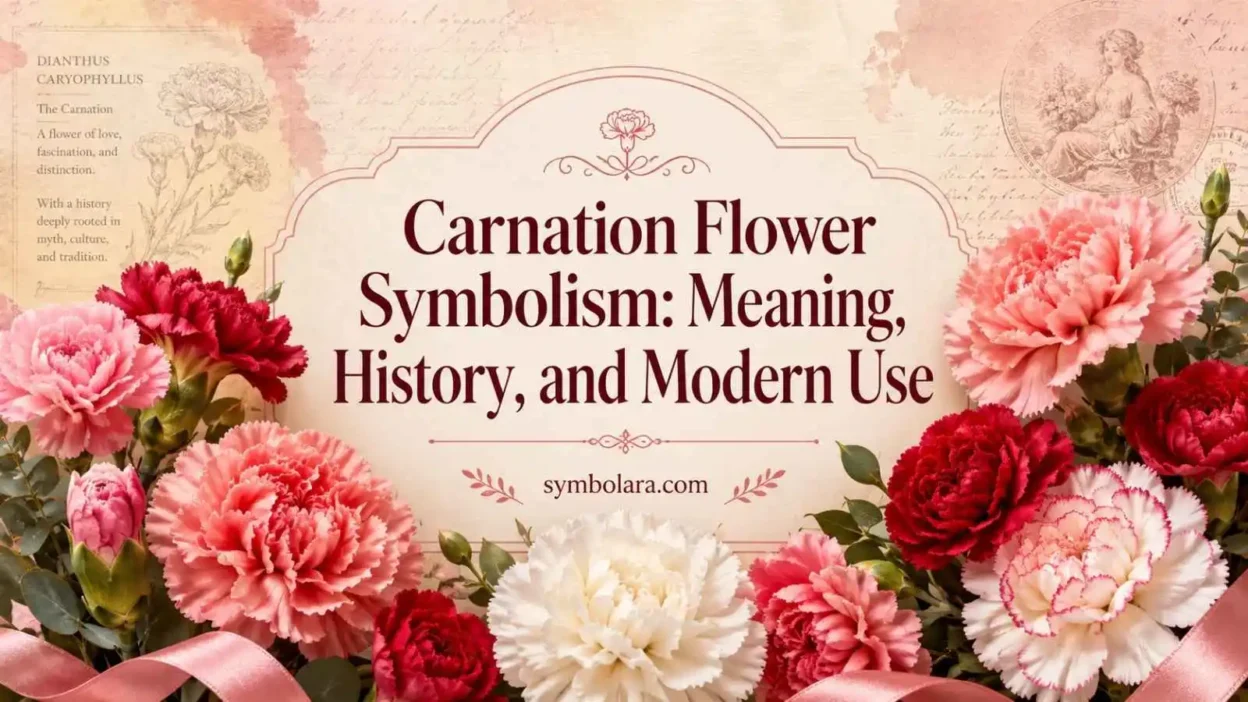
Carnation Flower Symbolism is often tied to love, admiration, gratitude, motherhood, remembrance, and personal devotion. The flower’s soft ruffled petals, long vase life, and wide color range have made it one of the most familiar flowers in American homes, floral shops, ceremonies, and holiday bouquets.
People care about carnations because they feel both ordinary and meaningful. They are affordable enough for everyday gifts, yet emotionally strong enough for Mother’s Day, sympathy arrangements, weddings, school events, lapel flowers, and memorials.
In modern U.S. culture, carnations do not carry only one message. A pink carnation can feel tender and thankful. A red one can suggest admiration or love. A white one can express purity, remembrance, or respect. Their meaning depends on color, occasion, and relationship.
Quick Answer
Carnation Flower Symbolism commonly represents love, admiration, gratitude, and motherly affection in modern American culture, especially in gifts, Mother’s Day bouquets, and memorial flowers. Historically, carnations have also been linked with devotion, distinction, remembrance, religious imagery, and color-based messages in older floral traditions.
TL;DR
- Carnations most often symbolize love and admiration.
- Pink carnations are strongly tied to motherhood.
- White carnations suggest purity, remembrance, or respect.
- Red carnations express affection, pride, or devotion.
- Their meanings changed through religion, politics, and gift culture.
- In the U.S., context matters more than old flower codes.
What Carnations Look Like and Where People See Them
Carnations are easy to recognize once you notice their shape. They have layered, ruffled petals that often look gently folded or fringed at the edges. Their stems are usually straight and slender, with narrow green or gray-green leaves. Many carnations also have a light spicy scent, which is why older names for the flower connect it with clove-like fragrance.
In the United States, people see carnations in grocery-store bouquets, florist arrangements, corsages, boutonnieres, funeral sprays, school dance flowers, Mother’s Day gifts, church decorations, and wedding centerpieces. They also appear in garden beds, though many Americans know them mainly as cut flowers.
Part of their symbolism comes from their practical nature. Carnations last longer than many delicate flowers, so they easily become symbols of steady affection, lasting care, and dependable love. They do not fade as quickly as some blooms, which helps explain why people use them for remembrance and devotion.
What Carnations Commonly Mean in the United States
In the United States, carnations most often symbolize affection that is sincere rather than dramatic. They are not as strongly tied to romance as red roses, but they still communicate care, warmth, and personal attention. This makes them useful when the message is loving but not overly intense.
Americans often connect carnations with mothers, teachers, grandparents, church events, memorials, and public ceremonies. They can feel traditional, modest, and familiar. Their meaning usually depends on the relationship between giver and receiver.
A bouquet of carnations can say “I appreciate you,” “I remember you,” “I’m proud of you,” or “You matter to me.” That emotional range explains why the flower appears in so many different settings.
The carnation’s U.S. meaning is also shaped by accessibility. Because carnations are common and affordable, they can symbolize everyday love rather than luxury. They are flowers of steady affection, not only grand occasions.
Why Carnations Became Linked to Motherhood
The strongest American association for carnations is motherhood. This connection grew through Mother’s Day, especially through the early 20th-century tradition of giving or wearing carnations to honor mothers.
White carnations were originally used to honor a mother’s memory, especially when the mother had died. Over time, pink and red carnations became associated with living mothers, while white ones remained tied to remembrance, purity, and memorial love in many traditions.
This history matters because it explains why carnations feel different from many other flowers. They are not only decorative. In Mother’s Day culture, they stand for care, sacrifice, memory, and gratitude. A carnation given to a mother can feel simple, but it carries a long American tradition.
Today, people may not know the full history, yet the feeling remains. Carnations still appear in Mother’s Day bouquets because they communicate appreciation without needing an elaborate message.
Carnation Colors and Their Meanings
Color changes the message of a carnation more than almost anything else. Modern flower meanings are not strict rules, but these associations still guide gift-giving, tattoo choices, and floral design.
| Carnation Color | Meaning in the USA | Common Associations | Notes |
| Pink | Gratitude, motherly love, tenderness | Mother’s Day, family love, appreciation | One of the warmest modern meanings |
| Red | Love, admiration, pride, devotion | Romance, respect, public honor | Darker red feels more passionate |
| White | Purity, remembrance, respect | Memorials, weddings, sympathy | Often used for honoring the deceased |
| Yellow | Disappointment, rejection, apology | Complicated feelings, regret | Less common as a positive gift |
| Purple | Unpredictability, individuality | Style, tattoos, expressive design | Often used more creatively today |
| Striped | Refusal or regret in older flower language | Apology, distance, mixed emotion | Rarely understood by modern audiences |
Color symbolism should be used with care. Most people today will notice beauty and occasion before they decode old meanings. Still, color can shape the emotional tone of the flower.
Ancient Roots and Early Symbolism
Carnations have been cultivated for a very long time, especially around the Mediterranean world. Their older symbolism likely grew from their use in garlands, ceremonies, gardens, and decorative settings.
The botanical name Dianthus is often interpreted as “divine flower,” which helped give carnations a sense of honor and elevated beauty. The flower’s connection with crowns or garlands may also explain why carnations became linked with distinction, public respect, and ceremony.
In ancient and early European settings, carnations were not only personal gifts. They could appear in ritual, decoration, and celebration. Their fragrance also made them useful beyond visual beauty, including in scented preparations and older culinary or household uses.
These early meanings did not translate into one fixed symbol. Instead, carnations gathered associations over time: devotion, admiration, love, memory, and social honor.
Carnations in Christian and Religious Imagery
In Christian-influenced symbolism, carnations have often been connected with love, purity, sorrow, and maternal devotion. Some traditions link pink carnations with the Virgin Mary’s tears, especially in stories connected to grief and compassion. This should be understood as devotional legend rather than botanical history.
Red carnations can also be interpreted through the color symbolism of sacrifice, blood, and passionate love. In religious art and floral design, red flowers often carry emotional weight because they suggest both love and suffering.
White carnations, by contrast, are often read as symbols of purity, innocence, prayer, or reverent memory. This is one reason they fit naturally in church services, memorial displays, and sympathy arrangements.
In modern U.S. culture, many people use carnations in religious spaces without thinking about these older meanings. Still, the flower’s softness, fragrance, and durability make it feel appropriate for prayer, remembrance, and quiet honor.
Carnation Spiritual Meaning and Symbolism
Carnations often carry spiritual meanings connected with love, compassion, gratitude, remembrance, and inner strength. While flower symbolism varies between beliefs and traditions, many people view carnations as reminders of emotional connection and the importance of caring relationships.
Pink carnations are frequently associated with gentle love, kindness, and appreciation. Because of their connection with motherhood and nurturing, some people see them as symbols of unconditional care and emotional support. White carnations may represent peace, purity, and spiritual remembrance, especially in memorial settings.
In personal spiritual practices, carnations can be used as meaningful flowers during meditation spaces, ceremonies, or moments of reflection. Their long-lasting blooms may represent endurance, loyalty, and the ability to maintain love through difficult times.
Carnation symbolism is not a universal spiritual rule. Meanings depend on personal beliefs, cultural background, and the situation where the flower appears. For many people today, carnations represent simple but powerful ideas: love that lasts, memories that remain, and gratitude that continues.
Carnations in Love, Romance, and Devotion
Carnations can symbolize romance, but their romantic meaning is usually gentler than that of roses. A red carnation may express admiration, affection, loyalty, or a growing romantic feeling. It does not always carry the same dramatic message as a red rose.
This makes carnations useful for relationships where the feeling is warm, sincere, and personal. They can suit anniversaries, early romance, long-term partnership, or small gestures of care. They are also common in boutonnieres and corsages, where they suggest respect and celebration as much as romance.
Carnations also work well for devotion outside romantic love. They can honor a parent, mentor, friend, teacher, or community leader. The flower’s meaning expands because devotion itself has many forms.
A carnation says love can be steady, loyal, and practical. That is one reason the flower has stayed meaningful even when floral trends change.
Carnations vs Roses: How Their Symbolism Differs
Carnations and roses can both symbolize love, but they communicate different emotional messages. Roses are often connected with romance, passion, and dramatic expressions of love. Carnations usually represent affection that feels steady, sincere, and personal.
A red rose often carries a strong romantic meaning, while a red carnation may express admiration, devotion, or respect. Pink roses and pink carnations can both suggest tenderness, but carnations have a stronger connection with gratitude and motherhood.
Carnations are also valued for their durability and accessibility. They often appear in family celebrations, memorials, and community events where the message is appreciation rather than luxury.
Choosing between a rose and a carnation depends on the relationship and occasion. Roses may communicate intense romantic feelings, while carnations often express lasting care, respect, and emotional warmth.
Carnations in Mourning and Remembrance
Carnations are common in funeral flowers, sympathy arrangements, graveside tributes, and memorial ceremonies. Their long-lasting quality supports their meaning as a flower of memory. They hold their shape well, which makes them useful in wreaths, sprays, and structured arrangements.
White carnations are especially common in remembrance because they suggest respect, peace, and purity. Pink carnations may honor a mother, grandmother, or nurturing figure. Red carnations can express continuing love, courage, or deep respect for the person who has died.
In American mourning traditions, carnations often feel formal but not cold. They bring softness to public grief. Because they are familiar, they can comfort people without drawing too much attention to themselves.
Their memorial meaning is strongest when the arrangement is simple. A white carnation placed on a grave can communicate more clearly than an elaborate bouquet.
Carnations in American Public Life
Carnations also have a place in American public symbolism. The scarlet carnation is the state flower of Ohio, chosen to honor President William McKinley, who was closely associated with wearing the flower. In that context, the carnation suggests public respect, remembrance, state identity, and civic honor.
Carnations have also appeared in school ceremonies, veterans’ events, church services, political gatherings, and community programs. Their affordability makes them practical for large groups, while their traditional meaning gives them emotional weight.
In public life, carnations often symbolize recognition. They are given to performers, graduates, volunteers, mothers, teachers, speakers, and honorees. A single carnation pinned to clothing can mark someone as remembered, appreciated, or set apart for the day.
This public meaning is not flashy. It is modest, ceremonial, and respectful. That is exactly why carnations continue to work in community settings.
Cross-Cultural Meanings of Carnations
Carnations carry different meanings across cultures. In Spain, red carnations are strongly connected with national identity, celebration, music, dance, and public festivity. They can suggest passion, beauty, and cultural pride.
In Portugal, red carnations became linked with democracy and peaceful change after the 1974 Carnation Revolution. Images of carnations placed in rifle barrels gave the flower a political meaning very different from its American Mother’s Day associations.
In parts of Europe, carnations have also been used in labor movements, political identity, religious settings, and formal ceremonies. Their meaning may shift depending on color and national history.
For American readers, the main point is simple: carnations do not mean the same thing everywhere. In the U.S., they usually suggest love, gratitude, motherhood, remembrance, and honor. In other countries, they may also carry national or political meaning.
Emotional and Psychological Meaning
Emotionally, carnations often communicate affection that feels stable and approachable. They are not usually seen as rare or extravagant, so they can feel more personal than luxurious. This gives them a warm, human quality.
A person who chooses carnations may be signaling gratitude, loyalty, family attachment, nostalgia, or quiet confidence. The flower can also suggest someone who values tradition without needing dramatic display.
Carnations are emotionally flexible. A pink carnation can feel tender. A red one can feel proud or loving. A white one can feel calm and reverent. A purple one can feel creative or unconventional.
Because the flower is common, some people underestimate it. Yet that commonness is part of its emotional strength. Carnations belong to ordinary life: kitchen tables, school stages, church halls, hospital rooms, and family celebrations.
Carnation Dream Meaning and Symbolic Interpretations
Dreams about carnations are often interpreted through personal emotions, relationships, and the situation surrounding the flower. Because carnations are commonly connected with love, appreciation, and remembrance, they may represent feelings related to connection, gratitude, or important memories.
Seeing a pink carnation in a dream may be interpreted as a symbol of affection, kindness, or emotional support. A red carnation may suggest strong feelings, admiration, or passion. White carnations may be associated with peace, healing, or remembering someone important.
Dream symbolism is highly personal and does not have one proven meaning. A flower appearing in a dream may reflect personal experiences, memories, or emotions rather than a fixed message.
The most useful way to understand a carnation dream is to consider the details: the flower’s color, condition, location, and the emotions felt during the dream.
Why Carnations Appear in Tattoos and Personal Style
Carnation tattoos have become popular because the flower can hold layered personal meaning without looking too heavy. The ruffled petals create strong visual detail, while the stem and bloom can fit small, elegant designs.
Many people choose carnation tattoos to honor a mother, grandmother, child, partner, or loved one who has died. Since carnations are also January birth flowers, they can mark a birthday, birth month, or personal milestone.
Color matters in tattoo meaning. Pink may suggest gratitude or maternal love. Red may represent passion, loyalty, or courage. White can be used for remembrance, though white ink tattoos have their own design limits. Blackwork carnations often lean toward memory, resilience, or classic floral beauty.
In fashion and jewelry, carnations can feel vintage, romantic, or sentimental. They work well for people who want a floral symbol that feels meaningful but not overused.
Carnation as the January Birth Flower: Meaning and Symbolism
Carnations are the traditional birth flower for January, making them meaningful gifts for people born during the first month of the year. As a birth flower, the carnation is often connected with admiration, affection, loyalty, and strength.
The January connection adds another layer to carnation symbolism. Because carnations bloom in many colors and remain attractive for a long time after being cut, they are often associated with endurance and steady character. These qualities make them a fitting symbol for starting a new year.
Different carnation colors can add personal meaning to January birthday gifts. Pink carnations may represent gratitude and affection, red carnations can express admiration and love, and white carnations may suggest peace or remembrance.
Today, January-born individuals often use carnations in jewelry, tattoos, artwork, and personalized gifts. The flower’s meaning is flexible, allowing people to connect it with personality, family history, or personal milestones.
Carnations in Decor, Weddings, and Modern Design
Carnations are widely used in decor because they are durable, affordable, and visually full. Their layered petals create texture, so designers use them in centerpieces, garlands, flower walls, wreaths, and event installations.
In weddings, carnations can symbolize young love, devotion, gratitude, and family blessing. White carnations can support a clean, classic theme. Pink carnations can add tenderness. Red carnations can bring warmth and romance. Mixed-color carnations feel cheerful and traditional.
In home decor, carnations often suggest freshness, comfort, and simple beauty. A vase of carnations on a table can feel less formal than roses and less delicate than lilies. They suit farmhouse, cottage, vintage, spring, and family-centered spaces.
On social media, carnations are often used in birthday posts, memorial posts, Mother’s Day graphics, and aesthetic floral photography. Their meaning is usually emotional rather than coded.
Common Misunderstandings About Carnations
One common misunderstanding is that carnations are “cheap flowers” and therefore less meaningful. Their affordability has sometimes made them seem ordinary, but symbolism does not depend on price. In fact, their everyday availability is part of why they became tied to family love and public ceremonies.
Another misunderstanding is that all carnations mean the same thing. Color and occasion matter. A yellow carnation carries a different traditional message from a pink one. A white carnation at a funeral does not mean the same thing as a white carnation in a wedding bouquet.
A third mistake is treating older flower language as universal. Many modern Americans do not know Victorian-style flower codes. A person receiving yellow carnations may see them as cheerful, even if older meanings connect them with disappointment.
The best way to understand carnations is to read the whole context: color, occasion, relationship, and cultural setting.
How the Meaning Has Changed Over Time
The carnation’s meaning has moved through several stages. In older Mediterranean and European settings, it was connected with ceremony, fragrance, distinction, and cultivated beauty. In religious contexts, it gained meanings of purity, love, sorrow, and devotion.
During the 19th century, flower-language traditions gave carnations more specific emotional codes. Colors began to carry different messages, from admiration and pure love to refusal or disappointment.
In the United States, Mother’s Day gave carnations one of their strongest modern identities. The flower became a symbol of maternal love, memory, and gratitude. Later, mass floral culture made carnations common in schools, churches, hospitals, weddings, and funerals.
Today, carnations are being reconsidered. Florists and designers use them for texture and color, while tattoo culture gives them personal meaning. Their symbolism has become less rigid and more intimate.
FAQs
What does a carnation symbolize most often?
A carnation most often symbolizes love, admiration, gratitude, and devotion. In the United States, it is especially connected with motherhood, family appreciation, and remembrance.
What does a carnation tattoo mean?
A carnation tattoo often represents love, loyalty, memory, or a tribute to a mother or loved one. It can also mark a January birth month or show appreciation for family roots.
Are carnations good flowers for sympathy?
Yes, carnations are appropriate for sympathy arrangements and memorials. White carnations suggest peace and respect, while pink carnations can honor a nurturing or maternal figure.
What do pink carnations mean?
Pink carnations usually symbolize gratitude, tenderness, and motherly love. They are one of the most common choices for Mother’s Day and family-centered gifts.
Do carnations have a negative meaning?
Some older flower-language traditions give yellow or striped carnations meanings such as disappointment, refusal, or regret. In modern use, many people do not recognize those meanings unless the context makes them clear.
What do carnations mean in weddings?
In weddings, carnations can symbolize devotion, young love, good wishes, and family affection. Their meaning depends on color, with white suggesting purity and pink suggesting tenderness.
Why are carnations associated with Mother’s Day?
Carnations became associated with Mother’s Day through early American celebrations that used the flower to honor mothers. White carnations became linked with remembrance, while pink and red carnations came to represent living mothers and grateful love.
What do black carnations symbolize?
Black carnations are usually associated with mystery, individuality, transformation, or remembrance in modern floral design. They are often used for artistic expression rather than traditional flower messages.
Conclusion
Carnations carry a meaning that is warmer and more varied than many people realize. They can express love, gratitude, remembrance, devotion, public honor, family attachment, and quiet respect. Their color, setting, and cultural background all shape the message.
Carnation Flower Symbolism endures because the flower fits real human moments. It belongs in celebrations, memorials, family rituals, personal tattoos, public ceremonies, and simple everyday bouquets. The carnation reminds us that a familiar flower can still carry personal weight. Its beauty is not in being rare, but in being present where people give thanks, remember someone, or show steady love
A carnation most often symbolizes love, admiration, gratitude, and devotion. In the United States, it is especially connected with motherhood, family appreciation, and remembrance.
A carnation tattoo often represents love, loyalty, memory, or a tribute to a mother or loved one. It can also mark a January birth month or show appreciation for family roots.
Yes, carnations are appropriate for sympathy arrangements and memorials. White carnations suggest peace and respect, while pink carnations can honor a nurturing or maternal figure.
Pink carnations usually symbolize gratitude, tenderness, and motherly love. They are one of the most common choices for Mother’s Day and family-centered gifts.
Some older flower-language traditions give yellow or striped carnations meanings such as disappointment, refusal, or regret. In modern use, many people do not recognize those meanings unless the context makes them clear.
In weddings, carnations can symbolize devotion, young love, good wishes, and family affection. Their meaning depends on color, with white suggesting purity and pink suggesting tenderness.
Carnations became associated with Mother’s Day through early American celebrations that used the flower to honor mothers. White carnations became linked with remembrance, while pink and red carnations came to represent living mothers and grateful love.