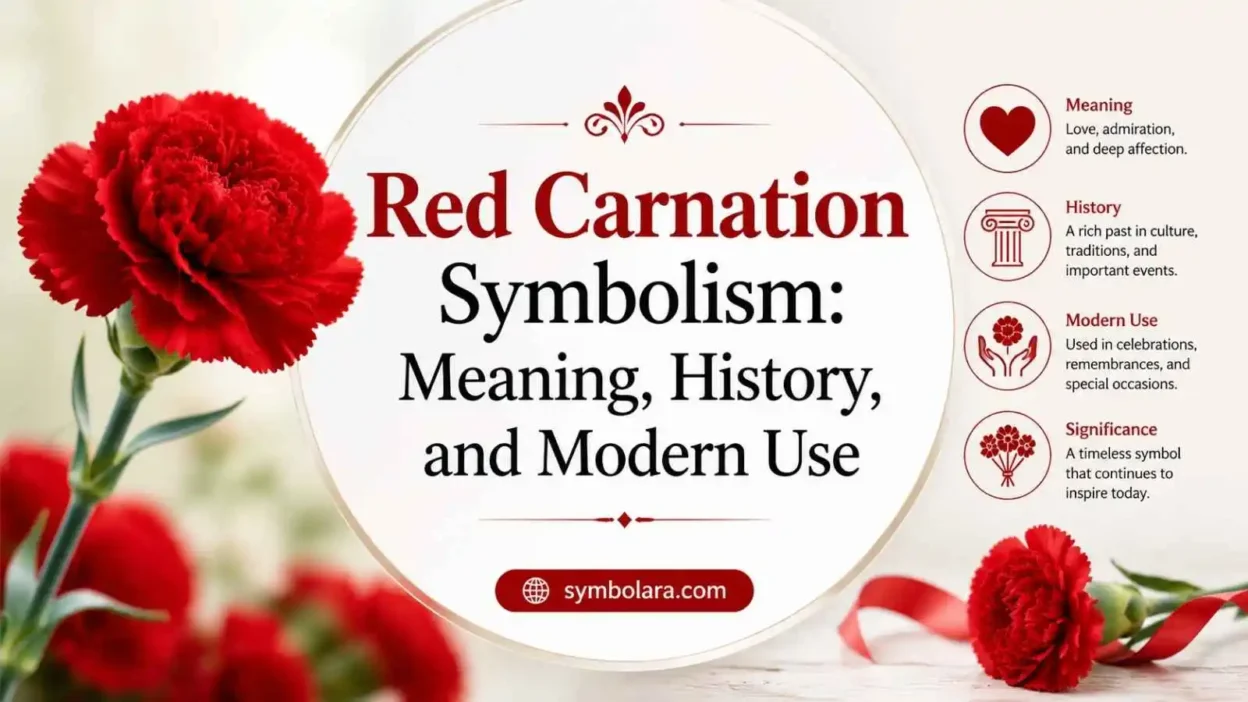
Red Carnation Symbolism is most often linked to love, admiration, respect, and heartfelt devotion. In the United States, people generally see a red carnation as a warm, affectionate flower—less dramatic than a red rose but still emotionally clear.
This meaning has evolved over centuries. Carnations have been cultivated, gifted, painted, worn, and used in ceremonies for generations, and their red color adds layers of passion, courage, remembrance, and public sentiment.
Today, red carnations are found in bouquets, lapel pins, Mother’s Day traditions, tattoos, memorial designs, state symbolism, and political imagery. Their significance shifts depending on context, but the central idea remains: a red carnation communicates care, honor, or devotion.
Quick Answer
Red Carnation Symbolism commonly represents love, admiration, devotion, and respect in modern American culture, especially in romantic bouquets, Mother’s Day flowers, memorials, and personal style. Historically, red carnations have also been tied to courage, public honor, political change, and ceremonial devotion.
TL;DR
• Red carnations primarily represent love and admiration.
• Dark red indicates deeper romantic or emotional intensity.
• In the U.S., they also symbolize honor and remembrance.
• Their origins trace to the Mediterranean and ancient cultivation.
• Red carnations appear in politics, tattoos, and memorial contexts.
• Meaning varies strongly with context.
What a Red Carnation Looks Like
A red carnation features ruffled, layered petals that create a textured, rounded bloom. The edges often appear delicately cut, giving a soft yet structured aesthetic. Slender stems support narrow, gray-green leaves, completing a classic floral profile.
Most encounters occur through cut flowers rather than garden cultivation. They are common in florist arrangements, corsages, boutonnieres, funeral sprays, Valentine’s Day displays, school events, and public ceremonies. Their long-lasting nature contributes to the sense of enduring affection and respect they convey.
Symbolism in Modern U.S. Culture
In contemporary American contexts, red carnations symbolize affection, admiration, and respect. While the flower can be romantic, it is versatile enough for familial, ceremonial, and public expressions of feeling.
A Valentine’s bouquet emphasizes romantic love, while a Mother’s Day arrangement signals familial gratitude. In memorial settings, the flower communicates enduring respect and remembrance. Its adaptable symbolism explains its frequent use across varied occasions.
Love, Devotion, and Admiration
Affection remains the most recognized meaning of red carnations. Unlike red roses, which primarily evoke romance and desire, carnations express broader emotional connections, from familial loyalty to public recognition.
Darker shades of red often denote deeper commitment or passionate affection, whereas brighter hues convey cheerfulness or celebratory feelings. They are frequently used in graduations, performances, award ceremonies, and public recognition, combining warmth with decorum.
Red Carnation Symbolism Compared With Other Red Flowers
Red carnations share some meanings with other red flowers, but each bloom communicates a different emotional tone. A red rose is traditionally associated with passionate romance and intense love, while a red carnation often expresses affection, admiration, and lasting devotion in a more approachable way.
Compared with red tulips, which are often linked with perfect love and elegance, red carnations feel more connected to loyalty, respect, and enduring relationships. Their symbolism works well for romantic partners, family members, and public expressions of appreciation.
The difference comes from both cultural tradition and the flower’s appearance. Roses developed a strong romantic reputation through literature and customs, while carnations gained broader associations through ceremonies, Mother’s Day, civic events, and remembrance.
Choosing between flowers often depends on the message someone wants to send. A red carnation can communicate deep care without creating the same highly romantic expectation that often surrounds a red rose.
The Role of Red Color in Meaning
The red hue enhances the carnation’s symbolic impact. Associated with blood, the heart, courage, and intense emotion, red transforms a simple flower into a visible declaration of feeling.
This intensity explains why red carnations can function in political, civic, or memorial contexts. In addition to expressing personal sentiment, the color communicates courage, solidarity, and public devotion when placed in the right setting.
What Does a Dark Red Carnation Symbolize?
A dark red carnation is often interpreted as a symbol of deeper affection, strong devotion, and lasting emotional connection. While all red carnations represent warmth and admiration, darker shades can suggest greater intensity and seriousness.
In romantic settings, dark red carnations may express committed love or a strong emotional bond. In non-romantic situations, they can represent deep respect, loyalty, or appreciation for someone’s character and achievements.
Color symbolism is not universal, so meanings can change depending on the occasion and cultural background. A dark red carnation given at an anniversary may communicate love, while the same flower used at a memorial may express honor and remembrance.
The shade adds emotional depth, but the sender’s intention remains the most important part of the message.
Ancient Roots and Early Symbolism
Carnations, part of the Dianthus family, have historical roots in the Mediterranean region. Their Greek-derived name, Dianthus, translates roughly as “divine flower,” reflecting early associations with sacred beauty.
Early European traditions cultivated carnations for decoration, ceremony, and symbolic purposes. Over time, their layered petals and distinctive scent made them particularly suitable for conveying admiration, devotion, and respect.
Victorian Influence and Flower Language
The nineteenth century popularized “floriography,” or flower language, allowing individuals to express complex emotions via bouquets. Red carnations emerged as symbols of admiration, love, and heartfelt emotion.
Although most Americans no longer adhere strictly to Victorian codes, the simplified meanings persist: red carnations continue to suggest visible affection, sincere respect, and devotion.
Red Carnations and Mother’s Day
Carnations are strongly linked with Mother’s Day in the U.S. White carnations honor mothers who have passed, while red carnations celebrate living maternal figures.
Within this tradition, red carnations convey love, gratitude, and recognition. Their symbolic tone differs from romantic contexts, emphasizing familial affection over romantic desire.
Civic Honor and State Symbolism
Ohio adopted the scarlet carnation as its state flower to honor President William McKinley, who frequently wore one on his lapel. This association extends the red carnation’s meaning beyond romance or family, marking civic pride, public respect, and historical remembrance.
Even outside Ohio, this example demonstrates how personal habits can shape public symbolism, transforming a simple flower into a broader cultural icon.
Romantic Uses
Red carnations in romantic settings communicate devotion and affectionate care. They are often chosen as alternatives to roses, providing a more approachable and understated expression of love.
These flowers are ideal for anniversaries, newer relationships, or gestures meant to express sincere but not extravagant romantic feeling.
Mourning and Memorial Symbolism
Red carnations also serve in funerals and memorials, symbolizing respect, courage, and enduring love. Their long-lasting petals visually reinforce the notion of memory and devotion.
Although not as traditionally tied to mourning as lilies or white roses, the red carnation conveys warmth and honor without overwhelming the ceremony.
Political and Social Symbolism
In specific historical contexts, red carnations have represented political solidarity, courage, and peaceful change. The Carnation Revolution in Portugal (1974) exemplifies this use, with soldiers placing carnations in their weapons as a symbol of nonviolent democratic transformation.
In American culture, these political associations are rare but underscore the flower’s capacity to convey public values in addition to personal affection.
Cross-Cultural Meanings
Globally, red carnations carry varied meanings. In Spain, they evoke festivals, dance, and celebration; in East Asia, they honor parents; and in Portugal, they represent democratic memory.
U.S. interpretations focus primarily on love, admiration, honor, and remembrance. International variations highlight the flower’s adaptability while reminding us that context shapes symbolism.
Emotional and Psychological Significance
Red carnations communicate warmth, loyalty, and sincerity. Their durability suggests steadfast affection, and their layered petals evoke fullness and care. The flower conveys emotional clarity without ostentation, making it suitable for a range of personal and public gestures.
Red Carnation Spiritual Meaning and Personal Interpretation
Some people interpret red carnations through a spiritual or personal lens, viewing them as symbols of love, inner strength, devotion, and emotional connection. These interpretations often come from personal beliefs rather than one universal symbolic system.
Because the flower has a long history in ceremonies and traditions, some individuals associate it with honoring loved ones, remembering important moments, or expressing gratitude. Its strong color and lasting nature can represent emotional endurance and commitment.
In spiritual practices, flower meanings often depend on individual experience, cultural background, and personal intention. A red carnation may represent healing, courage, affection, or remembrance depending on why someone chooses it.
Rather than having one fixed spiritual meaning, red carnations often gain significance through the memories and emotions connected to them.
Red Carnations in Tattoos and Personal Style
As tattoos, red carnations symbolize devotion, remembrance, love, or loyalty. People may honor parents, partners, or personal memories through these designs.
In fashion and jewelry, carnations lend a romantic, artistic, or vintage touch. Lapel pins, embroidered motifs, or brooches can express sentiment while subtly referencing historical and cultural associations.
Modern Use in Decor and Media
Today, red carnations appear in home decor, weddings, social media imagery, digital art, and event branding. Their textured blooms photograph well, and their vibrant hue complements romantic, vintage, or dramatic designs.
Practicality also drives popularity: carnations are affordable, durable, and versatile. In digital culture, they frequently symbolize love, admiration, memory, or resilience, simplified for quick visual communication.
Red Carnation Symbolism in Weddings and Celebrations
Red carnations can add warmth and emotional meaning to weddings and celebrations. Their symbolism of love, devotion, and admiration makes them suitable for bouquets, centerpieces, floral arches, and decorative arrangements.
Unlike flowers that communicate only romance, red carnations can represent commitment, family support, and appreciation for everyone involved in an important event. This flexibility makes them useful for both intimate gatherings and larger ceremonies.
Their durability and affordability also contribute to their popularity in event design. Florists often combine carnations with roses, greenery, or seasonal flowers to create arrangements with texture and long-lasting beauty.
The meaning of a red carnation at a celebration depends on the overall design and purpose. In weddings, they usually highlight love and dedication, while in other events they may emphasize honor, gratitude, or admiration.
Quick Comparison of Meanings by Context
| Context | Meaning in the USA | Common Associations | Notes |
|---|---|---|---|
| Romantic bouquet | Love and affection | Dating, anniversaries, Valentine’s Day | Softer than red roses |
| Mother’s Day | Gratitude and love | Living mothers, maternal figures | Familial, not romantic |
| Memorial flowers | Respect and remembrance | Funerals, veterans, public honor | Often paired with white flowers |
| Tattoo design | Loyalty and devotion | Family, love, memory, resilience | Meaning shaped by added symbols |
| Civic symbolism | Honor and state pride | Ohio, William McKinley | Historical American context |
| Political imagery | Solidarity or democratic change | Labor, revolution, public courage | Less common in everyday U.S. use |
Common Misunderstandings
A frequent misconception is that red carnations always signify romantic love. Context is key: in family or memorial settings, they express respect, admiration, or remembrance.
Another misunderstanding involves perceived “cheapness.” Affordability does not reduce symbolic weight. A carefully chosen red carnation can be meaningful and heartfelt.
Finally, not all red carnations carry political meaning. While historically they have appeared in movements abroad, most American uses remain personal or ceremonial.
Evolution of Meaning
Over time, the red carnation’s significance has expanded. Its early associations with beauty and devotion were reinforced by Victorian flower language, American civic symbolism, Mother’s Day traditions, and international political events.
Modern use is highly flexible. People now select red carnations for aesthetic, emotional, or personal reasons, guided more by intention than strict tradition.
When to Give Red Carnations
These flowers suit occasions requiring affection, admiration, or respect. Graduations, anniversaries, performances, memorials, and public recognition all benefit from the carnation’s approachable yet meaningful expression.
Context determines interpretation: romantic, familial, civic, or memorial. Considering the setting ensures the flower communicates the intended sentiment clearly.
FAQs
It generally represents love, admiration, devotion, and respect. Context defines whether the message is romantic, familial, or ceremonial.
Yes, in Valentine’s or anniversary contexts, it conveys affectionate love, but usually less intense than a rose.
It signifies love and gratitude for living maternal figures, emphasizing familial rather than romantic affection.
The tattoo often reflects loyalty, remembrance, or devotion to family, partners, or personal memories.
Yes, they symbolize respect, enduring love, and courage in memorial or veteran-focused arrangements.
Sometimes. Historically, they represent solidarity and democratic change abroad, but most U.S. uses are personal or ceremonial.
They are generally positive, conveying love, admiration, respect, or remembrance. Context dictates the precise meaning.
Yes, some people associate red carnations with strength and courage because of their bold color and historical use in civic and political settings. This meaning depends on cultural context.
Conclusion
Red carnations maintain a clear, adaptable symbolism across multiple domains. They can express romantic love, family devotion, civic honor, remembrance, courage, and admiration.
The flower’s layered petals, vivid red hue, and historical associations make it a versatile communicator of sentiment. Red Carnation Symbolism endures because it balances emotional depth with approachability, offering a meaningful gesture in personal, public, and ceremonial life.
Whether given in a bouquet, worn as a pin, or inked as a tattoo, the red carnation communicates care, respect, and lasting connection.