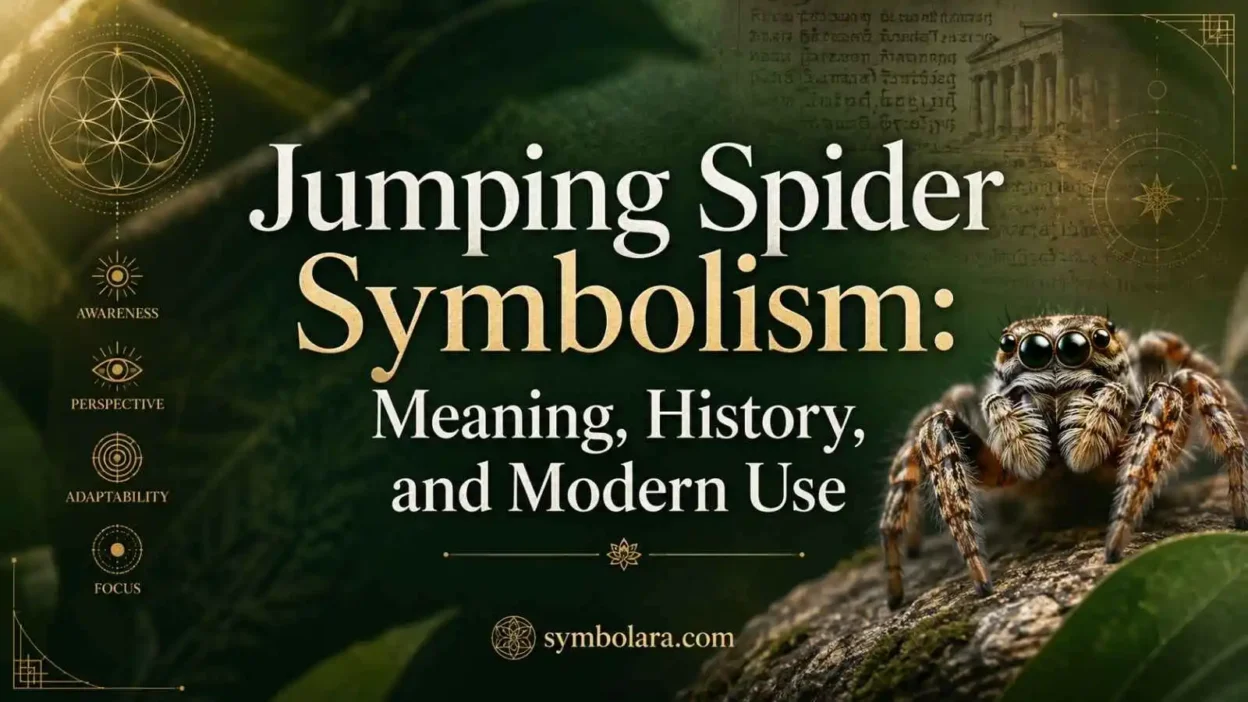
Jumping Spider Symbolism often centers on alertness, courage, curiosity, and the ability to move at the right moment. Unlike larger, more feared spiders, the jumping spider has a surprisingly friendly image in modern American culture because of its expressive eyes, quick movements, and almost curious way of looking back at people.
The jumping spider is small, compact, and visually distinctive. Its large front-facing eyes, careful stalking behavior, and sudden leaps make it feel less like a hidden threat and more like a tiny hunter with focus and personality.
For many Americans, this symbol matters because it softens the usual fear surrounding spiders. It turns the spider from a Halloween scare image into a sign of confidence, perception, patience, and unexpected charm.
Quick Answer
Jumping Spider Symbolism commonly represents curiosity, sharp awareness, courage, and taking decisive action in modern American culture. Historically, its meaning grows from broader spider symbolism connected to weaving, patience, cleverness, creativity, fate, and survival.
TL;DR
• Jumping spiders symbolize alertness and curiosity.
• Their leap represents timely action.
• Spider folklore adds creativity and patience.
• Americans often see them as cute, bold, and clever.
• Tattoos use them for courage and transformation.
• Misuse usually comes from fear-based spider stereotypes.
What a Jumping Spider Looks Like as a Symbol
A jumping spider is usually recognized by its compact body, short strong legs, and large forward-facing eyes. Those eyes matter symbolically because they make the spider appear attentive, almost expressive, in a way many people do not expect from an arachnid.
Most spiders are imagined through webs, corners, darkness, or fear. Jumping spiders break that pattern. They are often seen in daylight, on walls, windowsills, garden plants, fences, and outdoor furniture. They do not usually represent the hidden web-builder waiting for prey. Instead, they suggest a watchful creature that studies its surroundings before acting.
That physical impression shapes the symbolism. The jumping spider becomes a sign of noticing details, staying calm, and moving only when the moment is right. Its small size also adds another layer: strength does not need to look large or aggressive to be effective.
The Core Meaning in Modern American Culture
In the United States, the jumping spider most often symbolizes curious confidence. People who like this spider usually describe it as alert, intelligent-looking, and oddly endearing. Its appeal comes from contrast: it is a spider, but it does not behave like the scary spider people expect.
Its symbolic meanings usually include:
| Context | Meaning in the USA | Common Associations | Notes |
| Tattoos | Courage, observation, personal growth | Small but fearless | Often chosen by people who identify with quiet strength |
| Social media | Cuteness, curiosity, fascination | Macro photography, pet spiders | Helps soften fear of spiders |
| Home or garden encounters | Awareness, patience, timing | Watching, waiting, jumping | Often seen as a harmless visitor |
| Jewelry or art | Cleverness, individuality | Tiny details, bold movement | Works well in alternative or nature-inspired design |
| Personal symbolism | Facing fear, trusting instincts | Transformation, focus | Popular among people overcoming anxiety or self-doubt |
This symbol is usually positive when interpreted through the jumping spider’s behavior. It is not about dominance or danger. It is about precision, courage, and intelligent movement.
Why Vision Is Central to Its Meaning
The jumping spider’s eyes are the heart of its modern symbolism. Because it seems to look directly at the viewer, people often project awareness, attention, and personality onto it. That direct gaze makes the spider feel present rather than distant.
Symbolically, this connects the jumping spider with perception. It represents the ability to see what others miss, to notice small changes, and to observe before reacting. In personal symbolism, it can suggest emotional intelligence: watching carefully, reading the room, and choosing a thoughtful response.
This is different from the symbolism of a web-building spider. A web spider often represents patience, traps, fate, or the weaving of life. A jumping spider represents active attention. It does not wait passively in a web. It studies, calculates, and moves.
Courage in a Small Body
One reason the jumping spider has become meaningful to many people is that it looks tiny but acts boldly. Its leap is the perfect symbolic gesture: a small creature crossing space with confidence.
That makes it a natural emblem for people who feel underestimated. The jumping spider can represent someone who is quiet but capable, small in presence but strong in timing, or gentle in appearance but brave when action is needed.
In this sense, the spider does not symbolize recklessness. It does not leap blindly. It watches first. That makes its courage more grounded than dramatic. It reflects the kind of bravery that comes after preparation.
Patience Without Passivity
Many spider symbols are linked to patience because spiders wait, weave, and respond to movement. The jumping spider adds a more active version of patience. It waits, but not because it is stuck. It waits because timing matters.
This makes the symbol useful for people who are learning restraint. It can represent knowing when not to speak, when not to rush, or when not to force a decision. The waiting is strategic.
At the same time, the jumping spider reminds people that patience should eventually lead somewhere. The leap matters. Symbolically, it says that observation has value only when it helps you act wisely.
Ancient Spider Roots Behind the Modern Meaning
There is little evidence that ancient cultures singled out jumping spiders as a separate symbolic category. Most historical meaning comes from the broader spider family. That distinction is important because it keeps the interpretation accurate.
Across many traditions, spiders became meaningful because of their webs. A web can look like woven fabric, a net, a trap, or a map of connection. Because of this, spiders have often been associated with craft, storytelling, fate, patience, and the unseen structure of life.
The jumping spider inherits some of that symbolism but changes its emphasis. It carries the spider’s old meanings of cleverness and survival, then adds modern meanings based on its visible behavior: curiosity, alertness, and quick action.
Cross-Cultural Spider Meanings That Shape Interpretation
Spider symbolism varies widely across cultures, so it should never be flattened into one universal meaning. Still, several traditions help explain why spiders are often connected with intelligence, creativity, and survival.
In West African and African diasporic folklore, Anansi the spider is a trickster figure associated with wit, storytelling, strategy, and social lessons. Anansi stories often show cleverness as a tool for survival, especially when physical power is not enough.
In Greek mythology, Arachne is connected with weaving, skill, pride, and transformation. Her story helped attach spiders to themes of artistry, competition, and the consequences of human arrogance.
In some Indigenous traditions of North America, spider figures are associated with creation, weaving, guidance, or cultural teaching. These traditions are diverse and should be discussed with care, because meanings differ by nation, story, and ceremonial context.
The jumping spider does not replace these older meanings. Instead, modern readers often bring those spider associations into a smaller, more approachable image.
What It Commonly Means in the United States
In American culture, the jumping spider often sits between fear and affection. Many people who dislike spiders still find jumping spiders easier to tolerate because they appear curious rather than menacing.
This has made the spider popular in nature photography, educational videos, pet communities, garden content, and social media posts. Its image fits a modern cultural shift toward appreciating small creatures instead of automatically treating them as pests.
In the U.S., the symbol often communicates:
• being observant without being suspicious
• acting bravely without being loud
• finding beauty in overlooked creatures
• replacing fear with curiosity
• respecting small forms of intelligence in nature
This is why the jumping spider works well as a symbol for personal growth. It represents a change in perception: the thing that once seemed frightening can become fascinating.
Jumping Spider Symbolism in Nature and Environmental Awareness
Beyond personal symbolism, jumping spiders also represent a closer connection with the natural world. Their presence reminds people that small creatures play important roles in ecosystems and deserve attention rather than automatic fear.
Jumping spiders are active hunters that rely on vision and movement instead of building large webs to capture prey. This behavior contributes to their modern symbolic image of awareness, independence, and adaptability.
For many nature enthusiasts, the jumping spider represents a change in perspective. Instead of viewing unfamiliar animals as threats, people can learn to observe them with curiosity and respect.
This meaning fits a broader environmental message: understanding nature often begins with paying attention to the smallest details. The jumping spider becomes a symbol of discovery, patience, and appreciation for hidden forms of life.
Emotional and Psychological Meaning
Emotionally, the jumping spider often represents facing fear in small, manageable steps. Because many people are afraid of spiders, liking or choosing a jumping spider can signal a personal shift. It says, “I am learning to look closer before I panic.”
Psychologically, it can represent attention and readiness. The spider watches, processes, and responds. For people who value mindfulness, it can symbolize staying present and noticing what is actually happening rather than reacting to old fears.
It can also represent social curiosity. The jumping spider’s face-like gaze makes people imagine personality, friendliness, or playful intelligence. That does not mean the spider thinks like a human, but it explains why people emotionally connect with it.
Jumping Spider Symbolism in Dreams: Common Interpretations
Dreams about jumping spiders are often interpreted through the qualities people associate with this animal: awareness, movement, curiosity, and facing fears. A jumping spider appearing in a dream may represent a situation that requires careful observation before taking action.
A calm or friendly jumping spider in a dream can symbolize curiosity, confidence, or discovering something unexpected. Because the spider watches closely before moving, some people connect it with patience and choosing the right moment.
A dream involving fear of a jumping spider may reflect discomfort with something unfamiliar rather than the spider itself. Since many people naturally fear spiders, the image can represent learning to understand a situation instead of reacting immediately.
Dream meanings are personal and depend on emotions, experiences, and cultural background. There is no single proven interpretation, but the jumping spider’s common symbolic themes often include awareness, courage, and personal growth.
The Symbol in Tattoos and Personal Style
A jumping spider tattoo often means courage, curiosity, and quiet resilience. It can be especially meaningful for someone who feels small, underestimated, or misunderstood but still capable of bold movement.
Tattoo designs vary widely. Some are realistic, showing the spider’s eyes and fuzzy body. Others are cute, colorful, or stylized. A small jumping spider tattoo may suggest subtle strength, while a larger detailed design may show fascination with nature, science, or the beauty of misunderstood animals.
Common tattoo meanings include:
• overcoming fear
• trusting your instincts
• protecting your softness
• staying observant
• taking a leap after careful thought
• honoring overlooked creatures
Because spiders can also carry darker associations, the design style matters. A sweet, bright-eyed jumping spider communicates something different from a shadowy spider with horror imagery.
Jewelry, Decor, Fashion, and Digital Culture
In jewelry and decor, the jumping spider is usually used by people who enjoy unusual nature symbols. It can appear in pins, earrings, stickers, wall art, embroidered patches, phone cases, and small sculptures.
In fashion, it often belongs to alternative, cottagecore, goblincore, nature-loving, or science-inspired aesthetics. It suggests someone who finds charm in small, strange, overlooked things.
Digital culture has played a major role in changing how people see jumping spiders. Close-up videos and photos show their movements, eyes, grooming, and curious pauses. These images make the spider seem less like a threat and more like a tiny neighbor.
That modern visibility has changed the symbol. A jumping spider today can represent a more compassionate way of looking at nature: not everything unfamiliar needs to be feared or destroyed.
Positive and Negative Meanings
The positive meanings of the jumping spider are usually stronger in modern symbolism. It can represent curiosity, courage, focus, independence, adaptability, patience, and precise timing.
The negative meanings mostly come from general spider fear. Some people may still associate any spider with danger, unease, bad luck, hidden threats, or unwanted surprises. In Halloween imagery, spiders are often used to create a creepy atmosphere, and that can affect how people read the symbol.
The key difference is context. A jumping spider shown in a bright, natural, friendly way usually feels positive. A spider shown in darkness, webs, skulls, or haunted imagery may carry fear-based meaning instead.
Common Misunderstandings About the Symbol
The biggest misunderstanding is assuming that all spider symbolism is the same. A black widow, a tarantula, an orb-weaver, and a jumping spider do not create the same emotional response. Each has a different visual language.
Another misunderstanding is treating the jumping spider as an ancient sacred symbol on its own. Its modern meaning is real, but it mostly comes from a blend of spider folklore, natural behavior, pet culture, and online fascination.
A third misunderstanding is assuming the spider only means fear. For many people today, it means the opposite: learning not to fear what looks strange at first.
How the Meaning Has Evolved
The broader spider symbol began with webs, weaving, traps, craft, and storytelling. For centuries, spiders were often read through their ability to spin, wait, and create structures from their own bodies.
The jumping spider changed that focus. Its symbolism is less about the web and more about the eyes, the leap, and the sense of personality. The symbol moved from hidden patience to visible curiosity.
In modern American culture, this evolution reflects a wider change in how people relate to small animals. Social media, macro photography, and invertebrate pet communities have made it easier for people to see spiders as individual creatures rather than anonymous pests.
Jumping Spider Symbolism Compared With Other Spider Meanings
Jumping spider symbolism stands apart from many traditional spider meanings because it focuses on visible action rather than hidden creation. While spiders generally symbolize creativity, patience, and connection through their webs, jumping spiders represent observation, movement, and confidence.
A web-building spider is often connected with ideas of planning, fate, and the structures people create over time. A jumping spider adds a more active message: notice your surroundings, prepare carefully, and move when the opportunity appears.
Different spider species also create different emotional reactions. Some spiders are strongly linked with fear because of their appearance or reputation, while jumping spiders are often viewed with curiosity because of their expressive eyes and unusual behavior.
This difference explains why jumping spiders have gained popularity in modern art, photography, and online communities. Their symbolism combines traditional spider themes with a newer message of appreciation for small and overlooked forms of life.
When the Symbol Feels Personal
A jumping spider may feel personally meaningful to someone who is rebuilding confidence. Its message is not “be fearless” in a loud way. It is closer to “look carefully, trust yourself, and move when ready.”
It may also appeal to people who identify with being misunderstood. Just as the jumping spider is often feared because it is a spider, a person may feel judged before being known. In that context, the symbol becomes a reminder that first impressions are not the whole story.
For others, it simply represents wonder. Seeing a tiny creature behave with such focus can make everyday life feel more alive and detailed. That is part of the symbol’s modern appeal: it makes smallness feel meaningful.
FAQs
A jumping spider usually symbolizes curiosity, alertness, courage, patience, and well-timed action. Its meaning comes from its watchful eyes, careful movements, and sudden leap.
It can be interpreted as good luck, especially when seen as a sign to pay attention and act wisely. However, it is not a universal good luck symbol in the same way as a horseshoe or four-leaf clover.
A jumping spider tattoo often represents quiet courage, sharp observation, personal growth, and overcoming fear. It can also show affection for misunderstood animals or interest in nature and unusual beauty.
Some people give it spiritual meaning as a symbol of awareness, timing, and trust in instinct. Historically, its meaning is connected more to broader spider symbolism than to a single formal spiritual tradition.
It is usually positive in modern American use, especially in tattoos, art, and social media. Negative meanings usually come from general fear of spiders rather than from the jumping spider itself.
General spider symbolism often focuses on webs, patience, fate, weaving, and hidden patterns. The jumping spider adds meanings of curiosity, direct perception, quick movement, and small but confident action.
People often find them cute because of their large front-facing eyes, fuzzy bodies, and curious movements. Their appearance makes them seem expressive, which softens the fear many people feel toward spiders.
Some people view jumping spiders as spiritual symbols connected with awareness, courage, and transformation. However, jumping spiders do not have one universally accepted spiritual meaning across all cultures.
Conclusion
The jumping spider is a small creature with a surprisingly modern symbolic voice. It carries older spider meanings of cleverness, patience, weaving, and survival, but it also adds something more specific: alert curiosity and the courage to move at the right moment.
Jumping Spider Symbolism is especially meaningful in the United States because it reflects a shift from fear to fascination. People are learning to see this tiny spider not as a threat, but as a sign of attention, resilience, and unexpected charm.
Its message is simple and grounded: look closely, wait wisely, and do not underestimate small forms of courage.