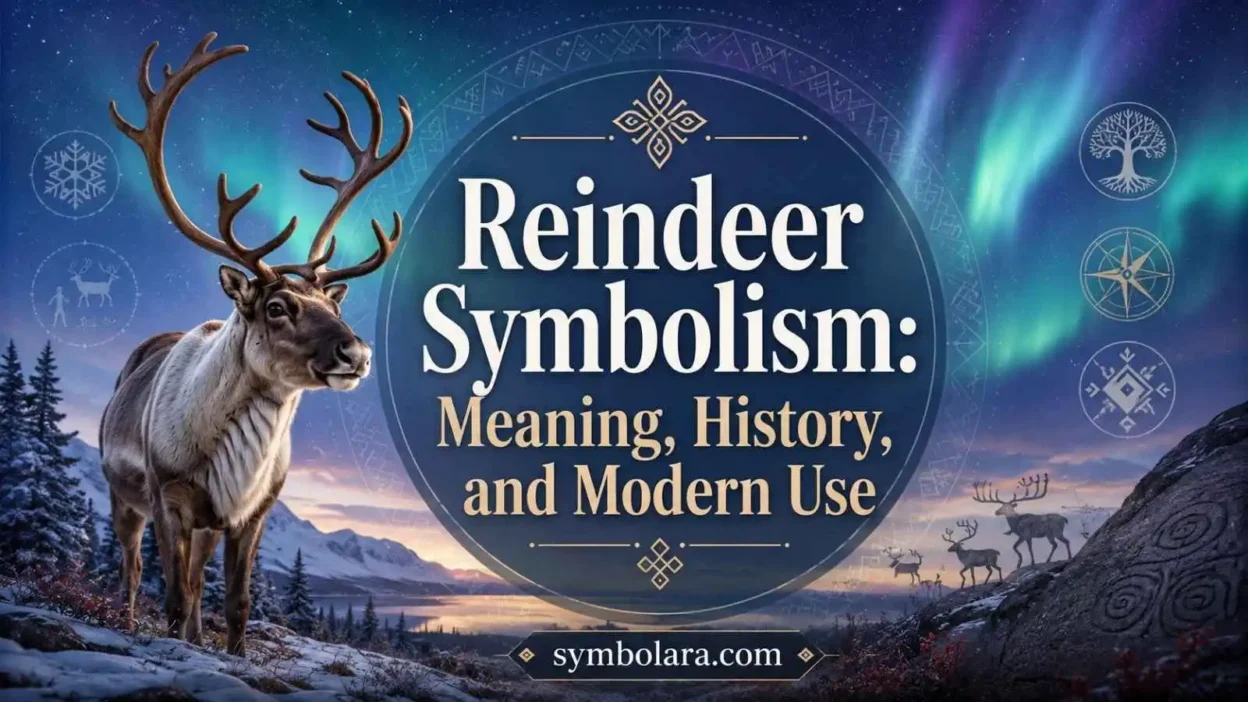
Reindeer Symbolism is most familiar to Americans through Christmas stories, winter decorations, and the image of Santa’s sleigh crossing a cold night sky. Because of that, many people first connect the reindeer with guidance, holiday joy, generosity, and the safe arrival of something hoped for.
But the reindeer is more than a seasonal image. In Arctic regions, reindeer and caribou are connected with migration, endurance, survival, food, clothing, transportation, family tradition, and cultural identity. The animal’s meaning changes depending on whether it appears in a Christmas card, a tattoo, Indigenous Arctic art, a children’s story, or a winter home design.
For a U.S. audience, the reindeer sits in two symbolic worlds at once: the cheerful world of modern holiday culture and the older northern world of adaptation, movement, and dependence on the land.
Quick Answer
Reindeer Symbolism commonly represents Christmas guidance, safe travel, generosity, and winter wonder in modern American culture. Historically, reindeer and caribou have also symbolized survival, migration, endurance, and close relationships between northern peoples and Arctic landscapes.
TL;DR
- Reindeer often symbolize guidance and safe winter travel.
- In the U.S., they are strongly tied to Christmas.
- Arctic traditions connect them with survival and identity.
- Rudolph adds themes of difference and acceptance.
- Modern designs use reindeer for warmth and nostalgia.
- Misuse often comes from flattening Indigenous meanings.
What a Reindeer Looks Like and Why Its Image Stands Out
A reindeer is a northern deer with a thick coat, broad hooves, and branching antlers. In North America, the wild form is usually called caribou, while the word reindeer is more often used for Eurasian and semi-domesticated herds. Both belong to the same species group, and both are adapted to cold climates, seasonal movement, and snowy landscapes.
Visually, the antlers are the most recognizable feature. They create a strong silhouette, which is why reindeer appear so often in ornaments, sweaters, logos, wrapping paper, and winter illustrations. Even a simple outline of antlers can suggest cold weather, northern forests, Christmas, or rustic cabin style.
The animal’s body also matters symbolically. Reindeer look sturdy rather than delicate. Their thick winter coat and large hooves make them seem built for difficult conditions. That physical impression helps explain why they often symbolize resilience, movement, and the ability to keep going through harsh seasons.
What Reindeer Commonly Mean in the United States
In the United States, the reindeer is most commonly understood as a Christmas symbol. It represents holiday travel, gift-giving, childhood imagination, family nostalgia, and the magical side of winter. Most Americans do not first think of the animal as a real Arctic species; they think of Santa, sleigh bells, Rudolph, and December decorations.
That does not make the meaning shallow. Holiday symbols often work because they carry emotional shorthand. A reindeer on a front lawn can suggest welcome, cheer, and a home ready for celebration. A reindeer on a child’s pajama set may suggest innocence, excitement, and the countdown to Christmas morning.
The reindeer also carries a softer meaning than many winter animals. A wolf might suggest danger or wilderness. A polar bear may suggest strength and isolation. A reindeer, especially in American holiday imagery, suggests helpfulness. It is not the hero alone; it is part of a team. That gives it meanings of cooperation, service, and shared purpose.
The Christmas Connection in American Culture
The reindeer became fixed in American Christmas imagination through early 19th-century holiday literature and later through songs, advertising, television, and retail culture. The famous image of Santa traveling by sleigh with named reindeer helped turn the animal into a familiar part of December storytelling.
In this context, the reindeer symbolizes movement between worlds. It carries Santa from the North Pole into ordinary neighborhoods. It crosses darkness, weather, distance, and rooftops. Symbolically, that makes the reindeer a guide between imagination and home life.
This is why reindeer imagery works so well in American holiday design. It makes Christmas feel active rather than static. Gifts are not simply placed under a tree; they are imagined as arriving after a long, magical journey. The reindeer gives that journey a face.
Rudolph and the Meaning of Difference
Rudolph changed American reindeer symbolism by adding a personal story. Instead of being only part of Santa’s team, Rudolph became the reindeer who is singled out, rejected, and later valued because of the very trait that made him seem different.
That story is why Rudolph often symbolizes acceptance, individuality, and the discovery of usefulness in an unusual gift. For children, the message is direct: the thing that makes someone feel out of place may become a source of confidence. For adults, Rudolph can still carry memories of childhood vulnerability, social exclusion, or wanting to be recognized.
Modern readers also notice the uncomfortable side of the story: Rudolph is accepted after he becomes useful. That criticism does not erase the character’s emotional appeal, but it adds nuance. Rudolph can symbolize both encouragement and the pressure to prove one’s worth before being included.
Reindeer Symbolism in Literature, Movies, and Popular Culture
Popular culture has shaped modern reindeer symbolism more than almost any other influence. Stories, songs, movies, and advertisements transformed the reindeer from an Arctic animal into a worldwide symbol of holiday imagination.
Rudolph became especially influential because his story added emotional themes of belonging, confidence, and acceptance. Other Christmas stories use reindeer to represent teamwork, loyalty, and the journey of bringing joy to others.
Beyond Christmas, reindeer appear in fantasy, children’s books, winter artwork, and seasonal branding. These uses often focus less on the real animal and more on the feelings it creates: comfort, wonder, nostalgia, and connection.
Older Northern Meanings: Survival, Food, and Movement
Outside the American Christmas frame, reindeer and caribou have long been connected with practical survival. In Arctic and subarctic regions, people have relied on these animals for food, hides, tools, transport, and seasonal knowledge. Their migrations shaped travel, hunting patterns, and community life.
This gives the animal a more grounded symbolic meaning: dependence on the natural world. The reindeer is not only cute or decorative in these contexts. It stands for a relationship between humans, animals, weather, and land.
Migration is especially important. Reindeer and caribou are known for long seasonal movements, and that movement gives them symbolic links to endurance, timing, memory, and return. They suggest knowing when to move, where to go, and how to survive by following patterns older than any single person.
Sámi Culture and Respectful Interpretation
For the Sámi people of northern Europe, reindeer herding is not just an old occupation. It remains connected with livelihood, family knowledge, language, land use, seasonal movement, and cultural continuity. Because of that, the reindeer can carry meanings of identity, responsibility, ecological knowledge, and inherited practice.
For American readers, this is an area that requires care. It is not respectful to reduce Sámi reindeer traditions to vague “magic” or generic spiritual symbolism. The reindeer’s meaning comes from real communities, real landscapes, and living cultural practices.
A better interpretation is to see the reindeer as a symbol of relationship. It represents how culture can form around careful observation of weather, pasture, animal behavior, and seasonal change. It also reminds readers that symbols are not just ideas; they can be tied to land rights, family work, and survival.
Reindeer and Caribou in Indigenous Arctic Contexts
In North America, caribou have deep importance for several Indigenous Arctic and subarctic peoples. Their meaning is tied to food systems, hunting knowledge, clothing, tools, stories, ceremony, and community identity. In some places, caribou are not simply animals in the landscape; they are part of how people understand home, continuity, and responsibility.
This meaning differs from the American Christmas reindeer. A holiday decoration may symbolize cheer, but caribou in Indigenous Arctic contexts can symbolize cultural survival and reciprocal relationship with the land. The animal is part of daily life, memory, and inherited knowledge.
When writing, decorating, or using reindeer imagery, it is important not to treat all northern meanings as interchangeable. Sámi herding traditions, Alaska Native caribou relationships, and American Christmas stories are distinct. They may overlap visually, but they do not mean the same thing.
Reindeer Symbolism in Native American and Arctic Traditions
In North American contexts, the animal most closely related to reindeer is usually called caribou. Several Indigenous Arctic and subarctic communities have long-standing relationships with caribou based on hunting knowledge, clothing materials, food systems, storytelling, and seasonal movement.
Caribou symbolism in these traditions is often connected with survival, respect for animals, community responsibility, and understanding the land. The animal is not simply a decorative symbol; it can represent a relationship between people, nature, and generations of knowledge.
It is important to avoid combining all Indigenous meanings into one universal interpretation. Different communities have their own histories, languages, and relationships with caribou. A respectful approach focuses on the specific culture and context rather than treating the animal as a general spiritual object.
Emotional Meaning: Warmth in the Cold
Emotionally, the reindeer often communicates warmth against a cold background. That contrast is central to its symbolic appeal. The setting is winter, darkness, snow, distance, and risk. The reindeer brings movement, help, direction, and companionship.
This is why the image feels comforting. It suggests that winter can be endured. It also suggests that help can arrive even when the world feels quiet or frozen. In holiday settings, this emotional meaning becomes hope, family closeness, and anticipation.
Psychologically, the reindeer can also represent steadiness. Unlike symbols that suggest sudden transformation, the reindeer suggests patient travel. It does not defeat winter; it moves through it. That makes it a strong symbol for people who value resilience without drama.
Reindeer as a Symbol of Guidance and Safe Travel
The idea of reindeer as guides comes naturally from their Christmas role. They pull the sleigh through the night and help Santa complete a long journey. Rudolph makes this meaning even clearer by lighting the way through fog.
But the guidance symbolism also fits the real animal. Reindeer and caribou are associated with movement across difficult northern terrain. Their seasonal routes suggest orientation, instinct, and trust in inherited paths.
In modern symbolic use, this can translate into safe passage through uncertainty. A reindeer tattoo, ornament, or illustration may suggest the desire to keep moving even when the path is not fully visible. It can also represent returning home after hardship.
Reindeer Symbolism in Dreams: Different Meanings and Interpretations
Dreams about reindeer are often connected with themes of direction, movement, memory, and seasonal emotions. The meaning depends on the dream setting, personal experiences, and the feelings connected to the animal.
Common interpretations include:
- Seeing a calm reindeer: may represent patience, stability, or trust in your current path.
- A reindeer traveling or running: may reflect movement, change, or a need to continue forward.
- A reindeer in snow or winter scenery: may connect with endurance, quiet reflection, or overcoming a difficult period.
- A Christmas reindeer: may relate to family traditions, childhood memories, generosity, or holiday emotions.
Some spiritual interpretations associate reindeer dreams with guidance because of the animal’s connection with travel and navigation. However, dream symbolism is personal rather than universal. A reindeer appearing in a dream may reflect your own memories, beliefs, cultural background, or current life experiences.
Reindeer in Tattoos and Personal Style
Reindeer tattoos are less common than deer, stag, or elk tattoos, but they carry a distinct meaning. A reindeer tattoo may symbolize endurance, winter identity, northern heritage, Christmas nostalgia, travel, family tradition, or the ability to survive difficult seasons.
Antlers are often the central design element. They can suggest growth, alertness, protection, or connection to nature. A minimalist reindeer outline may feel quiet and personal, while a detailed Arctic-style design may emphasize wilderness and resilience.
Some people choose Rudolph-inspired tattoos for more playful reasons. In that case, the meaning may be individuality, humor, childhood memory, or pride in being different. The tone depends heavily on the style: cute, rustic, realistic, mythic, or modern.
Reindeer in Home Decor, Fashion, and Holiday Design
In American decor, reindeer are used to create a winter atmosphere without making a space feel too formal. Wooden reindeer, metal silhouettes, knit patterns, and soft neutral illustrations often suggest coziness, cabin life, and seasonal welcome.
In fashion, reindeer appear on sweaters, pajamas, socks, scarves, earrings, and children’s clothing. These designs usually communicate playfulness rather than serious symbolism. They signal participation in the holiday season and a willingness to enjoy its traditions.
In digital culture, reindeer emojis, stickers, and graphics often function as quick seasonal markers. A reindeer image in a social media post usually says “Christmas,” “winter,” “festive,” or “cozy” without needing explanation.
| Context | Meaning in the USA | Common Associations | Notes |
| Christmas decor | Joy, welcome, tradition | Santa, lights, family gatherings | Most common American meaning |
| Rudolph imagery | Difference, acceptance, confidence | Red nose, fog, childhood stories | Can also raise questions about belonging |
| Tattoos | Endurance, guidance, northern identity | Antlers, snow, travel | Meaning depends on style |
| Rustic design | Warmth, winter comfort | Cabins, wood, wool, forests | Often secular rather than religious |
| Arctic references | Survival, migration, culture | Herding, hunting, land knowledge | Requires cultural respect |
Religious Meaning and Spiritual Associations
The reindeer is not a central Christian symbol in the way that the cross, lamb, dove, or star can be. In the United States, its Christmas meaning is mostly cultural and seasonal rather than theological.
That said, reindeer can appear near religious Christmas imagery because they belong to the wider holiday environment. A church Christmas market may use reindeer decorations, but the animal itself usually points to Santa folklore, children’s celebration, or winter festivity rather than doctrine.
In broader spiritual writing, reindeer are sometimes described as symbols of endurance, guidance, intuition, or adaptation. These meanings can be thoughtful when tied to the animal’s real behavior, but they become weak when they ignore cultural context or invent universal meanings that no tradition actually supports.
Positive and Negative Meanings
Reindeer symbolism is mostly positive in American culture. It suggests cheer, movement, help, cooperation, and safe arrival. It is rarely used as a threatening or unlucky symbol.
The more complicated meanings come from context. Rudolph can represent exclusion before acceptance. Arctic caribou imagery can raise concerns about climate change, habitat disruption, and the survival of Indigenous lifeways. Commercial reindeer imagery can also feel shallow when it borrows northern aesthetics without understanding their cultural background.
So the reindeer is not negative by nature. Its challenging meanings come from what people attach to it: loneliness, environmental stress, cultural erasure, or the pressure to be useful before being valued.
Common Misunderstandings About Reindeer Symbolism
One common misunderstanding is that reindeer only belong to Christmas. In the United States, that is the dominant association, but it is not the whole meaning. Reindeer and caribou have older and deeper roles in Arctic life.
Another misunderstanding is treating reindeer, deer, elk, and stags as identical symbols. They overlap, but they are not the same. Deer often suggest gentleness and alertness. Stags often suggest nobility, masculinity, or forest power. Reindeer suggest winter, migration, endurance, cooperation, and northern survival.
A third mistake is turning Indigenous or Sámi meanings into generic mystical language. Respectful symbolism stays specific. It recognizes that the reindeer has different meanings in different communities and does not flatten living cultures into decoration.
Reindeer vs Deer Symbolism: What Is the Difference?
Although reindeer and deer belong to the same animal family, their symbolic meanings often differ because people associate them with different environments and stories.
Deer symbolism commonly focuses on gentleness, sensitivity, awareness, renewal, and connection with forests. Deer appear frequently in mythology, nature writing, and spiritual traditions.
Reindeer symbolism is more strongly connected with winter, migration, endurance, travel, cooperation, and northern landscapes. In American culture, reindeer also carry the added meaning of Christmas because of Santa’s sleigh traditions.
The difference comes from the animal’s role in human imagination. Deer are often viewed as woodland creatures, while reindeer represent movement across cold landscapes and the ability to endure challenging conditions.
How the Meaning Has Changed Over Time
The reindeer’s symbolic meaning has shifted from practical survival to holiday imagination in much of American life. In Arctic cultures, the animal’s meaning grew from direct relationship: food, movement, clothing, herding, hunting, and seasonal knowledge.
In the United States, the meaning changed through literature, music, advertising, television, and family tradition. Santa’s reindeer made the animal magical. Rudolph made it emotional. Retail and decor made it familiar in homes, stores, schools, and public spaces every December.
Today, the reindeer carries both meanings at once. It can be a cheerful Christmas figure, a symbol of endurance, a reminder of Arctic cultures, or a sign of environmental fragility. Its meaning depends on how thoughtfully it is used.
Modern Controversies and Misuse
The biggest misuse of reindeer imagery is cultural flattening. This happens when people borrow antlers, Arctic patterns, or “northern tribal” language without knowing which culture they are referencing. It can turn specific traditions into vague seasonal aesthetics.
Another issue is commercialization. American holiday culture often uses reindeer as cute retail imagery while ignoring the real animal and the communities connected to it. That does not mean every ornament is disrespectful. It means deeper cultural claims should be made carefully.
Environmental concern has also changed the symbol. As Arctic warming, development, and habitat pressure affect caribou and reindeer populations, the animal increasingly symbolizes ecological vulnerability. A reindeer is no longer only a sign of winter magic; it can also remind people that northern landscapes are changing.
When to Use Reindeer Symbolism Thoughtfully
Use reindeer imagery when you want to communicate warmth, guidance, winter beauty, safe travel, endurance, family tradition, or holiday cheer. It works especially well in Christmas content, seasonal decor, winter branding, children’s designs, and cozy visual themes.
For personal symbolism, the reindeer fits people who identify with steady resilience rather than loud strength. It can represent someone who keeps moving, protects family, follows instinct, or finds direction during difficult seasons.
If you are using reindeer in connection with Sámi or Indigenous Arctic traditions, be specific and respectful. Avoid claiming meanings that belong to a culture unless you understand the context. The safest approach is to describe the relationship clearly rather than turning it into fantasy.
FAQs
A reindeer most often symbolizes guidance, safe travel, endurance, cooperation, and winter warmth. In the United States, it is also strongly associated with Christmas, Santa’s sleigh, generosity, and childhood imagination.
A reindeer tattoo can mean resilience, movement, northern identity, winter strength, or finding your way through hardship. If it references Rudolph, it may also symbolize individuality, acceptance, and turning a difference into a strength.
In American culture, reindeer symbolism is usually seasonal rather than religious. Reindeer appear around Christmas, but they are more connected to Santa folklore and holiday tradition than to core Christian symbols.
Rudolph symbolizes being different, facing rejection, and eventually being valued for a unique trait. Modern readers may also see a more complicated message about how people are sometimes accepted only after proving their usefulness.
They overlap, but they are not always used the same way. In American holiday culture, “reindeer” usually points to Christmas, while “caribou” more often suggests Arctic wildlife, migration, Indigenous relationships with land, and ecological survival.
In dreams, a reindeer may suggest guidance, winter emotions, family expectations, travel, or the need to keep moving through a difficult season. A Christmas setting may point to nostalgia, generosity, childhood memory, or holiday pressure.
It is mostly positive, especially in American Christmas culture. Negative or serious meanings appear when the symbol is tied to exclusion, environmental loss, cultural misuse, or the hardships of survival in extreme conditions.
Reindeer are often viewed as positive symbols connected with protection, safe journeys, and good fortune, especially during winter holidays. However, ideas about luck depend on cultural traditions and personal beliefs.
Conclusion
The reindeer is a rare symbol that feels both cheerful and serious. In American culture, it brings to mind Christmas lights, Santa’s journey, Rudolph’s difference, and the warmth of family traditions. In older northern contexts, it points to migration, survival, land knowledge, and cultural identity.
Reindeer Symbolism works because the animal moves through darkness and cold without losing its sense of direction. Whether used in decor, tattoos, stories, or seasonal art, it suggests guidance, endurance, cooperation, and the hope of reaching home.
At its best, the reindeer reminds us that winter is not only a season to survive. It is also a time when direction, community, and steady movement matter most.