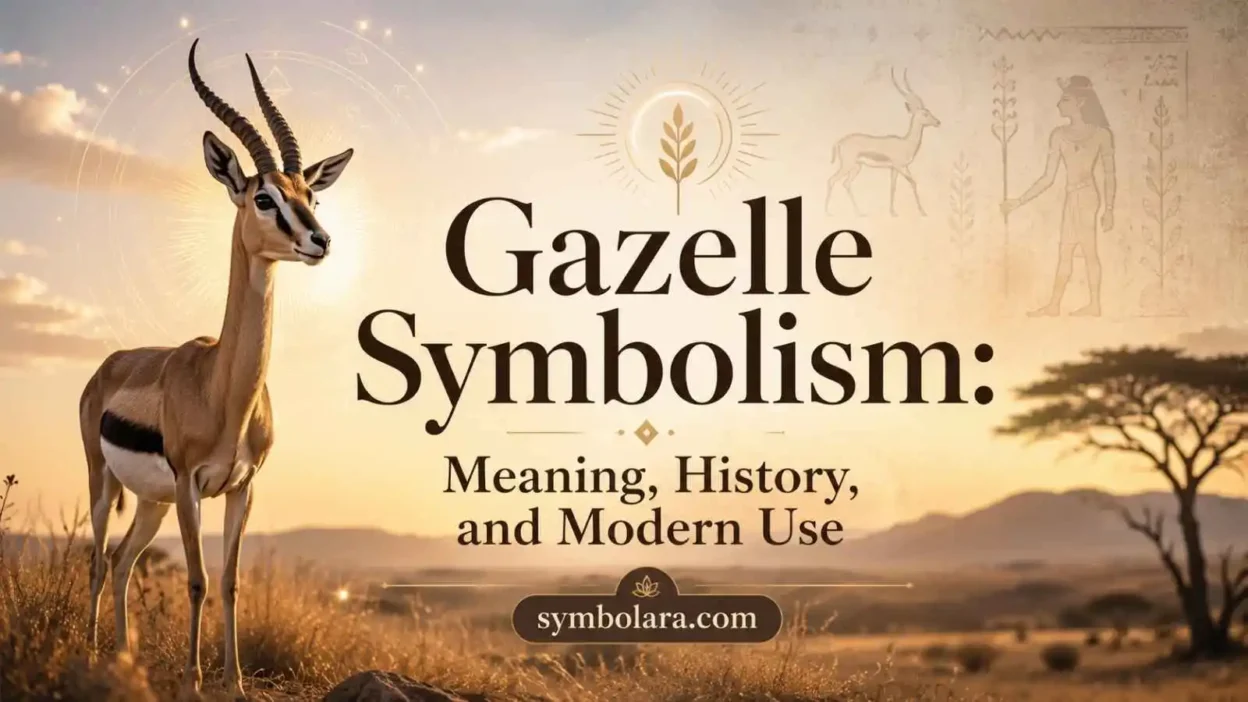
A gazelle is known for its slim body, curved horns, quick movements, and ability to move across open landscapes with remarkable speed. Found mainly in parts of Africa and Asia, this animal has appeared in art, literature, folklore, and decorative designs for thousands of years.
People often search for Gazelle Symbolism because the animal represents qualities that many people admire, such as grace, alertness, freedom, and gentle strength. In modern American culture, gazelle imagery appears in tattoos, fashion designs, wildlife art, and personal symbols connected with movement and independence.
The meaning of the gazelle has changed across different societies. Some older traditions focused on beauty and elegance, while modern interpretations often highlight confidence, adaptability, and the ability to move through challenges with awareness.
Quick Answer
Gazelle symbolism usually represents grace, speed, freedom, sensitivity, and natural beauty in modern American interpretations. Historically, gazelles were associated with elegance and admiration in Middle Eastern, African, and Asian art, poetry, and storytelling.
TL;DR
- Gazelles symbolize grace, agility, and awareness.
- Ancient art often showed gazelles as signs of beauty.
- Speed connects gazelles with freedom and movement.
- Modern tattoos use gazelles for individuality.
- Wildlife conservation adds meanings of protection.
- Different cultures interpret gazelles in unique ways.
What Does a Gazelle Look Like and Where Does It Live?
Gazelles are small to medium-sized antelopes recognized for their narrow faces, long legs, large eyes, and lightweight bodies. Many species have curved horns, although horn shape and size vary between males and females depending on the species.
These animals live mainly in grasslands, deserts, and dry regions of Africa and Asia. Species such as the Thomson’s gazelle are strongly associated with the African savanna, while other gazelles have adapted to desert environments where water and food can be limited.
The physical traits of gazelles influence many of their symbolic meanings. Their large eyes are often associated with alertness and awareness, as these animals must remain watchful for predators. Known for their remarkable speed, gazelles have also become symbols of quick action, agility, and the ability to escape danger.
A gazelle does not rely on size or force for survival. Instead, it survives through speed, careful movement, and attention to its surroundings. These characteristics shape many cultural interpretations of the animal.
What Does a Gazelle Symbolize Today?
In modern interpretations, gazelles are most commonly connected with grace, freedom, and adaptability. Many people choose gazelle imagery because it represents moving forward without losing elegance or calmness.
The main meanings associated with gazelles include:
| Context | Meaning in USA | Common Associations | Notes |
| Tattoos | Personal freedom and confidence | Movement, independence, elegance | Often chosen as a personal identity symbol |
| Jewelry | Beauty and refinement | Delicate strength, style | Popular in nature-inspired designs |
| Wildlife art | Respect for nature | Conservation, balance | Connects people with animals and landscapes |
| Fashion designs | Graceful appearance | Minimalism, natural beauty | Used in prints and artistic patterns |
| Literature and poetry | Emotional expression | Love, speed, sensitivity | Inspired by older artistic traditions |
The gazelle is rarely viewed as a symbol of aggression. Instead, it represents a softer form of strength. Its ability to survive through awareness and quick movement gives it a different meaning from animals associated with physical power, such as lions or bears.
How Did Gazelle Symbolism Begin?
The earliest associations with gazelles developed in regions where people lived alongside these animals. Archaeological evidence shows that gazelles appeared in ancient artwork, especially in areas of the Middle East and North Africa.
In ancient Egypt, gazelles appeared in paintings, carvings, and decorative objects. They were admired for their beauty and connection with the natural world. Egyptians sometimes kept gazelles as valued animals, and their images appeared in artistic scenes showing wildlife.
In Mesopotamian and Persian traditions, gazelles were frequently used in art and poetry. Their appearance became linked with elegance and attraction. Persian poets often used gazelle imagery when describing beauty, especially through comparisons involving the animal’s eyes and movement.
The exact meaning was not identical everywhere. In some places, gazelles represented beauty and refinement, while in others they reflected survival, quickness, and connection with the environment.
Why Were Gazelles Important in Ancient Art and Literature?
Gazelles appeared often in creative works because their physical characteristics made them easy to connect with human emotions.
Their large eyes became a common artistic feature. In some Middle Eastern poetry traditions, a person’s beautiful eyes were compared to those of a gazelle. This comparison focused on appearance and expression rather than a literal belief about the animal.
Artists also used gazelles to show peaceful natural scenes. A gazelle beside plants, water, or other wildlife could represent harmony between living things.
In African storytelling traditions, gazelles and other antelopes often reflected qualities such as awareness and survival. Stories about animals helped explain human behavior, social values, and relationships with nature.
The animal’s reputation for quick movement also made it an image of escaping danger. A gazelle running across an open landscape became a visual reminder of freedom and the importance of staying alert.
How Is the Gazelle Viewed in American Culture?
Gazelles are not native to most of the United States, so their symbolism in America usually comes through global art, wildlife appreciation, fashion, and personal expression rather than local folklore.
In American culture, gazelle imagery often appears in:
- Wildlife photography
- Nature-themed home decoration
- Animal tattoos
- Clothing patterns
- Brand logos
- Children’s books and illustrations
- Conservation campaigns
Many Americans associate gazelles with the beauty of wild places, especially African landscapes shown in documentaries and nature programs. The animal often represents a connection to the natural world rather than a specific traditional American belief.
In fitness and sports language, the word “gazelle” is sometimes used as a comparison for someone who runs smoothly or moves quickly. This modern usage comes from the animal’s reputation for speed and agility.
The gazelle also appears in artistic designs where people want to express a calm, elegant personality. A person choosing a gazelle image may be communicating qualities like independence, creativity, or appreciation for nature.
What Do Gazelles Represent in Different Cultures?
Gazelles have appeared in many cultures, but their meanings depend on local traditions and historical settings.
Middle Eastern Traditions
In Arabic and Persian poetry, gazelles were often connected with beauty and graceful movement. Poets used gazelle comparisons when describing admired people, especially their eyes or elegance.
The animal also appeared in decorative arts, including textiles, ceramics, and manuscripts.
Ancient Egyptian Culture
Egyptian art included gazelles as part of scenes showing animals, landscapes, and daily life. Their presence reflected appreciation for wildlife and the natural environment.
African Traditions
Across parts of Africa, gazelles and related antelope species are associated with speed, awareness, and survival. Their ability to live in challenging environments contributed to these meanings.
South Asian Art
Gazelles appeared in Indian paintings and poetry, where they were sometimes connected with beauty, emotion, and romantic expression.
These interpretations share some similarities, but they developed separately. A gazelle does not have one universal meaning accepted by every culture.
Why Do People Feel Connected to Gazelle Images?
People often connect with gazelle imagery because it combines softness with survival. The animal looks delicate, but it is also highly adapted to difficult environments.
A person who chooses a gazelle symbol may identify with qualities such as:
- Staying calm under pressure
- Moving forward after difficulties
- Valuing independence
- Appreciating natural beauty
- Being aware of surroundings
Unlike symbols based on dominance or control, the gazelle often suggests balance. It represents a way of handling challenges through awareness rather than force.
For some people, a gazelle tattoo or artwork may represent a personal experience, such as overcoming a difficult period or starting a new chapter in life. The meaning depends on the individual’s own connection with the symbol.
Why Do People Choose Gazelle Tattoos and Jewelry?
Gazelle designs are popular in tattoos and jewelry because the animal combines visual beauty with several widely understood ideas. A gazelle tattoo may represent freedom, movement, elegance, or a personal connection to nature.
The design style often changes the meaning. A simple outline of a gazelle can suggest minimalism and independence. A detailed gazelle surrounded by plants, mountains, or a sunset may focus more on wildlife, travel, or appreciation for natural landscapes.
Common gazelle tattoo designs include:
- Running gazelle: Often connected with speed, progress, and overcoming obstacles.
- Gazelle with flowers: May represent beauty, growth, and a connection with nature.
- Gazelle silhouette: Often chosen for a clean, artistic look.
- Gazelle with geometric patterns: Combines wildlife with modern design styles.
- Gazelle head with horns: Can highlight elegance and confidence.
Jewelry featuring gazelles is usually associated with style and personal meaning rather than a specific tradition. A gazelle pendant or charm may be worn because the wearer appreciates animals, travel, African art, or the qualities they associate with the animal.
How Is the Gazelle Used in Modern Design and Media?
Modern designers use gazelle imagery because its shape is easy to recognize and works well in different artistic styles. The animal’s thin legs, curved horns, and graceful posture create a visually appealing design.
Gazelles appear in:
- Luxury fashion illustrations
- Nature-inspired home decor
- Wildlife posters
- Children’s educational materials
- Brand artwork
- Digital illustrations
In advertising and branding, a gazelle may suggest speed, elegance, or careful movement. Companies sometimes use animal imagery to communicate a feeling rather than a literal connection to the animal.
For example, a company focused on travel, outdoor experiences, or natural products may use gazelle imagery to create associations with open landscapes and exploration.
The animal also appears in online art communities where creators use wildlife symbols to express personality, environmental awareness, or artistic interests.
Are There Any Misunderstandings About Gazelle Symbolism?
One common misunderstanding is that every culture gives the gazelle the same meaning. In reality, interpretations developed in different regions and time periods.
Another misunderstanding is that gazelles only represent weakness because they are smaller animals often hunted by predators. Many traditions view the animal differently. Its survival skills, speed, and awareness are important parts of its identity.
Some modern uses also separate the animal from its original cultural background. A design inspired by Middle Eastern poetry or African wildlife may be used simply because it looks attractive, without knowledge of its earlier meanings.
This does not automatically make the use incorrect, but understanding the background helps people appreciate the symbol more accurately.
It is also important to avoid treating animal symbols as having fixed meanings. A gazelle tattoo, artwork, or decoration may represent completely different ideas depending on the person using it.
How Has Gazelle Meaning Changed Over Time?
The meaning of the gazelle has shifted as societies changed. In older artistic traditions, the animal was often connected with beauty, admiration, and poetic expression.
During the 19th and 20th centuries, European and American interest in exploration, museums, and wildlife studies introduced more people to gazelles through books, paintings, and exhibitions.
In modern times, conservation and environmental awareness have added new meanings. Gazelles are now often viewed as examples of wildlife that need protection because many species face habitat loss and population pressures.
Younger generations may connect gazelles less with classical poetry and more with ideas like:
- Protecting endangered animals
- Appreciating natural environments
- Living freely
- Maintaining individuality
The symbol has moved from mainly artistic and literary use into personal expression, especially through tattoos, fashion, and online creativity.
Gazelle Symbolism Compared With Other Animal Symbols
Animal symbols often overlap, but each animal carries different associations.
| Animal | Common Symbolic Meaning | Main Difference From Gazelle |
| Lion | Leadership, courage, authority | Focuses more on strength and dominance |
| Deer | Gentleness, sensitivity, renewal | Shares softness but is more common in North American traditions |
| Horse | Freedom, travel, independence | Represents power through movement and partnership |
| Butterfly | Change and transformation | Focuses more on personal growth and change |
| Gazelle | Grace, awareness, speed, elegance | Combines delicacy with survival skills |
The gazelle stands apart because it represents a quieter form of confidence. Its symbolism comes less from controlling its surroundings and more from adapting to them.
Does Gazelle Symbolism Have a Religious Meaning?
Gazelles have appeared in religious and spiritual artwork, but they do not have one universal religious meaning.
In some historical religious texts and artistic traditions, gazelles appear as examples of beauty, nature, or longing. For example, gazelle imagery appears in some interpretations of Middle Eastern literature connected with spiritual and romantic themes.
However, a gazelle symbol today is usually used for artistic, personal, or cultural reasons rather than as a required religious symbol.
People who choose gazelle imagery may have many different backgrounds and beliefs. The meaning usually comes from personal connection, cultural interest, or appreciation for the animal itself.
Why Are Gazelles Connected With Speed and Freedom?
A gazelle’s ability to run quickly across open land is one of its most noticeable traits. This physical ability has shaped how people interpret the animal.
In the wild, gazelles rely on fast movement to escape predators. Their survival depends on timing, awareness, and quick decisions.
Because of this, people often connect gazelles with:
- Moving toward goals
- Leaving difficult situations
- Independence
- Adaptability
In American expressions, calling someone a “gazelle” or comparing their movement to a gazelle usually suggests smooth, fast, or athletic motion.
The symbolism comes from observing the animal’s behavior rather than from a supernatural belief.
Frequently Asked Questions
Is gazelle symbolism considered positive or negative?
Gazelle symbolism is generally viewed positively because it is often connected with beauty, freedom, and adaptability. Negative interpretations are uncommon, although some stories may focus on vulnerability because gazelles are prey animals.
What does a gazelle tattoo mean?
A gazelle tattoo can represent different things depending on the person. Common meanings include independence, graceful movement, connection with nature, and overcoming challenges.
Are gazelles mentioned in famous literature?
Yes. Gazelles appear in Middle Eastern and Persian poetry, where writers often used them as comparisons for beauty and elegance. Their imagery became especially connected with descriptions of eyes and graceful movement.
What does a running gazelle symbolize?
A running gazelle often represents progress, freedom, quick decisions, and the ability to move through difficult situations. The meaning usually comes from the animal’s natural behavior.
Is a gazelle a common symbol in the United States?
Gazelles are less common than animals like eagles, wolves, or deer in American symbolism. However, they appear in tattoos, wildlife art, fashion, and nature-related designs.
Does a gazelle represent femininity?
Some historical artworks connected gazelles with beauty and elegance, which led to feminine associations in certain traditions. Modern interpretations are not limited by gender and can represent anyone’s personal values.
What is the difference between a gazelle and a deer symbol?
Both can represent gentleness and natural beauty, but gazelles are more strongly connected with speed, open landscapes, and alertness. Deer symbolism in the United States is often linked with forests, seasons, and renewal.
Conclusion
A gazelle represents qualities that many people admire: grace, awareness, movement, and the ability to adapt. From ancient artwork and poetry to modern tattoos and wildlife designs, the animal has carried different meanings across cultures and generations.
Gazelle Symbolism today often reflects personal ideas about freedom, elegance, and staying alert while moving through life’s challenges. Whether used in art, fashion, or personal expression, the gazelle remains a reminder of how a small animal can represent complex human experiences.
A gazelle image on a necklace, wall painting, or tattoo is not just a decoration. For many people, it reflects a chosen quality they want to celebrate, such as independence, calm movement, or respect for the natural world.