
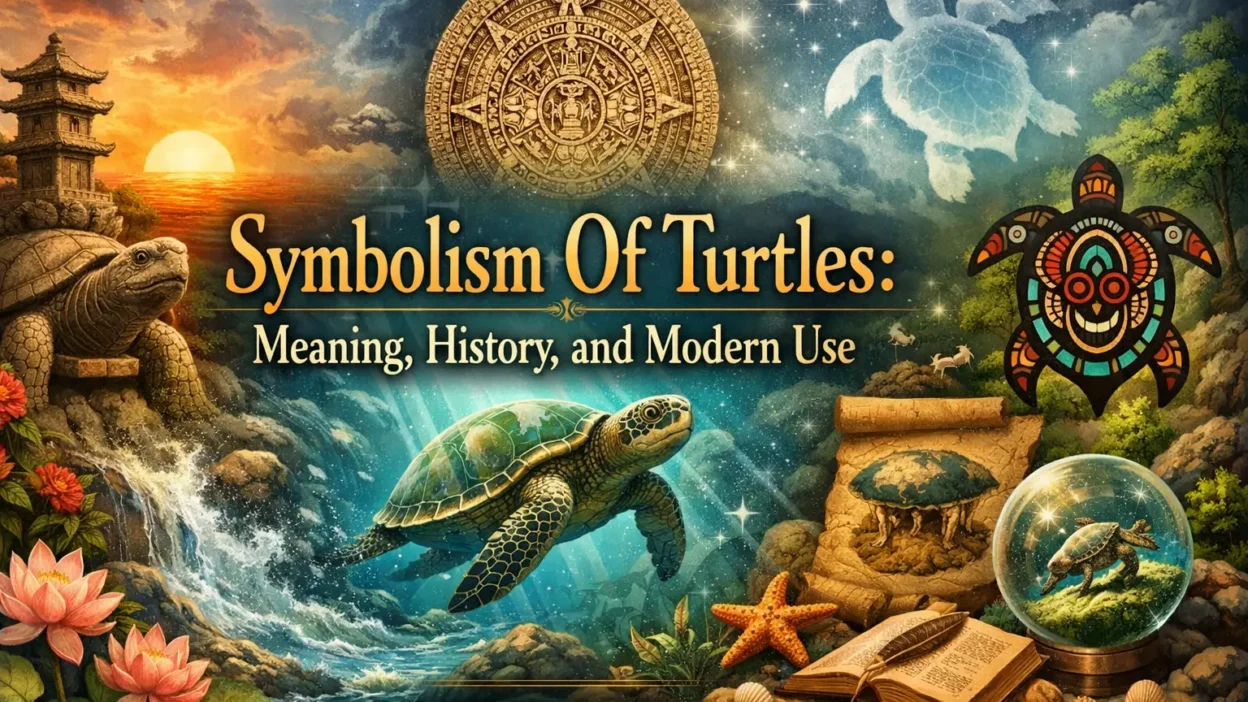
People usually look up Symbolism Of Turtles for a practical reason: they keep seeing turtle imagery in tattoos, jewelry, beach decor, spiritual conversations, or conservation campaigns and want to know what it actually means. In the United States, the turtle is generally read as a sign of patience, protection, endurance, and long life, but that modern reading sits on top of much older cultural and religious meanings.
Part of the turtle’s appeal is visual. It moves slowly, carries its shelter on its body, and can live for decades. That combination makes people read the animal as calm, self-protective, steady, and hard to break. A sea turtle adds another layer: migration, navigation, and return.
The symbol also matters in a specifically American way. In the U.S., turtles are not just ancient creatures or folklore figures. They are also beach-protection icons, wildlife-rehab success stories, school mascots, souvenir motifs, and a visible part of marine conservation culture, especially in places like Florida and Hawaiʻi.
Quick Answer
Symbolism Of Turtles most commonly represents patience, protection, endurance, and long life in modern American culture, especially in tattoos, coastal decor, and conservation-minded imagery. Historically, turtles and tortoises have also symbolized cosmic stability, sacred support, wisdom, and longevity in Indigenous, Hindu, Chinese, Japanese, and other traditions.
TL;DR
- Turtles usually symbolize patience, protection, and endurance.
- Their shells make them natural symbols of safety and boundaries.
- Many traditions link turtles with longevity and world-supporting stability.
- In the U.S., turtle imagery often overlaps with conservation values.
- Sea turtles often suggest guidance, return, and life journey.
- Meanings vary by culture, so context matters.
What A Turtle Looks Like Symbolically
A turtle’s symbolic force starts with its body. The shell reads as built-in shelter, which is why people often associate turtles with safety, home, and emotional self-protection. Because the animal can withdraw into that shell, it also suggests boundaries, retreat, and careful response rather than impulsive reaction.
Its movement adds a second meaning. Turtles do not rush, so they become shorthand for patience, persistence, and slow progress that still reaches its destination. In American everyday language, that is one reason turtle imagery works so well in motivational settings: it implies that steady effort can matter more than speed. That interpretation is cultural, but it grows naturally from the animal’s visible behavior.
What Turtles Most Commonly Mean In The United States
In the United States today, the most common meanings are protection, resilience, longevity, groundedness, and a calm pace of life. People often choose turtle symbols when they want to communicate that they are durable, emotionally guarded in a healthy way, or committed to moving through life without panic.
There is also a strong “home” meaning in U.S. interpretation. Because the turtle carries its shelter with it, Americans often read it as a symbol of stability that travels with you. That makes turtle imagery appealing during life transitions such as moving, healing after burnout, military relocation, retirement, or building a calmer identity after a chaotic period.
Sea turtles carry an additional American meaning because of their public visibility in coastal education and rescue work. In states with active marine conservation culture, they often symbolize both survival and responsibility: the animal is enduring, but human care still matters.
Ancient Roots And Early Symbolism
Long before turtles became popular in tattoos and coastal gift shops, they held symbolic weight in many older traditions. Part of that is simple biology: turtles are ancient reptiles, and some tortoises can live exceptionally long lives. Long-lived animals frequently become symbols of endurance, age, and continuity.
But turtles did not become symbolic only because they live a long time. Their shell made them easy to imagine as a world-bearing or truth-bearing creature. Across different societies, that physical form invited people to read them as stable, foundational, and self-contained. That is why turtle symbolism often clusters around ideas like support, order, and persistence rather than aggression or sudden change.
Indigenous North American Meanings
In parts of Indigenous North American tradition, the turtle carries world-creation meaning. One Haudenosaunee creation account describes earth being placed on the back of a great turtle, with that growing land becoming North America. This is one important root behind the phrase “Turtle Island,” which many Indigenous people use for the continent.
That does not mean all Native nations interpret turtles the same way. Indigenous cultures are diverse, and readers should be careful not to flatten many traditions into one pan-Indigenous meaning. Still, turtle imagery clearly appears in clan systems and identity structures in the Northeast; Britannica notes, for example, that the Seneca had Turtle as one of their clans.
In an American context, this matters because turtle symbolism is sometimes borrowed without understanding. When people use “Turtle Island” or turtle imagery inspired by Native traditions, the respectful approach is to distinguish between general admiration for the animal and specific sacred or nation-based meanings that do not belong equally to everyone.
Hindu Meaning: Support, Preservation, And Cosmic Order
In Hindu tradition, the turtle or tortoise appears in one of the best-known sacred roles: Kurma, an avatar of Vishnu. Britannica notes that Vishnu took the form of a tortoise to support the mountain used in the churning of the ocean. That image makes the turtle a symbol of foundation, support, and preservation under strain.
This is an important difference from the most common American reading. In the U.S., people often focus on slowness or patience. In Hindu thought, the emphasis can be more cosmic: the turtle is what holds a destabilizing process steady. It represents the ability to bear weight so that transformation can happen without collapse.
That older meaning still makes sense to modern readers. People who choose turtle symbolism during demanding seasons of life often mean something similar: not “I am slow,” but “I can hold steady while everything around me is in motion.”
Chinese, Japanese, And Korean Associations
In East Asian traditions, turtles and tortoises are strongly linked with longevity. The Met describes turtles and tortoises in ancient China as symbols of longevity and endurance, and notes their long association with divination. In Japanese art, The Met likewise describes turtles as symbols of longevity and associates them with immortality; another Met entry calls turtles auspicious animals said to live for ten thousand years.
These meanings matter because they influenced decorative arts, gift culture, and visual symbolism. A turtle in East Asian art is often not about hesitation or introversion. It is a favorable sign connected to long life, blessing, endurance, and ordered continuity. Korean decorative arts also include turtles among symbols of longevity.
Modern Americans do not always know that background when they wear turtle jewelry or display turtle motifs, but some of the current meaning of “long life” and “good luck” clearly echoes those older traditions.
Why The Turtle Often Feels Emotionally Comforting
Psychologically, turtle symbolism often appeals to people who want reassurance rather than excitement. A lion can symbolize dominance. A butterfly often points to transformation. A turtle feels different. It suggests protected movement, quiet confidence, and survival without spectacle.
That emotional tone explains why turtle imagery often appears during recovery periods. Someone who has come through grief, illness, divorce, or burnout may identify with the turtle because it communicates, “I am still moving, even if not quickly.” In that sense, the symbol often carries dignity rather than drama. This is also why contemporary marine educators and rescue groups frequently frame turtles as emblems of resilience and survival.
The shell also changes the feeling of the symbol. It can stand for healthy privacy, emotional boundaries, and the right to retreat. That is one reason turtle symbolism often resonates with introverts or people rebuilding a sense of personal safety.
Turtle Symbolism Spiritual Meaning And Personal Growth
Spiritually, turtles often represent inner strength, patience, protection, and the ability to move through life with awareness. Unlike symbols connected with sudden transformation or dramatic change, the turtle represents gradual growth. Its message is often about trusting your own timing and continuing forward even when progress feels slow.
The turtle’s shell carries one of its strongest spiritual meanings. It represents protection, personal boundaries, and the importance of creating a safe inner space. Many people connect turtle imagery with the idea of carrying their own sense of stability wherever they go.
A turtle can also symbolize balance between action and rest. It does not rush unnecessarily, but it continues moving when the time is right. For many people, this creates a reminder that success does not always come from speed. Consistency, awareness, and resilience can be equally powerful.
In personal symbolism, seeing or choosing a turtle image may represent a period of rebuilding, emotional healing, self-discovery, or learning to trust your own path. The turtle encourages patience without suggesting inactivity. Its deeper message is to move carefully while remaining committed to your destination.
Sea Turtles, Journey, And Return
Sea turtles have a slightly different symbolic profile from land turtles and tortoises. Because they travel long distances and return to nesting beaches, they easily become symbols of navigation, life path, instinct, and return to origin. Scientific and educational organizations often emphasize their migrations, hatchling journeys, and survival against long odds, which reinforces the popular association with resilience.
In American coastal culture, this gives sea turtles a strong “life journey” meaning. They are not just protected animals. They represent finding your way, surviving a dangerous beginning, and coming back to what formed you. That symbolism is especially common in Florida and Hawaiʻi, where public conservation education makes sea turtles highly visible.
In Hawaiʻi, the honu is culturally important as a Hawaiian green sea turtle. Visitors often encounter the word in educational and tourism settings, but it is worth remembering that Native Hawaiian meanings and relationships are not interchangeable with generic “beach vibes.” Respectful use means not reducing the animal to a souvenir image.
Tortoise vs Turtle Symbolism: Key Differences In Meaning
Although turtles and tortoises belong to the same animal family, their symbolic meanings often differ because people associate them with different environments and behaviors.
Tortoise symbolism usually focuses on longevity, wisdom, stability, and grounded strength. Because tortoises live on land and are known for their long lifespans, they often represent patience, experience, and the value of taking a steady approach.
Turtle symbolism, especially sea turtle symbolism, often connects with movement, exploration, emotional flow, and life journeys. Sea turtles travel across large oceans and return to nesting areas, which makes them powerful symbols of direction, connection, and returning home.
| Symbol | Common Meaning |
|---|---|
| Tortoise | Wisdom, longevity, stability, patience |
| Sea Turtle | Journey, guidance, freedom, return |
| Freshwater Turtle | Adaptability, balance, emotional connection |
Both symbols share important themes of endurance and protection. The difference comes from the environment each animal represents. The tortoise feels more connected to roots and stability, while the sea turtle often represents movement and exploration.
Why Turtles Appear In Tattoos, Jewelry, And Decor
Turtle tattoos are popular because the symbol is flexible without being vague. It can stand for patience, staying grounded, surviving hardship, protecting one’s peace, honoring the ocean, or marking a meaningful place like Hawaiʻi or a beloved coastline. A sea turtle tattoo often leans toward journey and return; a tortoise tattoo leans more toward wisdom, endurance, and old-soul steadiness.
Jewelry works the same way. A small turtle pendant or bracelet often signals calm, longevity, luck, or a protective reminder rather than a loud identity statement. Home decor tends to use turtles to create a mood of ease, coastal stability, and gentle continuity.
In all three cases, the symbol is attractive because it feels durable and non-aggressive. People can wear it for deeply personal reasons without needing the image to look severe or theatrical.
Turtle Symbolism In Tattoos: Meaning Behind Popular Designs
Turtle tattoos are popular because they allow people to express meaningful ideas through a simple and recognizable image. Many people choose turtle designs to represent personal strength, patience, protection, or a connection to nature.
A sea turtle tattoo often symbolizes travel, freedom, emotional healing, and the ability to find your way back home. Because sea turtles cross large distances and return to familiar places, they can represent life journeys and important personal milestones.
A turtle with ocean elements may represent a love for beaches, marine life, or environmental awareness. Some people choose these designs to honor memories connected with coastal places or meaningful experiences near water.
A turtle shell pattern may symbolize protection, inner strength, and personal boundaries. For others, a turtle tattoo represents surviving difficult experiences while continuing forward at their own pace.
The meaning of a turtle tattoo ultimately depends on the person wearing it. The same design can represent different stories, from family connections and healing journeys to patience and personal growth.
Turtle Dream Meaning: What Does Seeing A Turtle In Dreams Symbolize?
Dreams about turtles are often connected with patience, emotional protection, personal growth, and steady progress. Because turtles carry their homes on their backs and move carefully through their surroundings, they commonly appear in dreams as symbols of security and self-awareness.
Seeing a calm turtle in a dream may suggest that you need to slow down, trust your process, or focus on long-term goals instead of immediate results. It can represent a reminder that meaningful progress often happens through small, consistent steps.
A turtle hiding inside its shell may symbolize the need for privacy, rest, or emotional protection. It can reflect a desire to create stronger boundaries or take time away from stressful situations.
A sea turtle in a dream often carries additional meanings related to journeys, emotional movement, and returning to your roots. Since sea turtles travel across oceans and return to familiar nesting areas, they can symbolize finding direction while staying connected to your origins.
Dream interpretations vary depending on personal experiences. A turtle dream does not have one universal meaning, but its symbolism often connects with endurance, safety, and thoughtful movement through life.
Turtle Symbolism At A Glance
| Context | Meaning in the USA | Common Associations | Notes |
| Tattoos | Endurance, healing, personal pace | Survival, calm, return | Sea turtles often suggest journey |
| Jewelry | Protection, luck, long life | Gift-giving, reassurance, memory | Usually subtle rather than dramatic |
| Coastal decor | Peace, home, nature | Ocean, beach life, restoration | Common in Florida and Hawaiʻi |
| Indigenous-informed contexts | Land, origin, relational identity | Turtle Island, clan significance | Requires cultural specificity |
| East Asian-inspired art | Longevity, auspicious fortune | Long life, blessing, continuity | Often rooted in older art traditions |
| Conservation campaigns | Vulnerability plus resilience | Rescue, stewardship, public care | Strong modern U.S. meaning |
How Turtle Meaning Changed Over Time
Historically, turtles often carried sacred or cosmological meaning. They could support the world, steady creation, signal long life, or appear in divination and ritual art. In those contexts, the turtle was more than a pleasant animal. It had structural importance in how people imagined order, time, and survival.
In modern American culture, the symbol has become more personal and lifestyle-oriented. Many people now use turtle imagery to express wellness, patience, boundaries, environmental concern, or a slower philosophy of life. That shift does not erase older meanings, but it does move the symbol from sacred story into everyday identity and design.
A newer layer has also emerged through environmentalism. Because sea turtles are widely recognized as threatened animals, turtle symbolism in the U.S. now often includes stewardship, compassion, and ecological responsibility. World Turtle Day, promoted by American Tortoise Rescue, is one visible example of that modern symbolic life.
Common Misunderstandings And Misuse
One common mistake is treating all turtle symbolism as identical. A sea turtle, a tortoise, and a freshwater turtle can overlap symbolically, but they do not always carry the same emphasis. Sea turtles suggest migration and return more strongly; tortoises tend to suggest longevity and land-based steadiness.
Another mistake is treating Indigenous meanings as a single universal belief system. “Turtle Island” is real and important in some Indigenous traditions, but it should not be used as a generic aesthetic label stripped from the peoples and stories that give it meaning.
There is also a softer modern distortion: the turtle is sometimes reduced to a cliché about being slow or passive. That flattens the symbol. Historically and culturally, turtle imagery is often about endurance under pressure, sacred support, survival over time, and the intelligence of pacing yourself. That is a much fuller meaning than “move slowly.”
Is Turtle Symbolism Positive Or Negative?
In most American settings, turtle symbolism is overwhelmingly positive. It usually suggests grounded confidence, persistence, self-protection, loyalty to home, and long life. Even when the symbol points to withdrawal, it is often read as wise caution rather than fear.
Negative readings do exist, but they are usually secondary. Some people may use the turtle to imply delay, hesitation, over-defensiveness, or emotional unavailability. Those readings come less from inherited tradition and more from modern personality interpretation.
So the symbol is best understood as conditionally positive. It becomes negative only when traits like caution or self-protection harden into avoidance.
Frequently Asked Questions
What do turtles usually symbolize?
Turtles usually symbolize patience, protection, endurance, and long life. In modern American use, they also often suggest emotional steadiness and the ability to move through life at a sustainable pace.
What does a turtle tattoo mean?
A turtle tattoo often means resilience, groundedness, healing, or a personal commitment to moving steadily instead of rushing. A sea turtle tattoo may also suggest journey, return, and connection to the ocean.
Are turtles considered lucky?
In many traditions, yes. East Asian art and symbolism often connect turtles with longevity, auspiciousness, and enduring good fortune, which has influenced modern ideas of turtles as lucky symbols.
What is the religious meaning of a turtle?
The religious meaning depends on the tradition. In Hinduism, the tortoise appears as Kurma, a form of Vishnu that supports the cosmic churning of the ocean, while some Indigenous North American traditions connect the turtle with land, creation, and world-bearing imagery.
What does a sea turtle symbolize differently from a tortoise?
A sea turtle more often symbolizes guidance, migration, life journey, and return because of its ocean travel and nesting patterns. A tortoise more often suggests longevity, patience, stability, and grounded endurance.
Is turtle symbolism important in the United States?
Yes, especially in coastal and conservation culture. In the U.S., turtles are common in marine education, wildlife rescue, beach communities, tattoos, and decor, so their symbolism now blends traditional meanings with environmental care.
Are turtles a symbol of good luck?
In many cultures, turtles are considered positive symbols associated with longevity, protection, stability, and good fortune. East Asian traditions especially connect turtles with long life and auspicious meanings.
Conclusion
At its center, Symbolism Of Turtles points to a life lived with steadiness. The turtle usually stands for protection, patience, endurance, and longevity, but older traditions also give it a larger role as a bearer of order, blessing, origin, and sacred support.
That is why the image still works so well in modern America. It can fit a tattoo, a conservation campaign, a piece of jewelry, or a personal belief about moving carefully through the world without losing direction.
A turtle does not symbolize speed. It symbolizes staying intact while you keep going.

[…] speed gives symbols power, but it can also flatten them. Old, culture-rich symbols can quickly become trends when they are removed from their […]