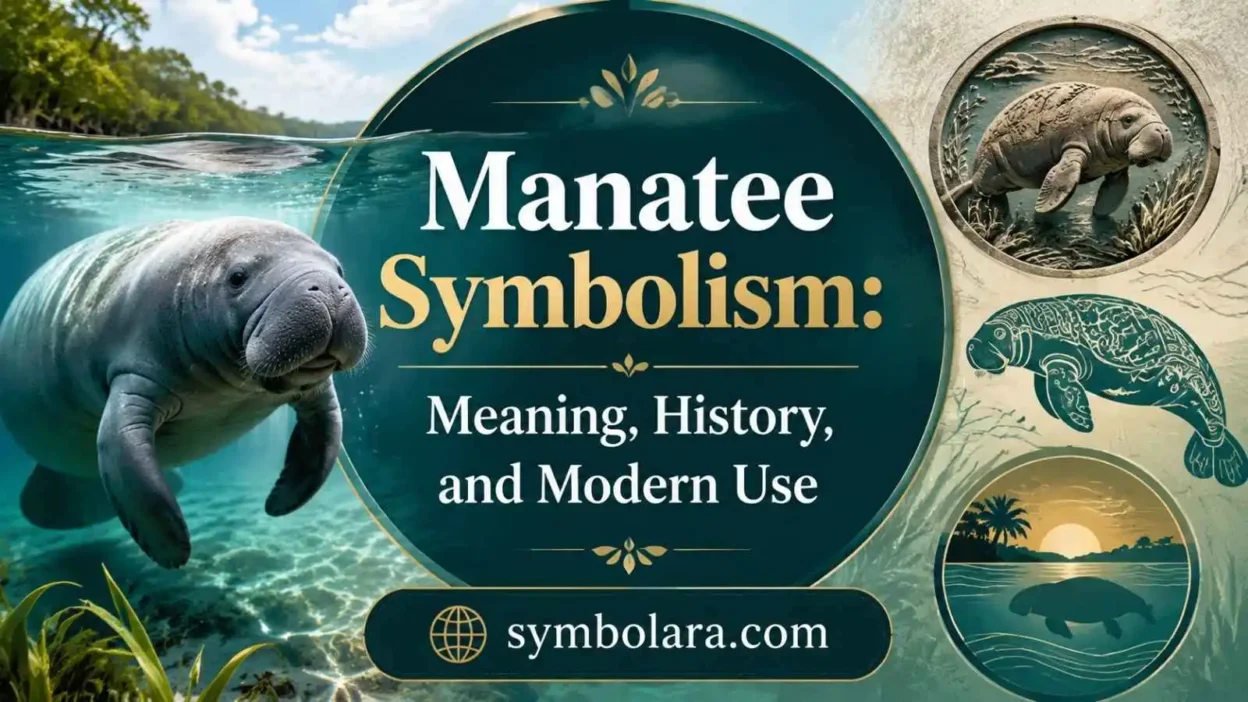
Manatee Symbolism centers on gentleness, calm strength, emotional safety, and protection of vulnerable life. In the United States, the manatee is especially tied to Florida, warm coastal waters, conservation awareness, and the idea that peaceful creatures still need active protection.
People care about the manatee because it does not look fierce, fast, or dramatic. Its meaning comes from the opposite qualities: slowness, trust, softness, quiet movement, and steady survival. That makes it a useful symbol for people who value patience, tenderness, and a less aggressive way of living.
In modern American culture, the manatee is more than a marine mammal. It appears in coastal art, wildlife campaigns, tattoos, vacation souvenirs, educational programs, and environmental messages. Its symbolism feels approachable because it is rooted in a real animal with visible habits, real risks, and a strong connection to place.
Quick Answer
Manatee Symbolism commonly represents peace, gentleness, emotional calm, and the need to protect harmless life in modern American culture. Historically, manatees have also been linked with sea-cow folklore, mermaid sightings, coastal mystery, and the relationship between humans and warm-water environments.
TL;DR
- Manatees symbolize peace, patience, and gentle strength.
- In the U.S., they strongly represent Florida conservation.
- Older folklore connects manatees with mermaids and sea cows.
- Their vulnerability adds meanings of protection and care.
- In tattoos, they often signal calm, kindness, and resilience.
- Misuse happens when people reduce them to jokes only.
What the Manatee Represents at First Glance
A manatee is large, rounded, slow-moving, and aquatic. It has paddle-like flippers, a broad tail, small eyes, and a blunt, whiskered face. These physical traits shape the way people read it symbolically. It does not suggest speed, sharpness, danger, or conquest. It suggests softness, buoyancy, and a life spent moving carefully through water.
That visual impression matters. Many animal symbols come from how humans interpret an animal’s body and behavior. Eagles suggest height and vision. Wolves suggest loyalty, danger, or pack identity. The manatee suggests nonviolence because its shape and behavior seem unthreatening. It feeds on aquatic plants, moves slowly, and spends its life in shallow coastal waters, rivers, springs, and estuaries.
Because of this, the manatee often becomes a symbol of being gentle without being weak. It is large enough to feel substantial, but its presence is not intimidating. That balance gives it emotional warmth. It can represent someone who is sensitive, grounded, kind, and quietly resilient.
What It Commonly Means in the United States
In the United States, the manatee most commonly symbolizes gentle living, conservation, and respect for fragile ecosystems. This meaning is strongest in Florida, where manatees are part of the state’s public identity. They appear on signs, license plates, local artwork, wildlife campaigns, tourist merchandise, and educational materials.
For many Americans, the manatee is also a symbol of slow living. It represents a refusal to rush, compete, or harden oneself unnecessarily. In a culture that often praises speed and productivity, the manatee offers a softer image: breathe, move carefully, and stay connected to the environment around you.
Its U.S. meaning is also tied to responsibility. Because manatees are vulnerable to boat strikes, cold stress, habitat loss, and seagrass decline, they symbolize the consequences of human carelessness. The animal itself is peaceful, but its story asks people to pay attention.
Core Symbolic Meanings of the Manatee
The manatee carries several related meanings, but they are not all the same. Each meaning comes from a different part of the animal’s life and public image.
| Context | Meaning in the USA | Common Associations | Notes |
| Wildlife conservation | Protection of vulnerable life | Boating safety, habitat care, Florida waters | Strongest modern public meaning |
| Personal symbolism | Calm and emotional gentleness | Patience, kindness, softness | Common in tattoos and art |
| Coastal identity | Florida and warm-water living | Springs, rivers, estuaries, tourism | Often used in local design |
| Folklore | Sea mystery and mistaken mermaids | Sailors, sea cows, old travel stories | Historical, not the main modern meaning |
| Psychological meaning | Peaceful resilience | Slowness, trust, self-acceptance | Popular in personal interpretation |
Together, these meanings make the manatee a symbol of quiet care. It does not demand attention through drama. It invites attention through vulnerability, calmness, and the reminder that harmless things still need defending.
Gentle Strength Without Aggression
The manatee is a useful symbol because it separates strength from aggression. It is a large animal, yet its symbolic personality is peaceful. That makes it different from animals commonly used to represent dominance, such as lions, sharks, or bears.
This is why the manatee can feel comforting. It suggests that a person, community, or value can be strong without being harsh. It can stand for people who are protective but not combative, steady but not loud, and emotionally present without needing to control others.
In personal symbolism, this matters. Someone drawn to the manatee may see themselves as calm, nurturing, introverted, or sensitive. They may also appreciate the idea of moving through life at their own pace instead of measuring themselves against louder or faster people.
Why Slowness Is Part of Its Meaning
The manatee’s slow movement is one of its most recognizable traits, and it gives the animal much of its symbolic weight. Slowness is often treated negatively in modern life, but the manatee changes that meaning. It makes slowness feel intentional, peaceful, and adaptive.
Symbolically, slowness can mean patience. It can also mean presence. A manatee does not appear frantic. It moves with the water, grazes, rests, and returns to warmth when it needs to survive. That creates a quiet lesson: not every form of wisdom is fast.
In American wellness and lifestyle language, the manatee can fit naturally with ideas of slowing down, reducing stress, and choosing a gentler rhythm. The meaning should not be exaggerated into fantasy. It is simple and practical: the manatee reminds people that a slower pace can still be a complete life.
Florida, Warm Water, and Regional Identity
No American region is more closely tied to the manatee than Florida. The Florida manatee has become a living emblem of the state’s springs, rivers, coastal waters, and winter refuges. When people see a manatee sign near a marina or a spring, they are also seeing a symbol of place.
This regional identity is not just decorative. Manatees depend on warm water during colder months, which links them to Florida’s natural springs and warm coastal habitats. That connection makes them symbols of refuge. They need safe places to gather, rest, and survive seasonal change.
In Florida culture, the manatee often represents the softer side of the state’s environment. It is not the alligator, the hurricane, or the high-energy beach scene. It is the quiet animal below the surface, asking boaters to slow down and notice what shares the water with them.
Historical Roots of Sea-Cow Meaning
The term “sea cow” helps explain one of the manatee’s oldest symbolic roles. Like cows on land, manatees graze on vegetation. This comparison made them easier for sailors, settlers, and naturalists to describe. It also shaped their image as mild, plant-eating, and domestic in temperament, even though they are wild animals.
Historically, sea-cow language placed manatees in a category of useful, unusual marine mammals. People saw them as strange because they did not fit familiar categories. They lived in water, yet they were not fish. They were large, gentle mammals with no interest in hunting, and their rounded bodies made them look very different from most animals that walk on land.
That uncertainty helped create symbolic associations with liminal spaces: river and sea, animal and almost-human, familiar and strange. The manatee became a creature of in-between places, both biologically and imaginatively.
The Mermaid Connection and Coastal Folklore
One of the most famous historical associations with manatees is the idea that sailors may have mistaken them for mermaids. This does not mean manatees “symbolize mermaids” in a direct modern sense. It means they became part of a larger history of sea travel, misrecognition, and mythmaking.
From a symbolism perspective, this matters because it shows how people turn unfamiliar animals into stories. A manatee rising from the water, seen from a distance by exhausted sailors, could become part of a mermaid tale. The animal’s body did not create the myth by itself; human expectation did much of the work.
Today, this connection gives the manatee a faint association with sea mystery and old coastal imagination. It also reminds readers to separate folklore from biology. The real animal is not less interesting because the myth was mistaken. In many ways, the truth is more meaningful: a quiet mammal became part of human wonder because people did not yet know how to understand it.
Cross-Cultural Meanings and Sacred Associations
Outside the United States, manatees and related sea-cow species have appeared in different cultural stories. In some West African traditions, manatees have been treated with reverence, sometimes linked to human-like qualities or taboos around killing them. These traditions should be approached carefully because beliefs vary by region, community, and period.
The broader pattern is clear: coastal and river cultures often give meaning to large aquatic animals that appear calm, rare, or human-like in movement. A manatee surfacing to breathe can feel strangely personal. Its eyes, face, and nursing behavior make it easier for people to see kinship rather than distance.
In Caribbean and Atlantic contexts, the manatee also belongs to a world of travel, colonization, Indigenous presence, fishing economies, and sea stories. Its symbolism cannot be reduced to one universal meaning. It changes depending on who is telling the story and what relationship that community has with the water.
Emotional and Psychological Meaning
Emotionally, the manatee often represents safety. Its rounded body and calm behavior make it feel nonthreatening, almost comforting. People who identify with the manatee may be drawn to its softness, its quiet presence, or its ability to live without appearing defensive.
Psychologically, it can symbolize self-acceptance. The manatee is not sleek in the way dolphins are often imagined. It is not fast, elegant, or sharp-edged. Its appeal comes from being exactly what it is: slow, large, gentle, and adapted to its environment.
That makes it a meaningful symbol for people who are tired of performance. A manatee image can suggest, “I do not need to become harder to be worthy.” It can also represent emotional boundaries: gentle does not mean available for harm, and peaceful does not mean unimportant.
Why It Appears in Tattoos and Personal Style
A manatee tattoo usually points to calmness, kindness, emotional healing, or love for marine life. Some people choose it because they feel connected to Florida or coastal environments. Others like the animal’s gentle personality and want a symbol that feels warm rather than intimidating.
The design style changes the meaning. A realistic manatee tattoo may emphasize wildlife respect and conservation. A small minimalist outline may suggest quiet humor or personal calm. A manatee with seagrass, waves, or a spring setting can add meanings of nourishment, flow, and safe refuge.
Unlike fierce animal tattoos, a manatee tattoo rarely tries to project dominance. Its message is more personal: I value peace, I move at my own pace, I protect what is gentle, or I feel at home near the water.
Jewelry, Decor, and Coastal Design
In jewelry and home decor, the manatee usually works as a symbol of coastal softness. It appears on pendants, ornaments, nursery art, beach house prints, mugs, stickers, and handmade crafts. These uses often blend affection with regional pride.
A manatee in decor can make a space feel relaxed and nature-oriented. It is especially common in designs connected to Florida springs, eco-tourism, marine rescue, or ocean education. Unlike shells or anchors, which can become generic coastal symbols, the manatee points to a specific living creature and a specific environmental story.
For children’s rooms or educational spaces, the manatee often communicates kindness and curiosity. Its friendly shape makes it approachable, while its conservation story gives adults a way to teach care for wildlife without using fear as the main message.
Conservation Meaning and Moral Responsibility
The strongest modern meaning of the manatee is conservation. Its peacefulness makes human-caused harm feel especially visible. When a creature that does not threaten people is injured by boats, habitat decline, or polluted waterways, it becomes a symbol of responsibility.
This is why manatee signs often tell boaters to slow down. The sign is practical, but it is also symbolic. It asks humans to adjust their behavior for a quieter life form they might not see until it is too late.
The manatee also represents ecosystem health. Because it depends on seagrass, warm-water refuges, and clean aquatic habitats, its well-being reflects larger environmental conditions. Protecting manatees is not only about saving one beloved animal. It is also about caring for the waterways that support many forms of life.
Modern Use in Social Media and Pop Culture
On social media, the manatee often appears as a cute, gentle, or humorous animal. People use manatee images to express softness, awkwardness, calm moods, body positivity, or the desire to float away from stress. This modern use is usually affectionate.
Pop culture sometimes treats the manatee as funny because of its shape and slowness. That can be harmless when it comes from warmth, but it can become shallow when it turns the animal into nothing more than a joke. The better modern interpretation keeps both sides in view: the manatee can be lovable and amusing while still deserving respect.
In digital culture, the manatee also fits a growing preference for “soft” symbols. Instead of using only fierce animals to express identity, people increasingly choose animals that represent rest, gentleness, neurodivergent comfort, emotional recovery, or quiet joy.
Common Misunderstandings About the Symbol
A common misunderstanding is that the manatee symbolizes laziness. That reading comes from judging the animal by human productivity standards. In reality, its slow movement is part of its biology and environment. Symbolically, it is better understood as patience, calm, and low-conflict living.
Another misunderstanding is that manatees are helpless. They are vulnerable to certain human threats, but they are not meaningless or incapable animals. They are adapted to their habitat and have survived as part of warm aquatic ecosystems for a long time.
A third mistake is treating the mermaid connection as the animal’s only historical meaning. The folklore is interesting, but the modern symbol is broader. Today, the manatee stands more strongly for conservation, gentleness, and coexistence than for fantasy.
How Its Meaning Has Changed Over Time
The manatee’s meaning has moved from mystery to responsibility. Earlier observers often framed it through unfamiliarity: sea cow, mermaid-like creature, odd marine mammal, strange grazer of warm waters. Those meanings came from distance and limited scientific understanding.
Modern Americans are more likely to understand the manatee through ecology and conservation. The animal is no longer mainly a curiosity. It is a public symbol of how human activity affects vulnerable wildlife.
This change makes the manatee a very contemporary symbol. Its meaning is not frozen in old folklore. It continues to evolve as people think more seriously about habitat, boating, climate pressure, water quality, and the ethics of sharing space with nonhuman life.
Positive and Negative Symbolism
Most manatee symbolism is positive. It includes peace, kindness, patience, trust, refuge, and emotional steadiness. These meanings come directly from the animal’s gentle public image and nonpredatory behavior.
The negative side is not about evil or bad luck. Instead, it involves vulnerability, slowness, and the risk of being overlooked. A manatee can symbolize what happens when gentle beings exist in environments shaped by faster, louder, more careless forces.
That contrast is part of what makes the symbol meaningful. The manatee is not only cute. It is a reminder that softness can be endangered when people stop paying attention.
When to Use the Manatee as a Symbol
The manatee works well as a symbol when the message involves calm, protection, kindness, coastal identity, environmental care, or healing. It fits brands, art, tattoos, educational projects, and personal designs that want warmth without aggression.
It is less effective when the intended message is speed, ambition, danger, luxury, or power in the traditional sense. The manatee’s strength is emotional and ecological, not competitive.
Used thoughtfully, the manatee can say a lot with a simple image. It can communicate care for nature, a slower rhythm of life, and respect for beings that survive by gentleness rather than force.
FAQs
A manatee symbolizes peace, gentleness, patience, emotional safety, and protection of vulnerable life. In the United States, it also strongly represents Florida wildlife conservation and respect for warm-water habitats.
Yes, a manatee can be a meaningful tattoo symbol for someone who values calmness, kindness, healing, or marine conservation. It is especially fitting for people connected to Florida, coastal life, or a slower and softer personal identity.
Spiritually, the manatee is often interpreted as a sign of calm presence, trust, and gentle movement through life. It is not tied to one single religious meaning, so personal interpretation matters more than a fixed doctrine.
Manatees are associated with mermaids because some early sailors and explorers are believed to have mistaken them for human-like sea figures from a distance. The connection belongs to maritime folklore and shows how unfamiliar animals were often interpreted through existing myths.
In Florida, the manatee symbolizes local wildlife, warm springs, coastal ecosystems, and conservation responsibility. It is also a reminder for boaters and residents to share waterways carefully with animals that are easy to harm.
It is mostly positive, with meanings of peace, kindness, refuge, and gentle strength. Its more serious side involves vulnerability, reminding people that harmless creatures can still be threatened by human behavior.
Dolphins often symbolize intelligence, play, communication, and social energy. Manatees usually symbolize calm, patience, softness, protection, and a slower way of living.
Conclusion
The manatee is a symbol of peace, patience, and gentle strength. Its meaning comes from the animal’s real behavior: slow movement, plant-based feeding, warm-water dependence, and a calm presence in shallow aquatic habitats.
In modern America, Manatee Symbolism is especially connected to Florida, conservation, and the moral responsibility to protect vulnerable wildlife. It carries older echoes of sea-cow folklore and mermaid stories, but its strongest meaning today is grounded in coexistence.
The manatee reminds us that not every meaningful symbol needs to be fierce. Some of the most important ones ask us to slow down, look below the surface, and protect what cannot protect itself from us.