
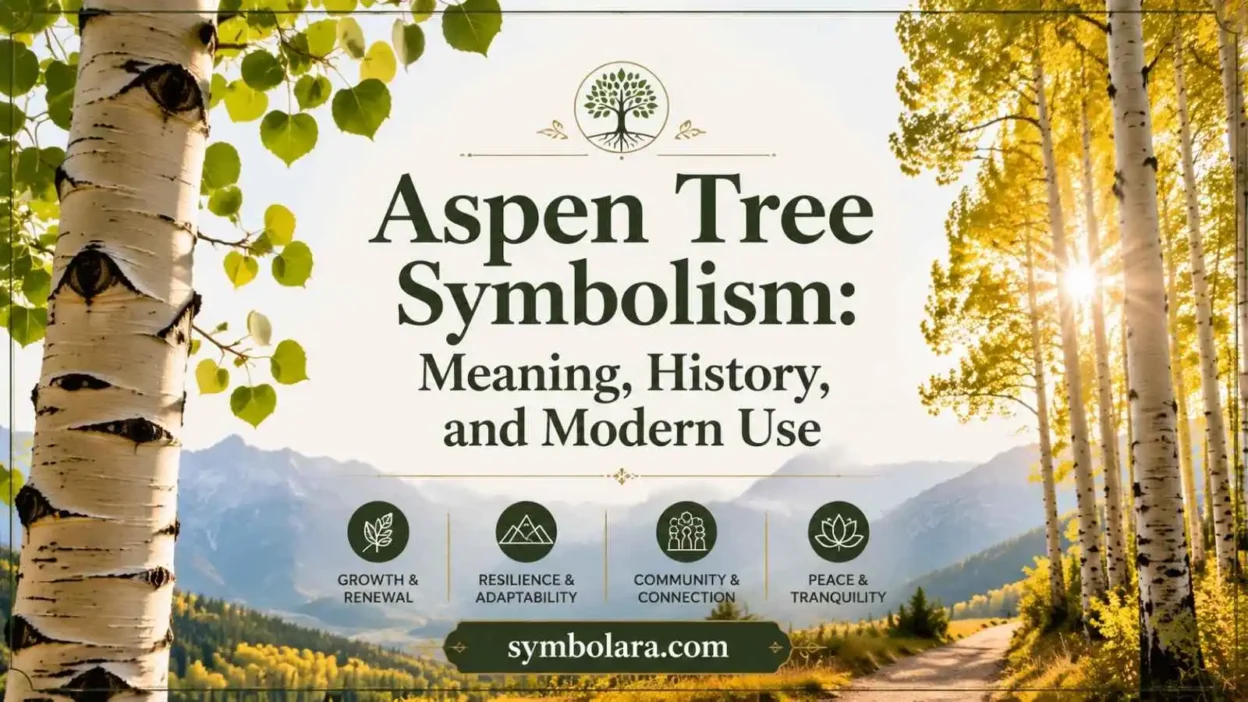
Aspen Tree Symbolism reflects resilience, renewal, sensitivity, and community. In the United States, the tree carries strong meaning because it thrives in Western mountain landscapes, where its white bark, shimmering leaves, and golden fall color make it instantly recognizable.
People admire the aspen because it appears delicate yet survives harsh environments. Its fluttering leaves respond to the slightest breeze, while its roots endure fire, cold, and drought.
This combination of vulnerability and durability gives the aspen its modern symbolic power. It illustrates that emotional awareness can coexist with strength.
Quick Answer
Aspen Tree Symbolism represents resilience, renewal, connection, and emotional sensitivity in contemporary American culture. Historically, people also associated it with protection, trembling awareness, rebirth, and shared strength across its interconnected root systems.
TL;DR
• Aspen conveys resilience through change.
• Trembling leaves suggest sensitivity and alertness.
• Shared roots symbolize community and connection.
• Seasonal color reflects renewal and transition.
• In the U.S., it embodies Western mountain identity.
• Misinterpretations often arise from romanticizing Indigenous associations.
Physical Characteristics and Presence
Aspens are slender deciduous trees with pale bark, rounded leaves, and golden foliage in autumn. The quaking aspen, common in North America, earned its name from the fluttering motion of its leaves.
White or cream bark, marked with dark knots, stands in contrast to bright green or golden leaves. Flattened leaf stems allow even a light breeze to move entire groves, giving the tree a lively appearance.
Americans encounter aspens primarily in Colorado, Utah, Wyoming, Idaho, Montana, Arizona, and New Mexico. They appear in cabin art, ski-town decor, hiking photography, and even tattoos or jewelry.
Core Symbolism in the United States
Americans associate aspens with endurance, change, and unity. The trees evoke mountain landscapes, clear air, and seasonal beauty. Golden leaves signal autumn, while white trunks suggest calm, simplicity, and clarity.
The tree’s interconnected root system conveys invisible support. A grove may appear as many separate trees, but underground roots unify it. This natural feature inspires symbolism around family, ancestry, and community strength.
| Context | Meaning in the USA | Common Associations | Notes |
|---|---|---|---|
| Tattoos | Resilience and personal growth | Survival, adaptation, family | Often chosen after life transitions |
| Home decor | Calm, natural beauty | Cabins, mountains, autumn | Popular in Western-inspired interiors |
| Weddings | Shared roots, new beginnings | Partnership, family growth | Less traditional than oak or olive |
| Memorials | Continuity after loss | Memory, renewal, seasons | Gently commemorative |
| Outdoor culture | Western identity | Hiking, forests, ski towns | Strong regional ties |
Resilience: Strength Through Hardship
Aspens regenerate from roots after damage caused by fire, storms, or disease. Visible stems may die, but the grove continues growing.
This natural durability symbolizes recovery and adaptation. People often relate it to overcoming grief, illness, or major life changes. The tree emphasizes persistence rather than invincibility.
Trembling Leaves and Sensitivity
The fluttering leaves define the aspen’s symbolism. They make the tree appear alert and responsive to subtle changes.
Historically, trembling leaves suggested fear, spiritual awareness, or warning. Modern Americans interpret the movement as emotional sensitivity, perception, and intuition. The tree resonates with people who see themselves as observant and empathetic.
Shared Roots and Community
Aspen groves often function as one organism beneath the surface. This characteristic symbolizes hidden support, interconnectedness, and communal strength.
Many interpret groves as metaphors for family, chosen communities, or collective resilience. The aspen reminds observers that strength can exist quietly within a supportive network.
Renewal and Seasonal Transformation
Aspens visually embody change. Spring leaves emerge bright and fresh, summer foliage turns lush, autumn leaves glow golden, and winter exposes pale trunks.
Americans often associate golden aspens with fall travel, reflection, and personal transition. The tree’s cycles highlight adaptation, continuity, and beauty through change.
Historical and Folkloric Significance
European folklore interpreted trembling aspen leaves as signs of fear, vigilance, or spiritual presence. Protective qualities emerged in some traditions, while others connected trembling to sorrow or caution.
Although older folklore differs from modern U.S. interpretations, it explains why humans long noticed aspens as special trees. Their visible movement set them apart and invited symbolic meaning.
Indigenous and Regional Contexts
Indigenous peoples used aspens in tools, medicine, shelter, and storytelling. However, meanings vary by nation, region, and community, so no single “Native American meaning” applies universally.
In the American West, aspen trunks often served as surfaces for carvings, known as arborglyphs, documenting names, dates, and cultural markers. These carvings show how aspens became part of human memory.
The Aspen and Western Identity
Aspens define much of the Western U.S. landscape. Their white trunks and golden leaves dominate fall scenery and inspire art, photography, and interior design.
They also symbolize escape from urban life, nature immersion, and mountain culture. People associate aspens with hiking, skiing, autumn drives, and high-country aesthetics.
Emotional and Psychological Meaning
The aspen reflects emotional depth combined with quiet strength. It bends in response to the environment, yet the root system endures.
This symbolism resonates with individuals who value emotional awareness, adaptability, and resilience. The tree validates strength that appears gentle rather than forceful.
Tattoos, Jewelry, and Decor
Aspen tattoos symbolize survival, personal growth, family, and mountain affinity. Single leaves often represent change, while groves suggest community or ancestry.
In jewelry, pendants shaped like aspen leaves convey transformation, memory, or place-based identity. Home decor uses the tree to combine movement, calmness, and visual interest in rustic or Western-inspired spaces.
Positive and Nuanced Interpretations
Modern symbolism emphasizes resilience, awareness, and unity. Historical associations with fear or trembling exist but have softened.
The aspen communicates both beauty and vulnerability. It reminds observers that emotional sensitivity and strength can coexist.
Common Misinterpretations
People sometimes assume the aspen holds a single spiritual meaning, which is incorrect. Symbolism depends on context, including ecology, folklore, or personal experience.
Overgeneralizing Indigenous connections or romanticizing groves as perfect symbols of unity can misrepresent both cultural and ecological realities.
Evolution of Meaning
The aspen shifted from representing fear or alertness in folklore to symbolizing resilience, adaptation, and community in modern U.S. culture. Awareness of root systems has strengthened its symbolic link to interdependence and ecological insight.
Today, the aspen reflects themes of change, renewal, and environmental awareness, making it especially meaningful in 2025–2026.
FAQs
It symbolizes resilience, renewal, sensitivity, and connection. Americans often link it to family, community, and endurance through change.
Mostly positive. Modern interpretations emphasize adaptability and awareness, while historical folklore sometimes associated trembling leaves with caution or fear.
Tattoos often represent personal growth, survival, or connection to mountains. Groves symbolize family or shared strength.
Flattened leaf stems allow light breezes to move leaves easily, symbolizing alertness, responsiveness, and emotional sensitivity.
Golden leaves represent transition, maturity, and reflection during seasonal change.
Many aspens share roots, symbolizing hidden support, interconnection, and collective strength.
No single religious meaning exists. Its symbolism is mainly ecological, cultural, or personal rather than formally spiritual.
Conclusion
Aspen Tree Symbolism emphasizes resilience, renewal, sensitivity, and community. Trembling leaves, white trunks, seasonal color, and shared roots convey enduring lessons relevant to modern American life.
The aspen teaches that strength can appear gentle, and that survival often relies on connection beneath the surface. It remains a meaningful symbol for individuals, communities, and those inspired by mountain landscapes.



[…] tree shows history in its structure. A bent branch or uneven trunk tells a story of time and care rather than flaw or […]