
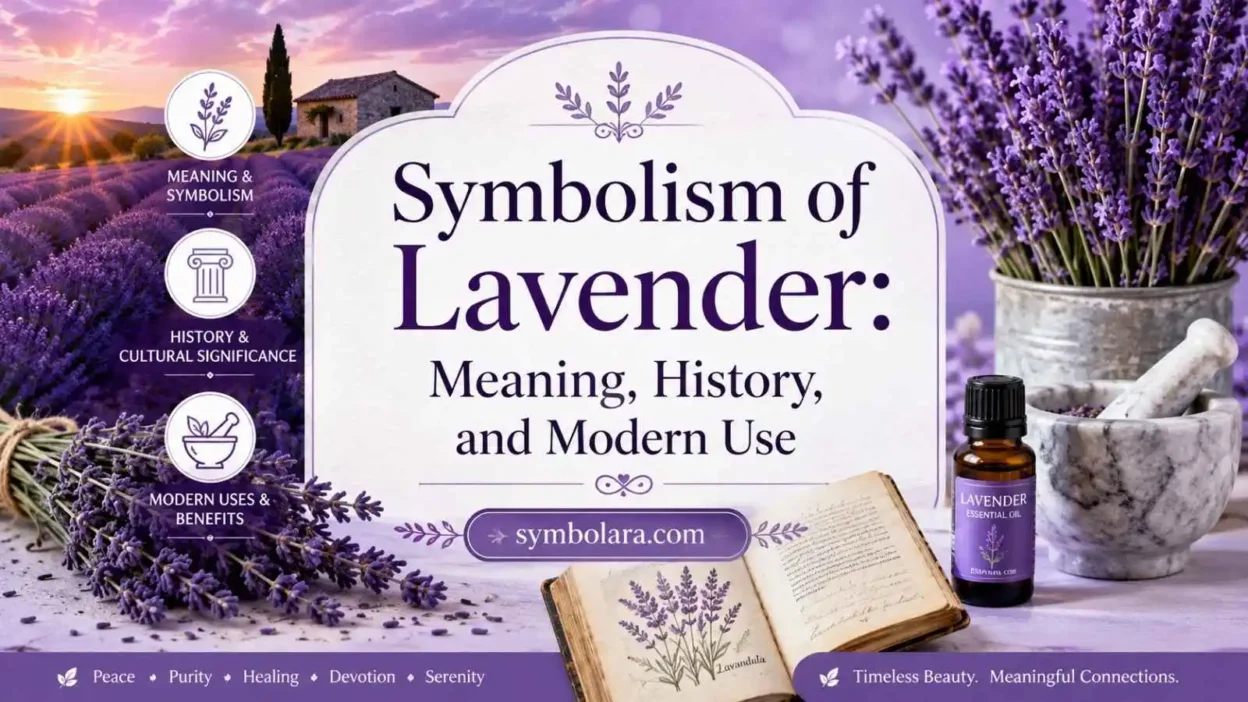
Lavender is one of the rare symbols Americans understand through several senses at once: its soft purple color, its clean herbal scent, its delicate flower spikes, and its association with rest. The symbolism of lavender usually begins with calm, but it does not end there. It also carries meanings tied to purity, devotion, healing, memory, femininity, queer identity, and gentle protection.
People encounter lavender in gardens, candles, soaps, essential oils, wedding flowers, bedroom decor, tattoos, sympathy gifts, and wellness products. Because it appears in both ordinary household items and emotionally charged moments, lavender has become a symbol that feels personal without being overly formal.
Its meaning comes from a long mixture of botany, scent, color psychology, folk tradition, domestic history, and modern American culture. Lavender’s story is not just about a pretty flower. It is about how one plant became shorthand for peace, care, cleanliness, and quiet emotional strength.
Quick Answer
The symbolism of lavender commonly represents calm, peace, healing, and emotional balance in modern American culture, especially in wellness, home decor, weddings, and personal style. Historically, lavender has also been associated with cleanliness, devotion, purity, protection, remembrance, and, in modern U.S. history, LGBTQ+ identity.
TL;DR
- Lavender most often symbolizes calm and emotional balance.
- Its name is tied to washing and cleanliness.
- Americans link lavender with wellness, sleep, and self-care.
- The flower can suggest devotion, purity, and gentle love.
- Lavender also has LGBTQ+ historical and cultural meaning.
- Misuse often comes from exaggerated wellness claims.
What Lavender Looks Like and Why Its Appearance Matters
Lavender is both a plant and a color. As a plant, it usually appears as a small, woody, aromatic shrub with narrow gray-green leaves and slender stems topped with purple, bluish, or violet flower spikes. It belongs to the mint family and is native to the Mediterranean region, though it is now widely grown in gardens and farms far beyond that climate.
That physical appearance shapes its symbolism. Lavender does not look bold or showy in the way a red rose does. Its flowers are small, repeated, and restrained. Its muted purple color feels softer than royal purple and cooler than pink. This is part of why Americans often read lavender as soothing, modest, clean, and emotionally safe.
The scent matters just as much as the color. Lavender’s fragrance is herbal, floral, slightly sharp, and recognizable even when the flower is not visible. Because people often meet lavender through soaps, laundry products, candles, lotions, and sachets, the symbol is strongly connected to domestic comfort and cleanliness.
What Lavender Commonly Means in the United States
In the United States, lavender most commonly symbolizes calm. It appears in products and settings designed to suggest rest: sleep sprays, bath salts, massage oils, spa rooms, yoga studios, nurseries, bedrooms, and quiet corners of the home. Even when someone does not know lavender’s older history, they likely recognize it as a visual and aromatic cue for relaxation.
Lavender also symbolizes care. A lavender candle, bouquet, or lotion often feels like a small act of tenderness rather than a dramatic romantic gesture. It can say, “Rest,” “Take care of yourself,” or “I hope you feel better.” That emotional tone is gentle, which makes lavender popular for sympathy gifts, get-well packages, and self-care rituals.
Another common meaning is refinement without coldness. Lavender can feel elegant, but not severe. It fits farmhouse kitchens, cottage gardens, minimalist bedrooms, wedding palettes, and boutique packaging because it suggests tastefulness, softness, and order.
Ancient Roots: Cleanliness, Bathing, and Scent
Lavender’s connection with cleanliness is one of its oldest symbolic threads. The word “lavender” is often linked to Latin lavare, meaning “to wash,” because the plant was historically associated with bathing, laundry, and perfuming clean fabrics. Etymological sources note that the English word is connected with French and Italian forms tied to washing and scented linens.
This origin helps explain why lavender still feels “clean” to modern Americans. The association is not random advertising. For centuries, lavender was used to scent stored clothing, freshen rooms, and perfume bathing spaces. Its symbolism grew from everyday use.
In practical terms, lavender made homes and bodies smell pleasant before modern synthetic fragrances existed. Symbolically, that gave the plant a link to purification, order, hospitality, and domestic care. A lavender-scented room suggested attention, tidiness, and a desire to make a space feel safe.
Lavender as a Symbol of Peace and Rest
Lavender’s calming meaning comes from both cultural habit and sensory experience. Its pale purple tone is visually quiet, and its scent has long been associated with rest. In modern wellness culture, lavender is often marketed for relaxation, sleep, and stress relief.
The medical evidence is more cautious than popular marketing. The National Center for Complementary and Integrative Health notes that it is still unclear whether lavender aromatherapy reliably helps anxiety, stress, depression symptoms, pain, sleep quality, or insomnia, although some people report improved quality of life from lavender aromatherapy.
For symbolism, that distinction matters. Lavender does not need to be a proven cure to carry emotional meaning. In American culture, it functions as a cue for slowing down. A lavender pillow spray, dried bundle, or bath product tells the mind that a transition is happening: from work to rest, from tension to ease, from public life to private recovery.
Purity, Clean Spaces, and Domestic Protection
Lavender’s symbolism of purity is closely tied to its history in washing and scenting household items. Unlike the purity of white lilies, which can feel formal or religious, lavender’s purity is domestic. It is the purity of fresh sheets, aired-out rooms, clean skin, folded linens, and a home that has been cared for.
This is why lavender has often been used in sachets for drawers and closets. The dried flowers hold scent well and are commonly used in sachets, potpourri, crafts, and recipes. University extension sources continue to describe lavender as one of the most popular herbs for dried flowers, fragrance, oil, baking, and household uses.
Because it was placed among stored clothes and household goods, lavender also developed a quiet protective meaning. It suggested preservation: keeping fabric fresh, keeping rooms pleasant, keeping disorder away. In modern symbolism, that protective quality often appears as emotional rather than physical protection. Lavender says, “This space is meant to calm you.”
Devotion, Loyalty, and Gentle Love
Lavender can symbolize devotion, especially in romantic, familial, or spiritual contexts. It is not the fiery passion of red roses or the innocence of daisies. Its emotional language is steadier: loyalty, patience, tenderness, and care over time.
That makes lavender especially fitting for weddings and long-term relationships. In American wedding design, lavender often appears in bouquets, boutonnieres, table settings, invitations, bridesmaid dresses, and rustic or garden-style ceremonies. Its appeal is partly visual, but its meaning also fits the mood many couples want: love that feels peaceful, sincere, and grounded.
Lavender’s devotion symbolism also comes from scent. Fragrance lingers. It can stay in fabric, memory, and rooms long after the flower is gone. Because of that, lavender often symbolizes love expressed through presence rather than spectacle.
Lavender in the Language of Flowers
In the Victorian language of flowers, plants were often assigned meanings that allowed people to communicate feelings indirectly. Flower dictionaries varied, and meanings were not always consistent, but lavender was commonly linked with ideas such as devotion, purity, silence, caution, calmness, and sometimes distrust. Victorian flower-language traditions used flowers to express emotions that polite society did not always allow people to state plainly.
The “distrust” meaning can surprise modern readers. It does not fit today’s warm association with lavender. But Victorian flower symbolism often depended on context, arrangement, and the specific book being consulted. A single flower could carry more than one meaning.
In today’s United States, the calmer meanings have largely won out. Most people do not give lavender to imply suspicion. They give it to suggest peace, affection, sleep, sympathy, beauty, or care.
Religious and Spiritual Associations
Lavender is sometimes connected with purity, devotion, and sacred fragrance in Christian-influenced folklore, though these associations should be handled carefully. The Bible mentions spikenard or nard, a costly aromatic oil, not the modern garden lavender most Americans know. Spikenard is generally identified with a different plant, Nardostachys jatamansi, native to the Himalayan region.
Still, lavender entered European Christian folk imagination through stories about holiness, clean garments, and sacred scent. In that setting, lavender’s meaning was less about doctrine and more about atmosphere: cleanliness, reverence, humility, and the care of the body.
For modern American readers, lavender is usually not a formal religious symbol in the way a cross, dove, or lily might be. It is more often a spiritual-adjacent symbol: something used in prayer spaces, meditation rooms, memorial gardens, and quiet rituals because it suggests peace and inward focus.
Lavender and Mourning, Memory, and Sympathy
Lavender can be used in mourning because it is soothing without being stark. White flowers often symbolize innocence, red flowers may feel too romantic, and bright flowers can seem too celebratory. Lavender sits between those emotional tones. It offers comfort without demanding cheerfulness.
In sympathy gifts, lavender may suggest rest for the grieving person, peace for the deceased, or remembrance that is tender rather than dramatic. Dried lavender also works well as a memory object because it keeps its scent after being harvested. That makes it suitable for keepsakes, memorial sachets, pressed arrangements, and remembrance boxes.
This meaning is especially common in personal rather than public mourning. A lavender plant on a porch, a sachet in a drawer, or a small bundle tied with ribbon can carry grief quietly. It gives people a way to remember without turning memory into display.
Lavender, Color Psychology, and Emotional Tone
The color lavender sits between purple, blue, gray, and pink. That in-between quality gives it emotional flexibility. Purple has long been associated with nobility, spirituality, and ceremony; blue suggests calm and trust; pink suggests tenderness; gray softens the whole effect.
In American design, lavender often communicates softness, imagination, femininity, gentleness, and emotional safety. A pale lavender bedroom feels different from a bright purple one. It is less dramatic and more restful. In branding and packaging, lavender often signals products related to sleep, skincare, relaxation, fragrance, baby care, or gentle beauty.
The color can also suggest sensitivity. People who choose lavender for clothing, decor, or tattoos may be drawn to its quiet expressiveness. It has personality, but it does not shout.
Lavender Symbolism by Color: Purple, White, and Pink Lavender Meanings
Although lavender itself is usually associated with soft purple tones, different lavender colors can create different symbolic meanings.
Purple lavender is the most recognized form and commonly represents calm, imagination, devotion, and emotional balance. It combines the traditional symbolism of purple with the gentle personality of the lavender flower.
White lavender often symbolizes purity, simplicity, peace, and new beginnings. Because white flowers frequently appear in weddings and memorial settings, white lavender can feel especially connected to innocence and remembrance.
Pink lavender carries softer emotional meanings. It may represent affection, kindness, tenderness, and gentle love. Its warmer appearance makes it feel more connected to friendship, compassion, and emotional closeness.
The meaning of lavender color depends on the setting. A lavender wedding arrangement, a lavender tattoo, and lavender home decor may use the same color but communicate different feelings.
Lavender in Modern American Wellness Culture
Lavender is now one of the most recognizable symbols in American wellness culture. It appears in essential oils, diffusers, eye pillows, candles, herbal teas, bath bombs, massage oils, sleep masks, and skincare products. The message is usually clear: this product is meant to calm, soften, or restore.
This modern use has made lavender both beloved and over-marketed. Its symbolic value is strong because it gives people a simple ritual for rest. Lighting a lavender candle or using lavender soap can become a way of marking a boundary between stress and recovery.
At the same time, the symbol can be stretched too far. Lavender products are sometimes promoted with claims that go beyond the available evidence. A grounded view recognizes lavender as meaningful and comforting while avoiding the idea that it is a substitute for medical care.
Lavender in Tattoos and Personal Style
Lavender tattoos are popular because the flower is visually delicate but symbolically layered. A small lavender sprig can represent calm, healing, resilience, remembrance, devotion, femininity, sobriety, or a personal commitment to peace. Unlike some floral tattoos, lavender often feels understated.
The shape also works well for body art. Its long stems and clustered blossoms fit wrists, ribs, ankles, collarbones, arms, and behind-the-ear placements. A single sprig can look minimal, while a larger botanical design can feel romantic or memorial.
In fashion and jewelry, lavender often signals softness with intention. A lavender dress, stone, enamel charm, or floral accessory may communicate grace, calm confidence, or a preference for gentler forms of beauty. It is especially common in spring fashion, bridal events, garden aesthetics, and soft vintage styles.
Lavender Symbolism in Dreams: Meaning and Interpretations
Dreams about lavender often connect with feelings of peace, emotional healing, memory, and personal growth. Because lavender already carries strong associations with calm and comfort in everyday life, seeing it in a dream may reflect a desire for balance, rest, or emotional renewal.
A lavender field in a dream can represent a peaceful period, a need to slow down, or a search for a safer emotional space. A single lavender flower may symbolize personal healing, quiet confidence, or a meaningful memory connected to someone or something important.
The meaning depends on the dreamer’s situation. For some people, lavender may represent relaxation after a stressful period. For others, it may connect with relationships, creativity, spirituality, or a personal transformation.
Common lavender dream interpretations include:
| Dream Symbol | Possible Meaning |
|---|---|
| Lavender field | Peace, growth, emotional freedom |
| Picking lavender | Collecting positive memories or experiences |
| Lavender scent | Comfort, nostalgia, or a calming influence |
| Dried lavender | Remembrance, lasting connections, preserved memories |
Dream symbolism is highly personal rather than universal. Although lavender often carries gentle and calming associations, the emotions experienced during the dream usually provide the most meaningful interpretation.
Lavender in Weddings, Decor, and Everyday Design
Lavender remains both a practical and symbolic choice in many American weddings. Its soft appearance and soothing associations make it popular in bouquets, decorations, invitations, and event themes. The flower is often chosen to create an atmosphere of elegance, romance, calmness, and natural beauty.
It can be used fresh or dried, and it fits outdoor, rustic, bohemian, vintage, and garden themes. Its color pairs easily with cream, sage, gray, dusty blue, blush, and natural wood.
In home decor, lavender usually means restfulness. It appears in bedrooms, bathrooms, guest rooms, nurseries, linen closets, and spa-like spaces. A lavender palette can make a room feel clean and gentle without becoming sterile.
| Context | Meaning in the USA | Common Associations | Notes |
| Home decor | Calm and cleanliness | Bedrooms, baths, linens | Often used to soften a space |
| Weddings | Devotion and peaceful love | Bouquets, favors, palettes | Popular in rustic and garden styles |
| Tattoos | Healing and resilience | Sprigs, memorial designs | Often chosen for personal meaning |
| Wellness | Rest and self-care | Oils, candles, bath products | Symbolic value can exceed evidence |
| Sympathy gifts | Comfort and remembrance | Plants, sachets, dried bundles | Gentle alternative to formal flowers |
| Identity | Visibility and resistance | LGBTQ+ history, purple symbolism | Meaning depends strongly on context |
Lavender Symbolism in Jewelry and Gifts
Lavender is often chosen for gifts because it communicates care without feeling overwhelming. Unlike symbols connected with intense emotions, lavender usually expresses gentle support, kindness, and thoughtfulness.
A lavender bouquet may represent peace, appreciation, or emotional comfort. A lavender candle or bath product can communicate the message, “Take time for yourself.” This makes lavender popular for birthdays, sympathy gifts, housewarming presents, and wellness packages.
Lavender jewelry, such as flower pendants, charms, or engraved designs, often represents personal calm, healing, remembrance, or a meaningful connection with someone special.
Because lavender has both emotional and practical associations, it works well as a gift symbol. It can represent love, but it can also represent friendship, recovery, encouragement, and peaceful memories.
Lavender and LGBTQ+ Identity in American History
Lavender also has a distinct place in American LGBTQ+ history. In the mid-20th century, the “Lavender Scare” referred to a period of federal persecution and moral panic in which gay and lesbian government employees were treated as supposed security risks. Britannica describes it as a U.S. moral panic that roughly coincided with the Red Scare and lasted from about 1947 to 1975.
The National Archives notes that beginning in the late 1940s and continuing into the 1960s, thousands of gay employees were fired or forced to resign from the federal workforce because of their sexuality.
Because of this history, lavender can carry a meaning very different from calm domesticity. In LGBTQ+ contexts, it may symbolize visibility, coded identity, survival, resistance, and the reclaiming of a term once used to stigmatize. This is also seen in phrases such as Lavender Graduation, a ceremony held at many schools to honor LGBTQ+ students, and in references to lesbian feminist activism such as the Lavender Menace.
The important point is context. A lavender candle in a bedroom and lavender in LGBTQ+ history do not mean the same thing, but they share a color and a cultural vocabulary. One is about rest; the other is about identity, exclusion, pride, and resilience.
Cross-Cultural Meanings and Folk Traditions
Lavender’s meanings vary across cultures, but several themes repeat: cleanliness, fragrance, protection, healing, and devotion. In European folk traditions, lavender was often placed in homes, linens, and gardens. Its scent made it useful in daily life, and useful objects often become symbolic because they show up at meaningful moments.
In Mediterranean and European contexts, lavender’s symbolism is tied to climate and place: sun, dry hillsides, herb gardens, monasteries, kitchens, and old domestic practices. In American culture, many of those associations have been softened into a more general idea of rustic calm or European charm.
Lavender also appears in contemporary spiritual practices, where people may use it in meditation, cleansing rituals, dream pillows, or intention-setting. These uses should not be confused with ancient universal meanings. They are modern interpretations built from lavender’s older associations with fragrance, calm, and purification.
Lavender Symbolism in Art, Literature, and Popular Culture
Lavender has appeared in art, literature, and popular culture as a symbol of softness, imagination, memory, and emotional atmosphere. Artists often use lavender colors and flowers to create a feeling of calm, nostalgia, beauty, or quiet mystery.
In paintings and photography, lavender fields often represent peaceful landscapes, escape, and connection with nature. The color itself can create a dreamy or reflective mood because it combines the stability of blue with the creativity and spirituality often linked with purple.
Writers may use lavender imagery to represent memories, gentle relationships, childhood moments, or moments of emotional change. A character surrounded by lavender may appear peaceful, sensitive, thoughtful, or connected to nature.
Modern media also uses lavender to communicate specific moods. In fashion, branding, and design, lavender often suggests creativity, elegance, kindness, and emotional awareness. In some cultural contexts, it can also represent identity and social history, especially through LGBTQ+ references.
Because lavender carries multiple meanings, artists can use it in different ways. It can suggest comfort and softness, but it can also represent resilience, personal expression, and the complexity of human emotions.
Common Misunderstandings and Misuse
The most common misunderstanding is treating lavender as if it has one fixed meaning. It does not. A lavender tattoo, a lavender wedding bouquet, a lavender political reference, and a lavender soap label may all point to different meanings.
Another misunderstanding is assuming that every historical lavender claim is equally reliable. Some stories about lavender in ancient Egypt, biblical scenes, or medieval medicine are repeated online in simplified ways. The safer interpretation is that lavender has a long history of aromatic, household, and medicinal use, but specific legends should not always be treated as documented fact.
Modern misuse often appears in wellness marketing. Lavender can be comforting, and many people genuinely associate it with sleep and relaxation. But symbolic calm is not the same as guaranteed medical effect. Responsible use separates emotional comfort from exaggerated health promises.
How Lavender’s Meaning Has Changed Over Time
Lavender’s meaning has moved through several stages. First, it was a practical aromatic plant associated with washing, scent, and household care. Then it became part of herbal, folk, religious, and flower-language traditions. Later, it entered modern design and wellness culture as a symbol of calm.
In the United States, the color also took on political and identity-related meaning through LGBTQ+ history. That development gave lavender a sharper cultural edge than many people realize. It is not only a spa color or a wedding flower; it can also mark a history of exclusion and resilience.
Today, the meaning of lavender often depends on the context in which it appears. Used in a bedroom, it may suggest calmness, relaxation, and rest. When included in a bridal bouquet, lavender can represent devotion, affection, and commitment. A memorial sachet may use the flower to express remembrance and connection with cherished memories. In LGBTQ+ contexts, lavender has also become associated with visibility, identity, and solidarity. Its symbolism continues to expand because of its emotional versatility and ability to carry different meanings across settings.
Why Lavender Still Feels Meaningful Today
Lavender remains meaningful because it answers a modern need. American life often feels loud, fast, and overstimulating. Lavender offers a visual and sensory opposite: softness, quiet, cleanliness, and pause.
It also works because it is accessible. A person does not need a formal ceremony to use lavender symbolically. A small plant on a windowsill, a dried bundle in a drawer, or a lavender-colored notebook can create a private ritual of calm.
That everyday quality is part of its strength. Lavender is not reserved for monuments, churches, or major life events. It fits ordinary life, which is exactly where many people need symbols most.
FAQs
What does lavender symbolize most often?
Lavender most often symbolizes calm, peace, healing, and emotional balance. In the United States, it is strongly associated with rest, clean spaces, self-care, and gentle comfort.
What does a lavender tattoo mean?
A lavender tattoo often represents healing, serenity, resilience, devotion, or remembrance. Because the flower has a delicate shape, many people choose it for a quiet personal meaning rather than a bold public statement.
Is lavender a romantic symbol?
Yes, lavender can be romantic, but its romance is gentle rather than passionate. It usually suggests devotion, loyalty, tenderness, and a peaceful kind of love.
Does lavender have religious meaning?
Lavender can carry religious or spiritual associations with purity, devotion, and sacred fragrance, especially in European Christian-influenced folklore. However, it is not a central biblical symbol, and it should not be confused with spikenard, a different aromatic plant mentioned in the Bible.
What does lavender mean in LGBTQ+ culture?
In LGBTQ+ culture, lavender can symbolize identity, visibility, resistance, and reclaimed pride. This meaning is connected to American history, including the Lavender Scare and later uses of lavender in queer and lesbian feminist contexts.
Is lavender symbolism always positive?
Most lavender symbolism is positive, especially meanings tied to calm, care, cleanliness, and devotion. The main negative or difficult meanings come from historical misuse, such as the Lavender Scare, or from older flower-language references that sometimes linked lavender with caution or distrust.
Why is lavender associated with sleep and relaxation?
Lavender is associated with sleep and relaxation because of its scent, soft color, and long use in bathing, linens, and household comfort. Modern wellness culture has strengthened that association through candles, oils, sprays, and bath products.
Is lavender a symbol of protection?
Lavender can represent protection in some folk traditions because people historically used it in homes, clothing, and stored fabrics. Today, this symbolism is usually understood as emotional protection, comfort, and creating a peaceful environment.
Conclusion
Lavender symbolizes calm, care, purity, devotion, remembrance, and emotional restoration. Its meaning comes from both the physical plant and the way people have used it: to scent clean linens, soften rooms, comfort the body, honor memory, and express gentle affection.
The symbolism of lavender also reaches beyond wellness and decor. In American culture, it can carry meanings tied to identity, resilience, and LGBTQ+ history, depending on the context.
That range is what keeps lavender relevant. It is small, fragrant, and visually quiet, yet it can hold a surprising amount of human feeling.
[…] one stem may be enough. In a formal arrangement, several blooms can create a sense of ceremony. The flower’s symbolism is strongest when it is allowed room to stand […]