
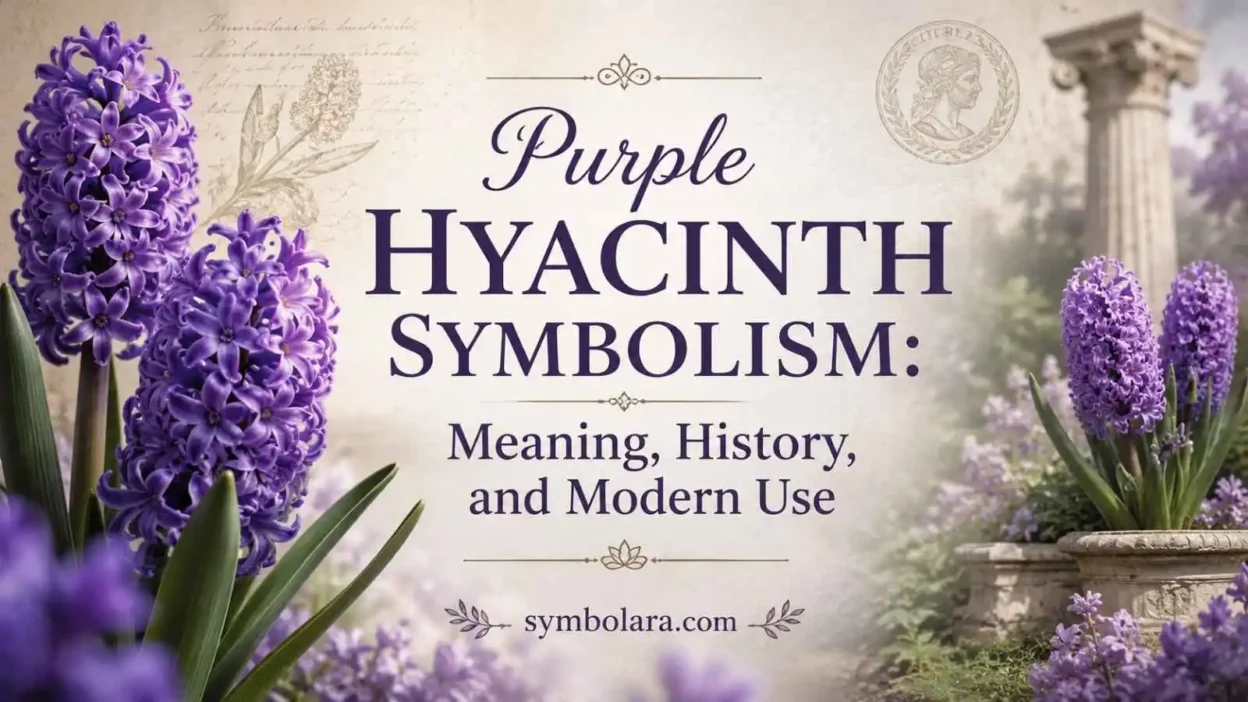
Purple hyacinths are spring flowers known for their tall spikes of small, tightly packed blooms and their sweet fragrance. Their purple color has long been connected with ideas such as admiration, remembrance, sorrow, and beauty, depending on the cultural setting.
People often look up Purple Hyacinth Symbolism because the flower appears in gardens, bouquets, tattoos, artwork, and personal gifts. In the United States, purple hyacinths are commonly chosen for their elegant appearance and their ability to express feelings that are sometimes difficult to say directly.
The meaning of this flower comes from a mix of Greek mythology, Victorian flower language, gardening traditions, and modern personal expression. Today, many Americans see purple hyacinths as a flower that can represent affection, reflection, and appreciation.
Quick Answer
Purple hyacinths commonly symbolize admiration, remembrance, sorrow, and heartfelt affection in modern American culture. Their meanings developed from Greek mythology and Victorian-era flower language, where flowers were often given specific emotional messages.
TL;DR
- Purple hyacinths represent admiration and remembrance.
- Greek myths influenced the flower’s symbolic history.
- Victorian flower language shaped modern meanings.
- Purple blooms often suggest dignity and reflection.
- Americans use them in gardens and gifts.
- Meanings can change with personal experiences.
What Does a Purple Hyacinth Look Like?
A purple hyacinth is a spring-blooming bulb flower with a tall central stem covered in many small, star-shaped blossoms. The flowers grow close together, creating a dense spike of color that can range from light lavender to rich violet.
Hyacinths belong to the genus Hyacinthus and are commonly grown in gardens across North America. They usually bloom in early to mid-spring, making them popular choices for seasonal flower beds, containers, and indoor displays.
The purple varieties are especially noticeable because their color stands out among common spring flowers such as daffodils, tulips, and white hyacinths. Their strong fragrance also makes them popular for decorative planting near homes and walkways.
What Does a Purple Hyacinth Symbolize Today?
The modern meaning of a purple hyacinth depends on the situation, but several associations appear frequently.
Admiration is one of the most common meanings. A bouquet containing purple hyacinths may communicate respect, appreciation, or affection toward someone important.
Remembrance is another common association. Because flowers are often used to honor memories, purple hyacinths can appear in memorial gardens or arrangements created to remember someone who has passed away.
The flower can also represent reflection and emotional honesty. Its connection with sadness in some traditions does not make it a negative flower. Instead, it can express the idea of recognizing difficult emotions while still appreciating beauty.
The Greek Story Behind the Hyacinth Flower
The earliest famous connection between hyacinths and symbolism comes from Greek mythology. The flower’s name is linked to Hyacinthus, a young figure described in ancient Greek stories.
According to one version of the myth, Hyacinthus was loved by the god Apollo. During a discus game, Hyacinthus was accidentally killed, and a flower grew where his blood fell. Ancient writers connected this story with the origin of the hyacinth flower.
The exact relationship between the myth and the modern garden flower is not completely certain because plant names changed over time. However, the story helped create lasting associations between hyacinths and themes of loss, memory, and devotion.
How Victorian Flower Language Changed Its Meaning
During the Victorian era in the 1800s, flowers became a way to communicate feelings through symbolic arrangements. This practice is often called the language of flowers.
Victorian flower dictionaries assigned different meanings to many plants. Hyacinths were associated with ideas such as sorrow, forgiveness, and asking for understanding. Purple varieties were often connected with feelings of respect and deep appreciation.
Flower meanings were not universal rules. Different books sometimes gave different interpretations. Still, Victorian traditions influenced how many people today understand flowers as emotional messages.
Purple Hyacinth Symbolism in American Culture
In the United States, purple hyacinths are mainly associated with gardens, seasonal decoration, gifts, and personal memories.
Many American gardeners plant hyacinths in spring because they provide early color after winter. A purple hyacinth garden can represent renewal, care, and the enjoyment of seasonal change.
The flower is also used in bouquets for occasions where a person wants to express appreciation without choosing a traditional romantic flower. For example, purple hyacinths may appear in arrangements for friends, teachers, family members, or people being honored.
Memorial gardens are another place where these flowers may appear. Their connection with remembrance makes them suitable for spaces designed to preserve memories.
Different Meanings in Gifts, Art, and Personal Expression
The meaning of a purple hyacinth changes depending on how it is used.
| Context | Meaning in USA | Common Associations | Notes |
| Spring garden | Fresh starts and seasonal beauty | Renewal, patience, growth | Often planted after winter |
| Gift bouquet | Appreciation and admiration | Respect, friendship, affection | Less romantic than red roses |
| Memorial setting | Remembering someone | Memory, reflection, honor | Meaning depends on personal connection |
| Tattoo design | Personal story or emotion | Beauty, change, remembrance | Often combined with names or dates |
| Home decoration | Elegance and calm | Style, nature, seasonal charm | Popular in spring displays |
Purple Hyacinths Across Other Cultures
Hyacinths have connections to European traditions, especially through Greek mythology and Victorian flower customs.
In parts of Europe, hyacinths became popular garden flowers during the 17th and 18th centuries. The Netherlands played a major role in developing hyacinth cultivation, with growers creating many new varieties.
Persian and Middle Eastern gardening traditions also valued fragrant flowers, although specific symbolic meanings for purple hyacinths vary. In many cultures, fragrance itself has been an important reason flowers were appreciated.
Because meanings depend on local traditions, a purple hyacinth may represent mourning in one setting and admiration in another.
Why People Feel Connected to Purple Hyacinths
Flowers often become meaningful because of personal experiences rather than fixed definitions. Someone may connect a purple hyacinth with a family garden, a childhood memory, or a special person.
The flower’s appearance also influences its emotional appeal. Purple is often associated with creativity, dignity, and calm because of its use in art, clothing, and decoration.
For some people, giving a purple hyacinth communicates care in a quieter way than a traditional romantic flower. It can say, “I appreciate you,” “I remember you,” or “this moment matters.”
Modern Uses of Purple Hyacinths in America
Today, purple hyacinths appear in many forms beyond traditional gardens.
Home decor: Fresh or artificial hyacinths are used in spring arrangements, table decorations, and seasonal displays.
Tattoos: Some people choose hyacinth tattoos to represent personal memories, emotional growth, or a connection to someone important. Tattoo designs often include names, dates, leaves, or other flowers.
Photography and art: The flower’s strong color and structured shape make it popular in floral photography and illustrations.
Gifts: Purple hyacinths are sometimes included in spring bouquets when the sender wants to express admiration or appreciation.
Common Misunderstandings About Purple Hyacinth Meaning
One common misunderstanding is that every flower has one official meaning. In reality, flower symbolism changes across time, cultures, and personal experiences.
Another misunderstanding is that purple hyacinths always represent sadness because of their connection with Greek mythology and Victorian traditions. While sorrow is one historical association, modern use often focuses on appreciation, beauty, and remembrance.
The meaning of a flower also depends on the relationship between the giver and receiver. A bouquet given after a loss carries a different message than one placed in a home for decoration.
How Purple Hyacinth Meanings Have Changed Over Time
The meaning of the purple hyacinth has shifted as societies changed.
In ancient stories, the flower became linked with loss and devotion through mythology. During the Victorian era, it became part of a system where flowers represented private emotions.
In modern America, the flower is less tied to strict symbolic rules. People usually choose it because of its color, fragrance, appearance, or personal connection.
Younger generations often view floral symbols more flexibly. A purple hyacinth tattoo or gift may represent anything from family memories to personal growth rather than following an old flower dictionary.
Purple Hyacinth in Fashion, Tattoos, and Creative Design
Purple hyacinths fit well into modern visual design because of their shape and color.
In fashion, purple floral patterns are often used to create a spring or elegant style. The flower’s appearance works well in fabric designs, accessories, and decorative artwork.
In tattoos, hyacinths are often drawn with detailed stems and clusters of blossoms. Artists may combine them with butterflies, moons, initials, or other flowers to create a design connected to a person’s story.
Unlike some symbols with strict meanings, floral tattoos usually depend heavily on the wearer’s interpretation.
Does Purple Hyacinth Have a Religious Meaning?
Purple hyacinths do not have one universal religious meaning. Some people may use flowers in spiritual or religious settings, but the hyacinth’s symbolism mainly comes from mythology, gardening traditions, and cultural practices.
In some communities, flowers are used during ceremonies because they represent beauty, memory, or respect. However, the meaning usually comes from the specific tradition rather than the flower itself.
FAQs
A purple hyacinth can represent both joyful and serious emotions. It is often connected with admiration, beauty, and remembrance rather than being strictly positive or negative.
Giving someone a purple hyacinth often expresses appreciation, respect, or admiration. The meaning can change depending on the relationship and occasion.
Yes, purple hyacinths may appear in memorial gardens or arrangements because they can represent remembrance. Their fragrance and spring blooming period also make them meaningful to many gardeners.
Different colors have different associations, but many people connect pink or red flowers with romantic affection. Purple hyacinths are more commonly linked with admiration and appreciation.
Yes, purple hyacinth tattoos are chosen by some people to represent memories, personal experiences, beauty, or emotional connections.
The flower is connected to the Greek story of Hyacinthus and Apollo. The myth helped shape later associations between hyacinths, loss, and remembrance.
No. Flower meanings vary by culture, time period, and personal experience. A purple hyacinth may represent different ideas in different places.
Conclusion
Purple Hyacinth Symbolism comes from a combination of Greek mythology, Victorian flower traditions, gardening culture, and modern personal expression. Today, the flower is often associated with admiration, remembrance, and appreciation.
A purple hyacinth in a garden, bouquet, or artwork does not carry only one message. Its meaning depends on the person choosing it and the moment where it appears. A spring flower planted beside a home, a gift shared with a friend, or a tattoo honoring a memory can each give the same flower a different story.
[…] or blue-violet flowers often sit between blue and purple symbolism. They may suggest imagination, spirituality, creativity, and inner reflection. Because indigo feels […]