
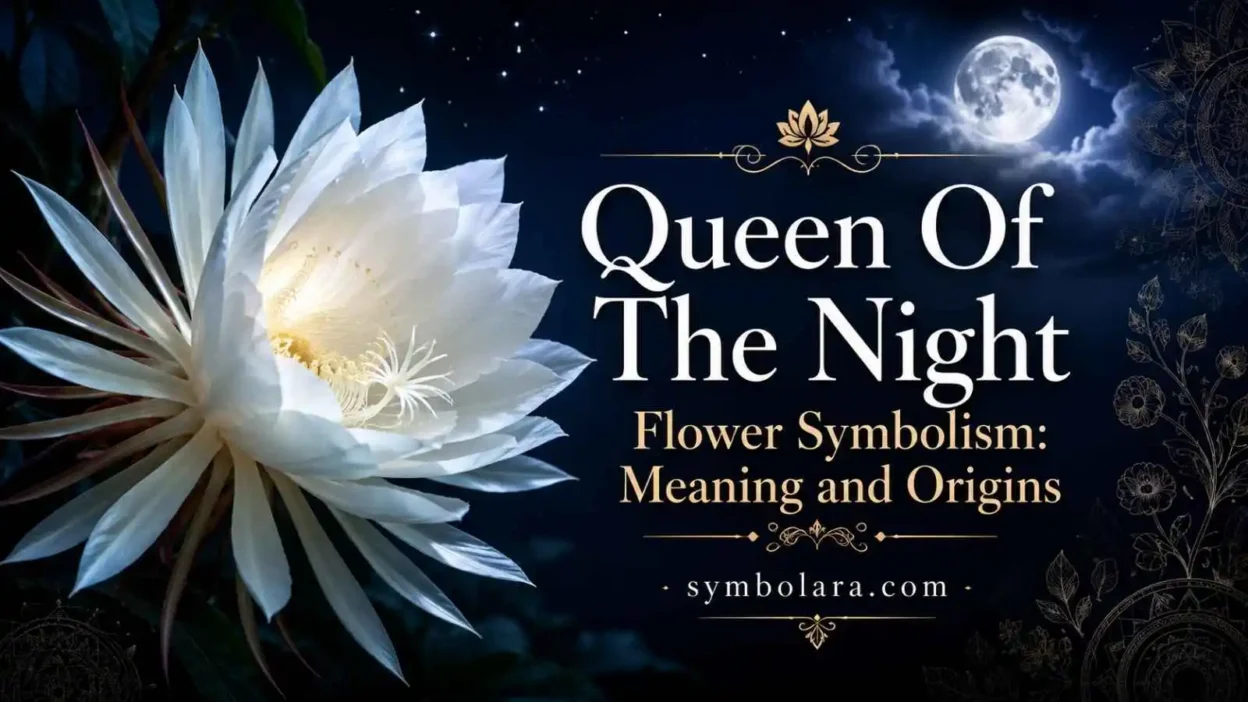
The Queen Of The Night Flower Symbolism is closely tied to rare beauty, patience, transformation, and the short-lived nature of special moments. This night-blooming cactus is best known for opening after dark, releasing a strong fragrance, and fading by morning.
People care about this flower because it turns blooming into an event. Unlike garden flowers that stay open for days, the Queen of the Night asks people to notice one brief window of beauty. Families may gather around it, plant lovers may stay awake to photograph it, and spiritual readers often see it as a reminder that some meaningful experiences cannot be rushed.
In modern American culture, the flower often appears in houseplant communities, tattoo ideas, social media posts, and home decor symbolism. Its meaning is not loud or showy. It speaks more quietly about waiting, watching, and appreciating what only appears for a short time.
Quick Answer
Queen Of The Night Flower Symbolism most commonly represents fleeting beauty, patience, and rare moments that must be appreciated while they last. Historically, its night bloom has also been linked with good fortune, moonlight, feminine grace, spiritual awareness, and the bittersweet idea that beauty can be brief.
TL;DR
- It symbolizes fleeting beauty and rare timing.
- Its bloom connects it to patience and anticipation.
- In the U.S., it often means quiet elegance.
- Asian traditions link it with luck and impermanence.
- Tattoo meanings focus on resilience and hidden beauty.
- Misuse often comes from confusing similar night flowers.
What the Queen of the Night Flower Looks Like
The Queen of the Night is usually associated with Epiphyllum oxypetalum, a tropical cactus often called night-blooming cereus, Dutchman’s pipe cactus, or orchid cactus. It does not look like the dry desert cactus many Americans imagine. Instead, it has long, flat, green stems that resemble leaves and often grow in a trailing or sprawling shape.
Its flower is the reason people remember it. The bloom is large, white, fragrant, and dramatic, with layered petals that open at night. By morning, the flower usually collapses or fades, leaving only the memory and photographs behind.
This physical behavior shapes nearly all of its symbolism. A flower that opens in darkness and disappears by daylight naturally becomes a symbol of timing, attention, secrecy, and impermanence. Its beauty is not constant. It has to be witnessed.
What It Commonly Means in the United States
In the United States, the Queen of the Night flower most often symbolizes rare beauty, personal patience, and appreciation for temporary moments. Americans usually encounter it through houseplant culture, botanical gardens, social media videos, or family stories about staying up late to watch it bloom.
Its meaning fits modern life because it challenges the habit of rushing. The flower does not bloom on demand. It asks the viewer to slow down, wait, and pay attention at an unusual hour. That makes it especially meaningful for people who value mindfulness, gardening, quiet rituals, or personal transformation.
Unlike roses, lilies, or sunflowers, it is not strongly tied to one holiday or public ceremony in the U.S. Its symbolism is more personal. People use it to express a private belief: some of the most meaningful things in life are brief, unexpected, and worth waiting for.
Why Its One-Night Bloom Matters
The one-night bloom is the heart of the flower’s meaning. Many flowers symbolize beauty, but this one adds urgency. It opens after sunset, reaches full display during the night, and fades before most people wake up.
That short life span gives the flower a message about impermanence. It does not suggest that beauty is meaningless because it disappears. Instead, it suggests the opposite: something can matter more because it does not last long.
This is why people often connect the Queen of the Night with weddings, milestones, grief, and major life changes. A graduation ceremony, a first meeting, a final goodbye, or a family gathering may last only a few hours, yet remain emotionally important for years. The flower becomes a natural image for those experiences.
Historical Roots and Botanical Identity
The Queen of the Night belongs to the cactus family, but its background is different from the desert cactus image common in the American Southwest. Epiphyllum oxypetalum is associated with tropical parts of Mexico and Central America and grows as an epiphyte, meaning it can live on other plants without being a parasite.
Over time, the plant spread through cultivation and became especially beloved in parts of Asia. Its unusual bloom made it easy to attach meaning to it. People did not need a written myth to understand its emotional force. A large white flower opening in the dark and vanishing by morning already carried a story.
One important point is that “Queen of the Night” is a common name used for more than one night-blooming cactus. In symbolism writing, the phrase usually points to Epiphyllum oxypetalum, but plant collectors may use similar names for Selenicereus and other night-blooming cactus species. This is one reason its symbolism can vary across regions.
Queen of the Night Flower vs Night-Blooming Cereus: Are They the Same?
The names “Queen of the Night” and “night-blooming cereus” are often used interchangeably, but they can refer to different plants depending on the region. In many symbolism discussions, Queen of the Night usually refers to Epiphyllum oxypetalum, also called Dutchman’s pipe cactus or orchid cactus.
However, some gardeners use the name for other night-blooming cactus species, including members of the Selenicereus group. These plants share a similar feature: large flowers that open after sunset and fade quickly.
The symbolic meanings remain similar because they come from the same natural pattern. A rare nighttime bloom naturally suggests mystery, patience, timing, and temporary beauty.
Understanding the botanical difference helps avoid confusion. The symbolism comes less from one exact species and more from the powerful image of a flower that waits in darkness, appears briefly, and disappears before morning.
The Meaning of White Petals and Night Blooming
The flower’s white color adds another layer of symbolism. In American culture, white flowers often suggest purity, remembrance, peace, sympathy, or elegance. When white petals appear at night, the meaning becomes more complex. The flower feels calm rather than innocent, luminous rather than plain.
Its night bloom connects it to the moon, darkness, privacy, and inner life. Many people read it as a symbol of beauty that does not need public attention. It opens when the world is quieter, which gives it a more intimate emotional tone than bright daytime flowers.
This is why the Queen of the Night can feel meaningful to introverts, artists, night thinkers, and people who connect growth with solitude. The flower suggests that not every transformation happens in public. Some forms of beauty develop quietly before anyone sees them.
Cultural Meanings in Asia
The Queen of the Night has especially strong cultural associations in Chinese, Japanese, South Asian, and Southeast Asian contexts. In Chinese, the flower is connected with the expression “tan hua yi xian,” which describes something impressive but short-lived. The phrase is often used for brief fame, sudden success, or a beautiful moment that disappears quickly.
In Japanese, the flower is known as gekka bijin, commonly understood as “beauty under the moon.” That name highlights elegance, femininity, moonlight, and the romantic sadness of something seen only briefly.
In parts of South Asia, the blooming of the flower may be treated as fortunate or spiritually meaningful. Families sometimes gather to watch it open, photograph it, or pray during the bloom. These traditions help explain why the flower carries meanings of blessing, timing, and rare opportunity.
How Americans Interpret the Flower Today
American interpretations are usually less formal and more personal. A gardener may see the Queen of the Night as a reward for patience. A tattoo wearer may see it as a sign of quiet strength. Someone grieving may view it as a reminder that a short life or brief relationship can still leave lasting meaning.
Its popularity also fits the rise of houseplant culture. Many people in the U.S. enjoy plants not only as decor but as emotional companions. A plant that may take time to bloom becomes part of a household story. When it finally flowers, the moment feels earned.
Online, the flower often appears in videos that show the bloom opening through the evening. These posts reinforce its modern meaning: anticipation, surprise, wonder, and the desire to capture something before it disappears.
Symbolism in Tattoos and Personal Style
As a tattoo, the Queen of the Night flower usually symbolizes hidden beauty, resilience, patience, and transformation after darkness. It is a strong choice for someone who wants floral imagery without choosing a common rose, lotus, or peony.
The design often works well with moons, stars, moths, fine-line stems, or black-and-gray shading. A white flower tattoo can be difficult to show literally, so artists may use outlines, pale highlights, or surrounding dark elements to suggest the bloom’s nighttime setting.
Its tattoo meaning can also be personal after hardship. Because the flower opens in darkness, people may use it to represent growth after grief, recovery after a private struggle, or a part of themselves that became visible only after a difficult season.
What Does Queen of the Night Flower Symbolize in Love?
In love symbolism, the Queen of the Night flower often represents a rare connection, quiet affection, and moments that feel unforgettable. Its brief bloom can reflect relationships that are deeply meaningful even when circumstances make them temporary.
Unlike traditional romantic flowers such as roses, the Queen of the Night has a more private emotional tone. It can symbolize love that grows slowly, remains hidden, or becomes stronger through patience.
Some people choose this flower for romantic gifts, artwork, or tattoos because it represents a bond that feels unusual rather than ordinary. The nighttime bloom adds a sense of mystery and intimacy.
Its meaning can also include acceptance. Just as the flower cannot remain open forever, some relationships and life chapters may be valuable because of the memories they create, not because they last forever.
Jewelry, Decor, and Fashion Meaning
In jewelry and decor, the Queen of the Night flower usually suggests elegance, mystery, and understated luxury. It does not carry the bright cheerfulness of daisies or the romantic directness of roses. Its mood is quieter, more nocturnal, and more refined.
In home decor, prints or illustrations of the flower can suggest calm evenings, moonlit spaces, botanical interest, or a love of rare plants. It fits especially well in bedrooms, reading corners, meditation spaces, and rooms with dark green, cream, black, gold, or moon-inspired palettes.
In fashion, the flower can communicate soft drama. A Queen of the Night motif on fabric, embroidery, or accessories suggests someone drawn to beauty that feels private rather than flashy. It is graceful, but not overly sweet.
Queen of the Night Flower Symbolism in Feng Shui and Home Spaces
In home symbolism, the Queen of the Night flower is often valued for its connection with calm, beauty, and peaceful reflection. Plant lovers may place it in personal spaces because its rare bloom creates a sense of anticipation and appreciation.
Some Feng Shui practitioners associate flowering plants with positive energy, growth, and vitality. However, specific meanings for the Queen of the Night vary because it is not one of the most standardized Feng Shui plants.
A grounded interpretation focuses on the qualities people naturally observe: patience, renewal, and beauty appearing at the right moment. A blooming Queen of the Night can become a reminder to slow down and notice meaningful experiences.
For many homeowners, the plant’s symbolism comes from personal connection rather than a strict rule. The care, waiting, and surprise of the bloom often become part of the meaning itself.
Emotional and Psychological Meaning
Psychologically, the Queen of the Night flower often represents the ability to bloom in difficult conditions. Its darkness is not treated as danger. Instead, night becomes the setting where beauty appears.
That makes the flower emotionally useful for people who have gone through quiet change. It can symbolize healing that happened privately, confidence that arrived slowly, or a talent that took years to reveal. The bloom becomes proof that growth does not always follow a visible schedule.
It also speaks to the fear of missing out, but in a gentler way. The flower reminds people that not everything can be possessed permanently. Some experiences are meant to be noticed, honored, and released.
Queen of the Night Flower Symbolism in Dreams
Dream interpretations involving the Queen of the Night flower often focus on timing, hidden potential, and emotional change. Because the flower appears after dark, some people associate it with ideas that develop privately before becoming visible.
Seeing this flower in a dream may be interpreted as a reminder to recognize opportunities that arrive unexpectedly. A blooming flower can represent personal growth, a new stage of life, or something valuable that has been developing quietly.
A fading bloom may carry a different emotional meaning. Some people connect it with accepting change, releasing the past, or appreciating a moment before it passes.
Dream symbolism is personal rather than universal. The Queen of the Night does not have one fixed dream meaning, but its natural qualities often inspire themes of patience, transformation, and appreciating temporary experiences.
Religious and Spiritual Interpretations
The Queen of the Night is not a central religious symbol in mainstream American religious practice. Still, people often give it spiritual meaning because of its timing, color, and short bloom.
In a broad spiritual sense, it can represent awakening, divine timing, prayer, blessing, or the presence of beauty during dark periods. Its white petals can suggest peace or purity, while its night bloom can suggest faith during uncertainty.
It is important not to overstate this meaning. The flower does not have one universal religious interpretation. Its spiritual symbolism depends heavily on culture, family tradition, and personal belief. A grounded reading sees it as a natural symbol that many people use to express hope, patience, and reverence.
Queen of the Night Flower Meanings by Context
| Context | Meaning in the USA | Common Associations | Notes |
| Houseplants | Patience and reward | Waiting, care, surprise | Often valued by plant collectors |
| Tattoos | Hidden strength | Night, resilience, transformation | Works well with moon imagery |
| Decor | Quiet elegance | Calm, mystery, botanical beauty | Common in moody or nature-inspired spaces |
| Social media | Rare moments | Time-lapse blooms, wonder, timing | Often shared because the bloom is brief |
| Memorial meaning | Short but meaningful life | Remembrance, grief, tenderness | Best used with sensitive wording |
| Cultural symbolism | Impermanence and luck | Asian traditions, family gatherings | Meanings vary by region |
Modern Use in Social Media and Pop Culture
Social media has changed how many Americans encounter the Queen of the Night. In the past, people usually had to know someone who grew the plant. Now, a time-lapse video can show the bloom opening in seconds.
That digital visibility has made the flower a symbol of rare moments worth documenting. People often post it with captions about patience, timing, moonlight, or beauty that does not last. The flower’s short bloom also fits the emotional style of modern visual culture, where a brief clip can make a natural event feel dramatic.
Pop culture has also helped. Stories and films that show families gathering for the flower’s bloom have introduced many viewers to the idea that watching it open can be a meaningful event. For American audiences, this adds a sense of ceremony to a plant they may otherwise know only as a houseplant curiosity.
Common Misunderstandings About the Flower
One common misunderstanding is that the Queen of the Night is only one exact plant. In everyday language, several night-blooming cactus species may share the name. For symbolism, this matters because different plants may have different botanical backgrounds even when their emotional meaning feels similar.
Another misunderstanding is that the flower is “magical” because it blooms only once. In reality, blooming patterns depend on plant species, age, care, climate, and growing conditions. Some plants may bloom more than once in a season, while others may bloom rarely.
A third mistake is treating every cultural meaning as universal. Good luck, blessing, feminine beauty, and impermanence are all real symbolic themes in different contexts, but they should not be flattened into one global meaning. The flower’s symbolism is strongest when its cultural setting is respected.
Positive and Negative Symbolism
The Queen of the Night is mostly a positive symbol. It represents beauty, patience, hope, rare opportunity, and the reward of attention. It can also suggest emotional maturity because it values what is temporary without trying to control it.
However, it can carry bittersweet meanings. Because the flower fades quickly, it may symbolize missed chances, short-lived fame, fragile romance, or a moment that could not be held. In Chinese idiom, the flower’s brief appearance can describe something that shines and disappears too soon.
This negative side is not harsh. It is more reflective than tragic. The flower does not symbolize failure. It symbolizes the truth that some beautiful things are brief by nature.
How Its Meaning Has Evolved
The Queen of the Night flower began as a striking botanical event: a large, fragrant cactus flower opening after dark. Its meaning grew from observation. People saw how rare and temporary the bloom was, then turned that pattern into metaphor.
In older cultural settings, the flower often carried meanings of blessing, auspicious timing, moonlit beauty, and impermanence. In modern American use, those meanings remain, but they are often personalized. The flower now appears in tattoos, captions, plant collections, and decor as a symbol of private growth and rare beauty.
Its evolution shows how symbolism works. A flower does not need one fixed meaning to matter. Its physical life creates a set of emotional possibilities, and each culture chooses the meanings that speak most clearly to its values.
When to Use Queen of the Night Flower Symbolism
Use this flower when the message involves patience, rare timing, quiet beauty, or a meaningful moment that will not last forever. It works well for writing about personal growth, grief, love, spiritual reflection, artistic identity, and major life transitions.
It is especially fitting when you want a floral symbol that feels elegant but not obvious. Roses may feel too romantic. Lilies may feel too formal. Lotuses may feel too spiritually familiar. The Queen of the Night offers a more unusual image for private transformation.
The symbol is strongest when used with restraint. Instead of calling it magical or mysterious, describe what it actually does: it waits, opens in darkness, fills the night with fragrance, and fades by morning. That reality is meaningful enough.
FAQs
The Queen of the Night flower symbolizes fleeting beauty, patience, rare opportunity, and transformation in darkness. Its one-night bloom makes it a natural symbol for moments that are brief but unforgettable.
Yes, it can be a meaningful tattoo for hidden strength, personal growth, and beauty that appears after hardship. It is especially fitting for people who want a floral design connected to night, resilience, and private transformation.
In some Asian traditions, seeing the flower bloom is considered fortunate or auspicious. In the United States, people may also treat the bloom as lucky, but the more common meaning is rare beauty and patient timing.
It is mostly positive, but it can feel bittersweet. The flower represents beauty and hope, while its short bloom can also suggest impermanence, missed chances, or something wonderful that does not last long.
In love, the Queen of the Night can symbolize a rare connection, quiet devotion, or a brief romance that remains emotionally important. It may also suggest love that blooms privately rather than publicly.
Yes, its night bloom and pale petals naturally connect it with moonlight in symbolic use. Japanese naming traditions also strengthen the association between the flower, moonlit beauty, and nighttime elegance.
It is considered special because its large, fragrant bloom opens at night and usually fades by morning. That rare timing turns the flower into an event rather than an ordinary garden display.
The flower does not usually represent something negative, but its short lifespan can symbolize impermanence, missed opportunities, or the temporary nature of beautiful experiences.
Conclusion
Queen Of The Night Flower Symbolism centers on rare beauty, patience, and the emotional weight of moments that do not last. Its bloom is brief, but that brevity is exactly what gives the flower its meaning.
In the United States, it is often understood through houseplant care, tattoos, decor, and social media as a symbol of quiet transformation. Across cultures, it also carries older associations with luck, moonlight, impermanence, and beauty seen at the right time.
The Queen of the Night reminds us that not every meaningful thing stays visible for long. Some beauty arrives quietly, opens fully in darkness, and leaves behind a memory strong enough to last.

[…] carnation says love can be steady, loyal, and practical. That is one reason the flower has stayed meaningful even when floral trends […]
[…] Day plant rather than as a flower carrying one rigid traditional message. Its older symbolism becomes clearer when the plant’s Mediterranean origins, historical folklore, and nineteenth-century flower language are considered together. Cyclamen […]