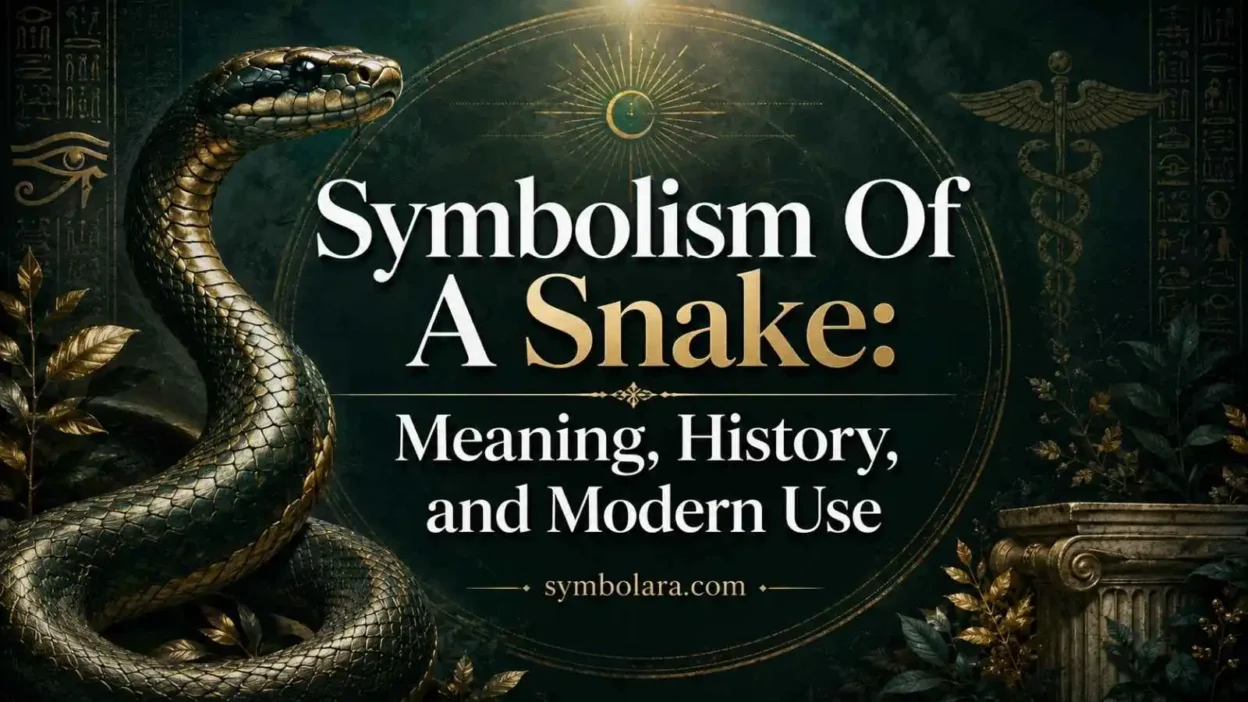
The Symbolism Of A Snake can mean transformation, danger, healing, temptation, protection, wisdom, or personal power. Few animals carry so many different meanings because snakes create mixed reactions: fear, respect, curiosity, and sometimes admiration.
People encounter snake imagery in religious stories, medical emblems, tattoos, jewelry, fashion, political flags, movies, and social media designs. A snake on a hospital symbol does not mean the same thing as a snake in a Bible story. A snake tattoo may feel empowering, while a rattlesnake warning sign asks for caution.
In the United States, snake symbolism is especially layered. Many Americans connect snakes with the Garden of Eden, wilderness danger, medical care, personal transformation, and political independence. Because of that, the snake can feel threatening, sacred, rebellious, elegant, and healing at the same time.
Quick Answer
The Symbolism Of A Snake commonly points to transformation, danger, healing, temptation, and personal power in modern American culture. Historically, snakes have also represented protection, wisdom, fertility, medicine, rebirth, and spiritual testing in different religious and cultural traditions.
TL;DR
- Snakes often symbolize change, danger, healing, and temptation.
- Shedding skin connects snakes with renewal and growth.
- American meanings come from religion, medicine, politics, and nature.
- Ancient cultures linked snakes with protection, wisdom, and fertility.
- Snake tattoos often express survival, rebirth, or personal boundaries.
- Context decides whether the meaning feels positive or negative.
What a Snake Symbol Looks Like
A snake symbol may appear as a coiled serpent, a crawling body, a raised cobra, a rattlesnake, or a circular snake eating its own tail. Some designs look realistic, with scales, fangs, eyes, and a forked tongue. Others are simple, using only a curved line or spiral shape.
Posture changes the message. A coiled snake often suggests warning, patience, and defense. A striking snake creates a sense of danger or attack. A snake wrapped around a staff usually points toward healing or medicine. When a serpent forms a circle, it often suggests cycles, eternity, or renewal.
People see snake imagery in tattoos, rings, necklaces, hospital logos, warning signs, fantasy art, gothic decor, spiritual illustrations, fashion prints, and political symbols. The meaning depends on the setting, the type of snake, and the way the image is designed.
What Snakes Commonly Mean in the United States
In modern American culture, snakes most often symbolize transformation, danger, temptation, and healing. These meanings come from daily life, religion, medicine, politics, and entertainment.
Danger is the most immediate association. Many Americans think of venomous snakes, warning signs, desert trails, forests, or sudden fear when a snake appears unexpectedly. Even harmless snakes can create alarm because their movement is quiet and unfamiliar.
Transformation is the most common positive meaning. Since snakes shed their skin, they naturally symbolize leaving an old stage behind. This makes them popular in tattoos, personal art, and writing about recovery or reinvention.
Temptation comes largely from biblical tradition. Healing comes from ancient medical symbolism, especially the serpent wrapped around a staff. Together, these meanings make the snake one of the most flexible symbols in American culture.
Why Snakes Symbolize Transformation
Snakes symbolize transformation because they shed their outer skin as they grow. That physical process gives the animal a strong connection with renewal, recovery, and change.
For many people, this meaning feels personal. A snake can represent leaving behind an old identity, ending a difficult chapter, healing after loss, or becoming stronger after hardship. The image works because it shows change as something visible: the old layer falls away, and the living body continues.
This symbolism is not only soft or comforting. Growth can be uncomfortable, and shedding skin suggests that transformation may require pressure, patience, and release. A snake does not become new by avoiding change. It changes by moving through it.
That is why snake imagery often appeals to people who want a symbol of survival rather than simple beauty. It can say, “I changed,” “I healed,” or “I am not who I used to be.”
Snakes as Symbols of Danger and Warning
Snakes symbolize danger because some species are venomous, many move silently, and their bites can be serious. This does not mean snakes are evil animals. In nature, most snakes avoid humans and strike mainly when threatened, surprised, or handled.
Symbolically, however, the snake’s danger makes it useful as a warning sign. A coiled snake can communicate, “Do not come closer.” A rattlesnake can suggest boundaries, self-defense, and readiness. A snake with exposed fangs often signals threat, betrayal, or consequences.
American culture often uses this meaning in stories and visual design. A villain may be called “a snake” to suggest deceit. A warning label may use snake imagery to signal danger. A tattoo may use the same image to show that the wearer has limits.
Danger is not always negative in symbolism. Sometimes it represents protection, strength, and the ability to defend oneself.
The Snake as a Symbol of Protection
Although snakes often frighten people, they can also symbolize protection. This meaning comes from the animal’s defensive posture. A snake does not need to chase everything around it. Instead, it waits, watches, and strikes only when necessary.
A coiled serpent can represent guarded energy. It suggests that something valuable is being protected. In art and myth, snakes often appear near sacred places, treasures, rulers, or thresholds. Their presence tells outsiders to approach carefully.
In the United States, this protective meaning appears strongly in rattlesnake imagery. The rattlesnake can symbolize independence, warning, and resistance to being controlled. It does not attack without cause, but it refuses to be stepped on.
For personal symbolism, this meaning is common in tattoos and jewelry. Someone may choose a snake to express boundaries, self-respect, or the decision to protect their peace.
Healing and the Snake-Wrapped Staff
One of the most important positive meanings of the snake is healing. The image of a serpent wrapped around a staff has long been connected with medicine, treatment, and recovery.
At first, healing may seem like a strange meaning for an animal associated with venom. Yet the contrast is part of the symbol’s strength. Venom can harm, but controlled substances can also become medicine. A snakebite can be dangerous, but treatment can save a life.
The snake’s ability to shed skin also supports this medical meaning. Shedding suggests renewal, restoration, and the body’s ability to recover. Because of that, the serpent became a fitting symbol for healing work.
In American medical imagery, people often confuse the single-snake staff with the two-snake caduceus. The single serpent staff is the older healing symbol, while the caduceus has a different classical background. Both appear in modern American settings, but they do not have the same original meaning.
Biblical Snake Symbolism
For many Americans, snake symbolism is shaped by the Bible. In the Garden of Eden story, the serpent is commonly associated with temptation, deception, disobedience, and the loss of innocence.
This influence is one reason snakes often feel morally suspicious in Western culture. Calling someone “a snake” usually means they are sneaky, false, or dangerous. In movies, sermons, cartoons, and everyday speech, the snake often becomes a symbol of betrayal.
Biblical snake imagery is still more complex than simple evil. Other serpent references involve judgment, healing, and spiritual warning. Because of that, the snake can represent both danger and deliverance, depending on the story.
In modern American life, the Eden association remains especially strong. Even people who are not religious may understand the snake as a symbol of temptation because the story has shaped art, literature, and common speech.
Ancient Egyptian Snake Symbolism
In ancient Egypt, the cobra was a symbol of royalty, divine authority, and protection. The raised cobra appeared on royal crowns and was linked with sacred guardianship.
This meaning differs from the fear-based view many Americans have today. The Egyptian cobra did not simply represent danger. It represented power that could defend the ruler and protect sacred order.
The cobra’s posture helped create that meaning. A raised hood looks alert, commanding, and ready to strike. In visual symbolism, that makes the cobra feel watchful and royal rather than merely aggressive.
Modern design still borrows from this older association. Cobra jewelry, tattoos, and art often suggest confidence, mystery, elegance, and authority. The image feels intense because it combines beauty with danger.
Snake Symbolism in Greek and Roman Traditions
Greek and Roman traditions strongly shaped the Western connection between snakes and medicine. The serpent became associated with healing, recovery, and the mysterious process of restoring the body.
In this context, the snake does not mainly represent deceit. It represents renewal, medical knowledge, and the fragile line between harm and cure. That meaning survived because it fits the snake’s natural qualities: shedding skin, moving close to the ground, and carrying venom.
Mythology also gave snakes other roles. They could appear as guardians, monsters, sacred animals, punishments, or signs of divine power. This variety helped preserve the snake’s double nature in Western imagination.
As a result, snake symbolism in the United States still carries both fear and respect. The same animal can represent a threat in one setting and healing in another.
Indigenous and Mesoamerican Snake Meanings
Snake symbolism in Indigenous traditions must be discussed with care because there is no single Native American meaning for snakes. Different nations, regions, and communities have their own stories, ceremonies, and interpretations.
In some Southwestern ceremonial contexts, snakes have been connected with rain, fertility, and the life-giving forces of nature. These meanings are very different from the idea of the snake as only evil or deceptive.
Mesoamerican traditions also gave serpent imagery major religious importance. The Feathered Serpent, often associated with ancient Mexico, connected the snake with sky, earth, wind, learning, and sacred authority in different periods and places.
These traditions show why snake symbolism should not be flattened into one meaning. Across cultures, snakes can represent life, weather, sacred power, wisdom, danger, and renewal.
Snakes in Asian Religious and Cultural Symbolism
In several Asian religious traditions, serpent-like beings are connected with water, protection, fertility, hidden realms, and spiritual force. They may be dangerous in some stories and beneficial in others.
Hindu, Buddhist, and Jain traditions include serpent beings that are more complex than ordinary animals. They can guard sacred spaces, connect with water, or represent forces that humans must respect.
Chinese zodiac symbolism gives the snake another modern meaning. The 2025 Year of the Wood Snake brought renewed attention to the snake as a sign of intelligence, patience, charm, strategy, and transformation.
For American audiences, these meanings often appear through Lunar New Year celebrations, tattoos, fashion, social media, and global design trends. They add wisdom and elegance to a symbol that Western culture sometimes treats too narrowly.
Snake Symbolism in Tattoos
Snake tattoos are popular because they can hold several meanings at once. A snake design may represent survival, rebirth, danger, independence, secrecy, sensuality, protection, or personal strength.
Design details shape the message. A snake paired with flowers can suggest beauty after hardship or a sense of softness mixed with danger. Wrapped around a dagger, it may symbolize betrayal, revenge, or the strength to overcome harm. When shown with a skull, a snake often points to mortality, fearlessness, or acceptance of life’s darker side.
Placement also matters. A snake around the arm creates movement and strength. A small snake behind the ear may feel private or secretive. A large back or chest piece can feel protective and bold.
In American tattoo culture, the snake often works as a boundary symbol. It may say, “I have changed,” “I survived,” or “I am not harmless.”
Snake Jewelry, Fashion, and Decor
Snake jewelry often suggests elegance, danger, and confidence. Rings, bracelets, and necklaces use the serpent’s curved shape naturally, which makes the design feel fluid and intentional.
Fashion uses snakes in a bolder way. Snakeskin patterns can suggest luxury, rebellion, wildness, or sharp personal style. Many modern designs use imitation snakeskin because real animal materials can raise ethical concerns.
Decor gives the snake a more dramatic role. Serpent imagery may appear in gothic interiors, maximalist rooms, ancient-inspired art, spiritual spaces, or dark romantic design. A snake sculpture or print can make a room feel watchful and unusual.
This modern use shows how flexible the symbol has become. A snake can feel sacred in one setting, fashionable in another, and intimidating somewhere else.
Emotional and Psychological Meaning
Emotionally, snakes often represent fear because many people react to them quickly. Their quiet movement, sudden appearance, and unfamiliar body shape can trigger alarm before a person has time to think.
Psychologically, this makes the snake useful as a symbol for hidden worries, instincts, temptation, anger, or change. In dreams and stories, a snake may represent something a person senses but has not fully faced.
Still, not every emotional meaning is negative. For some people, the snake represents control over fear. Wearing a snake ring or choosing a snake tattoo can become a way to claim confidence instead of avoiding discomfort.
This is why snake imagery often feels intense. It does not simply decorate. It brings tension, memory, instinct, and identity into the image.
Snake Symbolism in Dreams: Common Meanings and Interpretations
Snake dreams are often interpreted as symbols of change, fear, hidden emotions, or personal growth. The meaning depends heavily on the dreamer’s feelings, the snake’s behavior, and the situation in the dream.
A calm snake may represent awareness, healing, or personal transformation. A threatening snake may reflect stress, conflict, fear, or something the dreamer feels unable to ignore.
Some psychological interpretations connect snakes in dreams with instincts, unconscious thoughts, or situations that require attention. Spiritual interpretations vary widely, with some traditions viewing snakes as signs of renewal, wisdom, or spiritual awakening.
Dream symbolism is personal rather than fixed. A snake dream does not have one guaranteed meaning for everyone. The most useful interpretation comes from asking: What was happening? How did the snake behave? And what emotions did the dream create?
Snake Symbolism in American Politics
The rattlesnake has a special place in American political symbolism. During the Revolutionary era, the rattlesnake came to represent alertness, self-defense, unity, and resistance to domination.
The coiled rattlesnake with the warning “Don’t Tread on Me” remains one of the clearest examples. Historically, it expressed defiance and a refusal to be controlled. In modern America, however, the symbol has gathered several meanings.
Some people still read it as a statement of liberty, personal rights, and independence. Others associate it with anti-government views, aggressive political messaging, or extremist misuse in certain contexts.
This shift shows how symbols evolve. A rattlesnake image may begin with one historical meaning and later gain new emotional and political associations.
Positive and Negative Meanings at a Glance
| Context | Meaning in the USA | Common Associations | Notes |
| Medical symbol | Healing and recovery | Staff, medicine, care | Often linked with the single serpent staff |
| Biblical imagery | Temptation and deception | Eden, sin, warning | Strong influence in American culture |
| Tattoo culture | Transformation and resilience | Shedding, survival, boundaries | Meaning depends on design details |
| Political imagery | Defiance and self-defense | Rattlesnake, liberty, warning | Modern use can be controversial |
| Jewelry and fashion | Elegance and danger | Curves, luxury, confidence | Often used for bold personal style |
| Nature encounters | Caution and respect | Venom, wilderness, safety | Many snakes are not harmful to humans |
Snake Symbolism Compared With Other Animal Symbols
Snake symbolism becomes clearer when compared with other powerful animal symbols. Like dragons, snakes are often connected with hidden power, mystery, and transformation. However, dragons usually represent larger mythical forces, while snakes are more closely connected with nature, instinct, and renewal.
Compared with wolves, snakes are less associated with loyalty and teamwork. Instead, they often represent independence, patience, and personal change.
Compared with birds, which commonly symbolize freedom and the spirit, snakes are more connected with the earth, hidden knowledge, and cycles of life.
These comparisons show why snakes remain unique in symbolism. They combine qualities that seem opposite: danger and healing, fear and wisdom, darkness and renewal.
Common Misunderstandings About Snake Symbolism
The biggest misunderstanding is that snakes always mean evil. That view is common in some Western religious and pop-culture settings, but it does not apply everywhere.
Many cultures have seen snakes as healers, guardians, rain bringers, royal symbols, or signs of renewal. Even in Western tradition, the snake can represent medicine as well as temptation.
Another mistake is assuming every snake tattoo means betrayal or danger. Some designs do carry that meaning, especially when paired with daggers, skulls, or dark imagery. Other snake tattoos are about growth, protection, beauty, or survival.
People also confuse medical symbols. The single serpent staff and the two-snake caduceus look related, but their origins and meanings are not identical.
How Snake Meaning Has Changed Over Time
Snake symbolism has changed by adding meanings rather than replacing them. Ancient cultures often connected snakes with protection, fertility, medicine, sacred power, or renewal.
Biblical tradition made the serpent a strong symbol of temptation and moral danger in Western culture. Medical symbolism kept the snake connected with healing. American political imagery turned the rattlesnake into a sign of warning and independence.
Modern tattoo, fashion, and digital culture made the snake more personal. It now appears as a symbol of identity, confidence, survival, sensuality, and transformation.
Today, many Americans combine these meanings without separating their histories. A snake can carry very different meanings depending on where it appears. As jewelry, it may feel stylish. As a tattoo, it can feel empowering. In a sermon, it often becomes a warning. A rattlesnake flag may feel political.
Snake Symbolism in Literature, Movies, and Popular Culture
Writers and filmmakers often use snakes because the symbol naturally creates tension. A snake can represent danger, temptation, hidden power, intelligence, or transformation depending on the story.
In literature, snakes frequently appear as symbols of deception, forbidden knowledge, or moral challenges. The biblical serpent influenced many Western stories where snakes represent temptation or betrayal.
Popular culture also uses snakes in more positive ways. A heroic character may use snake imagery to show survival, intelligence, independence, or personal change. Fantasy stories often portray serpents as ancient creatures connected with magic, wisdom, or forgotten knowledge.
Movies, books, and video games continue to expand snake symbolism because the animal creates strong emotions. It can make audiences feel fear and curiosity at the same time.
How to Interpret a Snake Symbol
To understand a snake symbol, start with the setting. A snake on a hospital emblem does not mean the same thing as a snake in a horror movie or a snake tattoo on someone’s arm.
The type of snake matters too. A cobra may suggest royalty, control, or sacred protection. A rattlesnake often suggests warning, defense, or American independence. A garden snake may feel closer to nature, secrecy, or quiet movement.
Color can shift the meaning. A black snake may suggest mystery, fear, grief, or elegance. A green snake may point toward nature, renewal, envy, or growth. A gold snake can suggest luxury, sacred power, or status.
The strongest interpretations come from context. Look at posture, color, tradition, location, and surrounding symbols before deciding what the snake means.
Snake Symbolism by Color: Black, White, Green, and Red Snakes
A snake’s color can change the way people interpret its symbolism. While there is no universal meaning for every color, different traditions and modern uses often connect snake colors with specific ideas.
Black snakes are commonly associated with mystery, hidden knowledge, protection, fear, and transformation. In some personal interpretations, a black snake represents moving through a difficult period or facing something unknown.
White snakes often symbolize purity, spiritual change, healing, or new beginnings. In some Asian traditions, white serpents appear as powerful supernatural beings connected with wisdom and protection.
Green snakes are often linked with nature, growth, renewal, and life energy. Because green connects with plants and the natural world, people may interpret a green snake as a symbol of personal growth or balance.
Red snakes can represent passion, strength, danger, desire, or intense emotions. The meaning usually depends on the surrounding imagery and cultural background.
Color adds another layer to snake symbolism, but the full meaning comes from combining color with the snake’s setting, posture, and cultural context.
FAQs
Spiritually, a snake can symbolize transformation, temptation, healing, protection, wisdom, or hidden knowledge. The meaning depends on the tradition because biblical, Asian, Indigenous, Egyptian, and Greek contexts interpret snakes differently.
A snake can be either positive or negative. In American culture, it may suggest danger or deception, but it can also represent healing, renewal, wisdom, and protection.
A snake tattoo often means transformation, survival, personal strength, or protection. Details such as flowers, daggers, skulls, moons, or placement can make the meaning softer, darker, romantic, or more aggressive.
In Christianity, the serpent is most often linked with temptation and deception because of the Garden of Eden story. Other biblical serpent imagery can involve warning, judgment, healing, and deliverance.
Snakes are connected with medicine mainly through the image of a serpent wrapped around a staff. This symbol links the snake with healing, recovery, and the body’s ability to renew itself.
A coiled snake often symbolizes alertness, patience, defense, and controlled power. In American political imagery, a coiled rattlesnake can also suggest independence and warning.
Snakes symbolize rebirth because they shed their skin as they grow. That natural process became a metaphor for leaving behind an old identity, recovering from hardship, or starting again.
In some cultures, snakes are considered lucky symbols connected with wisdom, wealth, protection, and fertility. In other traditions, they represent danger or temptation.
Conclusion
The Symbolism Of A Snake remains complex because snakes carry real danger and strong cultural meaning at the same time. They can represent fear, healing, temptation, protection, wisdom, rebellion, and renewal depending on the setting.
In the United States, snake imagery often feels emotional rather than neutral. A serpent can warn, protect, heal, tempt, or express personal transformation. That range explains why it appears in tattoos, jewelry, medicine, religion, politics, fashion, and storytelling.
A snake symbol is best understood by looking at context. Its posture, color, tradition, and purpose reveal whether the image is asking for caution, respect, courage, or change.