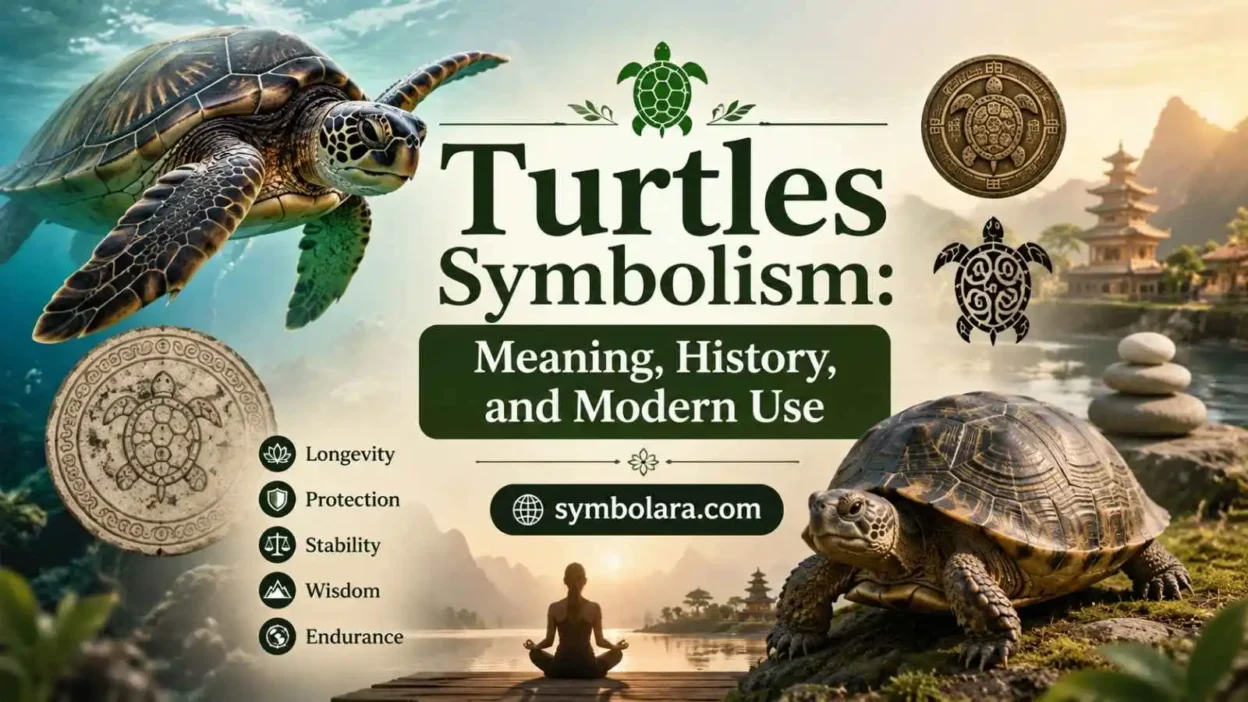
Turtles Symbolism shapes how many Americans understand patience, endurance, and steady progress in everyday life. People often choose the turtle as a reminder that progress does not need speed to be meaningful. Instead, it emphasizes consistency, resilience, and grounded living in a fast-paced world.
In the United States, turtle imagery appears in environmental campaigns, tattoos, art, and wellness spaces. It connects with people who want a calmer, more intentional approach to challenges. The symbol also reflects a growing interest in slowing down and avoiding burnout.
Across history, cultures have used turtles to represent stability, protection, and long life. These ideas continue to influence how people interpret the symbol today.
Quick Answer
Turtles Symbolism represents patience, protection, and long-term endurance in modern American culture. Historically, people also linked turtles to stability, wisdom, and the structure of the world in ancient traditions.
TL;DR
- Turtles symbolize patience and steady progress
- Ancient cultures linked turtles to creation and stability
- Americans use turtle imagery for resilience and calm living
- Turtle shells represent protection and boundaries
- Tattoos often show endurance and personal growth
- Modern use strongly connects to conservation efforts
What a Turtle Represents in Visual Culture
Turtles appear in art and culture as animals with a hard protective shell and slow, steady movement. The shell visually dominates the image and communicates safety and endurance. Artists often highlight this feature to emphasize stability.
In the United States, people see turtles in wildlife programs, children’s books, logos, and environmental messaging. Coastal regions especially associate turtles with natural ecosystems and marine life.
Because the turtle has a simple and recognizable shape, it quickly communicates meaning without explanation. People understand it as a symbol of calm strength and steady direction.
Core Meaning in Modern American Life
In modern American culture, the turtle represents patience and steady progress. It encourages people to move forward without rushing decisions. Many people relate it to personal growth and long-term success.
The shell represents emotional protection. It shows how people can protect their inner life while still engaging with the outside world. This idea resonates in discussions about mental health and boundaries.
The turtle also represents longevity. People associate it with long life, stability in relationships, and consistent personal development.
Historical Roots of Turtle Symbolism
Ancient societies created turtle symbolism based on observation and storytelling. Because turtles live long and move slowly, people connected them to endurance and stability.
Many early cultures described the world as resting on a giant turtle or being supported by turtle-like beings. These stories explained the idea of a stable universe in symbolic form.
Other traditions connected turtles to water and land at the same time. This dual connection helped people view turtles as symbols of balance between different forces.
Turtle Symbolism in Native American Traditions
Many Native American traditions associate the turtle with Earth and creation stories. Some narratives describe North America as “Turtle Island,” showing a deep connection between land and the turtle.
These stories present the turtle as a symbol of responsibility and grounding. The animal’s slow movement reflects awareness and careful action rather than weakness.
Different tribes hold different interpretations, but many share the idea of the turtle as a foundation of life and land.
How Americans Interpret Turtle Symbolism Today
| Context | Meaning in the USA | Common Associations | Notes |
|---|---|---|---|
| Nature & wildlife | Longevity and patience | Conservation, ecosystems | Strong environmental link |
| Personal growth | Slow progress and resilience | Mental health, healing | Encourages steady improvement |
| Emotional life | Protection and boundaries | Self-care, stability | Shell represents safety |
| Tattoos | Endurance and life journey | Strength, survival | Popular minimalist design |
| Pop culture | Calm or wise traits | Media characters | Often friendly portrayal |
| Environmental action | Conservation awareness | Sea turtle protection | Strong modern usage |
Emotional and Psychological Meaning
People often associate turtles with emotional stability. The slow movement encourages calm thinking and reduced stress reactions. It promotes thoughtful decision-making rather than impulsive behavior.
The shell represents personal boundaries. It shows how people protect themselves emotionally while still staying connected to the world. This makes the turtle a strong symbol for self-care.
Many people also connect turtles with calmness because they rarely represent danger or aggression. This strengthens their use in wellness and mindfulness spaces.
Turtle Symbolism in Global Mythology
Many cultures around the world developed turtle symbolism independently. Some traditions describe turtles as carrying the world or supporting cosmic order. These stories highlight stability and endurance.
In Asian traditions, people often connect turtles to wisdom and long life. The slow movement represents careful thinking and balance.
Ocean-based cultures view turtles as travelers across long distances. This reinforces their meaning of endurance and direction over time.
Spiritual Interpretations of Turtles
In spiritual symbolism, turtles represent grounding energy and emotional balance. Their connection to both land and water reflects harmony between stability and emotion.
Many interpretations describe turtles as reminders to slow down and focus on long-term purpose. They encourage alignment with natural timing instead of rushing outcomes.
Even outside formal religions, people use turtles as symbols of patience and personal grounding.
What Does a Turtle Symbolize in Dreams?
Dreams about turtles are often interpreted as symbols of patience, protection, and personal growth. A turtle appearing in a dream may represent a need to slow down, make careful choices, or trust a long-term process.
A turtle hiding inside its shell can symbolize the need for safety, privacy, or emotional protection. It may reflect a period when someone wants time to think before taking action.
Seeing a turtle moving forward can represent progress that happens gradually but consistently. Unlike symbols connected with speed or urgency, the turtle reminds people that steady movement can still lead to meaningful results.
Dream interpretations vary depending on personal experiences and cultural background. Some people view turtles in dreams as positive reminders of resilience, while others connect them with patience during difficult transitions.
Turtles in Tattoos and Personal Expression
Turtle tattoos often represent personal endurance and life experience. People choose them to show survival through challenges or steady personal growth.
Designs frequently include waves, geometric shells, or simple outlines. These styles highlight calm strength and balance.
In jewelry and fashion, turtles represent protection and emotional stability. Many people wear them as symbolic reminders of resilience.
Turtle Symbolism in Modern Media
Turtles appear in movies, cartoons, and online culture as symbols of patience and wisdom. Characters often show calm thinking and steady behavior.
On social media, people sometimes use turtle imagery humorously to represent slow progress or procrastination. Even in humor, the core meaning stays connected to steadiness.
Environmental campaigns also use turtles to highlight ocean conservation and endangered species protection.
Sea Turtle Symbolism and Environmental Meaning
Sea turtle symbolism carries many of the same meanings as general turtle symbolism, including endurance, protection, and long journeys. However, sea turtles have developed a unique connection with oceans, migration, and environmental awareness.
Because sea turtles travel across large distances during their lives, many people associate them with exploration, persistence, and returning to important places. Their ability to navigate oceans has made them powerful symbols of direction and connection.
In the United States, sea turtles are strongly connected with conservation efforts. Wildlife organizations and coastal communities often use sea turtles to represent ocean health, responsible environmental choices, and protection of marine ecosystems.
Sea turtle imagery also appears in jewelry, tattoos, and artwork. These designs often combine personal meanings like resilience and freedom with broader ideas about protecting nature.
Color and Shape Symbolism of Turtles
Turtles often appear in earthy colors like green, brown, and gray. These tones connect them to nature, grounding, and stability.
The rounded shell shape reinforces protection and completeness. Designers use this shape to represent safety and containment.
Water imagery often appears alongside turtles, linking them to emotional flow and adaptability.
Different Turtle Colors and Their Symbolic Meanings
Turtle colors can influence how people interpret their symbolism. While these meanings are not universal rules, certain colors commonly create specific associations in art, design, and personal expression.
- Green turtles: Often represent nature, healing, growth, and connection with the environment.
- Blue turtles: Commonly connect with water, peace, emotional balance, and calmness.
- Black turtles: May represent mystery, protection, strength, and deep transformation.
- White turtles: Often symbolize purity, peace, and spiritual reflection.
- Golden turtles: Can represent prosperity, wisdom, and good fortune in some traditions.
Color symbolism depends on cultural background and personal meaning. A turtle image may carry different messages depending on where it appears and why someone chooses it.
Turtle Shell Symbolism: Protection, Strength, and Boundaries
The turtle shell is one of the strongest visual symbols connected with this animal. It represents protection, security, and the ability to carry a safe space wherever life leads.
In symbolic interpretations, the shell often represents personal boundaries. It reflects the idea that people can protect their emotional well-being while still moving through the world and building connections.
The shell also represents strength because turtles survive by carrying their protection with them rather than relying on external defenses. This idea connects with modern views of resilience and self-care.
For many people, turtle shell imagery serves as a reminder that vulnerability and protection can exist together. A person can remain open to life while still maintaining healthy limits.
Misunderstandings About Turtle Symbolism
Many people mistakenly interpret turtles as symbols of weakness because of their slow movement. In reality, the symbolism focuses on consistency and endurance, not speed.
Some uses reduce turtles to decorative imagery without recognizing their cultural and ecological meaning. This weakens the depth of the symbol.
Commercial use sometimes ignores conservation messages tied to real turtle populations, especially sea turtles.
Evolution of Turtle Symbolism Over Time
Turtle symbolism has changed from ancient cosmological explanations to modern psychological meanings. Early cultures used turtles to explain the structure of the world.
As scientific understanding grew, people shifted toward symbolic and personal meanings. Today, turtles represent emotional grounding, patience, and stability.
Environmental awareness also shaped modern interpretation, especially in conservation efforts.
Modern Uses in Everyday Life
People use turtle symbolism in lifestyle branding, wellness practices, and environmental messaging. It appears in clothing, home decor, and digital media.
Many individuals use turtles as personal reminders to slow down and stay consistent. This meaning fits well with modern conversations about stress and burnout.
Environmental groups continue to use turtles as symbols of ocean health and biodiversity protection.
FAQ
What does a turtle symbolize in daily life?
A turtle symbolizes patience, stability, and steady progress. It encourages people to focus on consistency instead of speed.
Why do turtles represent protection?
The turtle’s shell functions as natural protection. People interpret it as emotional safety and personal boundaries.
What does a turtle tattoo mean?
A turtle tattoo represents endurance, survival, and long-term personal growth. Many people choose it after overcoming challenges.
Do turtles have spiritual meaning?
Yes, turtles often represent grounding energy and balance. Many interpretations link them to patience and emotional stability.
Why are turtles linked to conservation?
Sea turtles face environmental threats, so they became symbols of ocean protection. They represent biodiversity and ecological awareness.
Is turtle symbolism positive?
Yes, turtle symbolism carries mostly positive meanings like patience, resilience, and stability. Negative interpretations usually come from misunderstanding slowness.
Why are turtles used as symbols of patience?
Turtles represent patience because they move slowly but continue forward. Their symbolism focuses on consistency and endurance rather than speed.
Conclusion
Turtles Symbolism reflects steady progress, emotional protection, and long-term resilience across cultures and modern American life. The turtle continues to represent a grounded approach to challenges, emphasizing consistency over speed.
Over time, people have moved from mythological explanations to personal and environmental meanings. Today, the turtle stands as a reminder of balance, patience, and endurance in everyday life.
Its meaning remains simple but consistent: real strength often shows up in steady movement, not urgency.