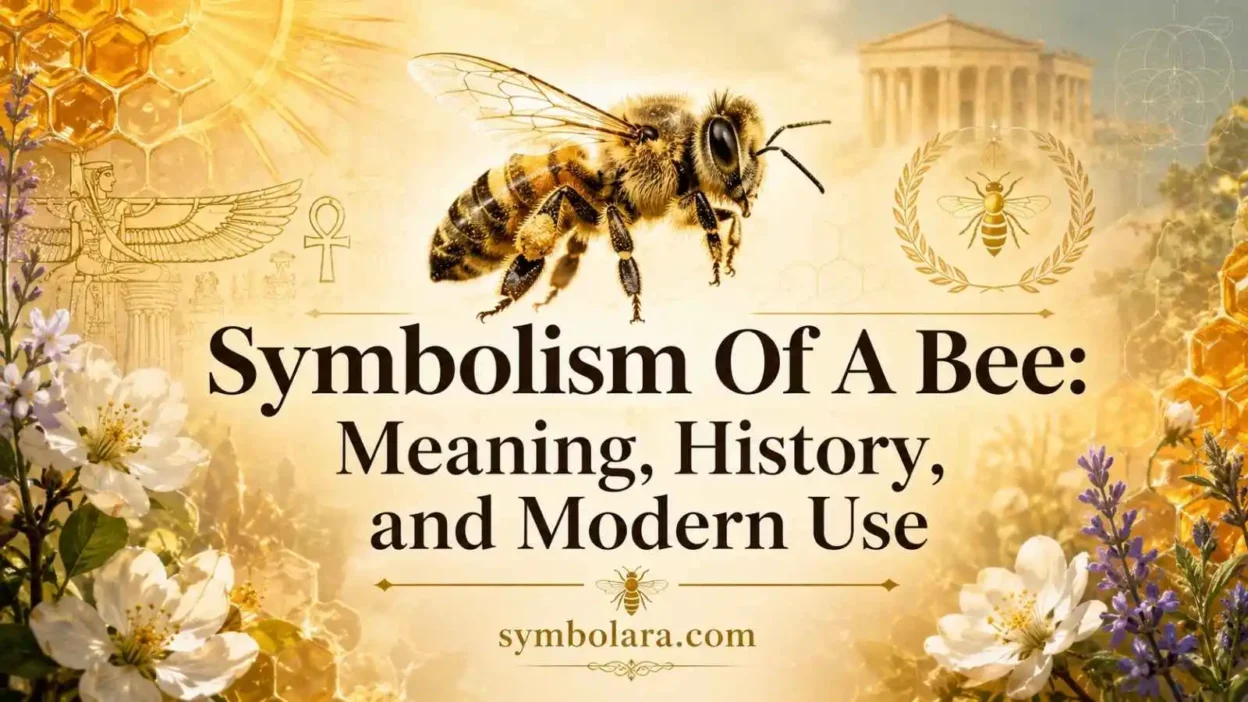
The Symbolism Of A Bee usually begins with one simple observation: bees are small, but their work supports life around them. In American culture, a bee often represents hard work, cooperation, usefulness, care for community, and the quiet importance of doing one’s part.
People also care about bee symbolism because bees appear in so many places. You may see them in tattoos, jewelry, garden decor, logos, honey brands, environmental campaigns, state symbols, and social media captions. A bee can look cute and cheerful, but it can also carry serious ideas about survival, discipline, and mutual dependence.
The meaning of a bee has changed over time. Ancient cultures connected bees with royalty, the soul, purity, sweetness, fertility, and divine order. Modern Americans usually read the bee more practically: as a sign of productivity, teamwork, nature, and environmental awareness.
This article explains what bees symbolize, where those meanings came from, and how people understand the bee today.
Quick Answer
In modern American culture, the Symbolism Of A Bee commonly points to hard work, teamwork, community, productivity, and care for nature. Historically, bees have also been linked with royalty, spiritual purity, fertility, sweetness, wisdom, and the connection between human life and the natural world.
TL;DR
- Bees most often symbolize hard work and cooperation.
- In the U.S., bees suggest community and productivity.
- Ancient cultures linked bees with royalty and sacred order.
- Bee tattoos often mean resilience, loyalty, or purpose.
- Modern bee imagery also connects with environmental care.
- Negative meanings usually involve stings, swarms, or overwork.
What a Bee Symbol Looks Like
A bee symbol usually shows a small winged insect with a striped body, delicate wings, and a rounded shape. Most designs use yellow, gold, black, amber, or honey tones because those colors connect the bee with sunlight, flowers, wax, and honey.
In realistic art, the bee may appear with detailed wings, legs, antennae, and a fuzzy body. In logos and decor, it often becomes simpler: a striped oval, two wings, and a neat outline. Tattoo designs may show bees with flowers, honeycomb, crowns, moons, hearts, or geometric patterns.
People encounter bee symbols in gardens, kitchens, nurseries, stationery, candles, honey jars, environmental campaigns, fashion, and home decor. The bee’s visual appeal matters because it feels both natural and organized. Its shape can suggest gentleness, but its sting reminds people that small things can still defend themselves.
What Bees Commonly Mean in the United States
In the United States, bees most often symbolize work, cooperation, and usefulness. The phrase “busy as a bee” still shapes how many Americans understand the insect. A bee suggests someone who stays active, contributes to a group, and helps create something valuable.
The bee also carries a strong community meaning. A hive depends on many individuals working together, so the bee becomes a natural symbol for teamwork, neighborhoods, families, and shared effort. This meaning appears in school imagery, local organizations, community groups, and small business branding.
Bees also represent sweetness and reward because of honey. That gives the symbol a warmer side: kindness, hospitality, comfort, and the pleasure that comes after steady effort. A bee can therefore mean both discipline and delight. It works hard, but the result is nourishment, beauty, and sweetness.
Why Bees Symbolize Hard Work
Bees symbolize hard work because their lives are visibly tied to repeated, purposeful activity. They gather nectar, pollinate flowers, build wax structures, care for the hive, and support the colony. Even people who know little about insects can understand the image of a bee moving from flower to flower with purpose.
This meaning became especially strong in American and European moral language. Bees were used as examples of diligence, order, and responsibility. The beehive became a visual lesson: no single bee creates the whole system alone, but each action matters.
That is why bee symbolism often feels practical rather than abstract. It does not usually suggest fame, luxury, or dramatic success. It suggests showing up, doing useful work, and contributing to something larger than yourself. For many people, that makes the bee a symbol of quiet achievement.
The Bee as a Symbol of Community
A bee rarely symbolizes individualism in the usual American sense. Even when one bee appears alone in a tattoo or logo, it often points back to the hive. The bee’s meaning comes from belonging, cooperation, and shared survival.
This is why the bee works well as a symbol for families, teams, workplaces, volunteer groups, and civic identity. A hive succeeds because each member has a role. The symbol can remind people that strong communities depend on care, coordination, and responsibility.
The bee also avoids the coldness that some “teamwork” symbols can have. It is not only mechanical or corporate. Because bees connect with flowers, honey, gardens, and warmth, they make community feel alive and nurturing. The bee suggests that cooperation should produce something life-giving, not just efficient.
Ancient Roots of Bee Symbolism
Bee symbolism is old because human beings have depended on bees, honey, and wax for thousands of years. Long before modern sugar, honey was a prized sweetener. Beeswax was used for candles, sealing, art, and ritual. Because bees produced valuable substances from flowers, people often saw them as unusual and meaningful.
In ancient Egypt, the bee was associated with royalty and Lower Egypt. The bee hieroglyph appeared in royal titles and helped connect the insect with rulership, order, and sacred authority. Honey also had religious and practical uses, which strengthened the bee’s importance.
In ancient Greek traditions, bees were linked with prophecy, priestesses, and divine nourishment. The Greek word “Melissa” means bee, and bee-related imagery appeared in stories connected with goddesses, sacred service, and inspired speech.
Over time, these older meanings shaped later ideas. Bees came to represent disciplined society, purity, sacred work, and the bridge between earthly life and something higher.
Bee Symbolism in Literature and Art
Artists and writers have used bees as symbols because they combine beauty, order, and mystery. A bee can represent both individual effort and the larger systems that connect living things. This makes it useful for stories about society, nature, identity, and human responsibility.
In literature, bees often appear as symbols of organized communities. Writers may use the hive to explore ideas about cooperation, duty, sacrifice, or the relationship between individuals and society. At the same time, the bee’s connection with flowers and honey allows it to represent creativity, sweetness, and the rewards of careful work.
Visual artists also use bees to create specific moods. A golden bee may suggest elegance, abundance, or craftsmanship, while a bee surrounded by flowers may emphasize renewal and the natural world. Historical artwork sometimes connected bees with royalty, purity, and spiritual themes.
Modern artists often use bee imagery in environmental and social messages. The symbol remains powerful because it can communicate a simple idea: even small actions can influence a much larger world.
Bees in Religious and Spiritual Traditions
Religious symbolism around bees often focuses on purity, order, sweetness, and disciplined service. In medieval Christian thought, bees were sometimes used as examples of chastity, moral order, and communal virtue. Their organized hive life made them useful as a metaphor for a well-ordered spiritual community.
In Islamic culture, bees and honey also hold special importance. Honey is associated with healing, and bees receive attention in religious tradition because of their role in producing something beneficial from nature.
In folk belief, bees sometimes appear as messengers between the human world and the unseen. The old custom of “telling the bees” treated hives as members of the household. Families informed bees about deaths, marriages, births, and major changes. This tradition shows how closely people connected bees with family life, grief, continuity, and respect.
These meanings do not all appear in modern American use, but they still influence how bees feel symbolically: small, purposeful, and close to life’s essential rhythms.
Bee Symbolism in American Public Life
Bee symbolism has a clear place in American public identity, especially through the beehive. The beehive has long represented industry, cooperation, and civic order. In the United States, this meaning became especially visible in Utah, where the beehive is a state emblem and the motto “Industry” reinforces the symbol.
The American meaning often removes older royal associations and focuses instead on shared labor. A hive becomes a picture of people building a community together. This interpretation fits American ideas about settlement, work ethic, mutual help, and local pride.
Bees also appear in public life through agriculture and environmental awareness. Because bees support pollination, they have become symbols of food systems, gardens, sustainability, and concern for ecological health. In modern American culture, saving bees often means caring about the future of farms, flowers, and everyday food.
Bee Symbolism by Context
| Context | Meaning in the USA | Common Associations | Notes |
| Tattoos | Resilience, loyalty, purpose | Flowers, honeycomb, crowns | Often personal and emotional |
| Home Decor | Warmth, sweetness, hospitality | Kitchens, gardens, candles | Usually cheerful and welcoming |
| State Symbols | Industry and cooperation | Utah, beehive, civic identity | Focuses on shared work |
| Environmental Use | Pollination and ecological care | Gardens, farms, sustainability | Common in modern campaigns |
| Jewelry | Strength, grace, femininity, charm | Gold, amber, delicate wings | Can be elegant or playful |
| Folklore | Household connection and mourning | Telling the bees, family news | More historical than everyday |
Emotional and Psychological Meaning of Bees
Emotionally, bees can symbolize purpose. A bee does not look lost; it appears directed, alert, and useful. That is why people often use bee imagery when they want to express focus, discipline, or a meaningful daily routine.
Bees can also represent belonging. The hive gives the bee a home, a role, and a larger purpose. For someone who values family, friendship, or community, a bee can say, “I am part of something that matters.”
At the same time, bees can suggest boundaries. A bee is small and often helpful, but it can sting when threatened. This gives the symbol a quiet protective meaning. In tattoos and personal style, a bee may communicate softness with strength: kind, productive, and warm, but not defenseless.
Bee Symbolism in Dreams: Meanings and Common Interpretations
Dreams about bees are often interpreted through themes already connected with bee symbolism: work, relationships, communication, and personal growth. A bee appearing in a dream may represent activity, responsibility, or the feeling that many small tasks are demanding attention.
A peaceful bee dream, such as seeing bees around flowers or honey, is often associated with productivity, abundance, creativity, and positive connections. It may reflect a period where steady effort is creating meaningful results.
A dream involving a bee sting or an aggressive swarm can carry a different interpretation. Some people connect these images with conflict, stress, boundaries, or situations that feel overwhelming. The meaning depends on the dreamer’s emotions and personal experiences rather than a single universal definition.
Because bees have different meanings across cultures, dream interpretations vary. In some traditions, bees represent spiritual messages or transformation, while modern psychological views often focus on personal feelings, relationships, and daily pressures.
Bee Tattoos and Personal Style
Bee tattoos are popular because they can hold several meanings without looking heavy. A small bee tattoo may stand for hard work, loyalty, survival, or devotion to family. A bee with flowers can suggest growth, beauty, and connection to nature. A bee with a crown may point to confidence, feminine leadership, or the “queen bee” idea.
Some people choose bee tattoos after personal hardship. In that context, the bee can mean resilience: continuing to move, build, and create sweetness after a difficult season. Others choose it as a reminder to stay productive without losing gentleness.
Bee jewelry and fashion often use a lighter version of the same symbolism. Gold bee earrings, brooches, necklaces, and embroidered designs can feel elegant, vintage, garden-inspired, or quietly bold. The bee is small enough to feel delicate, but meaningful enough to avoid being just decoration.
Bee Symbolism in Jewelry and Fashion
Bee jewelry often carries meanings of elegance, strength, connection, and personal identity. A bee necklace, ring, or bracelet may represent hard work, loyalty, creativity, or appreciation for nature. Because bees are small and visually attractive, they are commonly used in designs that feel both delicate and meaningful.
Gold bee jewelry has a long connection with luxury and craftsmanship. The warm color of gold naturally matches the traditional association between bees, honey, sunlight, and abundance. Some designs also include flowers, gemstones, or honeycomb patterns to emphasize growth and beauty.
For many people, wearing a bee symbol is a personal reminder. It may represent staying focused, supporting loved ones, building something meaningful, or remembering the importance of small contributions.
The meaning of bee jewelry depends on the wearer. Some choose it because of its connection with nature, while others appreciate its balance of softness and strength. The bee remains popular because it can express many ideas without losing its recognizable identity.
The Queen Bee Meaning
The queen bee carries a different meaning from the worker bee. In nature, the queen is central to reproduction inside the colony. Symbolically, this has made the queen bee a sign of feminine power, leadership, fertility, confidence, and social influence.
In American slang, “queen bee” can be positive or negative. Positively, it can mean a woman who is admired, stylish, capable, or central to her circle. Negatively, it can describe someone who dominates a social group or controls others through status.
Because of this mixed meaning, queen bee symbolism depends heavily on context. In jewelry or tattoos, it often feels empowering. In social commentary, it may criticize hierarchy, popularity contests, or exclusion. The crown changes the symbol from shared work to personal authority.
Bees, Honey, and Sweetness
Honey gives the bee one of its warmest symbolic meanings. Honey suggests sweetness, comfort, care, and reward. In American homes, bee and honey imagery often appears in kitchens, tea products, candles, bath items, and cozy decor because it feels welcoming.
Honey also adds a meaning of patience. It takes time, flowers, and repeated effort to produce honey. Symbolically, that can point to the sweetness that comes from consistent care. A bee does not create honey instantly; it gathers, transforms, and stores.
This is why bee symbolism can work well for weddings, family gifts, and home themes. It suggests that love and comfort grow through repeated small acts. The bee makes sweetness feel earned rather than accidental.
The Honeycomb Symbolism: Structure, Balance, and Creation
The honeycomb carries its own symbolism separate from the bee itself. Its repeating hexagonal structure often represents balance, organization, efficiency, and careful construction. Because bees create honeycombs through collective effort, the pattern has become a symbol of cooperation and intelligent design.
In modern design, honeycomb patterns appear in architecture, fashion, jewelry, branding, and artwork. Their geometric appearance gives them associations with harmony and stability. Many people see the honeycomb as an example of how small parts can combine to create something strong.
The honeycomb also adds a creative meaning to bee symbolism. Bees do not simply gather resources; they transform them into something useful. Because of this, honeycomb imagery can represent building, planning, craftsmanship, and turning effort into lasting results.
Bees as Environmental Symbols
In the 2025–2026 cultural context, bees are strongly tied to environmental concern. Many Americans connect bees with pollination, gardens, native plants, food production, and climate awareness. A bee symbol on a poster, shirt, garden sign, or brand often suggests care for the natural world.
This meaning is not only sentimental. Bees play a visible role in how people think about food and ecosystems. Even when the image shows a honeybee, the broader message often includes native bees, flowers, habitat, and pesticide concerns.
However, modern environmental symbolism can also simplify the issue. “Save the bees” sometimes becomes a general slogan without distinguishing between honeybees, wild bees, and native pollinators. A careful reading of the symbol should recognize both: bees genuinely matter, but not every bee image tells the whole ecological story.
Cross-Cultural Meanings of Bees
Across cultures, bees often gather meanings around work, order, sweetness, fertility, and the sacred. Ancient Egyptian symbolism emphasized royalty and divine association. Greek traditions linked bees with prophecy, priestesses, and sacred nourishment. European folklore treated bees as household beings that should be informed of family events.
Christian art and writing often connect bees with purity, moral discipline, and ideas related to resurrection. Islamic tradition values honey as a symbol of healing and blessing. Many folk traditions also treat bees as messengers between worlds, linking them with guidance, spiritual communication, and the unseen.
These meanings do not always agree perfectly. A bee can represent monarchy in one context, community labor in another, and spiritual purity in another. The shared thread is usefulness. Bees transform flowers into honey, support plant life, and live in organized societies, so cultures repeatedly turn them into symbols of order and benefit.
Negative Bee Symbolism and Misuse
Bee symbolism is mostly positive, but it is not always gentle. Bees can also symbolize irritation, danger, pressure, or collective anger. A swarm can suggest a crowd becoming threatening. A sting can represent consequences, defense, pain, or a warning not to disturb what should be respected.
In everyday language, “busy bee” can be affectionate, but it can also suggest someone who is overworked or constantly moving. The bee may become a symbol of productivity culture when work is praised without rest.
There is also a difference between historical symbolism and modern misuse. A beehive can represent cooperation, but it can also be used in shallow branding to make a workplace look communal while ignoring real labor conditions. A queen bee image can feel empowering, but in some contexts it reinforces social hierarchy. The symbol is strongest when its meaning matches the behavior behind it.
How Bee Symbolism Has Changed Over Time
Bee symbolism has moved from sacred and royal meanings toward civic, personal, and environmental meanings. In ancient societies, bees were often connected with rulers, gods, priestesses, and ritual materials. Their honey and wax made them valuable, and their organized behavior made them seem close to divine order.
Later, the beehive became a moral and social symbol. It taught lessons about labor, discipline, and a well-organized community. In American public life, this meaning became especially important: the bee and hive suggested industry, cooperation, and building a shared future.
Today, the bee has become more personal and ecological. People wear bees as tattoos, jewelry, and fashion statements. Brands use them to suggest natural care and craftsmanship. Environmental groups use them to remind people that human life depends on small creatures we often overlook.
When a Bee Symbol Makes Sense
A bee symbol works best when the message involves effort, care, connection, or nature. It fits a gardener, teacher, parent, maker, small business owner, environmental advocate, or anyone who values steady contribution.
It also works when someone wants a symbol that is warm but not weak. A bee can be sweet because of honey and flowers, but it still has a sting. That balance makes it useful for personal identity: gentle, useful, social, and self-protective.
Bees work beautifully in kitchens, gardens, nurseries, cottage-style homes, spring décor, and honey-colored palettes. In tattoos, bees suit people who want a small symbol with deep meaning. In public design, use the bee thoughtfully, especially when the message connects to labor, ecology, cooperation, or community.
Common Misunderstandings About Bee Symbolism
One common misunderstanding is that all bee symbolism means “hard work” and nothing else. Hard work is important, but bees also carry meanings of sweetness, protection, fertility, grief, social order, and environmental care.
Another misunderstanding is that bee symbolism is always soft or cute. A bee can be cheerful in decor, but it can also represent defense, warning, or the strength of a group. The same insect that makes honey can sting.
A third misunderstanding involves the queen bee. People often treat the queen as a ruler in the human sense, but the real biology of a hive is more complex. Symbolically, “queen bee” is less about literal government and more about centrality, reproduction, feminine authority, or social status.
Good symbolism depends on context. A bee on a honey jar, a memorial tattoo, a state emblem, and an environmental poster may share the same insect but carry different meanings.
FAQs
What does a bee symbolize spiritually?
Spiritually, a bee often symbolizes purposeful work, service, cooperation, sweetness, and connection with nature. In older traditions, bees were also linked with purity, sacred order, and communication between the living and the unseen.
What does a bee tattoo mean?
A bee tattoo often means hard work, resilience, loyalty, family, or personal purpose. When paired with flowers, honeycomb, or a crown, the meaning can shift toward growth, community, sweetness, or feminine confidence.
Is a bee a positive symbol?
A bee is usually a positive symbol because it represents productivity, teamwork, nature, and reward. It can become negative when the focus is on stings, swarms, overwork, or social pressure.
What does a bee symbolize in American culture?
In American culture, a bee commonly symbolizes industry, cooperation, community, and environmental awareness. The beehive is especially connected with civic work and shared effort, most visibly in Utah’s public symbolism.
What does a queen bee symbolize?
A queen bee often symbolizes feminine power, fertility, leadership, confidence, or social influence. Depending on context, it can feel empowering or critical of status-based social control.
Why are bees connected with death and mourning?
Bees are connected with death and mourning through old folklore traditions such as “telling the bees.” In those customs, families informed hives about a death so the bees remained part of the household’s emotional life.
What does honey add to bee symbolism?
Honey adds meanings of sweetness, comfort, reward, healing, and hospitality. It turns the bee from a symbol of work alone into a symbol of what careful effort can produce.
What does a bee symbolize in a relationship?
A bee can symbolize loyalty, teamwork, care, and building something together. Because bees depend on cooperation, they are sometimes used as symbols of commitment and shared purpose.
Conclusion
A bee symbolizes more than being busy. It represents work that supports life, cooperation that builds community, sweetness created through effort, and the need to respect small creatures with large influence.
The Symbolism Of A Bee is especially meaningful in modern American culture because it connects personal identity with public concerns. A bee can stand for family, resilience, craftsmanship, environmental care, or the quiet pride of doing useful work. Its lasting appeal comes from balance. The bee is gentle but not helpless, productive but not empty, small but essential.
Spiritually, a bee often symbolizes purposeful work, service, cooperation, sweetness, and connection with nature. In older traditions, bees were also linked with purity, sacred order, and communication between the living and the unseen.
A bee tattoo often means hard work, resilience, loyalty, family, or personal purpose. When paired with flowers, honeycomb, or a crown, the meaning can shift toward growth, community, sweetness, or feminine confidence.
A bee is usually a positive symbol because it represents productivity, teamwork, nature, and reward. It can become negative when the focus is on stings, swarms, overwork, or social pressure.
In American culture, a bee commonly symbolizes industry, cooperation, community, and environmental awareness. The beehive is especially connected with civic work and shared effort, most visibly in Utah’s public symbolism.
A queen bee often symbolizes feminine power, fertility, leadership, confidence, or social influence. Depending on context, it can feel empowering or critical of status-based social control.
Bees are connected with death and mourning through old folklore traditions such as “telling the bees.” In those customs, families informed hives about a death so the bees remained part of the household’s emotional life.
Honey adds meanings of sweetness, comfort, reward, healing, and hospitality. It turns the bee from a symbol of work alone into a symbol of what careful effort can produce.