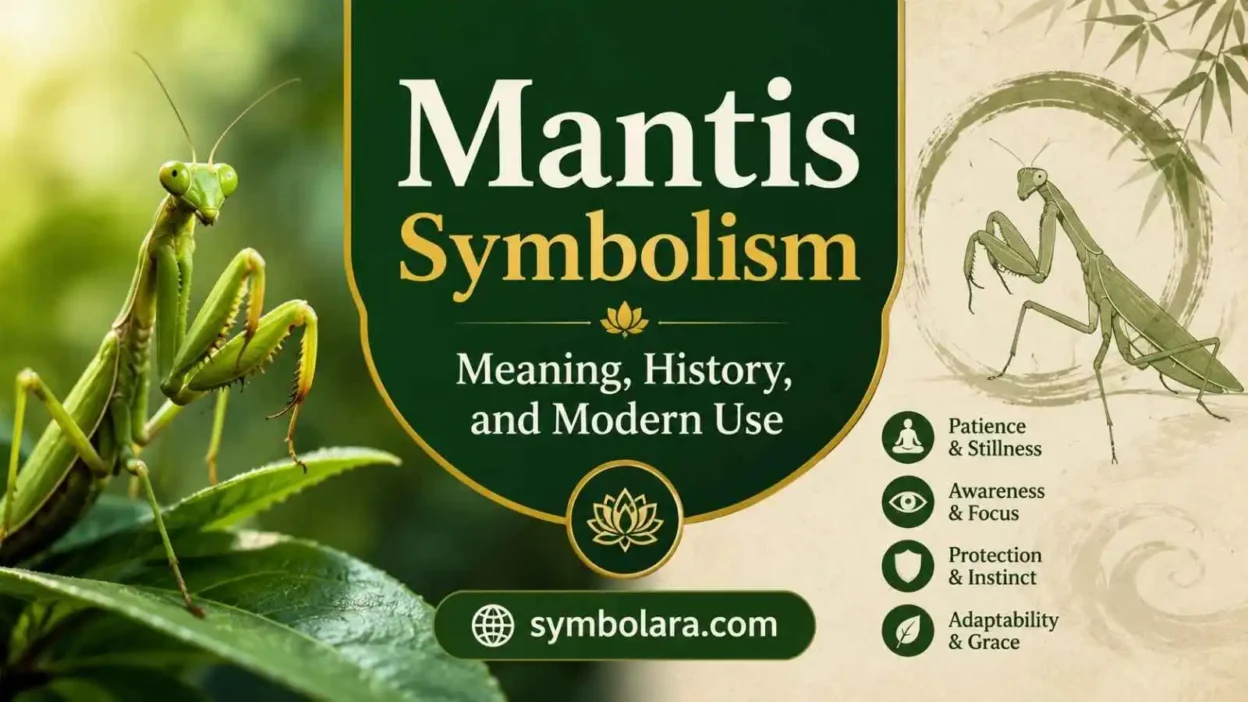
The Mantis Symbolism reflects how people interpret the praying mantis as a living example of patience, awareness, and precise timing. In modern American culture, people connect this insect to calm focus and deliberate action because it behaves with extreme stillness before it moves with sudden accuracy.
People study this symbol because it connects natural behavior with human decision-making. Instead of relying on force or speed, the mantis demonstrates control, observation, and timing—qualities that many people value in work, relationships, and personal growth.
Across history, different cultures noticed the mantis and built meanings around its unique posture and hunting style. Today, those interpretations continue to influence tattoos, art, mindfulness practices, and personal identity in the United States.
Quick Answer
Mantis symbolism represents patience, awareness, and precise timing in modern American culture. Historically, people also connected it to intuition, spiritual awareness, and calculated action based on its stillness and sudden strike behavior.
TL;DR
- Represents patience and controlled timing
- Connects to observation and mental focus
- Originates from hunting behavior in nature
- Used in tattoos and mindfulness culture
- Linked to discipline and self-control
- Appears in both spiritual and psychological contexts
How People Recognize the Praying Mantis
The praying mantis stands out because it holds its front legs in a folded position that resembles prayer. This posture immediately draws human attention and influenced many symbolic interpretations over time.
Its head rotates with sharp precision, allowing it to track movement from different angles. People often notice how it stays motionless for long periods, which creates an impression of focus rather than inactivity.
Unlike many insects that move constantly, the mantis waits. That waiting behavior forms the foundation for most symbolic meanings attached to it today.
Core Meaning in Modern American Interpretation
In the United States, people most often associate the mantis with patience, discipline, and strategic timing. It represents the idea that success often comes from waiting for the right moment rather than acting immediately.
Many individuals also connect it to emotional control. The mantis does not react impulsively; it observes first and then acts with precision. This makes it a strong symbol for people who value thoughtful decision-making.
In modern culture, it also represents mindfulness. People use it as a reminder to stay present and avoid unnecessary reaction to stress or distraction.
What Does Seeing a Praying Mantis Symbolize?
Seeing a praying mantis is often interpreted as a reminder to slow down, observe carefully, and make thoughtful decisions. In modern American symbolism, people commonly connect a mantis encounter with patience, awareness, and waiting for the right opportunity.
Some people view a mantis appearing near their home, garden, or path as a personal reminder to stay calm during uncertain situations. This interpretation comes from the insect’s natural behavior: it remains still, studies its surroundings, and acts only when the timing is right.
However, the meaning of seeing a mantis depends on personal beliefs and cultural background. Some spiritual traditions associate it with intuition or inner awareness, while others simply appreciate it as an example of adaptation and survival in nature.
For many people today, a mantis sighting represents a pause for reflection. It encourages careful thinking instead of rushed reactions and highlights the value of patience in everyday choices.
Early Observations That Shaped Its Symbolism
Early humans formed meaning around the mantis by watching its behavior in nature. They noticed how it stayed perfectly still and then struck with speed when prey came close.
Some cultures described it as a creature that balanced calmness with precision. Others focused on its unusual posture and compared it to prayer or meditation.
These early interpretations did not come from mythology alone. They came from direct observation, which gave the mantis symbolism a grounded and behavioral origin rather than a purely fictional one.
Why Stillness Defines Its Symbolic Identity
The mantis survives by staying still for long periods. It does not waste energy by moving constantly. Instead, it watches and waits until the exact moment to act.
This survival strategy influenced how people interpret its meaning. Stillness becomes active rather than passive. Waiting becomes a form of control rather than hesitation.
Because of this, the mantis often represents disciplined patience—choosing not to react until conditions become clear.
The Mantis as an Observer in Nature
The mantis uses camouflage and stillness to blend into its surroundings. It studies movement in its environment and responds only when necessary.
People often connect this behavior to human thinking patterns. It mirrors situations where careful observation leads to better decisions than immediate action.
The insect also demonstrates balance between visibility and invisibility. It remains present but avoids attention until it moves, which strengthens its symbolic link to awareness and timing.
Mantis Symbolism in the United States Today
| Context | Meaning in the USA | Common Associations | Notes |
|---|---|---|---|
| Tattoos | Discipline and patience | Focus, resilience | Often minimal or geometric designs |
| Mindfulness culture | Awareness and presence | Meditation, clarity | Used in personal growth spaces |
| Personal identity | Strategic thinking | Control, planning | Chosen for introspective meaning |
| Art and design | Precision and balance | Natural symmetry | Popular in modern illustration |
| Pop culture | Quiet intensity | Hidden capability | Used in character symbolism |
In modern American interpretation, the mantis often appears as a personal symbol rather than a mainstream cultural icon. People choose it to represent internal traits instead of external status.
Spiritual and Folk Interpretations
Some traditions treat the mantis as a symbol of awareness or intuition. Its still posture and sudden movement encourage people to view it as a reminder to stay alert and patient.
Folk stories in various regions sometimes describe the mantis as a guide toward better decisions or heightened perception. These interpretations vary widely and depend on local cultural beliefs.
In the United States, people usually interpret these ideas in a psychological way rather than a strictly spiritual one. They focus on mental clarity rather than supernatural meaning.
Praying Mantis Symbolism in Dreams
A praying mantis in dreams is often interpreted as a symbol of patience, observation, and careful decision-making. Because the insect waits before acting, many people connect dream appearances with moments when they need to think before making a choice.
A dream about a mantis may represent the need to pay attention to details that are easy to overlook. It can reflect a situation where quiet observation may provide better results than immediate action.
Some dream interpretations also connect the mantis with personal transformation or increased awareness. These meanings are symbolic rather than scientifically proven, and dream experiences vary greatly from person to person.
From a psychological viewpoint, the mantis may represent qualities that the dreamer values, such as focus, self-control, or confidence. The meaning often depends on the dream’s setting, emotions, and personal experiences.
Cross-Cultural Perspectives
Different cultures interpret the mantis in unique ways based on how they observe its behavior.
Some African traditions associate it with wisdom and spiritual communication. In East Asian martial traditions, practitioners studied its movements and adapted them into fighting styles focused on precision and timing.
In parts of Europe, naturalists described it as both elegant and unsettling due to its predatory efficiency. These contrasting views show how behavior shapes meaning across regions.
Despite these differences, most interpretations still highlight patience, awareness, and timing.
Mantis Symbolism in Japanese Culture and Martial Arts
The praying mantis has a notable connection with Japanese and Chinese martial arts traditions, especially through movements inspired by the insect’s quick reactions and defensive techniques. Practitioners studied the mantis because its movements appeared controlled, alert, and precise.
In martial arts symbolism, the mantis represents strategy rather than brute strength. Its small size compared with larger animals highlights the idea that intelligence, timing, and technique can overcome physical disadvantages.
The influence of the mantis can also be seen in traditional Chinese martial arts styles known as Praying Mantis Kung Fu. These systems developed their own techniques based on observations of the insect’s movements.
Although these traditions are not the same as general symbolism in Western culture, they contributed to the wider global association between the mantis and qualities like precision, awareness, and adaptability.
Emotional and Psychological Meaning
The mantis reflects emotional control under pressure. It suggests the ability to stay calm when situations demand quick decisions.
Psychologically, it represents observation before reaction. People drawn to this symbol often value thinking carefully before acting and maintaining control over emotional responses.
It also reflects restraint as a strength. Instead of rushing into action, it encourages clarity and timing as tools for better outcomes.
Why People Choose It for Tattoos and Personal Expression
The mantis appears in tattoo culture because it carries meaning without relying on common symbolism. It allows people to express discipline, patience, or transformation in a subtle way.
Artists often design it in minimalist styles or detailed natural forms. Each design emphasizes structure, symmetry, or movement control.
Many people choose it to represent personal growth or a shift toward mindfulness and intentional living. It communicates focus without aggression or dominance.
Praying Mantis Tattoo Meaning and Design Ideas
A praying mantis tattoo often represents patience, intelligence, awareness, and controlled strength. Unlike symbols associated with physical power, the mantis usually reflects mental focus and the ability to wait for the right moment.
Common mantis tattoo designs include realistic insects, geometric patterns, botanical combinations, and minimalist line art. Each style can create a different feeling, from natural beauty to personal reflection.
Some people choose a mantis tattoo after experiencing a period of growth or change. The insect’s ability to remain calm before action makes it meaningful for those who value discipline and thoughtful choices.
The placement and design details also influence the personal meaning. A detailed natural design may emphasize connection with nature, while an abstract design may focus more on balance, awareness, and individuality.
The Mantis in Art and Popular Culture
Artists use the mantis to represent contrast between calm appearance and sudden action. Its physical structure makes it visually striking in both realistic and abstract forms.
In storytelling, creators often assign mantis-like traits to characters who rely on patience, intelligence, or strategy. These characters observe more than they speak and act only when necessary.
This dual nature—stillness paired with precision—makes it a useful symbol in visual and narrative design.
Misunderstandings About the Symbol
Some people assume the mantis represents aggression because it hunts other insects. However, its symbolic meaning focuses more on timing and restraint than violence.
Others believe it always carries spiritual significance. In reality, interpretations vary widely and often depend on personal or cultural perspective rather than fixed tradition.
It also gets misused in media as a mystical sign, even though most symbolic meanings come directly from observable behavior in nature.
How Its Meaning Has Changed Over Time
The mantis began as a subject of natural observation. People focused on how it moved, waited, and struck.
Over time, cultures added layers of meaning related to spirituality, discipline, and awareness. These meanings expanded as people applied human traits to animal behavior.
In modern times, especially in the United States, the mantis has become a personal symbol. People now use it to express identity traits like patience, focus, and emotional control rather than collective cultural beliefs.
Where the Symbol Appears Today
The mantis appears in tattoos, illustration, wellness design, and digital art. It also shows up in mindfulness content and personal branding that emphasizes precision or calm decision-making.
Unlike widely commercial symbols, it remains niche and personal. People usually choose it for meaning rather than trend or popularity.
Its presence in modern culture reflects a growing interest in introspection and behavioral symbolism.
FAQs
It symbolizes patience, awareness, and precise timing. These meanings come from how it waits and strikes in nature.
Some cultures view it spiritually, but most modern interpretations focus on psychology and behavior rather than religion.
A mantis tattoo usually represents discipline, focus, and emotional control. It often reflects personal growth or mindful living.
No. While it hunts, its symbolism focuses on restraint and timing rather than aggression or violence.
People connect it to mindfulness because it stays still, observes carefully, and reacts only when necessary.
Yes. It evolved from natural observation to cultural, psychological, and personal interpretations.
The praying mantis is sometimes called spiritual because its folded front legs resemble prayer and its behavior appears calm and focused. Different cultures interpret this appearance in different ways.
Conclusion
The mantis carries meaning shaped by how it behaves in nature rather than invented mythology. Its stillness, patience, and precise movement give people a clear model for thinking about timing and awareness in daily life.
In modern culture, Mantis Symbolism reflects discipline and observation more than mysticism or aggression. It encourages people to think before acting and to value clarity over reaction.
As interpretations continue to evolve, the mantis remains a steady reminder that sometimes the strongest action begins with patience.