
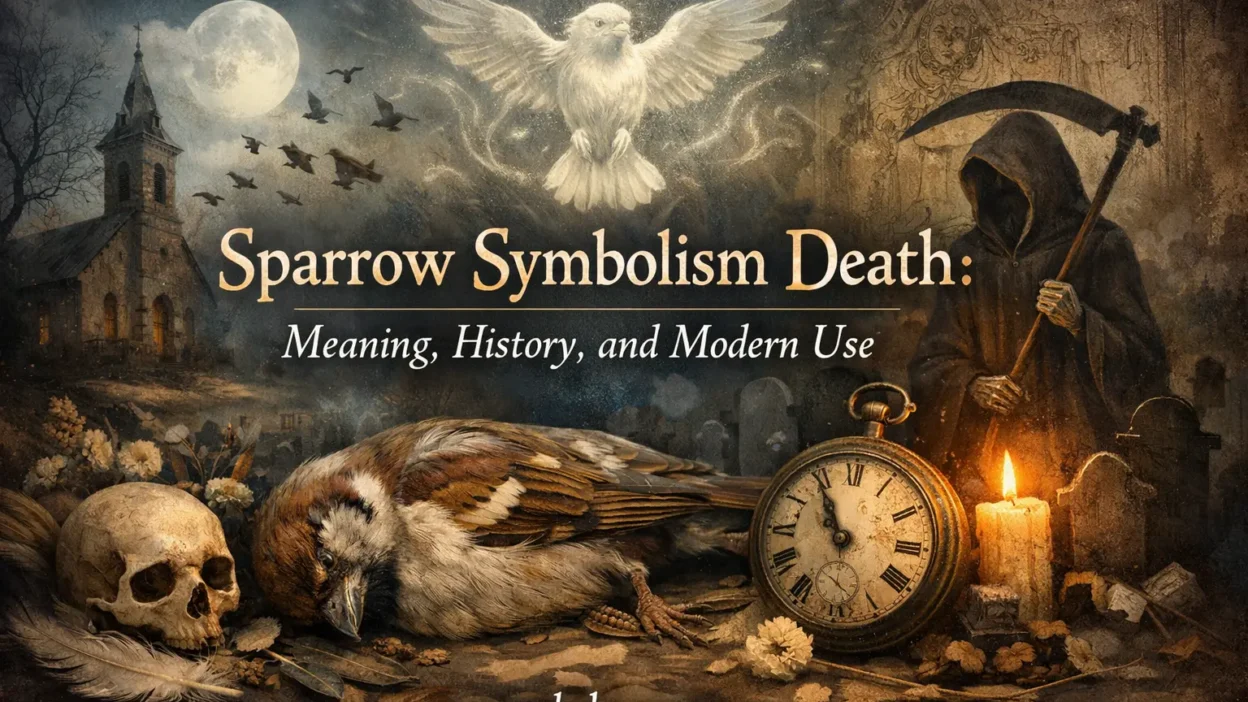
Sparrows are small, familiar birds that often appear in everyday life, from city sidewalks and gardens to poems, artwork, and religious stories. The idea of Sparrow Symbolism Death attracts attention because these birds are frequently connected with loss, remembrance, and the emotional experience of saying goodbye.
Unlike symbols that represent death only through darkness or fear, the sparrow often carries a more balanced meaning. In many traditions, it represents the fragile nature of life, the memory of loved ones, and the continuation of hope after loss.
Quick Answer
Sparrow symbolism death commonly represents remembrance, the fragile beauty of life, and emotional connection after someone’s passing in modern American culture. Historically, sparrows have also symbolized humility, spiritual care, and the belief that even small lives hold value.
TL;DR
- Sparrows symbolize remembrance and life’s fragility after loss.
- Ancient cultures viewed sparrows as signs of humility.
- Americans often connect sparrows with memorials and grief.
- Religious traditions associate sparrows with divine attention.
- Tattoos use sparrows to honor loved ones.
- Modern meanings focus on resilience and memory.
What Sparrows Represent and Why They Became Symbols
A sparrow is a small brown or gray bird commonly found near human environments. Unlike rare or dramatic birds such as eagles or hawks, sparrows live close to ordinary people. Their constant presence has made them symbols of everyday life, simplicity, and survival.
When connected with death, the sparrow does not usually represent death itself. Instead, it represents the relationship between life and loss. Because sparrows are small and vulnerable, people often associate them with the shortness of human existence and the importance of appreciating those who are gone.
The bird’s ability to survive in changing environments also adds another layer of meaning. For many people, a sparrow appearing after a loss can represent endurance, memory, and the continuation of life.
| Context | Meaning in the USA | Common Associations | Notes |
|---|---|---|---|
| Memorials | Remembering someone who passed away | Love, memory, connection | Often used in artwork and keepsakes |
| Religion | Care for every living being | Faith, protection, humility | Appears in Christian teachings |
| Tattoos | Personal remembrance | Family, survival, loyalty | Often paired with dates or names |
| Nature encounters | Reflection after loss | Peace, acceptance, renewal | Personal interpretations vary |
Ancient Roots and Early Symbolism of Sparrows
Sparrows have carried symbolic meanings for thousands of years because they lived alongside human communities. Their closeness to villages, farms, and homes made them familiar figures in folklore and storytelling.
In ancient Mediterranean cultures, small birds often appeared in stories about human emotions, relationships, and the natural world. Sparrows were sometimes connected with ordinary people because they lacked the strength and status associated with larger birds.
The Roman poet Virgil and other classical writers used small birds in literature to explore themes such as love, loss, and human vulnerability. While not every ancient reference gave sparrows a direct connection to death, their association with ordinary life helped create later symbolic interpretations.
Over time, people began viewing the sparrow as a reminder that every life has meaning, regardless of size or social importance.
What Sparrow Symbolism Means in the United States
In the United States, sparrow symbolism is often connected with personal memories rather than formal traditions. Many Americans see birds as emotional reminders of people, places, or moments from the past.
After someone dies, a sparrow may become meaningful because it appears during a period of grief. Some people interpret these encounters as comforting reminders of a loved one, while others simply see the bird as a natural symbol of remembrance.
Sparrows also fit American values connected with humility and perseverance. Because they are common birds that survive in cities, neighborhoods, and rural areas, they represent strength found in ordinary circumstances.
Memorial jewelry, garden decorations, paintings, and personalized gifts sometimes include sparrow designs because they communicate affection without using a traditional mourning symbol like a black ribbon or gravestone.
Religious Interpretations of Sparrows and Death
Religious traditions have played an important role in shaping how people understand sparrows. In Christianity, sparrows are often associated with God’s awareness of even the smallest creatures.
A well-known biblical passage describes how not even a sparrow is forgotten. This idea has led many believers to connect the bird with themes of divine care, comfort, and the belief that human lives are valued.
Because of this association, some Christians view a sparrow after a death as a reminder of spiritual comfort rather than a prediction or supernatural message.
Other spiritual traditions may interpret birds more broadly as symbols of the soul, transition, or connection between the physical world and spiritual beliefs. These meanings differ greatly depending on culture and personal faith.
Why Sparrows Became Connected With Mourning
The connection between sparrows and mourning comes from their relationship with ordinary human experiences. People often notice familiar natural elements more strongly during emotional moments, including grief.
A sparrow’s small size can represent vulnerability and the temporary nature of life. Its ability to continue singing and living can also represent healing after sadness.
Unlike symbols that focus only on finality, the sparrow often represents what remains after loss: memories, relationships, and the influence someone leaves behind.
This makes the sparrow a softer mourning symbol. It acknowledges sadness while also suggesting that life continues.
Emotional and Psychological Meaning of the Sparrow
From a psychological perspective, animals often become symbols because humans naturally create connections with the world around them. A familiar bird can become linked with personal experiences, especially during major life events.
A sparrow may represent:
- acceptance after loss
- comfort during grief
- appreciation for small moments
- emotional resilience
- connection with memories
For someone grieving, seeing a sparrow may provide a moment of reflection. The meaning comes from personal experience rather than a universal rule.
The bird’s ordinary nature is part of its emotional appeal. It does not represent unreachable perfection; it represents the value found in simple, familiar things.
Sparrow Symbolism in Tattoos and Personal Memorial Art
Sparrow tattoos are popular because they combine traditional bird imagery with personal meaning. When connected with death or remembrance, a sparrow tattoo often honors someone who has passed away.
Common designs include:
- a sparrow with a loved one’s name
- a sparrow carrying flowers
- two sparrows representing relationships
- dates connected with birth or death
- a sparrow flying away as a symbol of release
In American tattoo culture, sparrows have also been linked with sailors, freedom, and loyalty. The memorial meaning is only one interpretation among many.
People often choose sparrows because the bird feels personal and approachable. It communicates love and memory without appearing overly dramatic.
Sparrows in Folklore and Cross-Cultural Beliefs
Different cultures have interpreted sparrows in different ways. Some traditions view them as signs of good fortune, while others connect them with ordinary human struggles.
In parts of European folklore, small birds were sometimes associated with household spirits or messages from nature. In Chinese traditions, sparrows have often represented happiness, community, and lively energy.
Some folk beliefs connect birds generally with departed souls or spiritual messages. However, these interpretations are cultural traditions rather than proven facts.
The wide range of meanings shows that symbols change depending on geography, religion, and historical experience.
Common Misunderstandings About Sparrow Death Symbolism
One common misunderstanding is that seeing a sparrow means death is coming. This belief appears in some forms of folklore, but it is not a widely accepted interpretation in modern American culture.
Another misconception is that every bird encounter has a hidden message. Many people simply enjoy sparrows as part of nature without assigning spiritual meaning.
The death connection is usually about reflection and remembrance, not prediction. The sparrow is more often a symbol of emotional processing than a warning sign.
Understanding this difference helps separate cultural symbolism from superstition.
How Sparrow Meanings Have Changed Over Time
The meaning of sparrows has shifted as societies changed. In earlier periods, people often focused on their connection with daily survival and ordinary life. Religious traditions later added ideas about care, humility, and spiritual value.
In modern America, the sparrow has become more personal. Instead of representing a shared cultural belief alone, it often reflects individual memories and experiences.
Social media, personalized artwork, and memorial practices have expanded the bird’s meaning. Today, a sparrow may represent grief, healing, family, independence, or simply a meaningful connection to nature.
Sparrow Symbolism in Modern Culture and Design
Today, sparrows appear in many areas of American culture, including home decoration, jewelry, clothing, and digital artwork.
People often choose sparrow designs because they feel warm and familiar. A sparrow image can create a peaceful atmosphere in a memorial garden or serve as a personal reminder displayed in the home.
In digital spaces, bird imagery is frequently used in tribute posts and remembrance messages. A simple sparrow illustration can communicate sympathy and emotional support without words.
The symbol remains popular because it connects a small natural object with large human experiences.
Positive and Negative Interpretations of Sparrow Death Symbolism
Sparrow symbolism related to death has both comforting and challenging interpretations.
Positive meanings include:
- remembrance
- love beyond loss
- acceptance
- spiritual comfort
- resilience
Less positive interpretations may involve ideas of fragility, vulnerability, or the sadness of short lives. These meanings are not necessarily negative; they reflect the emotional reality of grief.
The same symbol can represent both sorrow and hope depending on the person and situation.
FAQs
A sparrow often symbolizes remembrance, emotional connection, and the value of a person’s life after death. Many people view it as a comforting image connected with memories rather than a direct sign of death.
Some people interpret a sparrow after a loss as a spiritual reminder or message of comfort. Others see it as a meaningful coincidence or a natural moment that brings peace.
A sparrow tattoo after a death usually represents honoring a loved one, keeping their memory alive, or carrying their influence forward. The meaning depends on the person’s story and the design chosen.
In some traditions, birds are associated with the soul or spiritual transition. However, this interpretation varies by culture and personal belief rather than being a universal meaning.
Some folklore connects birds with omens, but modern American interpretations usually view sparrows more positively. They are commonly associated with memory, humility, and survival.
Sparrows are used in memorial decorations because they represent small but meaningful lives, emotional connection, and remembrance. Their familiar appearance makes them approachable symbols of love and loss.
Conclusion
Sparrows represent more than the idea of death. They reflect the relationship between life, memory, and the emotions people experience after losing someone important. Their small size, familiar presence, and ability to survive have helped them become symbols of humility and remembrance.
Sparrow symbolism death is understood in modern America mainly as a reflection of grief, love, and the lasting impact of those who are remembered. Whether used in tattoos, memorial art, or personal reflection, the sparrow continues to represent how people find meaning after loss.
A small bird can carry a simple reminder: every life matters, and every memory has a place.


[…] horse breeds can create different symbolic impressions because people associate them with specific histories, environments, and […]
[…] meanings do not make the flower a universal death symbol. They do, however, help explain why it adapts so easily to mourning. A flower tied to loyalty, long […]