
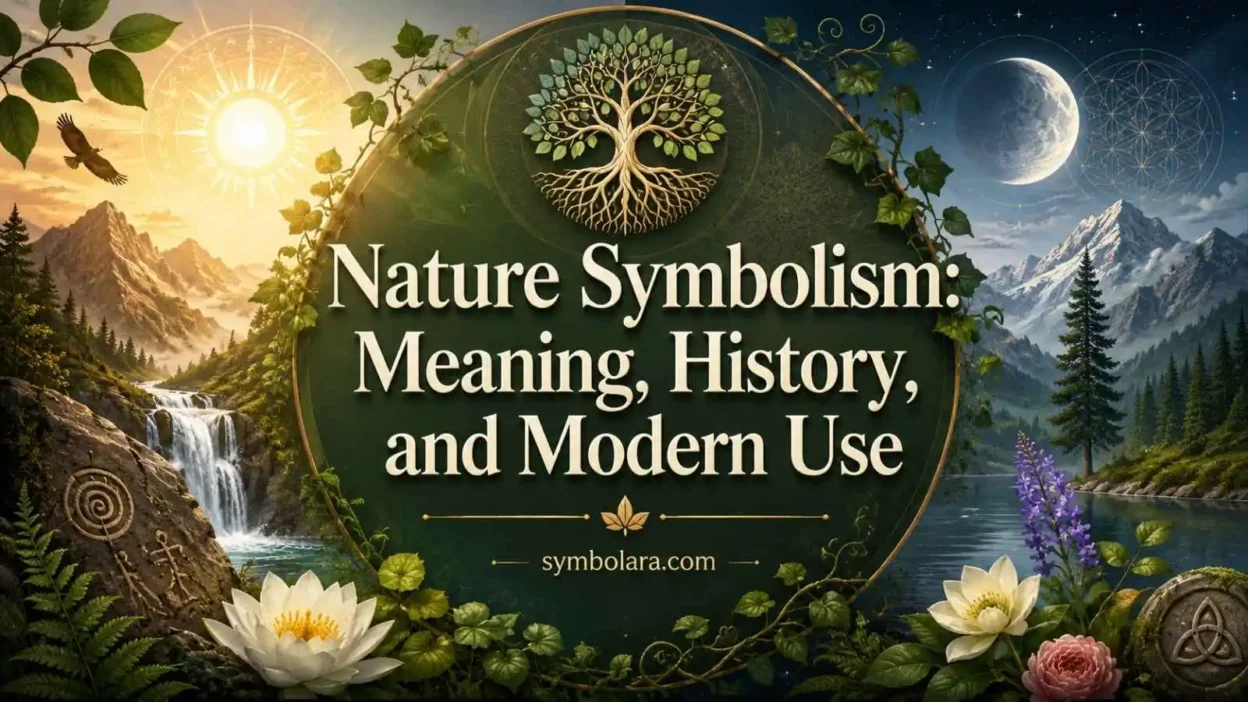
Nature Symbolism refers to the way people use trees, flowers, animals, water, mountains, seasons, weather, and landscapes to represent human ideas. In American culture, these images often stand for growth, freedom, peace, renewal, strength, mortality, and belonging.
People care about natural symbols because they are familiar before they are explained. A tree can suggest family roots. A river can suggest change. A mountain can suggest endurance. A storm can suggest conflict or cleansing. These meanings feel intuitive because they come from everyday experience as much as from religion, mythology, art, or literature.
In the United States, the symbolism of nature is especially tied to wilderness, national parks, environmental responsibility, home decor, tattoos, weddings, mourning customs, and personal identity. It appears in everything from state flags and poetry to wellness branding and social media captions.
Quick Answer
Nature Symbolism commonly symbolizes growth, renewal, peace, freedom, and connection in modern American culture, especially in design, tattoos, environmental messages, and personal reflection. Historically, natural images have also represented fertility, divine presence, seasonal cycles, survival, death, and the relationship between humans and the land.
TL;DR
- Nature often represents growth, renewal, and emotional balance.
- Seasons symbolize life stages, change, and mortality.
- American culture links nature with freedom and wilderness.
- Trees, water, animals, and flowers carry distinct meanings.
- Modern use appears in tattoos, decor, fashion, and activism.
- Meanings vary across cultures and should be used respectfully.
What Nature Commonly Represents in the United States
In the United States, nature usually symbolizes renewal, freedom, authenticity, and emotional calm. A forest path suggests escape from stress. A sunrise suggests a new beginning. A blooming flower suggests hope or recovery. A mountain peak suggests ambition or resilience.
These meanings are common because Americans often treat nature as a place to reset. Camping, hiking, gardening, beach trips, national park vacations, and backyard rituals all reinforce the idea that the natural world offers relief from work, screens, noise, and pressure.
Nature also carries a moral meaning in American culture. It can represent simplicity, honesty, and “getting back to what matters.” This is why brands use leaves, trees, rivers, and earth tones to suggest health, sustainability, purity, or handmade quality.
At the same time, nature can symbolize danger and uncertainty. Wildfires, hurricanes, droughts, floods, and extreme cold remind people that the natural world is not only peaceful. It can also represent forces beyond human control.
How Natural Symbols Work
Natural symbols work because they connect visible things to human experience. A seed becomes a symbol of potential because people can see how something small becomes something larger. Winter becomes a symbol of hardship because it brings cold, scarcity, and dormancy. Spring becomes a symbol of return because life visibly comes back.
Unlike many invented symbols, natural symbols do not need much explanation. They are rooted in patterns people observe repeatedly: birth and death, day and night, planting and harvest, storm and calm, drought and rain.
This is why the same natural image can appear in religion, poetry, psychology, advertising, and memorial art. A river may mean purification in one setting, time in another, and grief in another. The symbol stays recognizable, but the context shapes the meaning.
Ancient Roots and Early Meanings
The earliest meanings of nature came from survival. Before nature was decorative or poetic, it was food, shelter, medicine, danger, and direction. People watched the sky for weather, followed rivers for travel, studied animal behavior, and marked seasons for planting and hunting.
Ancient cultures often treated natural forces as spiritually charged because human life depended on them. The sun could represent life and authority. Rain could represent blessing. Fertile soil could represent abundance. Lightning, fire, and storms could represent punishment, transformation, or divine power.
Mythology also turned natural places into meaningful landscapes. Mountains were often imagined as meeting points between earth and sky. Rivers marked boundaries between worlds. Forests became places of testing, exile, vision, or danger. These ideas still influence modern storytelling, even when people no longer read them as literal religious beliefs.
Seasons as Symbols of Life and Change
The seasons are among the most familiar natural symbols in American life. Spring usually represents birth, recovery, youth, fertility, and hope. It appears in Easter imagery, graduation language, garden culture, and phrases about “starting fresh.”
Summer often symbolizes abundance, freedom, vitality, and pleasure. In the United States, it is tied to school vacations, beach trips, outdoor festivals, baseball, road trips, and childhood nostalgia.
Fall carries a more mixed meaning. It can symbolize harvest, maturity, beauty, memory, gratitude, and decline. Autumn leaves are admired because they are beautiful precisely as they are dying, which gives the season its emotional complexity.
Winter often represents stillness, hardship, aging, death, rest, and endurance. In holiday contexts, however, winter also becomes a season of warmth, family, generosity, and light in darkness.
Trees, Roots, and Growth
Trees are among the strongest symbols in nature because their shape makes meaning easy to read. Roots suggest ancestry, memory, and stability. Trunks suggest strength and endurance. Branches suggest family lines, choices, growth, and future possibility.
In American culture, trees often appear in family history. The “family tree” is one of the clearest examples: ancestry is imagined as a living structure, with each person connected to older roots and newer branches.
Trees also symbolize patience. They grow slowly, survive seasons, and often outlive the people who plant them. For that reason, they appear in memorial plantings, wedding ceremonies, school campuses, parks, and neighborhood identity.
Different trees add more specific meanings. Oaks often suggest strength and endurance. Willows suggest grief, flexibility, or mourning. Evergreens suggest continuity because they stay green through winter. Fruit trees suggest nourishment, fertility, and generosity.
Water, Rivers, Rain, and the Ocean
Water usually symbolizes life, cleansing, emotion, movement, and change. It is essential to survival, but it also shifts shape and resists control. This makes it one of the most flexible natural symbols.
Rivers often represent time and transition. They move in one direction, reshape the land, and carry things away. In literature and music, a river can suggest a journey, a boundary, memory, or escape.
Rain may symbolize blessing, sadness, renewal, or release. In everyday American language, rain can set a mood of grief or reflection, while a rainstorm after drought may suggest relief and restoration.
The ocean has a broader emotional range. It can represent freedom, mystery, danger, grief, possibility, and the unknown. For coastal communities, it may also represent livelihood, home, and local identity.
Mountains, Wilderness, and Freedom
Mountains often symbolize endurance, ambition, distance, and spiritual perspective. Their height makes them natural symbols of achievement. To “climb the mountain” is to face difficulty and rise above it.
In the United States, mountains and wilderness carry an added national meaning. The American West, national parks, and wide-open landscapes have long been used to symbolize freedom, self-reliance, exploration, and the scale of the country itself.
This symbolism is inspiring, but it is also complicated. Many landscapes later celebrated as “wilderness” were already homelands for Indigenous nations. Modern readers increasingly understand that American wilderness imagery can celebrate beauty while also erasing older histories of land, displacement, and stewardship.
That tension matters. Mountains, forests, deserts, and canyons can symbolize freedom, but they also ask a harder question: freedom for whom, and at whose expense?
Animals as Symbols of Instinct and Identity
Animals often symbolize traits people admire, fear, or want to claim as part of their identity. Eagles suggest freedom, vision, and national pride in the United States. Bears suggest strength, protection, and danger. Wolves suggest loyalty, wildness, independence, or threat, depending on the context.
Birds commonly represent freedom because they can fly. Doves suggest peace. Owls suggest wisdom or night knowledge. Ravens and crows often suggest death, intelligence, prophecy, or the unsettling unknown.
Butterflies symbolize transformation because their life cycle is visible and dramatic. They are common in tattoos, grief imagery, recovery stories, and memorial designs.
Animal symbolism can be personal, but it can also become stereotyped. Not every culture reads the same animal the same way, and not every animal symbol should be borrowed casually from Indigenous, religious, or ceremonial contexts.
Flowers, Gardens, and Human Emotion
Flowers are often used to express feelings that people may not want to say directly. Roses symbolize love, romance, admiration, or mourning depending on color and setting. Lilies often appear in funerals and religious imagery. Daisies suggest innocence or simplicity. Sunflowers suggest warmth, optimism, and loyalty.
In the United States, flowers are strongly tied to ceremonies. Weddings, funerals, graduations, Mother’s Day, Valentine’s Day, and memorial services all use flowers to mark emotional transitions.
Gardens add another layer. A garden can symbolize care, patience, domestic peace, fertility, healing, or a life intentionally cultivated. In literature, a neglected garden may suggest grief or isolation, while a restored garden may suggest recovery.
Because flowers fade quickly, they also symbolize impermanence. Their beauty is temporary, which makes them especially useful in mourning traditions and romantic gestures.
Common Meanings by Context
| Context | Meaning in the USA | Common Associations | Notes |
| Tattoos | Growth, freedom, healing, identity | Trees, flowers, mountains, waves | Often chosen for personal transformation |
| Weddings | Fertility, beauty, hope, union | Flowers, vines, gardens, spring | Meanings vary by flower and color |
| Funerals | Memory, grief, peace, mortality | Lilies, evergreens, willows, rain | Nature softens the language of loss |
| Home decor | Calm, simplicity, freshness | Leaves, wood, stone, earth tones | Often used to create a restful mood |
| Environmental messages | Responsibility, protection, interdependence | Earth, trees, water, wildlife | Became more visible after modern environmental movements |
| National identity | Freedom, scale, heritage | Eagles, mountains, forests, parks | Can overlook Indigenous land histories if simplified |
Nature Symbolism Examples: Common Natural Symbols and Their Meanings
Nature symbolism appears in many forms, and each natural element can carry different meanings depending on the situation. Some symbols become popular because people naturally connect them with human experiences.
| Natural Symbol | Common Meaning | Modern Uses |
|---|---|---|
| Tree | Growth, family, strength, stability | Tattoos, memorials, home decor |
| River | Change, journey, time, movement | Literature, art, personal reflection |
| Mountain | Achievement, endurance, challenges | Outdoor branding, tattoos, motivation |
| Butterfly | Transformation, healing, new beginnings | Memorial designs, personal identity |
| Flower | Beauty, love, emotions, temporary life | Weddings, gifts, ceremonies |
A tree often represents personal growth because its roots, trunk, and branches create a visual connection between the past, present, and future. A river represents movement because it continues forward even as the landscape changes around it.
Mountains commonly symbolize challenges and achievement because reaching a peak requires effort and persistence. Butterflies represent transformation because their life cycle shows visible change from one stage to another.
These meanings are not fixed rules. The same symbol can change depending on the culture, personal experience, and setting where it appears.
Nature in American Holidays and Public Rituals
Many American holidays use natural imagery, even when the holiday itself is religious, civic, or commercial. Easter uses eggs, lilies, rabbits, and spring colors to suggest renewal and new life. Thanksgiving uses harvest imagery such as corn, pumpkins, wheat, gourds, and autumn leaves.
Memorial Day and Veterans Day often use flowers, wreaths, and evergreen forms to communicate remembrance. Christmas uses evergreens, holly, poinsettias, snow, and candlelight to suggest endurance, warmth, and hope during winter.
Earth Day gives nature a civic meaning. It frames the natural world not only as scenery but as something people are responsible for protecting. Since the first Earth Day in 1970, trees, globes, leaves, recycling symbols, and clean water imagery have become common signs of environmental awareness in schools, public campaigns, and community events.
Seasonal decor also shapes everyday symbolism. Pumpkins in October, pine branches in December, tulips in spring, and sunflowers in late summer all help Americans mark time visually.
Nature in Design, Tattoos, Jewelry, and Fashion
Nature imagery is widely used in modern style because it can feel personal without being too literal. A mountain necklace may suggest perseverance. A wave tattoo may suggest emotional strength or love of the ocean. A pressed-flower pendant may preserve memory. A leaf pattern may suggest freshness or calm.
Tattoos often use natural symbols to mark change. Trees can represent family, survival, or personal growth. Butterflies may represent transformation. Snakes can represent danger, rebirth, healing, or temptation. Flowers may honor a loved one, a birth month, a recovery story, or a personal value.
In home design, nature imagery often signals comfort and balance. Wood grain, stone, plants, botanical prints, and earth-toned palettes are used to make indoor spaces feel warmer and less artificial.
Fashion uses nature in two main ways: beauty and identity. Floral prints may suggest softness, romance, or seasonal style. Outdoor brands use mountains, forests, animals, and rivers to suggest durability, adventure, and self-reliance.
Nature Symbolism in Literature, Movies, and Storytelling
Writers and filmmakers often use nature symbolism to communicate emotions without directly explaining them. A landscape, weather event, or natural object can reveal a character’s inner world or highlight important themes.
A storm may represent conflict, uncertainty, or emotional struggle. A peaceful garden may represent healing, safety, or a restored relationship. A long journey through mountains or forests often represents personal growth and overcoming obstacles.
Seasons are especially common in storytelling. Spring may represent hope or a new beginning, while winter may represent loneliness, hardship, or the end of a chapter. Fall often represents change, maturity, and reflection.
Nature symbolism works well in stories because readers already understand many natural patterns. They know that plants grow, seasons change, storms pass, and rivers continue moving. These familiar experiences help writers create emotional connections quickly.
Emotional and Psychological Meaning
Nature often symbolizes calm because many people associate natural settings with reduced pressure. Trees, water, birdsong, sunlight, and open views can suggest breathing room, privacy, and relief from overstimulation.
Psychologically, natural images can also represent the parts of life people cannot fully control. Weather changes. Plants grow at their own pace. Bodies age. Seasons turn. These patterns help people think about patience, grief, recovery, and acceptance.
This is why nature appears so often in therapy language, grief writing, wellness spaces, and recovery communities. A person may describe healing as “putting down roots,” “coming back to life,” “weathering the storm,” or “finding solid ground.”
Nature can also represent aspects of personal identity and self-expression. A person who feels connected to deserts may associate with qualities such as clarity, solitude, endurance, and resilience. Those who are drawn to forests may value ideas of shelter, privacy, growth, and deep roots, while people who feel a connection with the ocean may identify with movement, openness, exploration, and emotional depth.
Nature Symbolism in Dreams: Common Interpretations and Meanings
People often look for meaning in natural images that appear in dreams. While dream interpretation is personal and not scientifically fixed, certain natural symbols commonly appear in cultural and psychological discussions.
Dreams about trees may represent growth, stability, family connections, or personal development. Water dreams may relate to emotions, change, or the way someone handles uncertainty. Mountains may represent goals, obstacles, or major life challenges.
Animals in dreams often reflect qualities people associate with those creatures. A bird may suggest freedom or movement, while a wild animal may represent instinct, strength, or something unknown.
The meaning of a dream depends on the dreamer’s experiences, emotions, and cultural background. A symbol that feels positive to one person may feel completely different to another.
Religious and Spiritual Interpretations
In many religious traditions, nature is not only symbolic; it is part of how people understand creation, divine order, humility, and human responsibility.
In Christianity, water can symbolize baptism, cleansing, and new life. Trees can suggest life, temptation, wisdom, judgment, or restoration depending on the biblical context. Mountains often serve as places of revelation, prayer, or encounter.
In many Indigenous traditions, land, animals, plants, and seasons are connected to specific communities, stories, responsibilities, and ceremonial practices. These traditions are not interchangeable symbols for general use. They belong to living peoples with distinct histories and protocols.
In contemporary spiritual culture, people may use moon phases, crystals, herbs, forests, and animal imagery to express intuition, cycles, protection, or personal transformation. These uses vary widely, and some borrow from older traditions in ways that deserve care and context.
Cross-Cultural Meanings
Natural symbols travel easily, but they do not mean the same thing everywhere. A lotus may suggest purity and spiritual awakening in several Asian religious traditions. Olive branches often suggest peace in Mediterranean and Western contexts. Cherry blossoms can symbolize beauty and impermanence in Japanese culture.
Colors also shift meaning. White flowers may suggest purity or weddings in some American settings, but white can be associated with mourning in parts of Asia. Red may suggest love, danger, luck, sacrifice, or celebration depending on the tradition.
Animals also vary. Owls may symbolize wisdom in some Western contexts, but in other traditions they may be associated with death, warning, or bad luck. Snakes may symbolize healing, rebirth, danger, wisdom, fertility, or evil depending on the setting.
The best way to read a natural symbol is to ask where it appears, who is using it, and what tradition gives it meaning.
Modern Digital Culture and Social Media
Online, nature often functions as a shorthand for mood. A sunset photo can suggest gratitude, closure, or reflection. A forest image may suggest peace, privacy, or escape. A storm cloud can suggest emotional heaviness. A flower emoji can soften a message or signal affection.
Nature imagery is also common in wellness and lifestyle branding. Leaves, water, stones, sunlight, and muted greens are used to suggest balance, clean living, sustainability, or emotional ease.
Social media has made nature symbolism more visual and more personal. A person may use mountain photos to express discipline, ocean videos to express calm, or garden updates to document recovery and care.
The risk is that nature can become a decorative mood rather than a real relationship. A leaf icon can suggest sustainability even when a product or company does little to protect the environment. This is one reason modern readers are more alert to shallow “green” imagery.
Why Nature Symbols Are Popular in Modern American Culture
Nature symbols remain popular in the United States because they connect modern life with ideas people value: balance, authenticity, health, and connection.
Many people spend more time indoors and online, which increases the emotional appeal of forests, oceans, mountains, gardens, and wildlife imagery. Nature becomes a visual reminder of simplicity and a slower pace of life.
Brands, artists, and individuals use natural symbols because they communicate ideas quickly. A mountain can suggest adventure. A leaf can suggest sustainability. A flower can suggest beauty and care.
However, modern popularity also creates a responsibility to understand the history behind these symbols. Nature imagery carries cultural, environmental, and personal meanings that go beyond decoration.
Misunderstandings, Misuse, and Oversimplification
The biggest misunderstanding is treating nature as one universal symbol with one fixed meaning. Nature does not mean only peace, and it does not mean only purity. It can represent beauty, danger, fertility, decay, freedom, grief, survival, and responsibility.
Another common mistake is using Indigenous symbols as generic nature art. Feathers, animals, sacred mountains, medicine wheels, and ceremonial plants may have specific meanings within specific nations and communities. Using them without context can turn living traditions into decoration.
Environmental symbolism can also be distorted. A tree logo or green packaging may suggest ecological responsibility without proving it. This is why consumers increasingly question whether “natural” imagery reflects real practices or just marketing.
There is also a romantic misuse of wilderness. Celebrating untouched nature can be meaningful, but it can ignore the long history of Indigenous stewardship, forced removal, and land management. A more responsible reading recognizes both the beauty of landscapes and the human histories tied to them.
How Its Meaning Has Changed Over Time
In early human societies, nature symbolism grew from dependence. The natural world meant food, weather, medicine, danger, fertility, and survival. Its symbols were practical before they were decorative.
In ancient religion and mythology, nature became a language for divine power, cosmic order, and human fate. Mountains, rivers, trees, animals, and stars were woven into stories about creation, death, transformation, and moral life.
In American history, nature took on meanings tied to expansion, wilderness, national identity, and later conservation. Forests, mountains, rivers, and wildlife became symbols of both opportunity and heritage.
Today, nature is often read through personal wellness, environmental concern, identity, grief, and lifestyle. It still symbolizes life and renewal, but it also carries urgency. In the 2025–2026 cultural moment, natural symbols often point not only to beauty but also to climate anxiety, ecological responsibility, and the desire to feel connected in a digital world.
FAQs
What does nature symbolize spiritually?
Spiritually, nature often symbolizes creation, renewal, interdependence, humility, and the cycle of life and death. The exact meaning depends on the tradition, because water, trees, animals, mountains, and seasons carry different meanings in different religions and cultures.
What does nature symbolize in tattoos?
In tattoos, natural images often symbolize personal growth, healing, freedom, grief, resilience, or connection to a place. Trees, flowers, mountains, waves, birds, and butterflies are especially common because their meanings are easy to personalize.
Is nature a positive or negative symbol?
Nature can be positive, negative, or both. A flower may symbolize love and hope, while a storm may symbolize fear, conflict, or cleansing. Many natural symbols are meaningful because they hold opposites together: beauty and decay, calm and danger, life and death.
Why do Americans associate nature with freedom?
Americans often associate nature with freedom because of the country’s cultural history of wilderness, open landscapes, national parks, road trips, and outdoor recreation. This meaning is popular but incomplete, since many celebrated landscapes also have Indigenous histories that should not be erased.
What is the difference between nature symbolism and animal symbolism?
Animal symbolism is one part of nature symbolism. Nature includes landscapes, seasons, plants, water, weather, stones, celestial bodies, and animals, while animal symbolism focuses specifically on creatures and the traits people associate with them.
What does nature symbolize in literature?
In literature, nature can mirror a character’s emotions, mark the passage of time, foreshadow change, or create contrast between human society and the nonhuman world. A storm may reflect conflict, a garden may suggest recovery, and winter may signal loss or emotional distance.
Why is nature used so often in weddings and funerals?
Nature appears in weddings and funerals because it helps people express transition. Flowers, greenery, trees, and seasonal imagery can communicate love, memory, hope, grief, and continuity without requiring long explanations.
Does nature symbolism have the same meaning in every culture?
No. Nature symbols can have different meanings across cultures, religions, and communities. A flower, animal, or landscape may represent one idea in one culture and something completely different somewhere else.
Conclusion
Nature remains one of the most widely understood symbolic languages because people encounter it directly. A tree, river, flower, bird, mountain, or season can carry meaning before anyone explains it. These symbols work because they connect human life to visible patterns of growth, change, loss, return, and survival.
In modern American culture, Nature Symbolism often points to renewal, calm, freedom, personal identity, and environmental responsibility. Its history is older and more varied than any single meaning, shaped by survival, religion, mythology, Indigenous relationships to land, national identity, and contemporary concerns about the planet.
The most thoughtful way to read natural symbols is to notice both the image and the context. Nature can comfort, warn, remember, restore, and challenge, sometimes all at once.


[…] symbolic connections of the snake comes from its ability to shed its outer layer of skin. This natural process made snakes a common symbol of renewal and […]
[…] Symbolic images stand for ideas, not just objects.• Meaning can be natural, conventional, or both.• History gives images emotional force.• Americans use symbolic images […]
[…] widely between communities. It is important to recognize that no single belief system owns the symbolism of this natural […]