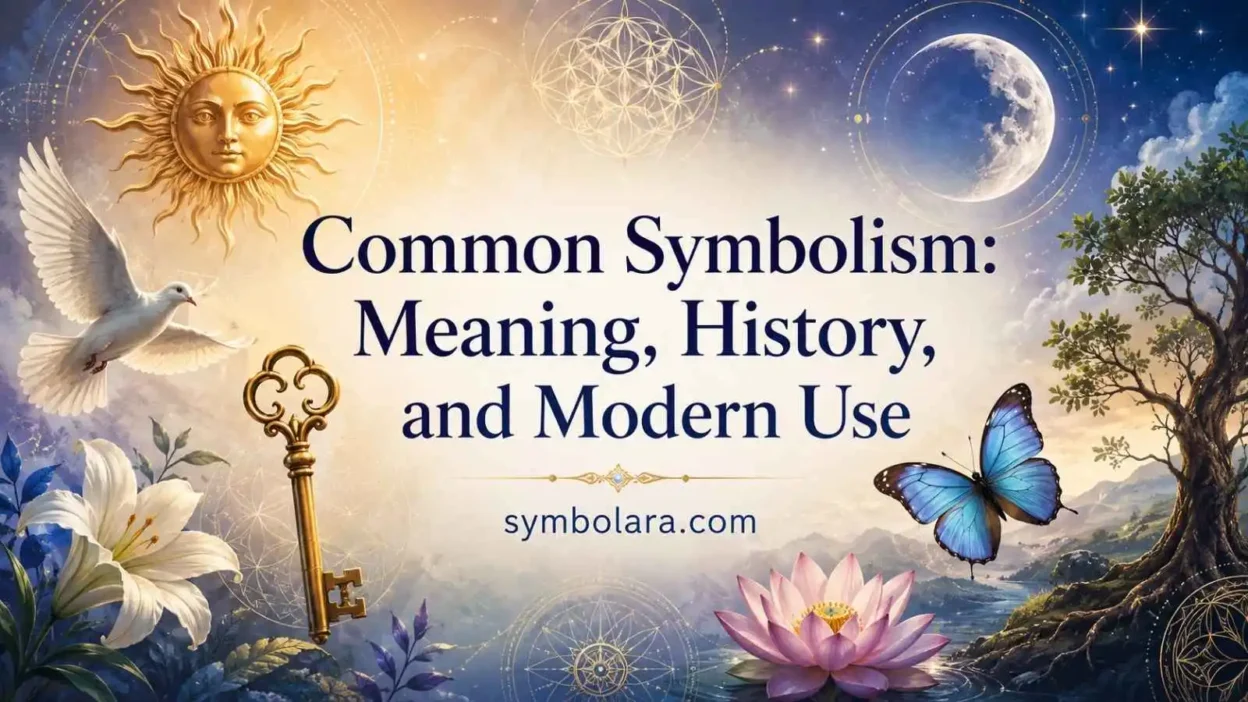
Common Symbolism refers to the shared meanings people attach to familiar signs, objects, colors, animals, shapes, and images. A heart can suggest love, a dove can suggest peace, black clothing can signal mourning, and a flag can represent national identity. People care about symbols because they make invisible ideas visible. A symbol can express grief, loyalty, faith, danger, celebration, rebellion, or hope without needing a long explanation. That is why symbols appear in homes, churches, schools, government buildings, tattoos, jewelry, movies, logos, protests, holidays, and social media.
In the United States, symbols often carry both personal and public meaning. The same object can feel patriotic in one setting, spiritual in another, decorative in a third, and controversial in a fourth. Understanding these meanings helps readers interpret culture more carefully and use symbols with more awareness.
Quick Answer
Common Symbolism most often symbolizes shared cultural meaning: the way familiar signs, colors, objects, and images represent ideas such as love, freedom, peace, mourning, identity, and warning. Historically, symbolic meaning developed through religion, art, folklore, politics, and everyday social customs.
TL;DR
- Symbols turn abstract ideas into visible signs.
- Context changes what a symbol means.
- U.S. symbols often connect to freedom and identity.
- Colors carry strong cultural associations.
- Digital symbols now shape everyday communication.
- Misuse can distort older meanings.
What Common Symbols Mean in Everyday Life
A symbol is something that stands for more than itself. A rose is a flower, but in many American settings it can also suggest romance, admiration, remembrance, or apology. A stop sign is a traffic tool, yet its shape and red color also communicate urgency and authority.
The key is that symbols depend on shared understanding. If a group of people agrees, formally or informally, that an image carries a meaning, the image becomes symbolic. Some symbols are official, such as flags, seals, badges, and religious emblems. Others grow naturally through custom, fashion, storytelling, or repeated use.
Everyday symbols work because they save time. A wedding ring can communicate commitment. A black armband can communicate mourning. A rainbow sticker can communicate inclusion. A skull on a label can communicate danger. These meanings are not random, but they are also not fixed forever.
Common Types of Symbolism and Their Meanings
Symbolism appears in many forms, and each type communicates meaning in a different way. Some symbols come from nature, while others develop through religion, art, language, or human traditions.
Common types of symbolism include:
- Animal symbolism: Animals often represent human qualities. A lion may suggest courage and leadership, while a butterfly may represent change and transformation.
- Color symbolism: Colors communicate emotions and ideas. Red can suggest passion or danger, while blue often suggests calm, trust, or stability.
- Nature symbolism: Plants, weather, landscapes, and natural events often represent growth, renewal, power, or change.
- Religious symbolism: Sacred objects and images connect physical forms with spiritual beliefs, rituals, and traditions.
- Object symbolism: Everyday items can gain deeper meanings through repeated cultural use, such as rings representing commitment or keys representing access and opportunity.
- Literary symbolism: Writers use objects, characters, and settings to represent larger themes such as freedom, loss, identity, or conflict.
Understanding these categories makes symbolism easier to interpret because it shows that symbols are not limited to one area of life. They appear in stories, artwork, personal choices, celebrations, and public communication.
Why Humans Use Symbols
People use symbols because human life is full of ideas that cannot be touched directly. Love, loss, courage, purity, danger, belonging, and memory are abstract. Symbols give those ideas a shape people can see, wear, display, share, or protect.
Symbols also help communities feel connected. A school mascot, military patch, family crest, neighborhood mural, or national flag can create a sense of group identity. The object itself may be simple, but the meaning around it can be emotional.
Symbols are also useful because they cross language barriers. A red heart, a peace sign, a raised fist, or a candle at a vigil can communicate quickly, even when people do not speak the same language. However, symbols are never completely universal. Their meaning can shift depending on culture, history, religion, age, politics, and personal experience.
The Difference Between a Symbol and a Sign
A symbol and a sign may look similar, but they communicate meaning in different ways. A sign usually provides direct information, while a symbol carries deeper cultural or emotional meaning.
For example, a stop sign tells drivers to stop. Its meaning is clear and practical. A dove, however, does not literally mean peace. People connect the dove with peace because of religious traditions, stories, and cultural associations.
The main difference is interpretation. Signs usually have a specific message that people learn to recognize. Symbols often have multiple layers of meaning that change depending on history, culture, and personal experience.
This difference explains why symbols can create discussion or disagreement. A flag, color, animal, or gesture may represent different ideas to different groups. Understanding the difference between signs and symbols helps people interpret messages more carefully.
Ancient Roots of Symbolic Meaning
Symbolic thinking is older than modern writing. Early societies used marks, colors, animals, natural forms, and ritual objects to communicate meaning. Sun shapes often suggested life, time, or divine order because the sun controlled light, warmth, and seasons. Water often suggested cleansing or renewal because of its connection to survival and washing.
Religious traditions gave many symbols lasting meanings. Light became linked with truth, holiness, or guidance. Darkness became linked with fear, secrecy, grief, or the unknown. Birds often suggested the soul, heaven, freedom, or messages between worlds. Trees often suggested life, ancestry, endurance, and seasonal change.
Political life also shaped symbols. Crowns, thrones, seals, banners, and coats of arms helped people recognize authority. These visual signs mattered in societies where many people could not read formal documents. A symbol could identify a ruler, a family, a city, an army, or a sacred place.
How Symbols Influence Art, Literature, and Storytelling
Artists and writers use symbolism because images and objects can communicate ideas beyond their literal meaning. A storm in a story may represent conflict. A journey may represent personal growth. A locked door may suggest mystery, fear, or a barrier that must be overcome.
In paintings and other visual arts, symbols help creators express emotions, beliefs, and social ideas. Religious artwork often uses light, animals, colors, and objects to communicate spiritual messages. Modern artists may use everyday objects to explore identity, politics, memory, or personal experiences.
Literature also depends heavily on symbolism. Authors often repeat certain images to develop deeper themes. A bird may represent freedom, a river may represent change, or a season may reflect a character’s emotional state.
Because symbols allow multiple interpretations, readers and viewers often find new meanings over time. The same artwork or story can feel different depending on the culture, historical period, and personal experiences of the audience.
How Meaning Changes Over Time
Symbols do not stay frozen. Their meanings change as societies change. A symbol that once belonged mainly to religion may become decorative. A political image may become a fashion design. A private sign of grief may become a public sign of protest.
The heart is a good example. It has long been tied to emotion, affection, and the inner self. Today, Americans see it in Valentine’s Day cards, text messages, health campaigns, jewelry, and social media reactions. The symbol still points toward love, but the type of love depends on the setting.
The skull has also shifted. It can mean death, danger, piracy, rebellion, Halloween fun, heavy-metal style, or remembrance. In some contexts, it warns people away. In others, it is playful or fashionable. The symbol did not lose its older meaning; it gained more layers.
What It Commonly Means in the United States
In the United States, familiar symbols often express freedom, individuality, memory, warning, celebration, and belonging. Americans encounter symbols in public life from childhood: the flag in classrooms, the bald eagle on government seals, the Statue of Liberty in history lessons, and patriotic colors during national holidays.
At the same time, Americans also use symbols personally. A tattoo may mark survival. A necklace may express faith. A color scheme may suggest mood or identity. A bumper sticker may signal values. A front porch decoration may mark a holiday, sports loyalty, military service, or family pride.
U.S. symbolism is especially shaped by pluralism. Because the country includes many religions, ethnic backgrounds, political traditions, and regional cultures, the same symbol can carry different meanings for different people. A symbol may feel comforting to one person and exclusionary to another.
Common Symbol Meanings in American Culture
| Context | Meaning in the USA | Common Associations | Notes |
| Heart | Love and affection | Romance, care, kindness | Also used for health and support |
| Dove | Peace and hope | Weddings, memorials, faith | Often linked with calm or reconciliation |
| Eagle | Strength and national identity | Freedom, government, patriotism | Especially tied to U.S. civic imagery |
| Black clothing | Mourning or seriousness | Funerals, formality, elegance | Meaning changes in fashion settings |
| Rainbow | Diversity and inclusion | Pride, hope, visibility | Also appears in religious and weather imagery |
| Candle | Remembrance and vigil | Grief, prayer, attention | Common after tragedies or memorial events |
Color Symbolism People Recognize Quickly
Color is one of the fastest forms of symbolism because people respond to it before reading words. In the United States, red often suggests love, urgency, danger, heat, anger, or patriotism. White often suggests purity, simplicity, weddings, peace, or cleanliness. Black often suggests mourning, elegance, seriousness, mystery, or authority.
Blue is often used for trust, calm, stability, and civic identity. Green can suggest nature, money, health, envy, growth, or environmental concern. Gold can suggest success, value, achievement, or celebration. Purple often suggests royalty, creativity, spirituality, or luxury.
These meanings are not automatic in every culture. For example, white is strongly associated with weddings in the United States, but it can be associated with mourning in some Asian traditions. That is why designers, writers, and artists need to consider audience before relying on color symbolism.
Animal Symbols and What They Suggest
Animals become symbols because people notice their behavior, appearance, and place in stories. The eagle suggests vision, strength, height, and freedom. The lion often suggests courage, leadership, and authority. The dove suggests gentleness and peace. The owl can suggest wisdom, night, secrecy, or watchfulness.
In American culture, animal symbolism appears in sports mascots, state emblems, tattoos, children’s stories, military imagery, brand logos, and holiday decorations. A team named after a hawk, bear, panther, or mustang wants to borrow the animal’s perceived traits.
Animal symbolism can also become complicated. Some animals are admired in one setting and feared in another. A snake may suggest danger, temptation, healing, transformation, or renewal depending on whether it appears in a medical symbol, a religious story, a tattoo, or a nightmare.
Religious and Spiritual Symbolism
Religious symbols carry meaning because they connect visible objects to belief, memory, ritual, and identity. A cross may represent Christian faith, sacrifice, resurrection, protection, or family heritage. A Star of David may represent Jewish identity, community, history, and faith. A crescent may be associated with Islamic culture in many modern contexts, though meanings vary by region and tradition.
Candles, water, bread, wine, incense, prayer beads, bells, and sacred texts can also become symbolic. Their meaning usually comes from repeated use in worship, ceremony, teaching, and family tradition.
In the United States, religious symbols often appear in both sacred and public settings. They may be worn as jewelry, placed in homes, used in holiday decor, carved into memorials, or displayed during ceremonies. Respect matters because a symbol that looks decorative to one person may be sacred to another.
National Symbols and Public Identity
National symbols help people imagine a country as a shared community. The U.S. flag, bald eagle, Statue of Liberty, Liberty Bell, Uncle Sam, and national anthem all connect visual or musical forms to civic ideas.
The flag can represent independence, sacrifice, military service, national unity, protest, grief, or political disagreement depending on how it is displayed. A flag at half-staff communicates mourning. A flag on a uniform may signal service. A flag at a rally may express pride, protest, or a claim about national values.
The Statue of Liberty is widely understood as a symbol of freedom, welcome, and opportunity. Yet its meaning is also shaped by immigration history and by debates over who receives liberty in practice. National symbols often work this way: they express ideals, but they also invite people to question whether those ideals are being honored.
Symbols in Holidays, Rituals, and Public Events
Holidays depend heavily on symbols because they turn memory into visible practice. Pumpkins, skeletons, and costumes shape Halloween. Red hearts, roses, and cards shape Valentine’s Day. Flags, fireworks, and red-white-and-blue designs shape Independence Day. Candles, wreaths, lights, and evergreen plants shape winter holidays.
These symbols help people recognize a season and participate in shared traditions. They also make celebrations easier to pass from one generation to the next. A child may not understand every historical detail of a holiday, but they quickly learn what the colors, foods, songs, and decorations mean.
Public events use symbols for a similar reason. A ribbon can represent awareness. A candlelight vigil can represent grief and solidarity. A wreath can represent honor. A moment of silence can become symbolic even though it is not an object.
Tattoo, Jewelry, and Personal Style Meanings
Many Americans use symbols to tell personal stories through tattoos, jewelry, clothing, and accessories. A butterfly tattoo may suggest change or survival. A feather may suggest freedom, memory, or spiritual connection. A compass may suggest direction, travel, or staying true to one’s path.
Jewelry often carries symbolic meaning because it is worn close to the body. Wedding rings, crosses, lockets, name necklaces, birthstones, and charm bracelets can express love, family, faith, grief, or identity. The meaning may be obvious to others, or it may be private.
Personal style also changes how symbols are read. A skull on a biker jacket feels different from a skull on a Halloween cupcake. A rose tattoo feels different from a rose on wedding stationery. The object matters, but placement, color, style, and context matter just as much.
Symbols in Home Decor, Fashion, and Design
Designers use symbols because they communicate mood quickly. A home filled with botanical prints may suggest calm, nature, and softness. A room with stars, moons, and dark blue tones may suggest night, imagination, or quiet reflection. A brand that uses a shield may want to suggest protection and trust.
Fashion uses symbols to signal belonging and taste. A peace sign on a shirt, a varsity letter, a band logo, a sports cap, or a religious pendant can tell others something about a person’s interests or identity. Sometimes the signal is intentional. Other times, the wearer simply likes the design.
Home decor symbols can also become seasonal. Wreaths, pumpkins, flags, hearts, pine trees, and stars move in and out of American homes throughout the year. Their meaning comes from repetition, memory, and shared cultural timing.
Digital Symbols, Emojis, and Social Media
Modern communication has made symbols more visible than ever. Emojis, reaction icons, hashtags, profile frames, badges, and memes all work as symbolic shorthand. A heart emoji can mean love, agreement, support, thanks, or simple friendliness. A fire emoji can mean excitement, beauty, success, or intensity.
Digital symbols are flexible, but that flexibility can create confusion. Age, platform, friend group, and tone all affect interpretation. A thumbs-up may feel friendly to one person and cold to another. A skull emoji may mean death in one context and laughter in another.
Social media also speeds up symbolic change. A color, hand gesture, animal, or emoji can gain a new meaning almost overnight if enough people use it in a campaign, joke, protest, or trend. This makes modern symbolism more democratic but also more unstable.
Emotional and Psychological Meaning
Symbols matter emotionally because they condense memory. A song, flower, color, or object can bring back a person, place, loss, relationship, or life stage. This is why people keep wedding rings, military medals, childhood objects, funeral cards, or old photographs.
Symbols also help people express feelings that are hard to say directly. A candle in a window can suggest waiting or remembrance. A black ribbon can express grief. A tattoo can mark survival after illness, trauma, or major change. A necklace may help someone feel close to a loved one who has died.
Psychologically, symbols can give people a sense of control over emotion. They create a visible form for something internal. That form can be worn, held, displayed, hidden, or shared.
Cross-Cultural Meanings and Why Context Matters
A symbol that feels familiar in the United States may not carry the same meaning elsewhere. Colors are especially variable. White can suggest weddings in many American settings, but mourning in some other cultures. Red can suggest love in the United States, luck in China, danger on warning signs, or sacrifice in national flags.
Animals also shift across cultures. Owls may suggest wisdom in some Western settings, but bad omens in other traditions. Snakes may suggest evil in one religious context and healing or renewal in another. Lotus flowers, elephants, dragons, ravens, and turtles all carry meanings that vary widely by culture.
This does not mean symbols are meaningless. It means they are cultural. To interpret them well, ask three questions: Who is using the symbol? Where is it appearing? What history does that audience bring to it?
Controversies, Misuse, and Distorted Meanings
Some symbols become controversial because groups use them to promote exclusion, intimidation, or political extremism. In these cases, the modern misuse may overshadow older meanings. A shape, number, gesture, flag, or ancient image can be pulled out of its original context and given a harmful public meaning.
It is important to separate historical meaning from modern misuse. A symbol may have begun as religious, decorative, regional, or protective, then later became associated with hate or propaganda because of how a group used it. Ignoring that modern association can hurt people, even if the user did not intend harm.
The safest approach is context and care. Before using a symbol publicly, especially in tattoos, branding, flags, clothing, or social media, check whether it has strong political, religious, or extremist associations. A symbol is never only what the user means by it; it is also what an audience has learned to see.
How to Interpret a Symbol Accurately
Start with the setting. A rose at a wedding, a funeral, a protest, and a tattoo shop will not mean exactly the same thing. The object is the same, but the setting changes the message.
Next, look at color, placement, and style. A white rose may suggest purity, sympathy, or remembrance. A red rose may suggest romance or sacrifice. A black rose may suggest grief, endings, rebellion, or gothic style.
Finally, consider the person or group using it. A symbol worn by a family, displayed by a church, printed by a government, or shared in an online meme may carry different weight. Interpretation works best when it combines history, culture, and immediate context.
How to Learn the Meaning Behind an Unknown Symbol
When you encounter an unfamiliar symbol, avoid assuming that it has only one meaning. A careful interpretation usually requires looking at several details.
Use these steps:
- Identify the symbol itself: Look at the image, object, color, shape, or gesture.
- Study the context: Consider where the symbol appears, such as a religious setting, artwork, clothing, tattoo, or public event.
- Research cultural background: Different societies may connect the same symbol with different ideas.
- Look for historical connections: Many symbols developed through traditions, mythology, religion, politics, or social movements.
- Consider personal meaning: A symbol may represent something unique to the person using it.
A symbol rarely has meaning by appearance alone. The strongest interpretations combine history, cultural knowledge, and the situation where the symbol appears.
Why Common Symbols Still Matter Today
Symbols remain useful because modern life is crowded with messages. People need quick ways to communicate identity, emotion, values, and belonging. A symbol can do that in a second.
They also matter because Americans live with many overlapping traditions. A person may use religious symbols, national symbols, family symbols, digital symbols, and fashion symbols all in the same day. These signs help people move between private life and public identity.
The challenge is awareness. Symbols can comfort, unite, decorate, protest, remember, or warn. They can also exclude, confuse, or offend when used carelessly. Knowing the meaning behind them makes everyday culture easier to read.
FAQs
What does symbolism mean in simple words?
Symbolism means using one thing to represent another idea. For example, a heart can represent love, a dove can represent peace, and a flag can represent a country or shared identity.
What are the most common symbols in the United States?
Common U.S. symbols include the American flag, bald eagle, Statue of Liberty, Liberty Bell, heart, dove, cross, rainbow, candle, and rose. Their meanings change depending on whether they appear in civic life, religion, holidays, fashion, or personal expression.
Can one symbol have opposite meanings?
Yes. A symbol can have positive, negative, or mixed meanings depending on context. Fire can represent warmth, danger, destruction, passion, purification, or creativity.
What does symbolism mean in tattoos?
In tattoos, symbols often express identity, memory, belief, grief, protection, or personal change. The meaning depends on the image, style, placement, color, and the personal story behind it.
Are symbols the same in every culture?
No. Some symbols are widely recognized, but meanings vary across cultures. Colors, animals, gestures, flowers, and religious images can carry very different associations in different communities.
Why are symbols important in communication?
Symbols make complex ideas easier to understand by turning emotions, beliefs, and values into visible forms. They allow people to communicate quickly without using many words.
Conclusion
Symbols help people understand and express ideas that words alone may not fully carry. They turn love, grief, freedom, danger, faith, identity, and memory into forms people can see and share. Common Symbolism is not about one fixed meaning for every object. It is about the shared language that forms when communities repeatedly connect signs with values, emotions, stories, and history.
The best way to read a symbol is to look at its context, its history, and the people using it. A small image can carry a large message, but that message becomes clearer when we understand where it came from and why it still matters.
Symbolism means using one thing to represent another idea. For example, a heart can represent love, a dove can represent peace, and a flag can represent a country or shared identity.
Common U.S. symbols include the American flag, bald eagle, Statue of Liberty, Liberty Bell, heart, dove, cross, rainbow, candle, and rose. Their meanings change depending on whether they appear in civic life, religion, holidays, fashion, or personal expression.
Yes. A symbol can have positive, negative, or mixed meanings depending on context. Fire can represent warmth, danger, destruction, passion, purification, or creativity.
In tattoos, symbols often express identity, memory, belief, grief, protection, or personal change. The meaning depends on the image, style, placement, color, and the personal story behind it.
No. Some symbols are widely recognized, but meanings vary across cultures. Colors, animals, gestures, flowers, and religious images can carry very different associations in different communities.


[…] the United States, snakes carry several common symbolic meanings. The interpretation usually depends on where the symbol appears and what message the creator wants […]
[…] have become especially common symbols of transformation because their life cycle creates an obvious visual metaphor for change. Owls can […]
[…] common misunderstanding is treating all amaranth meanings as if they come from one culture. The flower’s “unfading” symbolism, the grain’s […]
[…] second common meaning is entrapment. Americans often use phrases like “caught in a web” to describe lies, debt, bad […]