
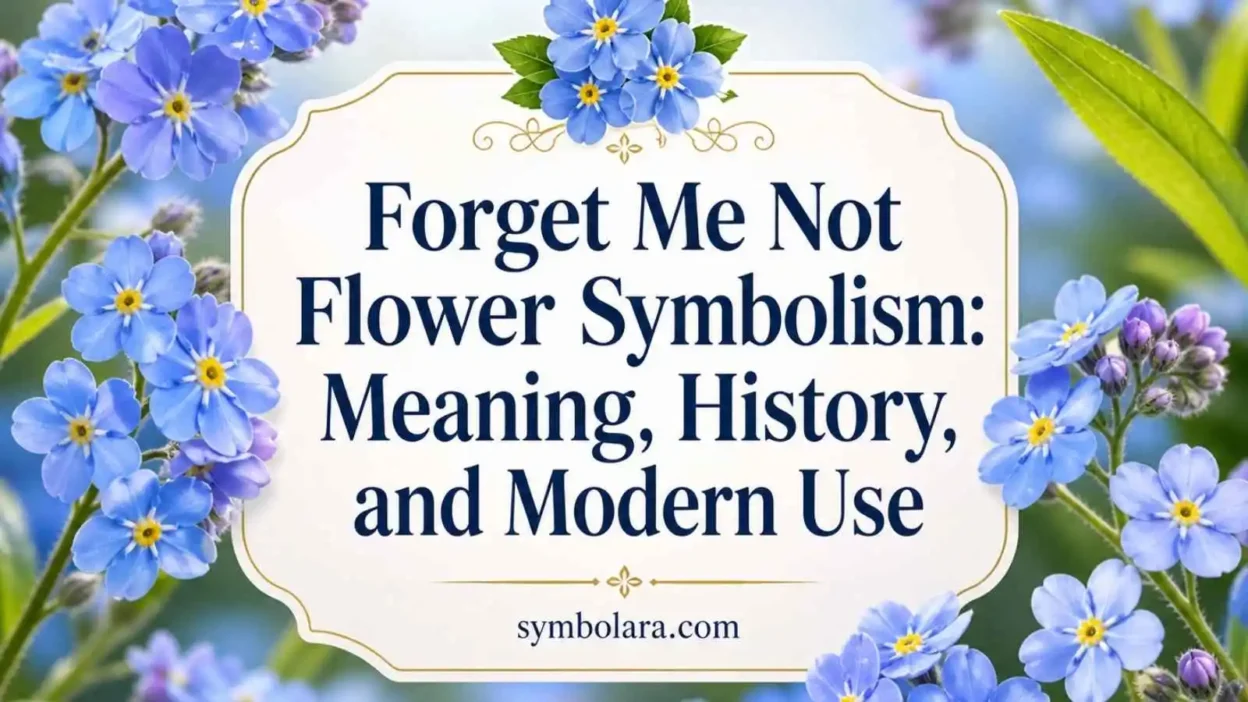
Forget Me Not Flower Symbolism centers on one unusually direct idea: remember me. The tiny blue flower has become closely associated with lasting memory, faithful love, separation, and honoring people who remain emotionally important even when they are absent.
That message can be romantic, but it is not limited to romance. In the United States, forget-me-nots appear in memorial gardens, remembrance gifts, tattoos, wedding details, jewelry, floral art, and personal tributes. They can commemorate someone who died, celebrate a relationship that has endured distance, or simply express the hope that a meaningful bond will not disappear with time.
The flower’s symbolism developed through its memorable name, European folklore, nineteenth-century flower language, and later public uses. Today, its meaning is often more personal than ceremonial: a small bloom can stand for a person, relationship, place, or period of life someone does not want forgotten.
Quick Answer
Forget Me Not Flower Symbolism most commonly represents remembrance, enduring love, loyalty, and an emotional bond that survives absence in modern American culture. Historically, the flower also became associated with faithful affection and the request not to be forgotten through European naming traditions, folklore, and nineteenth-century flower language.
TL;DR
- Forget-me-nots primarily symbolize remembrance and lasting emotional connection.
- They can represent faithful love despite distance, loss, or separation.
- Victorian flower language linked them closely with true love.
- Americans use them in memorials, tattoos, weddings, and keepsakes.
- Alaska recognizes the forget-me-not as its official state flower.
- Some dramatic historical stories about the flower are later legends.
What a Forget-Me-Not Looks Like
Forget-me-nots belong mainly to the genus Myosotis in the borage family. Many familiar varieties produce clusters of small, five-petaled blossoms, usually blue with contrasting centers, although white and pink forms also occur. Different Myosotis species grow across temperate regions, and individual species vary in whether they are annual, biennial, or perennial.
Their scale matters symbolically. A forget-me-not is not visually commanding like a rose, sunflower, or peony. Its small flowers can suggest something private and easily overlooked, which fits a message built around remembering what might otherwise fade from attention.
The botanical name Myosotis ultimately refers to a “mouse’s ear,” an allusion to the shape of the plant’s leaves. The common English name, however, is what gave the flower its strongest emotional identity.
What It Commonly Means in the United States
In American floral symbolism, the flower most often communicates remembrance. Depending on the situation, that remembrance may involve a deceased relative, a distant partner, a childhood friendship, a family member, or an experience someone wants to preserve.
Several related meanings grow naturally from that central idea:
| Context | Common Meaning in the U.S. | Typical Association |
| Memorial | Remembrance | Honoring someone who died |
| Romantic gift | Faithful love | Staying emotionally connected |
| Friendship | Lasting bond | Not forgetting shared history |
| Wedding | Devotion | Remembering family and loved ones |
| Tattoo | Personal memory | A person, loss, or meaningful period |
| Awareness symbol | Memory and recognition | Dementia-related causes |
Unlike flowers whose modern meaning depends heavily on color or occasion, the name “forget-me-not” does much of the symbolic work. Even someone unfamiliar with traditional flower dictionaries can understand the emotional message.
Why the Flower Became a Symbol of Remembrance
The connection between the blossom and memory is unusually literal. Saying “forget me not” sounds simultaneously like a request and a promise: do not erase me from your memory, and I will not erase you from mine.
That dual meaning helps explain why the flower works in both romantic and memorial settings. A person leaving for another place can give it as a sign of continued affection. Someone grieving can use the same flower to express an intention to preserve another person’s memory.
Historical flower dictionaries strengthened this association. A nineteenth-century language-of-flowers text available today lists the forget-me-not with “true love,” showing that affectionate remembrance had become an established floral interpretation rather than merely a recent internet-era meaning.
Love, Loyalty, and Separation
Forget-me-nots often represent a quieter form of love than red roses. They do not primarily suggest passion or physical attraction. Instead, they point toward continuity: affection that remains when two people cannot be together.
That makes the flower especially fitting for long-distance relationships, departures, anniversaries, military separation, moving away, or remembering someone from an earlier chapter of life.
In friendship, the message can be equally appropriate. Giving the flowers to a longtime friend can mean, “Our shared past still matters to me.” Because the symbolism does not require romantic love, forget-me-nots can represent many kinds of attachment without creating the ambiguity associated with traditional romantic flowers.
Forget-Me-Nots in Victorian Flower Language
The nineteenth-century fascination with floral meanings helped formalize many associations that still appear in modern flower guides. Collections known broadly as languages of flowers assigned sentiments to individual plants, allowing bouquets to carry additional social or emotional meaning.
These systems were never perfectly standardized. Different flower dictionaries sometimes assigned different meanings to the same plant, so it is misleading to imagine that every Victorian understood one universal floral code.
Forget-me-nots, however, developed an unusually consistent connection with affection and remembrance. One historical language-of-flowers dictionary explicitly assigns “true love” to the bloom, while a modern university horticulture resource summarizes its traditional meanings as true love and memories.
Modern Americans who choose the flowers for weddings or keepsakes are therefore participating in a tradition that was already recognizable in nineteenth-century floral culture.
The Name and the Medieval Legends Around It
The English name is old. The Oxford English Dictionary dates known English use of forget-me-not to the mid-sixteenth century, while another Oxford reference connects the term with an Old French floral name carrying essentially the same “do not forget me” message.
A popular legend tells of a knight gathering blue flowers beside a river for his beloved. He falls into the water, is swept away, and throws the flowers toward her while crying that she should not forget him.
The story fits the modern symbolism almost perfectly—but that is exactly why it should be treated carefully. It belongs to floral folklore rather than secure documentary history. Versions vary considerably, and it is safer to say that the legend reinforces the flower’s association with remembrance rather than claiming it definitively created the name.
There are other traditional explanations as well, another sign that the flower’s origin story is not settled.
Alaska and the Forget-Me-Not in American Identity
The flower has a particularly strong American connection through Alaska. The forget-me-not is Alaska’s official state flower, and the state itself identifies it as an emblem that grows well there.
The Smithsonian records the Alpine Forget-Me-Not as Alaska’s floral emblem and traces its official recognition through the territorial and statehood period.
That gives the flower an additional layer of meaning in Alaska. There, it can evoke not only memory and affection but also regional identity, northern landscapes, and belonging.
The association even appears in the story of Alaska’s flag. Historical material from the Alaska State Museum describes the flag’s blue field in connection with both the Alaska sky and the blue of the forget-me-not.
Meaning in Memorials and Grief
Forget-me-nots are particularly well suited to mourning because they communicate remembrance without making grief their only meaning.
A memorial flower arrangement may say, in effect, “This person’s life remains part of ours.” That differs subtly from symbols centered on death itself. The flower redirects attention from the fact that someone is gone to the fact that the relationship continues through memory.
This is why the image appears naturally on memorial jewelry, sympathy cards, grave decorations, remembrance artwork, and tattoos honoring deceased relatives or friends.
The symbolism can also feel appropriate after less literal forms of loss. Someone might use the flower after a breakup, migration, estrangement, or the end of an important stage of life. The underlying message remains the same: absence does not automatically erase significance.
What Different Forget-Me-Not Colors Can Suggest
Blue is the color most strongly associated with the flower, and it carries the clearest traditional connection with remembrance and faithful affection.
Blue forget-me-nots usually work best when the intended message is memory, loyalty, calm affection, or tribute. Their familiar appearance makes them the least ambiguous symbolic choice.
White forget-me-nots can add associations of sincerity, peace, innocence, or quiet remembrance. In memorial settings, white may make the design feel more subdued.
Pink forget-me-nots can lean toward affectionate love, tenderness, and warm personal attachment.
These color distinctions are largely modern interpretive extensions rather than rigid historical codes. The identity of the flower matters more than petal color, so a pink or white variety still carries the fundamental “remember me” association.
Forget Me Not Flower Meaning by Color
Although the forget-me-not’s overall symbolism comes mainly from its name and history, different flower colors can create slightly different emotional impressions.
Blue Forget-Me-Not Meaning
Blue is the traditional and most recognizable color of forget-me-nots. It commonly represents remembrance, loyalty, trust, and lasting affection.
Because blue flowers often create a feeling of calmness and sincerity, blue forget-me-nots are popular in memorial designs, friendship gifts, and personal keepsakes.
White Forget-Me-Not Meaning
White forget-me-nots can suggest peace, purity, sincerity, and quiet remembrance. Their softer appearance often makes them suitable for sympathy arrangements and reflective settings.
Pink Forget-Me-Not Meaning
Pink forget-me-nots may represent tenderness, affection, appreciation, and gentle love. They can create a warmer interpretation while keeping the flower’s traditional connection with memory.
These color meanings are modern interpretations rather than strict historical rules. The strongest symbolism always comes from the flower itself: remembering something or someone important.
Wedding and Relationship Symbolism
At weddings, forget-me-nots usually symbolize faithful love and enduring connection. They can appear in bouquets, boutonnieres, floral stationery, centerpieces, or embroidered details.
They also work especially well when a wedding needs to acknowledge someone who cannot attend. A bride or groom might incorporate the flower to remember a deceased parent or grandparent without turning the entire ceremony into a memorial.
That creates an unusual double meaning: the flowers can honor the couple’s future while preserving their connection with people from the past.
They are also appropriate anniversary flowers when the intended message is less “new romance” and more “I still remember what we have shared.”
Tattoo, Jewelry, and Personal Symbolism
A forget-me-not tattoo is often intensely specific even when its design is simple. One person may associate it with a mother who died; another may use it for a childhood friend, lost pregnancy, partner, hometown, or period of personal change.
Names, dates, handwriting, birds, butterflies, initials, or other flowers can narrow the meaning further. A cluster of blossoms may represent several family members, while a single stem can focus attention on one person or memory.
Forget-me-not jewelry functions similarly but can be less permanent and more private. Pressed-flower pendants, enamel pins, rings, bracelets, and engraved pieces allow the wearer to carry the remembrance symbolism without explaining it publicly.
In home decor or illustration, the flower can create a nostalgic mood without referring to a specific death. It may simply suggest cherished memories, family history, or attachment to the past.
Dementia and Memory-Awareness Symbolism
The flower’s name has also made it a natural symbol in dementia-related advocacy. The Alzheimer Society of Canada, for example, explains that it uses the forget-me-not to represent memory loss, one of the symptoms associated with Alzheimer’s disease.
In this context, the symbolism becomes more complex. The flower can represent memory itself, but it can also carry an appeal to society: do not forget people affected by cognitive decline.
That distinction matters. Using the flower respectfully means recognizing the person rather than reducing them to memory loss. Its strongest message in awareness settings is therefore one of dignity, recognition, care, and continued human connection.
Cross-Cultural Meaning and European Traditions
The idea of “do not forget me” is not restricted to English-speaking culture. Comparable flower names and remembrance traditions developed across several European languages, which helped reinforce the plant’s continental association with affection, memory, and separation.
The English common name itself appears centuries before modern American floral culture, so the symbolism Americans know today is partly inherited from older European traditions.
Rather than assigning one fixed meaning to every country, it is more accurate to recognize a broad European pattern: the flower frequently became associated with being remembered by someone important.
Modern global flower culture has further blurred national boundaries. Images shared through tattoos, wedding design, jewelry, and social media now circulate meanings internationally, making remembrance the flower’s most recognizable cross-cultural theme.
Forget Me Not Flower Symbolism in Literature and Art
Forget-me-nots have appeared in literature and visual art as symbols of memory, separation, devotion, and emotional attachment.
Artists often use the flower because its meaning is immediately understandable. A small blue blossom can suggest a personal story without requiring a large or dramatic symbol.
In poetry and storytelling, forget-me-nots frequently represent:
- A love that continues despite distance
- Memories of someone important
- Childhood experiences and nostalgia
- The connection between past and present
- The desire to preserve personal history
The flower’s gentle appearance also creates a contrast with heavier themes such as grief or loss. Instead of focusing only on sadness, it highlights the value of the relationship or experience being remembered.
Modern artists and designers continue to use forget-me-nots in illustrations, jewelry designs, tattoos, and memorial artwork because the symbol combines simplicity with emotional depth.
Emotional and Psychological Meaning
Psychologically, the flower expresses something fundamental about memory: people want meaningful relationships to survive change.
That can make it a symbol of continuing bonds. A relationship does not necessarily stop mattering when someone dies, moves away, or leaves one’s daily life. Photographs, stories, objects, rituals, and flowers can preserve a sense of connection.
The symbol may also express fear of being forgotten. In that reading, the flower is slightly more vulnerable. It asks whether affection will continue when physical presence disappears.
For others, the meaning runs in the opposite direction. Wearing the flower may represent a deliberate choice to remember one’s roots, experiences, family, or earlier self.
These interpretations explain why such a small blossom can work in circumstances ranging from grief to romance without seeming contradictory.
Forget Me Not Flower Spiritual Meaning and Symbolism
Forget-me-not flowers often carry spiritual meanings connected with remembrance, emotional bonds, and the idea that meaningful connections continue beyond physical distance.
Many people view the flower as a reminder to honor important relationships, preserve personal memories, and appreciate moments that shape their lives. Because of its name, the flower naturally encourages reflection on people, experiences, and values that deserve continued attention.
In spiritual and personal interpretations, forget-me-nots may represent:
- Eternal connection: A reminder that love and memories can remain meaningful even when circumstances change.
- Inner reflection: Encouraging people to look back on important life experiences and lessons.
- Faithful bonds: Representing loyalty, devotion, and emotional commitment.
- Peaceful remembrance: Offering comfort during times of grief or transition.
Unlike some symbols connected to specific religious traditions, the forget-me-not does not have one official spiritual meaning. Its interpretation depends on personal beliefs, cultural background, and individual experiences.
For many people, the flower’s greatest spiritual message is simple: important connections deserve to be remembered and valued.
Forget Me Not Flower Meaning in Dreams
Seeing forget-me-not flowers in dreams is often interpreted as a symbol connected with memory, relationships, and emotions from the past.
A dream about these flowers may reflect a person, place, or experience that still holds emotional importance. Because the flower represents remembrance, it can appear in dreams during periods of change, reflection, or personal growth.
Common interpretations include:
| Dream Situation | Possible Meaning |
|---|---|
| Seeing blue forget-me-nots | A reminder of loyalty, peace, or cherished memories |
| Receiving forget-me-nots | Feeling valued, loved, or remembered by someone |
| Planting forget-me-nots | Creating lasting memories or building meaningful connections |
| Losing forget-me-nots | Fear of forgetting something important |
| Giving someone flowers | Desire to maintain an emotional bond |
Dream symbolism is personal rather than scientifically fixed. The meaning often depends on the dreamer’s emotions, current experiences, and personal relationship with flowers.
For some people, a forget-me-not dream may simply represent nostalgia. For others, it may reflect a desire to preserve a meaningful connection or honor an important chapter of life.
Common Misunderstandings and Historical Myths
The most common mistake is treating every popular legend about the flower as documented history. The river-and-knight story is meaningful folklore, but repeating it as a proven account of how the plant received its name goes beyond the available evidence.
Another complicated story concerns Freemasonry. The blue flower eventually became a Masonic remembrance emblem, and a postwar pin is documented in the U.S. Holocaust Memorial Museum’s collections.
However, the frequently repeated claim that German Freemasons universally wore forget-me-nots as a secret identification symbol throughout Nazi persecution is disputed. Masonic historical material notes an earlier lodge badge, a later Nazi-era charity badge with a similar flower, and the development of a stronger remembrance tradition after the war.
The safest interpretation is therefore not to dismiss the Masonic association itself, which is real, but to separate documented postwar remembrance from dramatic versions of the wartime story that may have grown through repetition.
Forget Me Not Flower Uses in Modern Culture
Today, forget-me-nots appear in many areas of American culture because their symbolism works across different personal situations.
Common modern uses include:
Memorials and Remembrance Events
People use forget-me-nots in memorial gardens, sympathy arrangements, jewelry, and artwork to honor loved ones and preserve memories.
Weddings and Celebrations
Couples may include forget-me-nots in wedding designs to represent lasting love, family connections, or memories of people who cannot attend.
Tattoos and Personal Art
Many people choose forget-me-not tattoos as permanent reminders of someone meaningful, an important life experience, or a personal journey.
Gifts and Keepsakes
Pressed flowers, necklaces, cards, and decorative items featuring forget-me-nots allow people to express appreciation, friendship, and emotional connection.
The flower remains popular because it communicates a universal idea: some memories and relationships are too meaningful to be forgotten.
How the Meaning Changed Over Time
The flower’s symbolism did not develop in one moment.
Its evocative name first established a connection between the plant and being remembered. European stories then gave that concept romantic narratives involving lovers and separation. Nineteenth-century flower dictionaries strengthened the association with faithful or true love.
Modern culture expanded the meaning further.
Today, remembrance may involve bereavement, dementia awareness, family identity, personal tattoos, wedding memorials, friendship, regional pride in Alaska, or nostalgia for a particular stage of life.
What changed was not the central message but the range of people and experiences to which it could apply. The flower moved from a largely romantic emblem toward a broader symbol of memory that deserves to be preserved.
FAQs
They can symbolize continuing connection, remembrance, and the belief that an important bond remains meaningful despite physical absence. There is no single universal religious doctrine attached to the flower, so spiritual interpretations are usually personal rather than official.
Yes, but they are not primarily a symbol of death. In memorial settings they represent remembering the person who died, making their symbolism more about enduring memory than mortality itself.
A tattoo commonly represents someone or something the wearer intends never to forget. It may honor a deceased loved one, relationship, child, family history, hometown, major life experience, or part of the wearer’s identity.
They can be. Their traditional connection with true love and remembrance makes them especially appropriate for faithful affection, long-distance relationships, anniversaries, and love that continues through separation.
It can be either, depending on context. A wedding bouquet may communicate devotion and happy memories, while a memorial tattoo may carry grief; both uses share the same basic idea of preserving an important bond.
The flower became closely identified with Alaska and was adopted as its floral emblem before statehood; it remained the official state flower when Alaska became a state. Today it is one of Alaska’s established state symbols.
Giving them usually says that the relationship matters enough to be remembered. Depending on the recipient, the gesture can express love, friendship, loyalty, farewell, gratitude, or remembrance after a shared experience.
A forget-me-not tattoo usually represents a person, memory, relationship, or life experience that the wearer wants to keep close and never forget.
Yes. Forget-me-nots can represent friendship because their meaning focuses on lasting bonds, shared memories, and appreciation for people who remain important over time.
Conclusion
The enduring appeal of Forget Me Not Flower Symbolism comes from the simplicity of its central message: meaningful people and experiences should not disappear merely because they are no longer physically present. Remembrance, faithful love, loyalty, absence, and emotional continuity all grow from that idea.
Over time, the flower has moved from old European naming traditions and floral folklore into American memorials, weddings, tattoos, awareness campaigns, jewelry, and even Alaska’s civic identity. Its uses have broadened, but its emotional logic has remained remarkably stable.
A forget-me-not does not promise that nothing will change. It represents the decision to keep something worth remembering present in memory.
[…] history broadens the flower’s meaning. It was not just decorative. It was a life-sustaining plant tied to nourishment, agriculture, and […]
[…] physical contrast is one reason the rose has lasted as a symbol when many other flowers did not. A rose can say, “I love you,” but it can also suggest that love is not simple. In […]
[…] hydrangea can feel peaceful, formal, or apologetic depending on the occasion. Understanding the symbol means looking at both the flower and the […]