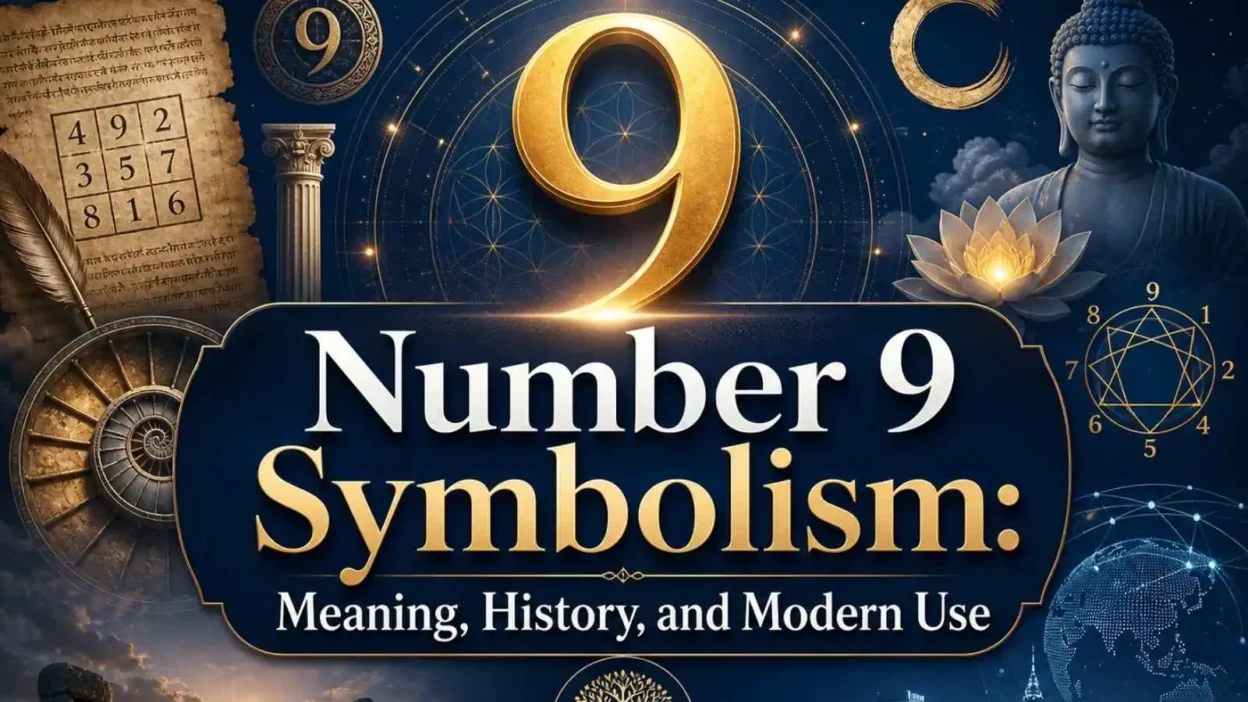
Numbers appear everywhere in human life, from calendars and architecture to personal choices and cultural traditions. Number 9 Symbolism explores why this single digit has gained meanings connected with completion, wisdom, compassion, and transformation across different societies. In modern American culture, people often encounter the number through spirituality, art, personal beliefs, and popular culture.
The number 9 stands out because it represents the end of a numerical cycle before returning to the beginning with 10. This position has encouraged many traditions to associate it with endings, maturity, reflection, and preparation for a new stage.
Quick Answer
Number 9 Symbolism commonly represents completion, personal growth, and humanitarian values in modern American culture, especially in spiritual practices, art, and personal reflection. Historically, it has also been associated with wisdom, sacred cycles, and important traditions across religions and cultures.
TL;DR
- Number 9 often symbolizes completion and new beginnings.
- Ancient cultures connected nine with sacred cycles.
- Americans use nine in personal and creative expressions.
- Religious traditions give nine different meanings.
- The number appears in art, tattoos, and design.
- Some claims about nine lack historical evidence.
What the Number 9 Represents in Everyday Symbolism
The number 9 is commonly linked with the idea of reaching a final stage. Because it is the last single-digit number in the decimal system, many people view it as a symbol of finishing a process, gaining experience, or completing a journey.
In everyday life, people may connect nine with:
- Achievement after effort
- Learning from past experiences
- Emotional maturity
- A transition into something new
- Generosity toward others
Unlike numbers that represent beginnings, such as one, nine often represents the moment when something has developed fully. It suggests reflection before moving forward.
Ancient Roots and Early Symbolic Interpretations
The symbolic importance of nine appears in several ancient cultures, although meanings varied depending on location and tradition.
In ancient Greek thought, nine was connected with groups of three because three itself carried symbolic importance. The number nine appeared in mythology through structures such as the nine Muses, who represented different forms of artistic inspiration and knowledge.
Ancient Egyptians also gave importance to groups of nine through religious concepts involving groups of deities. Their use of symbolic numbers reflected ideas about order, creation, and the structure of the universe.
These examples show that nine gained meaning because people often looked for patterns in nature, religion, and human experience.
Why Nine Is Associated With Completion and Transformation
One major reason nine symbolizes completion is its position in mathematics. After counting from one to nine, the next number begins a new place value with ten.
This simple structure influenced symbolic interpretations. Many cultures saw the number as representing:
- The end of a chapter
- The results of personal growth
- A period of preparation
- Movement from one stage to another
In modern psychology and personal development communities, people sometimes use nine as a reminder to evaluate progress and prepare for change.
The symbolism is less about an ending as a loss and more about completion as a natural part of growth.
Number 9 Symbolism in the United States
In the United States, nine does not have one official cultural meaning, but people interpret it in several personal and creative ways.
Americans may encounter nine in:
- Birth dates and personal numerology practices
- Sports jersey numbers
- Artwork and graphic design
- Tattoos and jewelry
- Fiction and entertainment
In sports, the number nine often represents identity and achievement. Famous athletes wearing number nine have helped give the number associations with skill, leadership, and personal legacy.
In creative fields, artists may use nine because of its visual balance and associations with completion or evolution.
| Context | Meaning in the USA | Common Associations | Notes |
|---|---|---|---|
| Personal beliefs | Growth and completion | Reflection, change | Often used in numerology |
| Tattoos | Individual meaning | Life journey, transformation | Depends on personal story |
| Sports | Identity and achievement | Skill, recognition | Meaning comes from athletes |
| Design | Balance and structure | Harmony, creativity | Used for visual appeal |
| Spiritual practices | Personal development | Compassion, awareness | Interpretations vary |
Religious and Spiritual Meanings of Nine
Many religious traditions connect nine with important ideas, although interpretations differ.
In Christianity, nine appears in several contexts. The New Testament describes nine fruits of the Spirit in the Book of Galatians, including qualities such as love, patience, and kindness. Christian traditions also recognize nine orders of angels in some theological systems.
In Hindu traditions, nine often appears in sacred contexts. The Navaratri festival lasts nine nights and honors forms of the divine feminine. The number is also connected with spiritual practices and cultural celebrations.
In Buddhism, some traditions associate nine with spiritual teachings and sacred structures, although meanings differ by region.
These examples show that nine can represent devotion, spiritual development, and organized religious ideas.
Cross-Cultural Meanings of the Number 9
The interpretation of nine changes across cultures.
In Chinese culture, nine has often been considered a fortunate number because its pronunciation is associated with ideas of longevity and lasting existence. It has appeared in imperial traditions and cultural symbols connected with authority and endurance.
In Japanese culture, however, nine can sometimes have negative associations because its pronunciation may resemble a word connected with suffering or hardship.
In Norse mythology, nine appears in descriptions of the nine worlds connected by Yggdrasil, the world tree. This association links the number with cosmic structure and interconnected realms.
These differences show why numbers should always be understood within their cultural setting rather than given one universal meaning.
The Emotional and Psychological Meaning Behind Nine
People often attach emotional meanings to numbers because numbers create patterns and help organize experiences.
Nine may represent:
- Acceptance of change
- Reflection on past experiences
- Compassion for others
- A desire to complete unfinished goals
- Personal wisdom
For someone choosing nine as a meaningful number, it may represent a personal milestone rather than a universal message.
Psychologically, symbols can provide a way for people to express identity and create meaning from important moments in their lives.
Number 9 in Tattoos, Jewelry, and Personal Style
The number nine appears frequently in personal designs because it can carry private meanings.
A person may choose a nine tattoo to represent:
- A significant date
- A completed life chapter
- A family connection
- A spiritual belief
- A reminder of personal growth
Jewelry featuring nine may also represent a personal philosophy or connection to a cultural tradition.
Because numbers are simple visual symbols, they allow people to create designs that are meaningful without requiring complex images.
Nine in Popular Culture, Media, and Design
The number nine appears often in entertainment and creative industries.
Examples include:
- Characters with number nine identities
- Album titles and artistic projects
- Movie references
- Sports branding
- Fictional worlds using symbolic numbers
Creators often choose nine because audiences already recognize its associations with mystery, completion, or importance.
However, sometimes the number is chosen simply for practical reasons, such as design balance or availability.
Common Misunderstandings About Number 9 Meanings
Modern discussions about number symbolism sometimes include claims that are not supported by strong historical evidence.
A common misunderstanding is that nine always carries a spiritual message or predicts future events. While many traditions give numbers symbolic meanings, there is no scientific evidence that the number itself controls outcomes.
Another misconception is that every culture views nine positively. As shown by different cultural interpretations, meanings can change significantly depending on language, religion, and history.
Understanding symbolism requires separating traditional beliefs from personal interpretations.
How the Meaning of Nine Has Changed Over Time
The meaning of nine has evolved as societies changed.
Ancient cultures often connected numbers with religion, astronomy, and social order. Later traditions incorporated nine into philosophy, art, and spiritual practices.
Today, many Americans approach number symbolism in a more personal way. Instead of following one shared interpretation, individuals use numbers to represent memories, goals, identities, and beliefs.
This shift reflects a broader change from collective symbolism toward personal expression.
Why People Continue to Find Meaning in Number Symbols
Numbers remain meaningful because they are part of everyday life. Unlike many symbols that appear only in specific settings, numbers surround people constantly.
The number nine can become meaningful through:
- A personal experience
- A cultural tradition
- A religious belief
- A creative choice
- A memorable event
The meaning often comes from the connection people create with the symbol rather than the number alone.
Positive and Negative Interpretations of Nine
Like many symbols, nine can have different meanings depending on perspective.
| Interpretation | Positive Meaning | Possible Negative View |
|---|---|---|
| Completion | Achievement and progress | Fear of endings |
| Change | Growth and renewal | Uncertainty |
| Wisdom | Experience and learning | Isolation |
| Spirituality | Reflection and compassion | Overinterpretation |
These differences demonstrate that symbols are flexible. The same number can represent hope for one person and change or uncertainty for another.
FAQs
The number 9 is often associated with spiritual growth, compassion, and completion in many traditions. These meanings come from religious and cultural interpretations rather than scientific evidence.
In Chinese culture, nine is often viewed positively because it is connected with longevity and lasting success. Other cultures may interpret the number differently based on language and tradition.
A number 9 tattoo can represent personal growth, a meaningful date, a completed chapter, or a private belief. The meaning depends on the person wearing it.
Nine appears in several Christian contexts, including the nine fruits of the Spirit described in Galatians. Some Christian traditions also connect nine with angelic orders.
No. While many traditions view nine positively, some cultures associate it with negative ideas because of language or historical connections.
People use numbers as symbols because they help express identity, memories, beliefs, and personal experiences in a simple visual form.
Conclusion
Numbers can carry meanings that extend beyond counting, and Number 9 Symbolism reflects ideas of completion, growth, reflection, and connection across many traditions. In modern America, people often interpret nine through personal beliefs, creativity, religion, and cultural influences.
The meaning of nine is not fixed. Its symbolism changes depending on history, community, and individual experience, making it a flexible symbol that continues to appear in personal and cultural expressions.
[…] symbol of the house becomes especially meaningful because owning property represented more than comfort. For many families, it represented security, […]
[…] does not mean the number itself is unlucky. Symbols work because people assign meaning to them, repeat that meaning, and build habits around it. Over time, 13 became a cultural shorthand […]