Vampire symbolism has lasted because it brings two opposite reactions together at once: fear and attraction. In the United States, the vampire appears everywhere from Halloween costumes and horror films to goth fashion, tattoos, romance stories, and everyday phrases about people who “drain” others. That range helps explain why the symbol keeps returning. It is not just a monster. It is a way of thinking about hunger, seduction, danger, secrecy, power, outsider identity, and the fear that something alluring may still be harmful.
In older folklore, the vampire was tied much more closely to death, disease, and the terror of the grave. Modern American culture still keeps some of that darkness, but it has added glamour, longing, rebellion, and psychological complexity. That shift is what makes the vampire such a durable symbol today.
Quick Answer
In the United States, vampire symbolism usually points to desire, danger, and life-draining power. More broadly, the vampire can symbolize immortality, forbidden hunger, outsider identity, fear of death, manipulation, and the uneasy pull between attraction and threat.
What A Vampire Symbol Looks Like
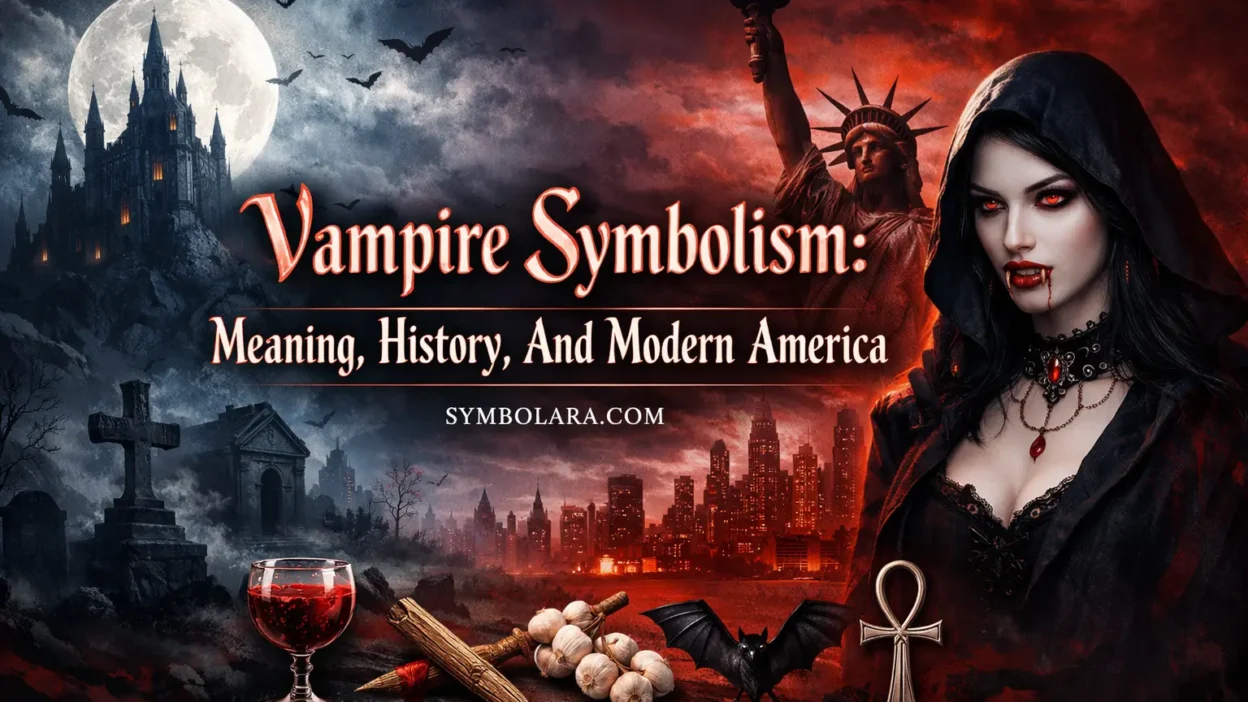
The vampire is instantly recognizable because its image is built from strong visual cues: pale skin, fangs, dark clothing, blood-red accents, moonlight, coffins, bats, and nocturnal settings. Those details matter because the vampire is a symbol of contradiction. It looks refined and decayed, elegant and predatory, intimate and threatening at the same time.
Pale skin tends to suggest death, coldness, or unnatural distance. Fangs signal hunger and attack. Black clothing implies secrecy, mourning, or control. Red suggests blood, passion, and life force. A coffin or grave marker points back to the older folkloric fear of the dead returning to trouble the living. Together, those elements create one of the strongest visual symbols in American horror culture.
Core Meanings Of Vampire Symbolism
Desire Mixed With Danger
One of the vampire’s strongest meanings is forbidden desire. The creature is usually written or pictured as attractive in some way, but that attraction carries risk. The vampire invites closeness while threatening harm, which is why it so often symbolizes obsession, seduction, or the fear that intimacy can become consuming.
Hunger Without Balance
At the deepest level, the vampire symbolizes appetite that never fully ends. That hunger may be physical, emotional, sexual, social, or spiritual. The creature feeds, but it is never truly at peace. This is why the vampire works so well as a symbol of craving, addiction, or need that takes more than it gives. Merriam-Webster’s extended meanings for “vampire” reflect that symbolic move from folklore into human behavior, defining the term not only as a revenant but also as one who preys on others.
Life-Draining Power
The vampire is also a symbol of power that survives by feeding on someone else’s vitality. That is the core thread connecting older corpse folklore to modern phrases like “energy vampire.” Even when the setting changes, the symbolic pattern stays the same: the vampire takes life, attention, strength, or emotional energy from others.
Outsider Identity
In modern American storytelling, the vampire often symbolizes the outsider: someone different from the ordinary world, set apart from social rules, both admired and feared. That reading has become especially strong in modern fiction, where vampires are often tragic, alienated, or self-divided rather than simply monstrous.
Curious how dark symbols represent fear, corruption, and hidden danger across cultures? Explore the deeper meaning behind evil symbolism and see how it connects with vampire mythology and human psychology.
Ancient Roots And Early Folklore
The modern vampire did not appear all at once. Britannica traces vampire belief to ancient and medieval traditions involving corpses or supernatural beings thought to leave the grave and prey on the living. These older legends were not identical to today’s polished vampire, but they established the basic fears that still matter: the dead returning, the body becoming unclean or dangerous, and the living being mysteriously weakened.
Those roots explain why the vampire still feels powerful even when it appears in stylish or romantic form. Beneath the glamour is an older anxiety about death, decay, contamination, burial, and the fragility of the body. The symbol remains effective because it never fully loses that graveyard layer.
From Folklore To Dracula
The major turning point came with modern literature. Britannica calls Bram Stoker’s Dracula (1897) the most important work of vampire fiction, and for good reason: it helped solidify many of the traits now considered classic, including the aristocratic predator, Eastern European setting, blood-based threat, hypnotic power, and blend of revulsion with attraction.
That shift mattered because it transformed the vampire from a village terror into a lasting cultural symbol. Earlier folklore often imagined the vampire as a grotesque corpse. After Dracula, the figure became more intelligent, theatrical, and seductive. The vampire was no longer just a problem to bury. It became an icon through which literature and later film could explore class, sexuality, fear of outsiders, and fascination with forbidden power.
Vampire Symbolism In Literature And Storytelling
Vampire symbolism became especially powerful in literature because writers used the creature to explore human struggles that ordinary characters could not express as easily. The vampire allowed authors to examine themes such as temptation, loneliness, morality, identity, and the consequences of seeking power without limits.
In Gothic literature, vampires often represent the conflict between civilization and instinct. They appear sophisticated and intelligent, yet they carry an uncontrollable hunger. This contrast creates tension because the vampire represents both human desire and the fear of losing control over those desires.
Many vampire stories also explore questions about immortality. Living forever may seem like a gift, but vampire fiction often presents endless life as a burden connected with isolation, regret, and separation from normal human experiences.
Modern storytelling has expanded these meanings further. Contemporary vampires may represent outsiders searching for belonging, individuals struggling with their nature, or characters questioning traditional ideas about good and evil.
Vampire Symbolism In American History
Although many people associate vampire lore mainly with Eastern Europe, the United States developed its own vampire scares. Smithsonian reports that in nineteenth-century New England, some families linked wasting illnesses, especially tuberculosis, to the belief that the dead were feeding on surviving relatives. In response, some communities exhumed bodies and performed rituals meant to stop the supposed vampire.
In that American setting, the vampire did not mean romance or dark glamour. It symbolized helplessness, grief, unexplained illness, and fear spreading through a household. That history is important because it reminds modern readers that behind the cape and fangs lies a much older association with disease, bodily decline, and desperate attempts to explain suffering before modern medicine could.
What Vampire Symbolism Means In The USA Today
In the United States today, the vampire is one of the most flexible dark symbols in popular culture. It can be frightening, sexy, tragic, lonely, rebellious, comic, or strangely sympathetic. That flexibility is the reason it survives so well in American culture, which tends to reinvent old figures rather than keep them fixed.
Modern American meanings often include dangerous attraction, dark glamour, outsider identity, hidden power, emotional draining, immortality, and rebellion against ordinary limits. The vampire works so well because it can be rewritten for each era. Sometimes it is pure horror. Sometimes it is romance. Sometimes it becomes satire, social critique, or a metaphor for unhealthy attachment.
Spiritual And Cross-Cultural Meanings
Across traditions, vampire-like beings often connect to stolen life force. The exact creature changes from culture to culture, and not every tradition has the same kind of vampire, but the symbolic pattern is often similar: something survives by weakening the living. That is why modern spiritual language sometimes uses the vampire as a metaphor for energetic depletion, temptation, or attachment that consumes rather than nourishes.
That said, it is important not to flatten every revenant, ghost, hungry spirit, or blood-drinking being into one universal “vampire” symbol. Folklore traditions differ widely. A careful article should treat the vampire as a modern umbrella term built from many overlapping but distinct stories, not as one neat global symbol with a single meaning.
Emotional And Psychological Meanings
Psychologically, the vampire symbolizes mixed feeling. It represents the thrill of desire and the fear of losing control. It can point to obsession, manipulation, dependency, shame around need, or the suspicion that charm may hide exploitation. That emotional split is one of the main reasons the symbol stays useful. It lets people think about taboo feelings at a safe fictional distance.
This is also where the phrase “energy vampire” makes sense. In everyday speech, the vampire no longer has to be supernatural. It can describe a person, pattern, or relationship that leaves someone emotionally exhausted. Merriam-Webster’s examples reflect that current American usage, showing how completely the vampire has moved from folklore into psychological and social language.
Vampire Symbolism In Dreams
Dreams about vampires often reflect themes of energy, control, fear, and personal boundaries. Because vampires are traditionally associated with taking life force from others, they may appear in dreams during periods when a person feels emotionally exhausted, pressured, or overwhelmed.
A vampire chasing someone in a dream may represent a fear of losing control or being affected by a harmful situation. In contrast, becoming a vampire may symbolize personal transformation, a desire for independence, or an attraction to a more powerful identity.
However, dream symbolism is personal. A vampire dream does not have one universal meaning. The details matter, including the vampire’s behavior, the dreamer’s emotions, and the surrounding setting.
Common vampire dream interpretations include:
| Dream Symbol | Possible Meaning |
|---|---|
| Being chased by a vampire | Feeling threatened, pressured, or emotionally drained |
| Fighting a vampire | Protecting personal boundaries or overcoming fear |
| Becoming a vampire | Transformation, hidden desires, or personal change |
| A friendly vampire | Exploring a misunderstood part of yourself |
| A vampire bite | Feeling influenced or changed by someone or something |
In modern dream interpretation, vampires often represent the parts of life that demand attention, energy, or emotional investment. They can act as symbols of hidden fears, powerful desires, or major personal transitions.
Vampires In Movies, TV, And American Pop Culture
American pop culture helped turn the vampire from a simple villain into a layered figure. Britannica notes that twentieth-century vampire fiction, especially works like Anne Rice’s Interview with the Vampire, made vampires more brooding, self-aware, and emotionally complex. That change opened the door for later film and television portrayals that emphasized romance, alienation, moral conflict, and outsider identity alongside horror.
This matters for symbolism because pop culture does not merely repeat old meanings. It edits them. A classic horror vampire highlights corruption and death. A Gothic vampire highlights beauty and doom. A romantic vampire highlights longing and restraint. A satirical vampire may reflect vanity or social absurdity. The figure remains powerful because it can carry all of those layers without losing its core association with hunger.
Vampire Symbolism In Halloween, Fashion, And Decor
In the United States, the vampire is now a major Halloween figure. That seasonal role softens some of the symbol’s older terror. Around Halloween, the vampire often becomes theatrical, stylish, campy, and playful rather than purely frightening. Yet even in costume form, it still signals recognizable themes: fangs, blood, night, secrecy, Gothic drama, and playful menace.
Outside Halloween, vampire imagery also shapes goth and alternative fashion. Velvet, lace, black formalwear, crimson accents, antique jewelry, dark lipstick, and candlelit interiors all borrow from the vampire’s visual world. In these settings, the symbol often points less to literal horror and more to dark glamour, romantic morbidity, elegance, and chosen difference.
Vampire Tattoos And Identity
A vampire tattoo can mean many things, but common patterns appear again and again. It may symbolize survival, transformation, seduction, fascination with darkness, outsider pride, or comfort with one’s shadow side. A full vampire portrait usually leans toward drama, allure, or fandom. Smaller symbols like fangs, bats, or drops of blood often suggest compact meanings such as hunger, danger, night beauty, or forbidden desire.
In the United States, tattoo meaning is usually personal first. Still, vampire imagery remains popular precisely because it is so adaptable. It can express pain survived, beauty in darkness, resistance to normal rules, or a deep pull toward Gothic aesthetics.
Much like vampires represent hidden danger, transformation, and emotional intensity, smoke symbolism also explores mystery, illusion, and the blurred line between what is seen and concealed.
Misunderstandings, Misuse, And Controversies
One common mistake is assuming vampires have always been glamorous. They have not. The elegant, seductive vampire is a later literary and cinematic development layered over much older fears of death, decomposition, and disease.
Another confusion is assuming all vampire traditions mean the same thing. They do not. Folkloric revenants, literary vampires, Halloween vampires, and modern romantic vampires overlap, but they are not identical. Modern love-story vampires can also raise real debates about obsession, power imbalance, consent, and whether romantic framing sometimes softens genuinely predatory behavior. That tension is part of the symbol, not a side issue.
Positive Meanings Of Vampire Symbolism
Although vampires are traditionally connected with fear and danger, modern interpretations also include positive symbolic meanings. Many people are drawn to vampire imagery because it represents qualities that feel powerful, unique, or meaningful.
Positive vampire symbolism may include:
- Transformation: The vampire can represent personal change and a new identity.
- Resilience: Surviving despite challenges connects with the vampire’s ability to endure.
- Individuality: Vampires often symbolize people who feel different from mainstream society.
- Mystery: The unknown and hidden aspects of life are central to vampire imagery.
- Self-expression: Gothic fashion, tattoos, and art use vampires as symbols of creativity and personal identity.
These meanings show why vampires remain popular beyond horror. For many people, the vampire represents embracing complexity rather than simply representing darkness.
How Vampire Meaning Has Shifted Over Time
The broad historical shift is clear. Older vampire belief emphasized corpse horror, disease, and contamination. Modern American symbolism often emphasizes charisma, immortality, dark beauty, tragic loneliness, and seductive power.
But one thing has not changed: the vampire still symbolizes taking life from others. That is the core thread connecting folklore, Dracula, horror films, romance stories, and everyday language about draining people or relationships. The style changed. The hunger did not.
Why The Vampire Still Fascinates Americans
The vampire lasts because it holds contradictions in one image. It is dead but moving, beautiful but dangerous, intimate but predatory, timeless but endlessly reinvented. American culture responds strongly to symbols like that because they can be rewritten for each generation without losing their basic charge.
Each era finds a new use for the vampire. One generation uses it for graveyard horror. Another uses it for romance. Another uses it to talk about exploitation, addiction, identity, or emotional exhaustion. That constant reinvention is exactly why the vampire remains one of America’s most adaptable dark symbols.
FAQs
What does a vampire symbolize spiritually?
Spiritually, a vampire often symbolizes drained life force, unhealthy attachment, temptation, or hunger without balance. In modern metaphorical use, it can also point to relationships or patterns that consume energy rather than restore it.
Is vampire symbolism always negative?
No. In modern American culture, the vampire can also symbolize mystery, beauty, rebellion, immortality, outsider identity, and emotional intensity. Even so, danger usually remains part of the image.
What do vampires symbolize in love stories?
In love stories, vampires often symbolize forbidden attraction, obsessive longing, and the fear that intimacy can consume the self. They let stories explore passion and risk at the same time.
Why are vampires linked to Halloween in America?
They fit Halloween because they combine fear, costume drama, and instantly recognizable Gothic style. Over time, American holiday culture turned the vampire into both a spooky figure and a playful one.
What does a vampire tattoo mean?
A vampire tattoo may symbolize dark beauty, transformation, seduction, outsider pride, survival, or comfort with one’s shadow side. The exact meaning depends on the design and the wearer’s personal story.
Are vampires a religious symbol?
Not in one fixed sense. Vampires belong more to folklore, literature, and popular culture than to formal religion, though people sometimes discuss them in spiritual or moral terms because they touch ideas about temptation, life force, death, and corruption.
Conclusion
Vampire symbolism lasts because it speaks to feelings people still recognize. It gives shape to fear of death, fear of being consumed, and the strange pull of what feels dangerous but irresistible.
In the United States, vampire symbolism has grown far beyond old folklore. It now lives in Halloween, fashion, horror, romance, tattoos, and everyday language about draining people or relationships. That is why the vampire remains so powerful. It is not only a monster from the past. It is a mirror for modern desire, anxiety, appetite, and the parts of human life that never feel fully safe or fully satisfied.
[…] a possible foothold in Bible-related discussion through the debated wording of Deuteronomy 14:5. In modern America, however, the giraffe has become far more of an inspirational and devotional symbol than a textual […]
[…] a new meaning through online communities, trends, or popular culture. As a result, understanding modern symbolic art requires attention to both historical meaning and current […]
[…] A butterfly may still carry migration and community meaning in addition to private growth. The modern meaning of a change symbol is often strongest when it lets older collective meanings and newer personal meanings […]