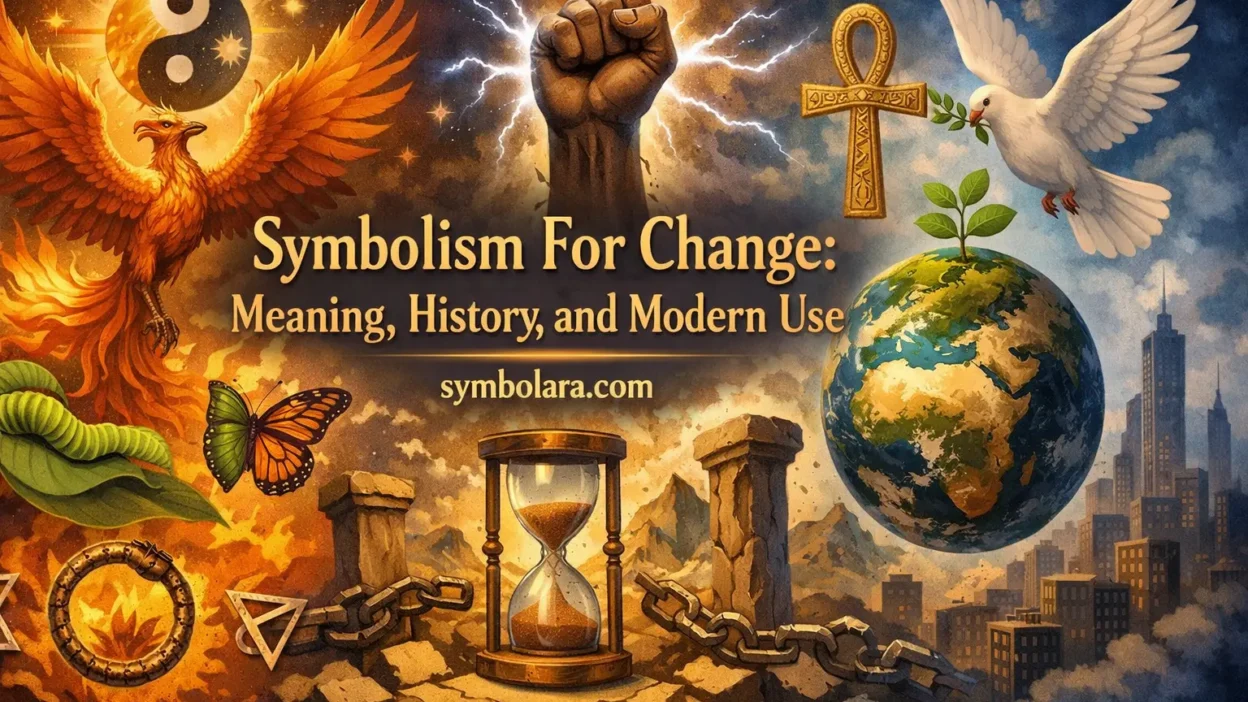
People usually search for Symbolism For Change when they are trying to name a transition that feels bigger than ordinary life. That transition might be recovery, grief, divorce, parenthood, migration, faith, career reinvention, or simply the feeling of becoming a different person than before. Symbols matter because they give visible form to experiences that are otherwise hard to explain.
In modern American culture, there is no single universal symbol for change. Instead, people rely on a cluster of images that each emphasize a different part of transformation. A butterfly usually points to personal growth. A phoenix suggests surviving destruction and starting again. A crossroads highlights decision and risk. Spring, blossoms, water, and circles often suggest renewal, continuity, or a fresh beginning.
That is why the topic keeps showing up in tattoos, jewelry, memorial art, religious language, seasonal rituals, and digital culture. People are not just asking what change looks like. They are asking what kind of change they are living through: chosen or forced, hopeful or painful, gradual or dramatic.
Quick Answer
Symbolism For Change most commonly represents personal transformation, renewal, and the movement from one stage of life to another in modern American culture. Historically, that meaning has been carried by recurring images such as the butterfly, phoenix, spring rebirth, ritual cleansing, circles, and portals that mark entry into a new state of life.
TL;DR
- Change symbols usually express transition, not just improvement.
- Butterfly imagery stresses growth through visible transformation.
- Phoenix imagery stresses rebirth after loss or destruction.
- Spring symbols connect change with renewal and return.
- Crossroads symbols focus on choice, risk, and direction.
- In the U.S., people use these symbols personally and publicly.
What People Mean When They Ask for a Symbol of Change
Most people are not asking for an abstract philosophy lesson. They want an image that captures movement from one identity, condition, or season of life into another. In practice, symbols of change do two jobs at once: they make change easier to picture, and they help people tell a story about what the change means.
That is why symbols for change are rarely neutral. They usually frame change in one of four ways: growth, recovery, release, or decision. A person choosing a butterfly is often emphasizing development. Someone choosing a phoenix may be naming hardship survived. A doorway or path suggests passage. A circle or season suggests that endings and beginnings belong to the same process.
What It Looks Like in Everyday Life
People encounter symbols of change everywhere, even when they do not use that exact phrase. They show up in graduation art, sobriety milestones, memorial gardens, self-help design, therapy language, wedding and baptism imagery, tattoo flash, seasonal décor, and social media posts about “new chapters.” In visual terms, change is often pictured with wings, fire, roads, doors, circles, water, blooming branches, moons, or shed skin.
The reason these images repeat is simple: they are easy to read. Even when people come from different backgrounds, most can quickly understand the basic message of emergence, turning, renewal, or rebirth. That shared readability is part of what makes a symbol stick in public culture.
The Most Common Meanings in the United States
In the United States today, symbols of change usually point first to self-reinvention. Americans often read change through an individual lens: becoming healthier, freer, truer to oneself, or more resilient after disruption. That is one reason butterfly and phoenix imagery remain so popular in tattoos, motivational art, and milestone jewelry.
A second common American meaning is hopeful renewal after difficulty. Spring blooms, cherry blossoms, sunrise imagery, and water rituals often carry that tone. They do not deny loss, but they frame change as survivable and sometimes necessary. In U.S. public settings, cherry blossoms in Washington, D.C., have become a seasonal marker of renewal as well as a reminder of impermanence and civic gathering.
A third meaning is choice. In American storytelling, the road, bridge, doorway, and crossroads all suggest a moment when a person must decide who they will become next. That use is especially strong in literature, film, graduation language, and personal milestone posts.
The Best Symbols That Represent Change and Transformation
People often search for a single symbol that captures the idea of change, but transformation can take many forms. Some symbols focus on growth, while others represent survival, release, courage, or a completely new beginning.
The butterfly remains one of the strongest symbols of personal transformation because it represents a visible journey from one form into another. It is often chosen for moments of healing, self-discovery, and emotional growth.
The phoenix represents a different type of change. Instead of gradual development, it symbolizes rebuilding after hardship. It connects strongly with experiences such as recovery, resilience, and overcoming difficult periods.
The tree is another powerful symbol of change because it represents growth through time. A tree changes with every season while keeping its roots, making it a fitting image for personal development without losing identity.
The moon often represents cycles and gradual transformation. Because the moon changes appearance throughout its phases, many people associate it with emotional growth, renewal, and accepting different stages of life.
The open door or bridge symbolizes movement between two stages. These images focus less on becoming someone new and more on crossing into a different chapter.
Choosing a symbol of change depends on the story behind the transition. Someone beginning a new career may connect with a doorway or path, while someone recovering from hardship may feel closer to the phoenix. The most meaningful symbol is the one that reflects the type of change a person has experienced.
Ancient Roots and Early Symbolism
Long before modern self-help language, many cultures linked change to seasonal cycles, ritual death and rebirth, and visible transformations in nature. Spring festivals in the ancient Near East marked not only the renewal of the land but also the renewal of human and civic life. That matters because it shows that change symbolism was never only personal. It was social, agricultural, political, and sacred at the same time.
Religious rites of passage also shaped the language of change. Across societies, rituals often symbolized entry into a new state through doors, thresholds, cleansing, or a symbolic death followed by rebirth. Those patterns still influence how people imagine major transitions today, even outside formal religion.
Why the Butterfly Became a Go-To Symbol
The butterfly is probably the most familiar modern symbol of change because its life cycle makes transformation visible. It does not merely move; it becomes something recognizably different. That is why the butterfly often stands for rebirth, development, and emergence rather than simple motion.
In the United States, butterfly symbolism has also taken on social meanings beyond private growth. Smithsonian reporting on monarch imagery in Latinx immigrant activism describes butterflies as symbols of migration, survival, transformation, and community. That expands the meaning from “I changed” to “we endured movement and remade a life.”
Animal Symbols of Change and Their Meanings
Animals have long represented change because many creatures naturally display transformation through growth, movement, adaptation, or survival.
The butterfly represents the most recognizable form of transformation. Its journey from caterpillar to butterfly makes it a universal image of becoming something different through a natural process.
The snake represents another powerful form of change through shedding old skin. Unlike the butterfly, snake symbolism focuses on release, renewal, and leaving behind an outdated version of oneself.
The frog is often connected with transformation because it changes dramatically during its life cycle. From tadpole to adult frog, it represents adaptation, growth, and movement into a new stage.
The dragonfly symbolizes change through flexibility and emotional maturity. Because it moves between water and air, it is often associated with adapting to new environments and seeing life from a different perspective.
The turtle represents slower transformation. It reminds people that meaningful change does not always happen quickly. Growth can happen gradually while still creating lasting results.
Animal symbols of change are popular because they connect human experiences with patterns already found in nature. They remind people that transformation is not always sudden; sometimes it happens through patience, adaptation, and time.
Why the Phoenix Means More Than “Starting Over”
The phoenix is different from the butterfly. It does not symbolize gradual development so much as renewal after destruction. In classical and later Christian readings, the phoenix became associated with rebirth, resurrection, and continuity through loss. That gives it a more dramatic emotional tone than most change symbols.
That difference explains its modern use. In American culture, phoenix imagery often appears when people want to mark recovery from catastrophe, not just a new phase. It can refer to trauma survived, addiction recovery, illness, divorce, burnout, or collective rebuilding after crisis. The emotional message is not merely “I changed.” It is “something burned away, and I still returned.” That is an inference drawn from the myth’s longstanding rebirth function and from how phoenix language appears in literature and public symbolism.
Spring, Blossoms, and the American Language of Renewal
In the United States, spring may be the broadest seasonal symbol of change. It usually signals renewal, return, and the reopening of public life after winter. This meaning is old, but it remains current because seasonal change is easy to experience collectively. People do not have to be religious to understand why spring stands for fresh beginnings.
Cherry blossoms are especially important in American public symbolism. The National Park Service describes the blossoms around the Tidal Basin as a marker of renewal, while also noting their emotional tie to transience because the bloom is brief. That mix of hope and impermanence is one reason blossoms are so effective as symbols for change: they express joy without pretending anything lasts forever.
Flowers and Plants That Symbolize Change
Flowers and plants often represent change because they follow natural cycles of growth, blooming, decline, and renewal. Their connection with seasons makes them powerful symbols of transformation.
The lotus flower is one of the strongest symbols of personal change. Because it grows from muddy water and produces a beautiful bloom, it is often associated with overcoming challenges and developing inner strength.
The cherry blossom represents temporary beauty, renewal, and the acceptance that life continues to change. Its short blooming period reminds people that transformation is often connected with impermanence.
The dandelion represents resilience and adaptation. Although many people view it as a common weed, its ability to grow in difficult places has made it a symbol of survival and persistence.
The new leaf is a simple but powerful image of change. It suggests fresh growth, a new beginning, and the possibility of moving forward after a difficult season.
Plant symbols are especially common in tattoos, artwork, and personal gifts because they combine beauty with deeper messages about endurance, growth, and renewal.
Water, Baptism, and Cleansing as Change Symbols
Water often symbolizes change because it suggests crossing, washing, immersion, and new life. In religious traditions, water frequently marks purification or the beginning of a changed state. In Christianity, baptism has long been understood as rebirth, regeneration, and the death of an old self followed by new life.
Even outside religion, Americans still use water this way. Rivers, oceans, rain, and ritual baths often appear in grief writing, recovery language, and reflective art because water can imply both release and continuity. It changes shape, moves forward, and connects separate places, which makes it a useful image for transitions that feel cleansing but unfinished. This is an inference grounded in the long symbolic use of water for regeneration and passage.
Circles, Seasons, and the Idea That Change Is Ongoing
Not every symbol of change is about becoming a new person all at once. Some symbols stress continuity inside change. Circles, wheels, and seasonal cycles suggest that transformation is recurring rather than final. In Indigenous hoop traditions discussed by the Smithsonian, the hoop represents the circle of life, balance, and healing, with no absolute beginning or end.
That idea matters in modern American life because many people no longer think of change as a one-time breakthrough. They think of it as maintenance, healing, relapse and recovery, parenting stages, aging, and ongoing identity work. Circular symbols fit that experience better than dramatic rebirth symbols do.
Snakes, Shed Skin, and Harder Versions of Transformation
Snake symbolism is more complicated than butterfly symbolism because it splits sharply across cultures. In some Western traditions, snakes carry suspicion, temptation, or danger. In East Asian iconography, however, skin shedding has been associated with renewal of life. More broadly, snakes have been linked to rebirth because they visibly slough off old skin.
That makes the snake a stronger symbol for painful, unsentimental change. It suggests not prettiness, but necessary shedding. In American tattoo culture and visual storytelling, that can appeal to people who want a change symbol that feels tougher, darker, or more honest about discomfort. This is an inference based on the established rebirth meaning of shedding and the broader use of tattoos to mark life transitions and transformed identity.
Crossroads, Doors, and Thresholds
Some symbols of change focus less on rebirth and more on decision. A crossroads, bridge, gate, or doorway marks the point where one life course cannot continue unchanged. In rites of passage, portals and thresholds have long signified entry into a new social domain.
That symbolism remains especially strong in American culture because national storytelling often treats identity as something made through choices. The path not taken, the open road, the next chapter, and stepping through the door all frame change as agency, even when real life is messier than that. These images are popular because they preserve uncertainty. A threshold does not promise improvement. It only says that you are about to become different.
Emotional and Psychological Meaning
Psychologically, symbols for change help people organize unstable periods into a story. Shared symbols can give a life event coherence, especially when language feels too blunt or too clinical. During transition, people often reflect on values, goals, and identity; a symbol can become a shorthand for that work.
That is one reason people attach these symbols to the body. Recent psychology writing on tattoos and life transitions notes that tattoos can mark major experiences and support a transformed sense of self. In that context, the symbol is not decoration alone. It becomes a personal record of a threshold crossed.
Where Americans Use These Symbols Now
Today, Americans most often use symbols of change in very ordinary places: tattoo designs, memorial objects, therapy-adjacent art, graduation gifts, baby and wedding imagery, recovery communities, home décor, and inspirational posts online. The same image can shift tone depending on context. A butterfly in jewelry may suggest personal growth. A phoenix on a mural may suggest collective resilience. Cherry blossoms in civic space may suggest renewal joined to memory and public belonging.
This flexibility is part of the appeal. Symbols of change work because they are broad enough to travel across secular life, religion, art, and identity, but specific enough to still feel emotionally legible. They let people say, “I am not where I was,” without having to explain every detail.
Change Symbols in Tattoos: Personal Meaning and Identity
Change symbols are among the most popular tattoo choices because tattoos allow people to permanently mark important life transitions.
A butterfly tattoo often represents personal growth, healing, confidence, or becoming a new version of oneself. Many people choose it after major life events such as recovery, graduation, personal breakthroughs, or emotional transformation.
A phoenix tattoo usually carries a stronger message of survival. It can represent rebuilding after loss, overcoming hardship, and creating a new identity after a difficult chapter.
A snake tattoo may represent shedding the past, personal strength, and transformation through challenges. Its meaning often depends on the person’s cultural background and personal story.
Other popular change tattoo symbols include:
- Waves for emotional movement and adaptation
- Trees for growth and stability
- Moons for cycles and renewal
- Arrows for moving forward
- Doors for entering a new chapter
The meaning of a change tattoo is ultimately personal. While symbols have shared cultural associations, people often choose designs because they connect with their own experiences and memories.
A Quick Comparison of Common Change Symbols
| Symbol | Meaning in the USA | Common Associations | Notes |
| Butterfly | Personal growth and emergence | Metamorphosis, healing, migration, self-reinvention | Usually softer and more developmental |
| Phoenix | Rebirth after devastation | Fire, survival, resurrection, recovery | More dramatic than “fresh start” imagery |
| Cherry blossoms / spring bloom | Renewal with impermanence | Hope, seasonal return, brief beauty, civic ritual | Often carries both joy and loss |
| Snake shedding skin | Shedding an old self | Rebirth, danger, toughness, transformation through discomfort | Meanings vary strongly by culture |
| Crossroads / doorway | Decision and passage | New chapter, risk, identity choice, threshold | Emphasizes agency more than renewal |
| Water / baptismal imagery | Cleansing and new life | Purification, transition, rebirth, release | Strong religious and secular uses |
The table shows why no single image fully owns the meaning of change. Each symbol highlights a different emotional structure: growth, survival, decision, cleansing, recurrence, or letting go. That is why choosing the “right” symbol usually depends on what kind of transition a person is trying to name.
Common Misunderstandings and Misuse
One common mistake is assuming that every symbol of change is automatically positive. Many are not. Cherry blossoms can imply impermanence and loss. Phoenix imagery assumes destruction before renewal. Snake imagery can signal danger as easily as rebirth. Even the butterfly can feel simplistic when applied to experiences that are unresolved or painful.
Another mistake is flattening cultural context. The lotus, hoop, snake, and blossom all carry meanings shaped by specific religious, artistic, and community traditions. Borrowing them without that context can turn a living symbol into a vague lifestyle accessory. Respectful use does not require perfect expertise, but it does require recognizing that these symbols did not begin as generic mood-board images.
Colors That Represent Change and Transformation
Colors can strengthen the meaning of symbols because different shades often create emotional associations with change.
Green commonly represents growth, renewal, nature, and healing. It connects closely with new beginnings because plants and landscapes show visible signs of life returning.
Blue often represents emotional change, reflection, and calm transformation. It is frequently associated with water, which itself symbolizes movement and renewal.
Orange can represent energy, creativity, and confidence during periods of change. It suggests movement, motivation, and the courage to try something new.
Purple is often linked with personal development, imagination, and spiritual reflection. It can represent deeper forms of identity change.
White commonly symbolizes cleansing, fresh starts, and a blank page. It often appears in ceremonies and rituals connected with transition.
Colors do not have one universal meaning, but they help people communicate the emotional side of transformation. When combined with symbols such as flowers, animals, or natural elements, colors create a stronger visual story.
How the Meaning Has Changed Over Time
Historically, change symbols were often tied to seasons, ritual order, civic renewal, and sacred transformation. In modern American life, they have shifted toward individual identity, mental health language, self-expression, and personal milestones. The symbols themselves may be old, but the way people deploy them has become more autobiographical.
That shift does not erase older meanings. It layers them. A phoenix tattoo may still echo resurrection language. Blossoms in D.C. still carry diplomatic and civic significance. A butterfly may still carry migration and community meaning in addition to private growth. The modern meaning of a change symbol is often strongest when it lets older collective meanings and newer personal meanings coexist.
FAQ
What does a symbol of change usually mean?
Usually, it means transition from one state of life to another. In modern U.S. use, that often includes growth, recovery, reinvention, or the acceptance that life will not stay the same.
What is the most common symbol for change?
The butterfly is probably the most common modern symbol because metamorphosis makes transformation easy to see and understand. In American culture, it often represents personal growth, healing, and emergence into a new version of the self.
What symbol works best for painful change?
The phoenix and the snake usually fit painful change better than a butterfly does. The phoenix emphasizes survival after destruction, while the snake’s shed skin suggests leaving something behind through discomfort rather than grace.
Do change symbols have religious meanings too?
Yes. Many do. Baptismal water has long symbolized rebirth in Christianity, and other traditions connect circles, flowers, or seasonal renewal to sacred ideas about life, cleansing, and transformation.
What does a change tattoo usually communicate?
It usually marks a threshold: recovery, grief, a new beginning, survival, or a major decision. Research discussed in recent psychology writing suggests tattoos can help people make sense of life transitions and embody a changed sense of self.
Are symbols of change always positive?
No. Many of them hold both hope and loss at the same time. Blossoms can symbolize beauty that fades, thresholds can imply fear as well as possibility, and rebirth symbols often assume something had to end first.
Why do Americans use so many different symbols for change?
Because change is not one experience. A person recovering from crisis, becoming a parent, moving across borders, or leaving a faith tradition may all need different imagery. American usage tends to favor flexible symbols that can hold personal identity, public meaning, and emotional nuance at once.
What flower symbolizes transformation and change?
The lotus flower is one of the strongest symbols of transformation because it grows from difficult conditions and produces a beautiful bloom. Cherry blossoms and new leaves also represent renewal and new beginnings.
Conclusion
In modern American life, Symbolism For Change usually centers on transition, renewal, and identity in motion. But the most useful symbols do more than say “new beginning.” They clarify what kind of change is happening: growth like a butterfly, survival like a phoenix, release like water, choice like a crossroads, or recurring renewal like the seasons.
That is why these images keep returning in art, ritual, public memory, and personal style. They help people make change visible without oversimplifying it. The best symbol is usually the one that matches the truth of the transition, not just the prettiest image attached to it.
[…] common mistake is assuming that one chart can explain every symbol everywhere. That rarely works. Symbolic meaning changes across time, geography, religion, politics, and […]
[…] an unbroken bond, eternal love, family connection, or spiritual continuity. That is mainly a modern symbolic reading based on the knot’s endless visual […]
[…] symbolism has shifted as cultures changed. Earlier societies often focused on survival, mystery, and the bird’s connection with […]
[…] breaking of the table after Aslan’s return changes the symbol. What looked like a place of death becomes evidence that death has been defeated. In Christian […]