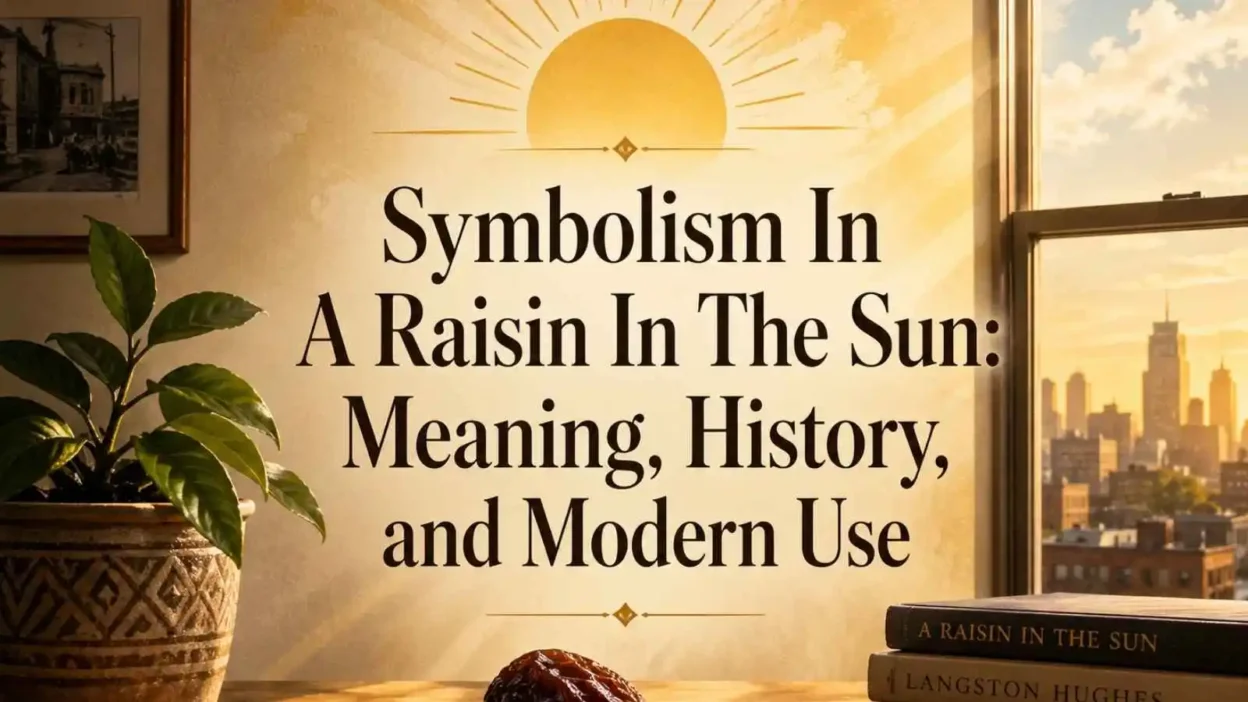
Symbolism In A Raisin In The Sun reveals how Lorraine Hansberry’s famous play uses everyday objects, dreams, and family struggles to explore identity, opportunity, race, and the search for a better life in America. First performed in 1959, the play remains widely studied because its symbols connect personal experiences with larger social issues.
The story follows the Younger family, an African American family living on the South Side of Chicago, as they decide how to use an insurance payment after the death of the family patriarch. While the money creates conflict, the deeper meaning comes from what each family member believes the money can represent: security, freedom, success, dignity, or hope.
Understanding these symbols helps readers see why the play continues to matter in classrooms, theaters, and conversations about the American experience. Hansberry does not use symbols as simple decorations; she connects them to real choices people make when facing economic limits, family responsibilities, and dreams for the future.
Quick Answer
Symbolism In A Raisin In The Sun commonly represents dreams, identity, family pride, and the struggle for dignity in modern American life. Through symbols like the plant, the new house, and the insurance money, Lorraine Hansberry explores hope, racial barriers, and the desire for a better future.
TL;DR
- The plant symbolizes hope, growth, and family perseverance.
- The house represents security, equality, and belonging.
- The insurance money reflects dreams and personal choices.
- Beneatha’s hair represents identity and cultural pride.
- Walter’s dream shows ambition and self-worth.
- The play connects personal struggles with American history.
The Role of Symbolism in Lorraine Hansberry’s Play
Lorraine Hansberry’s A Raisin in the Sun uses symbolism to show that ordinary objects can carry larger emotional meanings. A small apartment, a simple plant, or a financial decision becomes connected to questions about race, family, and personal identity.
The title itself comes from Langston Hughes’s poem “Harlem,” which asks what happens to a dream that is delayed. This idea forms the foundation of the play. The Younger family members each have dreams, but social conditions, financial hardship, and personal disagreements create obstacles.
Hansberry presents symbolism through realistic situations rather than fantasy. The objects in the play matter because the characters attach their hopes and fears to them.
The Dream Deferred: The Central Symbolism of the Title
The title A Raisin in the Sun carries one of the play’s most important meanings. The image comes from a comparison between a forgotten dream and a piece of fruit drying in the sun.
The symbol suggests that dreams do not disappear immediately when people face difficulties. Instead, they may change, weaken, or create frustration when they are constantly delayed.
Each Younger family member experiences a different version of a delayed dream:
- Walter wants financial independence and respect.
- Beneatha wants education and a stronger sense of identity.
- Mama wants a stable home where her family can thrive.
- Ruth wants peace and relief from daily struggles.
The title connects the family’s private challenges with a broader American reality. Many people understand the idea of delayed dreams because it reflects struggles involving opportunity, equality, and personal goals.
The Meaning of the Raisin Symbol in A Raisin in the Sun
The raisin in A Raisin in the Sun represents a dream that has been delayed for too long. Lorraine Hansberry connects the title to Langston Hughes’ poem “Harlem,” which asks what happens when a dream is repeatedly postponed.
A raisin is created when a grape loses moisture over time. This transformation reflects how a neglected dream can change when a person cannot achieve what they hope for. The dream may become weaker, create frustration, or influence the way someone views their future.
For the Younger family, the raisin symbolizes different forms of delayed opportunity. Walter feels frustrated because he cannot achieve financial independence. Beneatha struggles to find space for her ambitions and cultural identity. Mama has spent years sacrificing her own desires to support her family.
However, Hansberry does not present delayed dreams as completely destroyed dreams. The play also shows resilience. The Younger family continues searching for dignity, growth, and a better future despite the barriers they face.
The raisin symbol remains powerful because many people understand the experience of waiting for opportunities that seem out of reach. It connects the family’s personal struggles with larger ideas about hope, ambition, and the human desire to improve one’s life.
The Younger Family’s Apartment as a Symbol of Limited Opportunity
The Younger family’s apartment represents both love and restriction. The home is filled with memories and family relationships, but its small size reflects the economic limitations placed on the family.
The apartment’s condition shows the effects of years of financial struggle. The lack of space affects the family emotionally because each person has little room for privacy or independence.
For Mama, the apartment represents sacrifice. She has worked hard to protect her family, but she believes they deserve more. For Walter, the apartment represents a life he wants to escape because he connects it with financial failure.
The symbol is not simply about poverty. It represents the tension between appreciating what one has and wanting opportunities that have been unavailable.
The Insurance Money as a Symbol of Choice and Responsibility
The insurance money received after Big Walter’s death becomes one of the most important symbols in the play. The money represents possibility because it gives the Younger family a chance to change their circumstances.
However, Hansberry shows that money alone cannot solve every problem. The family members disagree because they attach different meanings to the payment.
Walter sees the money as a way to become a successful businessman. He believes financial success will give him confidence and respect.
Mama sees the money differently. She views it as a responsibility connected to her husband’s hard work and sacrifice. She wants to use it to create stability for the family.
Beneatha sees it as an opportunity to support education and personal growth.
The conflict over the money reflects a larger question: how should people use limited resources when everyone has different dreams?
The Symbolism of Big Walter’s Death and the Insurance Check
Big Walter’s death and the insurance check represent both loss and possibility in A Raisin in the Sun. Although Big Walter never appears on stage, his presence influences nearly every major decision the family makes.
The insurance money comes from his life insurance policy, making it a symbol of his sacrifice and responsibility as a husband and father. The payment represents the value of his hard work and the future he hoped to provide for his family.
For Mama, the money carries emotional meaning because it connects to her late husband’s memory. She sees it as something that should honor his efforts and help create security for the next generation.
For Walter, the check represents a chance to escape financial struggles and prove himself. He believes success through business ownership will give him independence and respect.
The symbol shows that money is never just about wealth. It can represent memories, dreams, responsibility, and family expectations. Hansberry uses the insurance check to explore how different people can attach completely different meanings to the same opportunity.
The New House as a Symbol of Equality and Belonging
The house Mama purchases in Clybourne Park represents one of the family’s greatest hopes. It symbolizes stability, independence, and the possibility of building a better future.
The decision is especially significant because the neighborhood is predominantly white, and the family faces discrimination when they attempt to move there. The house therefore represents more than a place to live. It becomes a statement about the family’s right to choose where they belong.
In American culture, homeownership has often been connected with achievement and security. Hansberry explores this idea while also showing that owning a home does not remove social challenges.
The house represents progress, but it also reveals the barriers that African American families faced because of segregation and housing discrimination.
Mama’s Plant as a Symbol of Hope and Family Strength
Mama’s small plant is one of the most recognized symbols in A Raisin in the Sun. The plant represents hope, patience, and the desire to create a better life despite difficult conditions.
Throughout the play, Mama carefully takes care of the plant even though it struggles to receive enough sunlight in the apartment. Her relationship with the plant reflects her own life. Like the plant, Mama has survived in an environment that has not always allowed her to fully grow.
The plant also represents her connection to the past. She remembers the sacrifices made by her husband and previous generations, and she wants her family to benefit from their struggles.
At the end of the play, Mama takes the plant with her when the family moves. This action shows that hope does not come from a perfect environment; it comes from continued care and determination.
For many American readers, the plant remains a symbol of resilience. It reflects the idea that families can preserve hope even during difficult periods.
Beneatha’s Hair as a Symbol of Identity and Cultural Awareness
Beneatha’s hair represents her search for identity and her growing awareness of African heritage. When she changes her hairstyle to a natural African style, the choice reflects her desire to understand and embrace her cultural background.
During the 1950s, many Black Americans faced pressure to follow European beauty standards. Beneatha’s decision challenges those expectations and shows her confidence in defining herself.
Her hair is not simply a personal style choice. It represents questions about belonging, history, and self-respect.
The symbol remains relevant in modern American culture because discussions about natural hair, cultural identity, and representation continue today. Many people see Beneatha’s hairstyle as an example of how appearance can communicate personal values and cultural pride.
Walter’s Dream as a Symbol of Ambition and Self-Worth
Walter Younger’s dream of owning a business represents ambition, independence, and the desire for recognition. He believes financial success will allow him to become the person he wants to be.
Walter’s struggle is not only about money. He feels that society has limited his opportunities and prevented him from achieving the respect he desires.
His dream also shows the pressure many people experience when they connect personal worth with economic achievement. Walter wants to provide for his family, but his frustration sometimes causes conflict with those closest to him.
Hansberry presents Walter as a complex character rather than simply a symbol of greed or ambition. His dream reflects a common human desire: the need to feel valued and capable.
The Meaning of Dreams in A Raisin in the Sun
Dreams are one of the strongest symbols throughout A Raisin in the Sun. Each member of the Younger family has a personal vision of a better future, but their dreams reveal different ideas about success.
Walter’s dream focuses on financial independence. He believes owning a business will allow him to gain respect and provide more opportunities for his family.
Mama’s dream centers on creating a safe and stable home. After years of hardship, she wants her family to experience comfort, pride, and security.
Beneatha’s dream represents education, independence, and self-discovery. Her goal of becoming a doctor shows her desire to challenge limitations placed on her because of race and gender.
Ruth’s dream is quieter but equally meaningful. She wants peace, stability, and relief from the pressures that affect her daily life.
Hansberry shows that dreams are deeply personal. They are not only about money or achievement; they represent identity, hope, and the desire for a meaningful life.
Beneatha’s Education as a Symbol of Progress and Independence
Beneatha’s goal of becoming a doctor represents intellectual growth, independence, and expanded opportunities. Her education symbolizes a future where she can define her own path rather than accept traditional expectations.
In the 1950s, a Black woman pursuing a medical career challenged many social limitations. Beneatha’s ambition reflects the changing roles of women and the growing demand for equal opportunities.
Her education also creates conflict within the family because it requires financial support. The disagreement shows how personal dreams often depend on family resources and sacrifice.
For modern audiences, Beneatha’s journey represents the importance of education as a tool for personal freedom and social advancement.
The Symbolism of African Heritage and Cultural Identity
African heritage is an important symbolic theme in A Raisin in the Sun. Beneatha’s interest in Africa, including her relationship with Asagai, represents a search for connection with a cultural history that was often ignored or suppressed.
Asagai introduces Beneatha to ideas about African identity and encourages her to see herself beyond American racial struggles.
The play does not present heritage as something simple. Beneatha struggles with questions about what it means to honor the past while creating a future.
This theme connects with broader American discussions about identity, representation, and cultural pride. Many readers continue to examine the play because it addresses questions that remain relevant in diverse communities.
Clybourne Park as a Symbol of Racial Barriers
Clybourne Park represents the social obstacles faced by the Younger family when they attempt to move into a white neighborhood. The neighborhood itself is not the problem; the discrimination surrounding it creates the conflict.
The visit from Karl Lindner, a representative of the neighborhood association, reveals the pressure placed on the family to stay away. His polite language hides a message of exclusion.
Hansberry uses this situation to show how racism can appear through systems and social expectations, not only through direct hostility.
The symbol remains important because housing equality continues to be discussed in the United States. The family’s decision to move demonstrates courage and a refusal to accept unfair limitations.
Symbolism of Masculinity, Family Roles, and Responsibility
The play explores expectations surrounding family roles, especially ideas about masculinity and responsibility. Walter struggles because he believes being a man means achieving financial success and controlling his family’s future.
Mama represents an older understanding of responsibility based on protection, sacrifice, and family unity. Walter and Mama often disagree because they define success differently.
The conflict between them reflects changing ideas in American society during the 1950s. The play shows that family responsibilities are shaped by culture, economics, and personal experiences.
Rather than presenting one definition of success, Hansberry shows how different generations may understand dignity in different ways.
Major Symbols in A Raisin in the Sun at a Glance
| Context | Meaning in the USA | Common Associations | Notes |
| Mama’s Plant | Hope and perseverance | Growth, care, survival | Reflects the family’s struggle and future |
| Insurance Money | Opportunity and responsibility | Choices, dreams, conflict | Represents different visions of success |
| New House | Equality and stability | Belonging, achievement | Connects to housing rights and family security |
| Beneatha’s Hair | Identity and cultural pride | Heritage, confidence | Reflects changing views of beauty |
| Apartment | Economic limitations | Sacrifice, family history | Shows challenges created by inequality |
Historical Context Behind the Symbols in A Raisin in the Sun
The symbols in A Raisin in the Sun are closely connected to the social conditions of mid-20th-century America. Lorraine Hansberry wrote the play during a period when many African American families faced discrimination in housing, employment, and education.
The Younger family’s experiences reflect real challenges faced by Black families in Chicago and other American cities. Housing segregation limited where families could live, while unequal access to opportunities affected economic growth.
The symbol of the house becomes especially meaningful because owning property represented more than comfort. For many families, it represented security, independence, and participation in the American dream.
Hansberry’s use of symbolism allows the play to discuss these issues through one family’s story. Instead of presenting history as a distant event, she shows how social systems influence everyday decisions.
Symbolism in the United States: Why the Play Still Matters
In the United States, A Raisin in the Sun remains important because its symbols connect with ongoing conversations about opportunity, identity, and family goals.
American audiences often recognize the desire for a better home, financial security, and educational success. These ideas are common parts of the American experience, but Hansberry shows that access to these opportunities has not always been equal.
The play is frequently taught in schools because it encourages discussions about:
- racial equality
- economic opportunity
- generational differences
- personal identity
- family responsibility
Modern audiences may also connect the play’s symbols to current experiences involving housing costs, career goals, and cultural identity.
The symbols continue to work because they are based on human concerns that extend beyond one historical moment.
Emotional and Psychological Meaning of the Symbols
The symbols in A Raisin in the Sun communicate emotions that are difficult to express directly. Objects become connected with feelings such as hope, frustration, pride, and fear.
Mama’s plant represents emotional endurance. She continues caring for something fragile because it reflects her belief that growth is possible.
Walter’s business dream reflects the psychological need for recognition. His desire is not only about financial gain; he wants to feel respected and capable.
The house represents emotional safety. It represents a place where the family can create memories without feeling trapped by their circumstances.
Beneatha’s search for identity represents the process of understanding who a person is and where they belong.
These symbols make the play relatable because they show how personal objects and goals often carry emotional meaning.
Religious and Spiritual Interpretations of Symbolism
Although A Raisin in the Sun is not a religious play, some symbols can be connected to spiritual ideas found in many traditions.
Mama’s plant is sometimes interpreted as representing faith, patience, and the belief that care can lead to growth. Her actions reflect values often associated with religious communities, including sacrifice and responsibility.
The idea of a better home can also connect with themes of hope and renewal found in many spiritual traditions.
However, Hansberry keeps the focus on human experiences rather than presenting the symbols as religious messages. The meanings come mainly from family relationships, history, and social realities.
How the Symbols Connect With Modern American Culture
The symbols in A Raisin in the Sun continue to appear in modern discussions about success and identity.
The idea of a dream being delayed remains familiar to many Americans dealing with financial challenges, career obstacles, or social barriers. The play’s title continues to represent the frustration of wanting progress while facing limitations.
The house remains a major symbol in American culture. Many people still associate homeownership with independence, family stability, and achievement.
Beneatha’s hair continues to connect with conversations about natural beauty, representation, and cultural confidence. Her choices are often discussed alongside modern movements that celebrate diverse identities.
The play’s symbols also appear in theater, education, literature discussions, and social conversations because they represent experiences that remain meaningful.
Symbolism of Freedom and the American Dream in A Raisin in the Sun
The symbols in A Raisin in the Sun connect strongly with the idea of the American Dream. The play explores the belief that people should have the opportunity to improve their lives through hard work, determination, and personal choices.
The Younger family’s desire for a home represents more than owning property. It represents freedom, security, and the ability to create a future without constant restrictions.
However, Hansberry also shows that the American Dream has not been equally available to everyone. The family’s struggle to move into Clybourne Park reveals how discrimination and social barriers can limit opportunities.
The insurance money also reflects this theme because it gives the family a chance to pursue different versions of success. Each character imagines freedom in a different way.
Through these symbols, Hansberry presents a balanced view of the American Dream. She shows both the hope it inspires and the challenges people may face while trying to achieve it.
Symbolism in Theater, Education, and Popular Culture
Since its debut, A Raisin in the Sun has maintained a strong presence in American theater and education. Its symbols help audiences understand complex social issues through personal stories.
Teachers often use the play to introduce literary symbolism because the meanings are clear but open to discussion. Students can analyze how objects, locations, and dreams reveal character development.
The play has also influenced discussions about representation in American theater. Its success showed that stories about Black families and everyday experiences could reach broad audiences.
Modern productions continue to explore the play because different generations find new connections with its themes.
Common Misunderstandings About the Symbolism
Some readers may assume that the symbols in A Raisin in the Sun have only one meaning. In reality, Hansberry creates symbols that change depending on the character viewing them.
The insurance money, for example, is not simply a symbol of wealth. For Walter, it represents independence. For Mama, it represents responsibility. For Beneatha, it represents possibility.
Another misunderstanding is that the play only focuses on racial discrimination. While race is a major theme, the symbols also explore universal issues such as family conflict, ambition, and personal identity.
The symbols work because they connect specific historical experiences with broader human concerns.
The Evolution of Meaning Over Time
The meaning of the symbols in A Raisin in the Sun has developed as American society has changed. When the play first appeared, audiences strongly connected its symbols with segregation and civil rights issues.
Later generations have continued to find new meanings. Some readers focus on economic inequality, while others examine identity, gender expectations, or family relationships.
The house may represent racial equality for one audience and financial security for another. Beneatha’s journey may represent cultural pride for some readers and personal independence for others.
This changing interpretation shows why the play remains relevant decades after its first performance.
Why People Continue Studying These Symbols Today
People continue studying the symbols of A Raisin in the Sun because they combine historical reality with personal emotion. The play does not separate social issues from everyday life.
A family decision about money becomes a discussion about dreams. A plant becomes a reflection of perseverance. A house becomes a statement about belonging.
These connections allow readers to examine both American history and their own ideas about success.
The symbols remain useful because they encourage questions about what people value, what obstacles they face, and how they define a meaningful life.
FAQs
Mama’s plant symbolizes hope, care, and perseverance. It represents her belief that growth is possible even when circumstances are difficult.
The house symbolizes stability, equality, and the desire for a better future. It also represents the challenges African American families faced because of housing discrimination.
Walter’s dream symbolizes ambition, independence, and the desire for respect. His goals show how financial success can become connected with personal identity.
Beneatha’s hair represents cultural identity, self-expression, and pride in African heritage. Her hairstyle reflects her effort to define herself on her own terms.
No. While racial inequality is a major theme, the play also explores family relationships, dreams, responsibility, and personal growth.
The play remains relevant because its symbols connect with modern discussions about opportunity, identity, housing, and the pursuit of personal goals.
Conclusion
Symbolism In A Raisin In The Sun shows how ordinary objects and personal dreams can represent larger ideas about dignity, opportunity, and belonging. Lorraine Hansberry uses the Younger family’s experiences to explore both the challenges of American history and the universal desire for a better future.
The plant, house, money, and personal choices in the play continue to carry meaning because they reflect real human experiences. They remind readers that dreams are shaped not only by individual effort but also by the opportunities available to people.
More than six decades after its debut, A Raisin in the Sun remains a meaningful work because its symbols continue to encourage conversations about family, identity, and what it means to build a fulfilling life in America.