
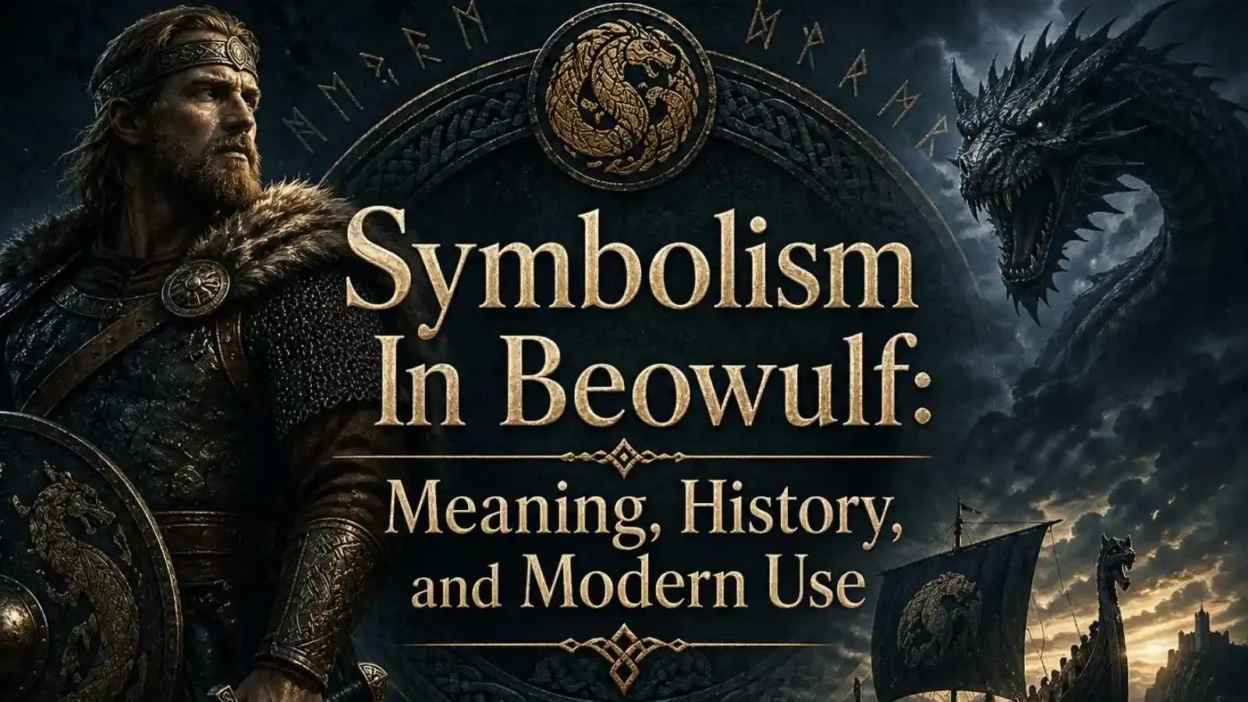
Symbolism In Beowulf reveals how an ancient epic uses monsters, treasures, battles, and heroic figures to explore ideas about courage, leadership, identity, and human limits. Written in Old English, Beowulf is one of the earliest surviving works of English literature and remains widely studied in American schools and universities.
The poem is more than a story about a warrior defeating enemies. Its symbols reflect the concerns of early medieval societies, including the importance of reputation, loyalty between leaders and followers, and the struggle between human ambition and inevitable death.
Modern readers in the United States often approach Beowulf as both a historical text and a source of cultural ideas. Its symbols continue to appear in discussions of heroism, leadership, storytelling, fantasy literature, and popular entertainment.
Quick Answer
Symbolism In Beowulf commonly represents heroism, loyalty, and the struggle between good and destructive forces in modern American interpretations. Historically, the epic’s symbols reflected Anglo-Saxon beliefs about honor, community, fate, and the limits of human power.
TL;DR
- Beowulf symbolizes ideal leadership and heroic responsibility.
- Monsters represent chaos, danger, and social threats.
- The mead hall reflects community and belonging.
- Treasure symbolizes wealth, legacy, and human desire.
- Fate shapes Anglo-Saxon views of life and death.
- Modern audiences connect Beowulf with courage and identity.
The Historical Background Behind Beowulf’s Symbols
Beowulf was created in an Anglo-Saxon cultural environment, probably between the eighth and early eleventh centuries, although the exact date remains debated. The poem describes events involving Scandinavian kings and warriors rather than the English society that preserved the manuscript.
The world of the poem was shaped by warrior traditions where personal reputation, loyalty, and bravery had major social importance. A person’s name and achievements could determine how future generations remembered them.
Because of this cultural setting, many symbols in Beowulf focus on relationships between individuals and communities. A hero was not only someone who defeated enemies but someone who protected others and maintained social order.
Beowulf as a Symbol of Ideal Heroism
Beowulf himself represents the qualities admired by Anglo-Saxon warrior culture. He demonstrates physical strength, courage, loyalty, and willingness to accept dangerous responsibilities.
However, the poem presents heroism as more complicated than simple victory. Young Beowulf represents confidence and physical power, while the older Beowulf represents wisdom, sacrifice, and awareness of mortality.
For modern American readers, Beowulf often symbolizes the idea that true leadership requires responsibility. A hero is not defined only by personal success but by the protection and service they provide to others.
| Symbol | Meaning in the USA | Common Associations | Notes |
| Beowulf | Leadership and courage | Heroism, responsibility | Represents changing ideas of greatness |
| Grendel | Threats and disorder | Fear, conflict | Often interpreted as a symbol of social danger |
| Mead Hall | Community connection | Belonging, celebration | Represents shared identity |
| Treasure | Human desire and legacy | Wealth, ambition | Shows both value and danger |
| Dragon | Mortality and destruction | Loss, final challenges | Represents unavoidable limits |
Grendel as a Symbol of Chaos and Fear
Grendel is one of the most recognizable symbols in the poem. The creature attacks Heorot, the great mead hall of King Hrothgar, creating fear and destroying a place meant for celebration.
Many interpretations view Grendel as a representation of chaos, isolation, and threats against civilization. He exists outside human society and attacks the relationships that hold the community together.
In modern American culture, Grendel is often compared to forces that disrupt social stability, such as violence, injustice, or personal struggles. Different readers interpret the monster differently depending on the themes they find most meaningful.
The Symbolism Of Grendel’s Mother In Beowulf
Grendel’s mother represents a different type of danger than her son. While Grendel is often connected with chaos and destruction, Grendel’s mother symbolizes revenge, grief, and the consequences of violence.
Her attack on Heorot begins after Beowulf defeats Grendel, showing how conflicts can continue even after one threat disappears. She represents the idea that actions often create consequences that reach beyond the original conflict.
From a historical perspective, her character reflects the importance of family loyalty and honor in warrior societies. Her desire to avenge her son follows the same cultural values that shaped many human relationships in the world of the poem.
Modern readers may interpret Grendel’s mother as a symbol of unresolved pain, the cycle of revenge, or the difficulty of ending conflicts once they begin. Her role adds complexity to the story because she is not simply an enemy but a figure connected to loss and retaliation.
The Mead Hall Represents Community and Identity
Heorot, Hrothgar’s mead hall, symbolizes more than a building. It represents community, friendship, tradition, and the bonds between leaders and their people.
In Anglo-Saxon society, the hall was a place where warriors gathered, received rewards, shared stories, and strengthened relationships. Its destruction represented damage to the entire community.
American audiences can connect this symbol with modern ideas of gathering spaces, family traditions, and places where people create shared identities. The hall reminds readers that communities depend on trust and cooperation.
The Symbolic Meaning Of Heorot In Beowulf
Heorot is one of the most important symbols in Beowulf because it represents the achievements of civilization. The hall stands as a place where people celebrate, build relationships, and create a shared identity.
Its destruction by Grendel shows how fragile communities can become when fear replaces trust. The attacks are not only physical damage; they represent a challenge to the values that keep society together.
Heorot also symbolizes leadership. King Hrothgar built the hall as a place where his people could gather and where loyalty between rulers and warriors could grow.
Modern readers can view Heorot as a symbol of any place where people find connection and belonging, including homes, schools, workplaces, and community spaces.
The Meaning Behind Beowulf’s Battles
The battles in Beowulf symbolize more than physical fights. Each conflict represents a different challenge faced by individuals and societies.
The battle against Grendel focuses on protecting community order. The fight against Grendel’s mother explores revenge and consequences. The final battle with the dragon confronts aging, loss, and mortality.
These conflicts explain why the poem continues to interest modern audiences. The enemies change, but the struggles between courage and fear, responsibility and self-interest, remain familiar.
The Symbolism Of Beowulf’s Three Major Battles
The three major battles in Beowulf represent different stages of human experience. Each conflict reveals a new challenge and a deeper understanding of heroism.
The battle with Grendel symbolizes the fight against chaos and threats that harm society. Beowulf protects the community by defeating a force that exists outside human order.
The battle with Grendel’s mother represents revenge, grief, and the continuation of conflict. It shows that defeating one enemy does not always end a larger struggle.
The final battle with the dragon represents aging, sacrifice, and mortality. Beowulf wins the fight, but the victory comes with personal loss.
Together, these battles show that heroism changes over time. A young hero proves strength through action, while an older leader demonstrates courage through sacrifice.
The Symbolism Of Weapons And Armor In Beowulf
Weapons and armor in Beowulf symbolize strength, protection, reputation, and the responsibilities of warriors. These objects are not only tools for fighting; they represent the identity and values of the people who carry them.
The sword often represents power, tradition, and the connection between generations. A famous weapon carries history because previous warriors used it and passed down its reputation.
Armor symbolizes preparation and courage. Warriors enter dangerous situations knowing that their equipment may protect them but cannot guarantee survival.
The poem also shows that physical objects have limits. Even the finest weapons cannot remove every danger. This idea connects with one of the epic’s central themes: human strength is valuable, but it is never unlimited.
For modern American audiences, these symbols connect with ideas of preparation, responsibility, and the tools people use to overcome challenges.
The Dragon Symbolizes Mortality and Human Limits
The dragon appears near the end of Beowulf’s life and represents one of the poem’s most complex symbols. Unlike Grendel, the dragon is not simply a threat to society; it also represents unavoidable destruction and the passage of time.
Beowulf defeats the dragon, but the victory comes at the cost of his own life. This ending shows that even the greatest heroes cannot escape mortality.
Modern interpretations often view the dragon as a symbol of final challenges people face, including aging, personal sacrifice, and the acceptance of limits.
Treasure as a Symbol of Wealth and Legacy
Treasure appears throughout Beowulf as a sign of success, reward, and social status. Gold and valuable objects show the importance of generosity and reputation among warriors.
However, treasure also carries a warning. Possessions do not provide permanent security, and wealth can become connected with greed, conflict, or loss.
American readers may see this symbol through modern discussions about success and legacy. The poem suggests that what people leave behind matters more than the material things they collect.
Fate and the Anglo-Saxon View of Human Life
The concept of fate plays an important role in Beowulf. Characters often recognize that some events are beyond human control, even while they continue to act bravely.
This idea reflects Anglo-Saxon beliefs about courage in uncertain conditions. A person could not always control the outcome, but they could control their response.
Modern readers often connect this theme with resilience and acceptance. The poem presents bravery as the ability to face challenges even when success is not guaranteed.
The Role of Loyalty and Honor
Loyalty is one of the strongest values represented in Beowulf. Warriors are expected to support their leaders, and leaders are expected to reward and protect their followers.
This relationship created social stability in the world represented by the poem.
In the United States, this symbolism often connects with ideas of teamwork, commitment, friendship, and leadership. The poem shows that individual achievements depend on relationships with others.
The Symbolism Of Kingship And Leadership In Beowulf
Kingship in Beowulf symbolizes responsibility, generosity, and service to others. A successful ruler is not defined only by power but by the ability to protect and support the people who depend on them.
Characters such as Hrothgar and Beowulf show different forms of leadership. Hrothgar represents experienced leadership shaped by wisdom, while Beowulf represents active leadership built through courage and sacrifice.
The poem suggests that leaders must balance personal ambition with responsibility toward their communities. A ruler who focuses only on personal glory risks damaging the relationships that create stability.
For modern American readers, this symbolism connects with discussions about ethical leadership, teamwork, and the responsibilities of people in positions of influence.
Religious Symbolism in Beowulf
Beowulf contains a mixture of pagan warrior traditions and Christian references. Scholars often discuss how the poem combines older Germanic beliefs with Christian ideas introduced by the manuscript’s later cultural environment.
Biblical references appear alongside themes of fate, warriors, and traditional heroic values.
This combination makes the poem historically interesting because it reflects a society experiencing cultural change. Rather than representing only one belief system, Beowulf shows different traditions existing together.
Symbolism of Light and Darkness
The contrast between light and darkness appears throughout the poem. Darkness is often connected with danger, uncertainty, and separation from society.
Grendel’s attacks occur at night, reinforcing his connection with fear and disorder. In contrast, the hall represents warmth, community, and human connection.
Modern audiences often recognize this symbolic contrast because it appears widely in literature, film, and storytelling. Light frequently represents safety and hope, while darkness represents challenges or unknown dangers.
The Meaning Of Good Vs Evil Symbolism In Beowulf
The conflict between good and evil is one of the strongest themes in Beowulf, but the poem presents this struggle with complexity. The story includes clear conflicts between heroes and monsters, yet many symbols explore deeper human problems.
Beowulf represents protection, courage, and social responsibility. Monsters such as Grendel represent threats that damage community life and create fear.
However, the poem also explores human weaknesses. Pride, ambition, and the desire for lasting fame can create challenges even for great heroes.
This makes Beowulf more than a simple battle between good and evil. It examines how people choose to respond to danger, power, and the limits of human ability.
How Americans Interpret Beowulf Today
In the United States, Beowulf is commonly taught as a foundational literary work rather than only an ancient heroic story. Students examine its themes through history, literature, ethics, and storytelling.
Modern adaptations have also changed how people view the poem. Films, novels, and fantasy works often borrow its ideas about monsters, warriors, and legendary battles.
Many Americans connect Beowulf’s symbolism with personal growth, leadership challenges, and the idea of standing against difficult circumstances.
Why Beowulf Still Appears in Modern Culture
The symbols in Beowulf continue to influence modern storytelling. Fantasy novels, movies, and games often use similar ideas: heroic journeys, dangerous creatures, ancient treasures, and battles between order and chaos.
The poem’s influence can be seen in the broader fantasy tradition that developed in English-language literature.
Its lasting appeal comes from its ability to address universal questions: What makes someone a hero? How should people respond to danger? What remains after a person is gone?
Common Misunderstandings About Beowulf Symbolism
One common misunderstanding is that every symbol in Beowulf has one fixed meaning. Literary symbols often allow multiple interpretations depending on historical context and the reader’s perspective.
Another mistake is viewing Beowulf only as a simple monster-fighting adventure. The poem explores leadership, aging, responsibility, and the relationship between individuals and society.
Understanding the historical background helps readers appreciate why these symbols mattered to the original audience and why they remain relevant today.
FAQs
Beowulf symbolizes courage, leadership, loyalty, and responsibility. His character shows both the achievements and limitations of heroic ideals.
Grendel often symbolizes chaos, isolation, and threats against community order. Different interpretations also connect him with fear, violence, or social disruption.
The dragon symbolizes mortality, final challenges, and the limits of human power. Beowulf’s final battle shows that even great heroes cannot avoid death.
Treasure represents wealth, honor, and social status, but it also shows that material possessions cannot guarantee lasting happiness or security.
Yes. The poem contains Christian references alongside older warrior traditions, reflecting the cultural changes of the society that preserved the story.
Americans study Beowulf because it explores lasting themes such as leadership, courage, conflict, and human identity. Its influence continues in modern literature and entertainment.
The ending symbolizes mortality, sacrifice, and the temporary nature of human achievements. Beowulf’s final battle shows that even great heroes cannot escape death.
Conclusion
The symbols in Beowulf reveal a story about more than battles and monsters. They explore how people understand courage, loyalty, community, success, and the reality of human limitations.
Symbolism In Beowulf remains meaningful because its central ideas continue to appear in modern American culture. Heroes still face challenges, communities still depend on trust, and people still search for ways to create a lasting legacy.
The poem’s symbols survive because they address questions that remain relevant across generations: how people face danger, how they define greatness, and what they leave behind.
[…] her with religious belief, trust, hope, and emotional security. When Brown leaves Faith behind, he symbolically leaves behind the values that once gave his life […]