
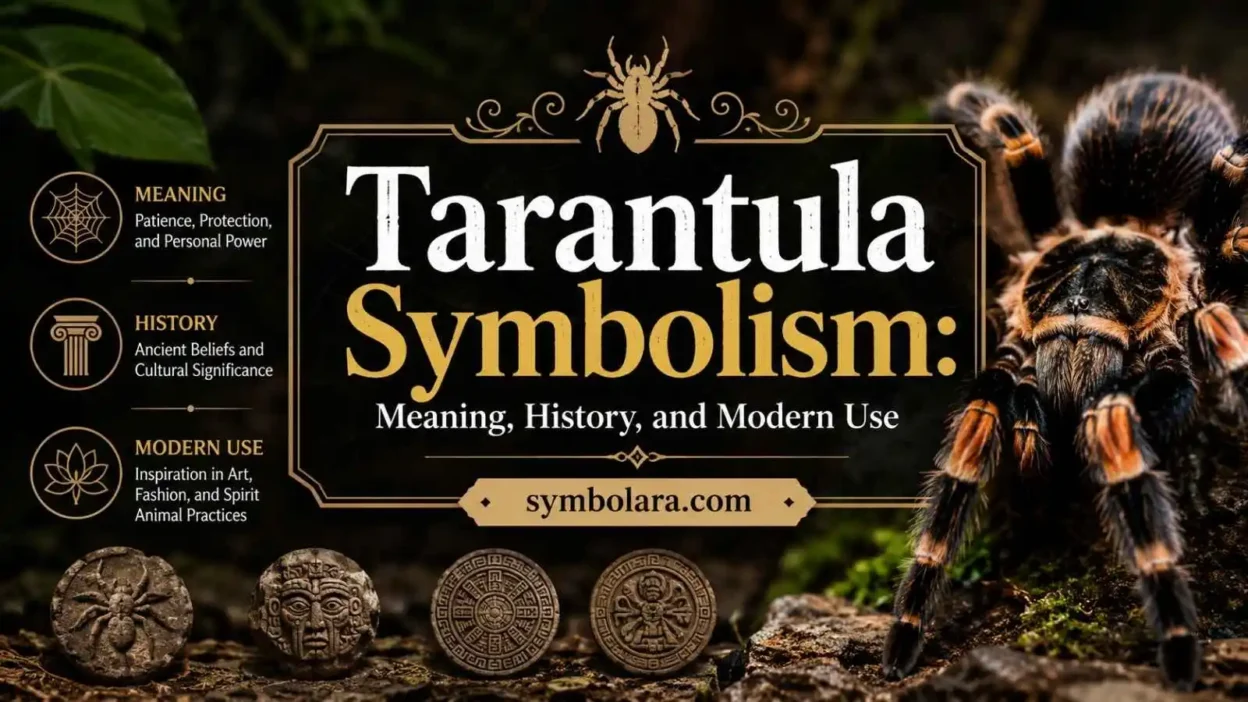
Tarantula symbolism explores how one of the world’s most recognizable spiders has come to represent ideas such as patience, protection, independence, and transformation. In modern American culture, tarantulas often appear as symbols of resilience, personal strength, and the ability to face fears.
Unlike many animals that naturally attract admiration, tarantulas often create mixed reactions. Their large size, unusual appearance, and connection with fear have made them powerful symbols in folklore, art, tattoos, and popular culture.
Understanding the meaning behind the tarantula requires looking beyond its frightening reputation. The same qualities that make people uneasy — its quiet movements, defensive abilities, and survival skills — have also inspired positive interpretations across different cultures.
Quick Answer
Tarantula symbolism commonly represents strength, patience, independence, and facing fears in modern American culture, especially in tattoos and personal identity. Historically, tarantulas have also been connected with protection, survival, mystery, and transformation in different traditions.
TL;DR
- Tarantulas symbolize patience, resilience, and personal strength.
- Their meanings come from folklore and cultural beliefs.
- Americans often view them through fear and fascination.
- Tattoos use tarantulas to express courage and individuality.
- Spider symbolism connects with creativity and transformation.
- Misunderstandings often come from fear of spiders.
What a Tarantula Represents in Modern Culture
In the United States, tarantulas usually symbolize qualities connected with survival and confidence. Many people see the animal as a reminder that strength does not always appear aggressive or obvious.
A tarantula spends much of its life quietly observing its surroundings. This behavior has encouraged symbolic associations with patience, preparation, and controlled action. Instead of rushing toward danger, the spider waits until the right moment to respond.
For some people, the tarantula represents embracing qualities that others may misunderstand. Because many people fear spiders, choosing a tarantula image can communicate independence and the willingness to stand apart from common expectations.
The Physical Traits Behind Tarantula Symbolism
The appearance and behavior of tarantulas strongly influence their symbolic meanings.
Tarantulas are large, hairy spiders with strong legs and a defensive posture. Their size makes them visually impressive compared with many other spiders. However, most tarantulas are not aggressive toward humans and usually avoid conflict.
Their natural characteristics create several symbolic connections:
| Context | Meaning in the USA | Common Associations | Notes |
| Survival | Resilience and adaptation | Endurance, patience | Based on their ability to survive harsh environments |
| Appearance | Strength and uniqueness | Confidence, individuality | Their unusual look creates strong visual identity |
| Behavior | Calm power | Control, observation | They often avoid unnecessary conflict |
| Defense | Protection | Boundaries, self-preservation | Defensive actions symbolize personal limits |
| Transformation | Personal growth | Change and renewal | Connected with shedding and life cycles |
The tarantula’s symbolism often comes from observing what the animal does rather than simply reacting to its appearance.
Ancient Roots and Early Symbolism
Spider symbolism has existed for thousands of years, although specific tarantula meanings developed differently depending on region and culture.
Many ancient societies associated spiders with creativity because of their ability to create intricate webs. The spider’s web became a symbol of connection, design, and the relationship between different parts of life.
Large spiders such as tarantulas also gained associations with mystery because people often encountered them without fully understanding their behavior. Before modern science explained spider biology, unusual creatures were frequently connected with stories about protection, danger, or supernatural forces.
The tarantula’s symbolism developed alongside broader spider traditions, combining ideas of patience, survival, and hidden strength.
Tarantula Symbolism in Native American and Indigenous Traditions
Spider symbolism appears in many Indigenous traditions, although meanings vary between communities and should not be treated as one universal belief.
Across some Native American stories, spider figures are connected with creativity, wisdom, storytelling, and the ability to build connections. The spider’s web often represents relationships, planning, and the way different parts of life connect together.
While tarantulas are not a central symbol in every Indigenous tradition, their connection with broader spider symbolism can include themes such as patience, survival, and respect for nature.
Many Indigenous perspectives emphasize learning from animals rather than viewing them only as symbols. The tarantula can remind people to observe the natural world carefully and recognize the important role each creature plays within an ecosystem.
Tarantula Symbolism in the United States
American interpretations of tarantulas are shaped by a mixture of science, entertainment, folklore, and personal expression.
In the western and southwestern United States, tarantulas are familiar wildlife rather than mythical creatures. Some communities view them as interesting parts of local ecosystems. Their presence can represent nature, adaptation, and respect for animals that people often misunderstand.
At the same time, movies, Halloween decorations, and horror imagery have often presented large spiders as symbols of fear. This has created a complicated cultural image: the tarantula can represent both danger and fascination.
Modern Americans often reinterpret the tarantula in a more personal way. Someone may choose a tarantula design to represent overcoming anxiety, accepting differences, or showing confidence.
Tarantulas as Symbols of Strength and Protection
One of the strongest symbolic connections of the tarantula is protection.
Although tarantulas are generally peaceful, they have effective ways to defend themselves when threatened. Their defensive behavior represents the idea of having boundaries and protecting personal space.
This meaning appears in modern identity symbolism. A person who connects with the tarantula may see it as a reminder to remain calm but prepared.
The symbol does not necessarily represent aggression. Instead, it often reflects controlled strength — knowing when to act and when to remain still.
Black Tarantula Symbolism: Meaning of Color and Appearance
The color and appearance of a tarantula can influence how people interpret its symbolism. Black tarantulas especially often create associations with mystery, protection, strength, and the unknown.
In symbolic traditions, black is frequently connected with depth, independence, and hidden power. A black tarantula image may represent confidence, emotional strength, or the ability to remain calm during uncertain situations.
In tattoos and artwork, black tarantulas are popular because their appearance creates a strong visual impact. Some people choose this design to represent resilience, personal transformation, or overcoming fears.
However, color meanings are personal and cultural. A black tarantula does not have one fixed meaning. Its symbolism depends on the person, artwork style, and message behind the image.
Patience, Strategy, and Quiet Power
Tarantulas are often associated with patience because they do not rely on constant movement. They conserve energy and respond carefully to their environment.
This quality gives the tarantula symbolic value for people who admire thoughtful decision-making. It can represent:
- waiting for the right opportunity
- observing before acting
- trusting personal instincts
- maintaining control under pressure
In a culture that often values speed and constant activity, the tarantula offers a different message: careful action can be a form of strength.
Fear, Courage, and Facing the Unknown
Because many people fear spiders, the tarantula has become a symbol connected with confronting fears.
For some individuals, the image represents overcoming discomfort and learning that something frightening may not be as dangerous as it first appears.
This interpretation is especially common in tattoos and personal artwork. A tarantula can represent a person’s decision to face challenges rather than avoid them.
The symbol becomes less about the spider itself and more about the emotional experience of changing one’s relationship with fear.
Tarantula Symbolism in Tattoos and Personal Style
Tarantula tattoos often carry meanings related to individuality, strength, and resilience.
People may choose a tarantula tattoo because they connect with its appearance or because they want a symbol that feels unusual and memorable. Unlike common animal tattoos, a tarantula design often communicates a willingness to embrace something unconventional.
Common tattoo meanings include:
- overcoming fear
- personal transformation
- independence
- survival after difficult experiences
- connection with nature
The design style also affects interpretation. A realistic tarantula may emphasize respect for nature, while a stylized version may focus more on personality and artistic expression.
Tarantula Symbolism in Tattoos: Placement and Design Meanings
Tarantula tattoos often combine visual strength with personal meaning. Because tarantulas are unusual tattoo choices, they can express individuality and a willingness to embrace things that others may avoid.
Different tattoo designs can create different interpretations:
A realistic tarantula tattoo may represent respect for nature, survival, and personal strength.
A dark or detailed tarantula design may symbolize mystery, protection, or overcoming difficult experiences.
A colorful tarantula tattoo may focus more on creativity, uniqueness, and appreciation for unusual beauty.
Placement can also influence the message. A visible tarantula tattoo may represent confidence and self-expression, while a hidden design may carry a more personal meaning connected with private growth or overcoming fear.
Like all tattoos, the meaning comes from the person wearing it. The same tarantula image can represent courage for one person and curiosity for another.
Spiritual and Cultural Interpretations
Spider symbolism appears in many cultural traditions, but interpretations vary widely.
In some Indigenous stories, spiders are connected with creativity, wisdom, and storytelling. Spider figures may represent knowledge, patience, or the ability to create connections.
Some African and Caribbean traditions include spider characters associated with intelligence and cleverness. These stories often focus on strategy rather than physical strength.
In other traditions, spiders may carry negative associations because of their connection with fear, darkness, or hidden danger.
The tarantula itself does not have one universal meaning. Its interpretation depends on cultural background, personal experience, and the context where the symbol appears.
Tarantula Symbolism in Dreams: Common Meanings and Interpretations
Dreams about tarantulas often reflect emotions connected with fear, personal power, patience, or hidden challenges. Because tarantulas create strong reactions, they may appear in dreams when someone is dealing with something that feels intimidating but requires attention.
A calm tarantula in a dream may symbolize confidence, self-control, and the ability to handle difficult situations. It can represent a reminder to stay patient and observe before making decisions.
A threatening or attacking tarantula may reflect personal fears, stress, or situations where someone feels pressured. However, the dream does not always represent something negative. It may encourage a person to face uncomfortable emotions and discover inner strength.
Common tarantula dream interpretations include:
- Seeing a tarantula: Awareness of a hidden concern or powerful emotion.
- A moving tarantula: A situation that requires patience and careful action.
- A friendly tarantula: Acceptance of unusual qualities or personal differences.
- Killing a tarantula: Overcoming fear or removing a personal obstacle.
- A large tarantula: A major challenge or powerful transformation.
Dream symbolism depends on personal experiences. A person who loves spiders may interpret a tarantula dream differently from someone who fears them.
Emotional and Psychological Meaning
From a psychological perspective, animals that create strong emotional reactions often become meaningful symbols.
The tarantula can represent parts of human identity that are often hidden or misunderstood. Its symbolism may connect with:
- accepting personal differences
- developing confidence
- protecting emotional boundaries
- embracing independence
- recognizing inner strength
For some people, the tarantula reflects the idea that appearances can be misleading. Something that seems frightening at first may reveal another side when understood more carefully.
Modern Uses in Media, Design, and Pop Culture
Tarantulas appear frequently in modern entertainment because they create immediate visual impact.
Films, Halloween themes, video games, and artwork often use tarantulas to create feelings of suspense or mystery. However, outside horror settings, they also appear in educational materials, nature photography, and animal appreciation communities.
Designers may use tarantula imagery because it creates a strong visual identity. The animal’s distinctive shape makes it recognizable in logos, clothing, illustrations, and decorative art.
Among exotic pet enthusiasts, tarantulas are also associated with curiosity, responsibility, and appreciation for unusual animals.
Common Misunderstandings About Tarantula Symbolism
Many symbolic meanings come from human reactions rather than scientific facts.
One common misunderstanding is that tarantulas always represent danger. In reality, most tarantula species prefer avoiding conflict and play important roles in ecosystems.
Another misconception is that every spider symbol carries the same meaning. Spider imagery can represent creativity in one culture and fear in another.
The meaning of a tarantula depends on how it is used. A horror movie may use it as a symbol of threat, while a tattoo may use it as a symbol of courage.
How Tarantula Meaning Has Changed Over Time
The tarantula’s symbolic meaning has shifted as human understanding has changed.
Earlier interpretations were often shaped by uncertainty and fear. As scientific knowledge increased, people gained a more balanced view of these animals.
Today, tarantulas represent a combination of traditional spider symbolism and modern personal expression. They can symbolize caution, creativity, resilience, or overcoming fear depending on the person and situation.
This evolution shows how symbols change as societies develop new relationships with the natural world.
FAQs
A tarantula can symbolize patience, protection, transformation, and personal strength. Spiritual interpretations vary depending on cultural traditions and individual beliefs.
A tarantula can represent both positive and negative ideas. Some people associate it with fear and danger, while others view it as a symbol of courage, survival, and independence.
A tarantula tattoo often represents resilience, individuality, overcoming fears, or embracing qualities that others may misunderstand.
Yes, some interpretations connect tarantulas with protection because of their defensive abilities and strong boundaries. The meaning usually focuses on self-preservation rather than aggression.
In the United States, tarantulas are often connected with curiosity, nature, fear, courage, and personal identity. Their meaning depends heavily on the context where the image appears.
Yes, broader spider symbolism often includes creativity because of web-building. Tarantulas may share some of these associations, although they are more commonly linked with strength and resilience.
Tarantulas create strong emotional reactions because of their appearance and reputation. This makes them powerful symbols of facing fears, accepting challenges, and discovering personal strength.
Conclusion
Tarantula symbolism reflects a complex relationship between fear, respect, and understanding. In modern American culture, the tarantula often represents patience, independence, resilience, and the courage to face uncomfortable challenges.
Although many people first notice the spider because of its intimidating appearance, its deeper meaning comes from its behavior and survival abilities. The tarantula reminds people that strength can exist quietly and that things that seem frightening may deserve a closer look.
Whether used in tattoos, art, nature appreciation, or personal reflection, tarantula symbolism continues to represent the balance between caution and confidence.