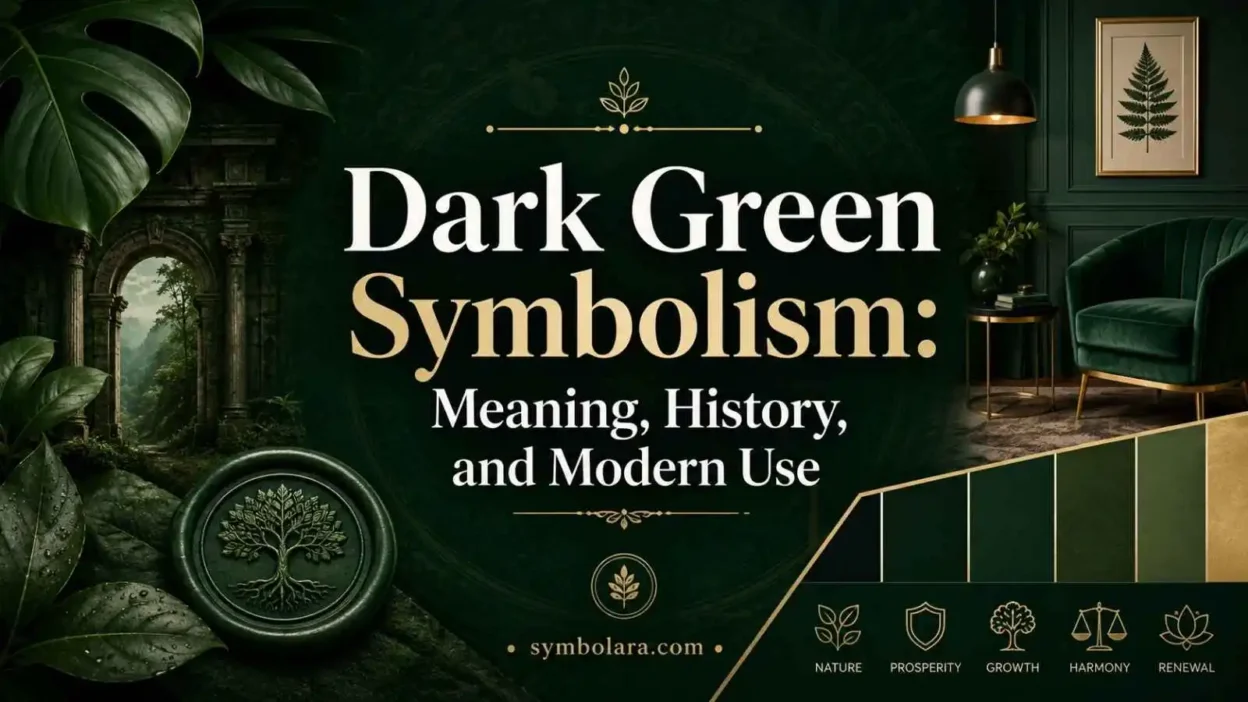
Dark Green Symbolism usually centers on nature, stability, wealth, maturity, and quiet strength. Unlike bright green, which often feels fresh or playful, dark green has a heavier emotional tone. It suggests forests, old trees, deep shade, money, tradition, privacy, and endurance.
People care about the meaning of dark green because it appears in places where color is expected to communicate something quickly: clothing, home design, logos, uniforms, flags, tattoos, holiday decorations, and digital branding. In American culture, it can feel trustworthy and grounded, but it can also hint at greed, secrecy, envy, or emotional heaviness depending on the context.
The color is especially interesting because it sits between two major American associations: nature and money. That double meaning gives dark green a practical, serious quality. It can suggest life and renewal, but also ambition, status, and material success.
Quick Answer
Dark Green Symbolism commonly represents stability, wealth, nature, maturity, and grounded confidence in modern American culture. Historically, dark green has also been tied to forests, fertility, renewal, religious life, Irish identity, military authority, and the complicated symbolism of money and envy.
TL;DR
- Dark green often means stability, wealth, and nature.
- It feels more mature than bright green.
- Americans connect it strongly with money.
- It appears in uniforms, decor, fashion, and branding.
- Negative meanings include greed, envy, and secrecy.
- Its meaning changes with shade, setting, and culture.
What Dark Green Looks Like and Where People See It
Dark green is a deep shade of green with less brightness and more visual weight than grass green, lime, or mint. It may appear as forest green, hunter green, pine green, bottle green, olive green, or emerald green depending on the undertone. Some dark greens lean blue and feel cool or formal. Others lean yellow or brown and feel earthy, military, or rustic.
Americans encounter dark green in familiar places: evergreen trees, dollar bills, park signs, military clothing, school uniforms, luxury packaging, holiday wreaths, sports team colors, golf courses, leather goods, home offices, and upscale restaurant interiors. It is common in spaces that want to feel natural without feeling casual.
Because dark green is visually dense, it rarely feels lighthearted. It tends to communicate seriousness, control, privacy, or tradition. A bright green sneaker may feel energetic; a dark green blazer feels composed. A lime green logo may look youthful; a dark green logo can suggest heritage, wealth, or environmental responsibility.
Dark Green vs Other Green Shades: Symbolic Differences
Different green shades communicate different emotions and ideas. Dark green usually feels more serious and mature than lighter shades.
| Green Shade | Common Symbolic Meaning | Emotional Feeling |
|---|---|---|
| Dark Green | Stability, wealth, endurance, tradition | Calm and serious |
| Light Green | Fresh starts, youth, growth | Fresh and energetic |
| Emerald Green | Beauty, luxury, success | Elegant and valuable |
| Olive Green | Peace, military, practicality | Strong and grounded |
| Mint Green | Cleanliness, freshness, openness | Soft and refreshing |
Dark green stands apart because it combines the natural qualities of green with a deeper sense of experience and authority. While bright greens often suggest beginnings, dark green suggests something that has already grown and developed.
What It Commonly Means in the United States
In the United States, dark green most often symbolizes nature, money, growth, security, and mature confidence. It is one of the few colors that can feel both earthy and prosperous at the same time. That makes it useful in design, advertising, fashion, and public life.
The natural meaning comes from forests, evergreens, moss, and shaded landscapes. Dark green suggests life that has lasted for a long time, not just new growth. It feels rooted rather than quick or temporary.
The financial meaning comes from American paper money and the long-standing nickname “greenbacks.” Because U.S. bills have been visually associated with green for generations, green became shorthand for cash, profit, wealth, and economic opportunity. Dark green intensifies that meaning because it feels more serious and established than lighter green.
Why Dark Green Feels Mature and Stable
Dark green feels stable because it resembles things that grow slowly: pine forests, old ivy, dense foliage, and deep moss. These are not images of sudden change. They suggest endurance, patience, and shelter.
This is why dark green often appears in offices, libraries, academic settings, financial branding, and traditional interiors. It gives the impression of competence without demanding attention. It is calmer than red, warmer than black, and less distant than navy.
The color also has a conservative visual quality. That does not always mean political conservatism; it means visual restraint. Dark green rarely looks impulsive. It says, “This is established. This has weight. This is meant to last.”
Nature, Forests, and Renewal
Green’s oldest symbolic foundation is the living world. Plants, crops, leaves, and trees made green a natural sign of life, fertility, food, and seasonal return. Dark green narrows that meaning toward forests, shade, evergreens, and landscapes that feel protected or ancient.
In American life, this meaning appears in national parks, camping culture, hiking gear, environmental design, outdoor brands, and suburban landscaping. Dark green can make a product feel rugged, organic, or responsible. It can also make a room feel quieter and closer to nature.
The renewal meaning is slightly different from the renewal associated with spring green. Light green suggests new shoots and beginnings. Dark green suggests life that has survived weather, age, and seasonal change. It is renewal with resilience attached.
Money, Prosperity, and Ambition
Dark green’s connection to money is especially strong in the United States. Americans often use “green” as a casual reference to cash, and dark green carries the more established side of that association: banks, investments, old wealth, business success, and financial security.
This meaning appears in business logos, personal finance imagery, wealth-related graphics, casino design, and luxury packaging. A dark green wallet, office wall, or brand identity can quietly suggest prosperity without using gold or obvious status symbols.
But this meaning has two sides. On the positive side, dark green can symbolize stability, savings, ambition, and responsible growth. On the negative side, it can suggest greed, possessiveness, or an obsession with material success. Context decides which meaning comes forward.
Luck, Irish-American Identity, and St. Patrick’s Day
Green is strongly tied to Irish identity in American culture, especially through St. Patrick’s Day. Although the historical relationship between St. Patrick and green is more complicated than many people assume, modern American celebration has made green the holiday’s dominant color.
Dark green appears in shamrocks, parade clothing, pub decorations, banners, and city celebrations. It can symbolize Irish heritage, cultural pride, good luck, and public festivity. In places with large Irish-American communities, wearing green may feel like a friendly social ritual as much as a heritage marker.
Dark green also has a calmer, more traditional feel than neon green holiday decorations. A deep green sweater or shamrock pin can communicate pride, respect, and belonging without the louder party atmosphere often attached to the holiday.
Military, Authority, and Public Service
Dark green also carries meanings of discipline, authority, endurance, and service because of its use in military clothing, field uniforms, tactical gear, and public outdoor work. Olive green and forest green are especially connected with camouflage and practical survival.
In this context, dark green does not primarily mean money or luxury. It means function, readiness, protection, and seriousness. It can suggest someone who is prepared, self-controlled, and connected to duty.
That is why dark green can feel strong without feeling flashy. It is not the theatrical strength of bright red or the formal authority of black. It is a quieter kind of strength associated with patience, training, and the ability to remain steady under pressure.
Religious and Cross-Cultural Meanings
Dark green carries different meanings across cultures and religious traditions. Within many Islamic contexts, green is associated with paradise, life, blessings, and sacred beauty. Christian seasonal symbolism often connects green with spiritual growth, renewal, and periods of ordinary life. In ancient cultures, the color was frequently tied to vegetation, fertility, rebirth, and the natural cycle of returning spring.
Western art and folklore have also given green more complex associations. The color was sometimes linked with fairies, untamed nature, poison, jealousy, and the uncertain boundary between human civilization and the wild world. Historical concerns about some early green pigments, which could contain harmful substances, added to the idea of green as a color that could appear both beautiful and potentially dangerous.
For a modern American reader, the most important point is that dark green is not universal in meaning. It often suggests nature and growth, but religion, history, national identity, and local tradition can shift the meaning dramatically.
Dark Green Symbolism in Different Cultures Around the World
Dark green carries different meanings across cultures because people connect colors with their environment, history, traditions, and beliefs.
In many Islamic cultures, green has a respected connection with paradise, life, nature, and spiritual beauty. Because of this association, green shades can carry feelings of honor and sacred importance.
In Chinese culture, green can represent life, growth, and renewal, but certain shades may have additional meanings depending on context. Traditional color symbolism often connects green with nature, balance, and seasonal change.
In Celtic traditions, green has strong links with landscapes, forests, fertility, and cultural identity. Modern Irish symbolism continues this connection through national celebrations and heritage.
In many Indigenous cultures of North America, green often relates to plants, healing, the earth, and the relationship between humans and nature. Specific meanings vary between nations and traditions.
These examples show why dark green symbolism cannot be understood through one universal meaning. The same shade can represent nature, spirituality, identity, or prosperity depending on the culture using it.
Emotional and Psychological Associations
Emotionally, dark green tends to feel calm, private, and grounded. It can create a sense of retreat, especially when used in interiors, clothing, or visual design. People often associate it with forests, quiet rooms, old books, rain, leather chairs, and spaces where the mind can slow down.
Compared with lighter green, dark green feels less cheerful and more introspective. It can support concentration, seriousness, and emotional steadiness. This is why it works well in studies, offices, bedrooms, and traditional living rooms.
However, too much dark green can feel heavy or closed-in. In a small room, it may create coziness, but it can also feel somber if there is not enough light. Symbolically, that same heaviness can suggest secrecy, guarded emotions, or a person who is hard to read.
Dark Green Symbolism in Dreams: Common Meanings and Interpretations
Dreams often use colors to express emotions, memories, and personal experiences. Dark green in dreams can carry several meanings depending on the situation, the objects involved, and the dreamer’s feelings.
A positive dark green dream may represent growth, healing, stability, patience, or a desire for balance. Seeing a forest, plants, or green landscapes in a dream may reflect a connection with nature or a need for emotional renewal.
However, dark green can also appear in dreams during periods of uncertainty or emotional tension. A dark, shadowy green environment may suggest hidden feelings, jealousy, secrecy, or something in life that needs attention.
The meaning depends on the dream context. A dark green tree may symbolize strength and long-term growth, while a dark green object connected to money may represent ambition, security, or financial concerns.
In modern American interpretations, dark green dreams are often viewed less as predictions and more as reflections of personal emotions, goals, relationships, and life changes.
Dark Green in Fashion and Personal Style
In fashion, dark green communicates taste, restraint, and individuality. It is less common than black, navy, or gray, but it still feels classic. A dark green dress, suit, coat, or sweater can look elegant without appearing overly formal.
The color works especially well in fall and winter because it pairs naturally with brown, cream, gold, black, denim, burgundy, and charcoal. It can suggest old-money style, outdoorsy confidence, academic taste, or quiet luxury depending on fabric and cut.
Dark green also flatters many style identities because it can feel masculine, feminine, neutral, rugged, romantic, or refined. A satin emerald gown feels very different from an olive field jacket, but both use dark green’s ability to signal depth and composure.
Tattoos, Jewelry, and Personal Meaning
In tattoos, dark green often appears in leaves, vines, snakes, forests, clovers, botanical designs, dragons, eyes, and nature-based symbols. It may represent personal growth, survival, connection to the earth, Irish heritage, protection, or a quiet kind of strength.
A dark green tattoo can also show devotion to nature without using obvious environmental slogans. For example, a pine branch may symbolize endurance. Ivy may represent attachment or persistence. A dark green snake may suggest transformation, danger, or hidden wisdom depending on the design.
In jewelry, dark green stones such as emerald, jade, malachite, and green tourmaline are often associated with beauty, status, renewal, protection, and emotional balance. The exact meaning depends on cultural background, but the color itself usually adds a sense of depth and value.
Home Decor, Branding, and Design
Dark green has become a popular design color because it feels both natural and upscale. In homes, it appears on kitchen cabinets, accent walls, velvet furniture, tile, wallpaper, bedding, and office decor. It can make a room feel calm, layered, and intentional.
In branding, dark green is often chosen by companies that want to communicate trust, sustainability, stability, finance, wellness, agriculture, outdoor living, or tradition. The color can create a sense of responsibility and reliability rather than following short-term trends. When combined with cream or gold, dark green often creates a premium and sophisticated appearance. Pairing it with brown or beige gives a more natural, earthy feeling, while using it with black can create a modern, serious, and professional look.
Digital culture uses dark green in similar ways. Social media graphics, app interfaces, and personal brands often use it to suggest calm confidence, environmental values, financial literacy, or a mature aesthetic.
| Context | Meaning in the USA | Common Associations | Notes |
| Money and business | Wealth, security, ambition | Cash, banking, investing | Can also suggest greed |
| Nature and outdoors | Growth, shelter, endurance | Forests, parks, evergreens | Feels more mature than light green |
| Fashion | Taste, restraint, confidence | Coats, gowns, suits, jewelry | Often reads classic or refined |
| Military and uniforms | Discipline, service, readiness | Olive green, camouflage | Practical rather than decorative |
| Holidays | Irish pride, luck, tradition | St. Patrick’s Day, shamrocks | Especially strong in U.S. celebrations |
| Interiors | Calm, privacy, sophistication | Cabinets, offices, libraries | Can feel heavy in low light |
Dark Green Symbolism in Branding and Marketing Psychology
Brands often choose dark green because it communicates trust, reliability, and long-term value. Unlike bright colors that immediately attract attention, dark green creates a quieter impression.
Financial companies may use dark green to suggest stability and responsible growth. Outdoor brands use it to create a connection with forests, exploration, and environmental awareness. Wellness companies often use it because people associate green with balance and natural living.
Dark green can also create a premium feeling when combined with colors such as gold, cream, black, or white. Luxury packaging, restaurants, hotels, and heritage brands often use this combination to appear established and refined.
However, businesses should use dark green carefully. A green design alone does not prove sustainability or ethical practices. Customers increasingly look beyond visual signals and consider real company actions.
Negative Meanings: Envy, Greed, and Secrecy
Dark green is not always positive. It can symbolize envy, greed, possessiveness, secrecy, or emotional stagnation. These meanings come from language, cultural habit, and the darker visual quality of the shade.
The phrase “green with envy” gives green a long-standing connection to jealousy. Dark green can make that association feel more intense because the shade is less fresh and more brooding. In storytelling, a dark green glow or costume may hint that a character is jealous, corrupt, poisonous, or morally complicated.
The money association can also turn negative. In the wrong setting, dark green may suggest hoarding, manipulation, or an unhealthy attachment to status. This does not mean the color itself is negative. It means dark green carries enough seriousness that it can easily shift from stability to control.
Misuse, Greenwashing, and Distorted Symbolism
One of the biggest modern misuses of green is greenwashing. This happens when companies use green imagery, leaves, earthy packaging, or sustainability language to make products appear more environmentally responsible than they really are. Dark green can make this especially persuasive because it looks serious and natural.
Consumers in the United States are increasingly aware that green design does not automatically mean ethical production, clean ingredients, or environmental responsibility. A dark green label can create an impression, but the actual practices behind the product matter more than the color.
Dark green can also be misread when used without cultural awareness. For example, using green only as a generic “nature” color may overlook its religious, national, military, or political meanings in other contexts. Good symbolic interpretation depends on where the color appears and who is using it.
How Its Meaning Has Changed Over Time
Dark green’s meaning has shifted as American life has changed. In older agrarian contexts, green was closely tied to crops, land, fertility, and seasonal survival. As cities and industrial life expanded, green became a symbol of parks, gardens, and escape from urban stress.
With the rise of American paper currency, green became tightly connected to money and financial power. Later, environmental movements strengthened green’s association with conservation, climate awareness, organic products, and sustainable living.
In the 2025–2026 cultural moment, dark green often blends several meanings at once. It can look eco-conscious, financially literate, elegant, traditional, outdoorsy, or emotionally grounded. That layered meaning is why it appears across so many areas of modern life.
When Dark Green Is a Good Symbolic Choice
Dark green is a strong choice when the intended message is calm authority, grounded growth, financial trust, natural beauty, privacy, or maturity. It works well for people and brands that want to appear steady rather than loud.
It is especially effective in settings related to finance, wellness, education, nature, hospitality, heritage design, personal style, and reflective spaces. It can make a message feel more established and less impulsive.
But it should be used carefully when the tone needs to feel playful, youthful, transparent, or highly energetic. In those cases, lighter greens or brighter colors may communicate better. Dark green is best when the goal is depth, not speed.
Dark Green Symbolism in Personality and Personal Identity
People who prefer dark green often connect with qualities such as stability, patience, independence, and appreciation for nature. The color attracts those who enjoy calm environments and timeless styles rather than constant attention.
Dark green personality symbolism often suggests someone who values security, personal growth, and thoughtful decisions. It can represent a person who prefers depth over excitement and quality over trends.
However, color preferences do not define a person completely. Someone may choose dark green simply because they like its appearance, not because of a specific personality trait.
In fashion and personal branding, dark green can help communicate confidence, maturity, and quiet strength without appearing aggressive or overly dramatic.
FAQs
What does dark green symbolize spiritually?
Dark green often symbolizes growth, endurance, renewal, and connection to the natural world. In spiritual contexts, it may also suggest healing, patience, protection, or a grounded relationship with life rather than a dramatic or mystical transformation.
Is dark green a positive or negative color?
Dark green can be either positive or negative depending on context. Positively, it suggests stability, nature, prosperity, and maturity; negatively, it can suggest envy, greed, secrecy, or emotional heaviness.
What does dark green mean in American culture?
In American culture, dark green is strongly associated with money, forests, tradition, military service, Irish-American celebration, and environmental awareness. It often feels practical, serious, and trustworthy rather than playful.
What does a dark green tattoo mean?
A dark green tattoo often represents growth, survival, nature, protection, heritage, or inner strength. The design matters: leaves may suggest renewal, a snake may suggest transformation, and a shamrock may suggest luck or Irish identity.
Why is dark green associated with wealth?
Dark green is associated with wealth partly because Americans have long connected green with paper money. The deeper shade adds a sense of age, seriousness, and established prosperity, which is why it often appears in financial and luxury design.
What emotions does dark green communicate?
Dark green usually communicates calm, privacy, focus, and steadiness. It can also feel somber, guarded, or heavy if used in a dark setting or paired with symbols of secrecy, jealousy, or control.
Is dark green different from emerald green?
Yes. Emerald green is usually brighter, jewel-like, and more luxurious, while dark green is broader and may include forest, hunter, pine, bottle, or olive tones. Emerald often suggests beauty and status; forest green suggests nature, endurance, and quiet strength.
What does dark green symbolize spiritually?
Dark green spiritually often represents healing, endurance, connection with nature, and personal growth. Different cultures and belief systems may interpret it in unique ways.
Conclusion
Dark green is one of the most layered colors in American symbolism. It can point to forests, money, maturity, tradition, privacy, discipline, and emotional steadiness. Its meaning changes with context, but it almost always carries a sense of weight and seriousness.
Dark Green Symbolism matters because the color appears in so many places where people want to communicate trust, growth, heritage, or quiet confidence. It is a color of living things, but not only new life. It is also the color of what lasts.
Used well, dark green speaks without shouting. It suggests that strength can be calm, prosperity can be restrained, and growth can be rooted rather than rushed.

[…] See also Dark Green Symbolism: Meaning, History, and Modern Use […]
[…] yew is usually recognized by its dark green needles, dense branching, reddish-brown bark, and small red berry-like cups called arils. Unlike […]