
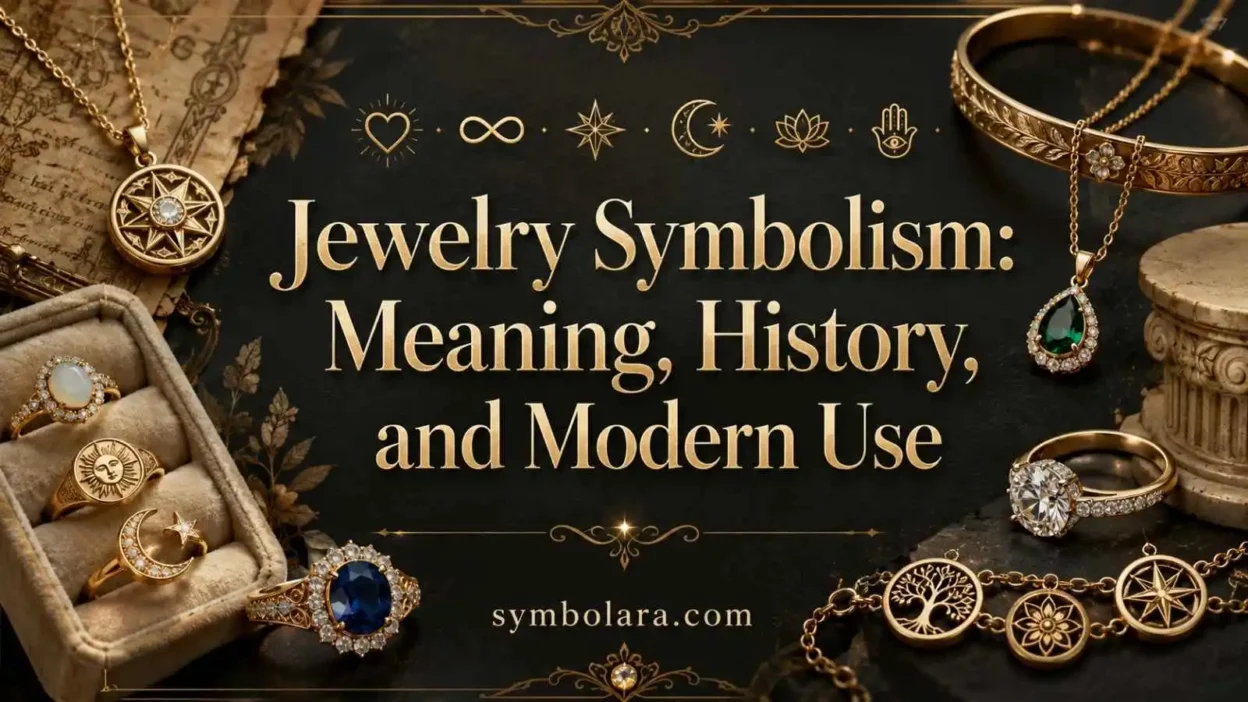
Jewelry Symbolism matters because jewelry is rarely just decoration. A ring, necklace, charm, bracelet, brooch, or pair of earrings can speak for love, grief, faith, family, status, identity, protection, beauty, and belonging without saying a word.
In the United States, jewelry often marks important life moments: engagements, weddings, graduations, anniversaries, military service, religious milestones, birthdays, and memorials. It can also be casual and personal, like a charm bracelet built over time, a birthstone necklace, a class ring, or a pendant chosen because it feels like “you.”
The meaning of jewelry depends on the piece, material, design, wearer, and setting. A diamond ring at a proposal, a cross necklace at church, a locket with a photo, and a friendship bracelet at summer camp all carry different messages, even though all are forms of adornment.
Quick Answer
Jewelry Symbolism commonly represents love, commitment, identity, memory, and personal expression in modern American culture. Historically, jewelry has also symbolized social rank, protection, spiritual belief, mourning, family lineage, and belonging across many cultures.
TL;DR
- Jewelry often marks love, identity, status, and memory.
- Rings usually symbolize commitment, promises, or belonging.
- Gemstones add color, birth, mood, and tradition.
- Americans use jewelry for milestones and self-expression.
- Mourning jewelry connects adornment with remembrance.
- Some symbols require cultural or religious respect.
What Jewelry Commonly Means in the United States
In modern American life, jewelry usually symbolizes one of four things: relationship, identity, achievement, or memory. Engagement rings and wedding bands signal romantic commitment. Class rings, military rings, fraternity and sorority pins, and championship rings connect a person to an institution or accomplishment. Lockets, heirlooms, memorial pendants, and inherited watches preserve emotional ties across generations.
Jewelry also communicates taste and personality. A minimalist gold chain may suggest restraint and polish, while layered necklaces, chunky rings, or bold earrings may express confidence, creativity, or trend awareness. These meanings are not fixed rules. They come from shared cultural habits, family traditions, marketing, fashion, and personal choice.
In the United States, jewelry is especially tied to milestones. People buy it for engagements, weddings, birthdays, graduations, Mother’s Day, Valentine’s Day, anniversaries, retirements, and religious ceremonies. This makes jewelry both personal and social: it belongs to the individual, but other people often understand what it represents.
Why Jewelry Became Symbolic in the First Place
Jewelry became symbolic because it sits on the body. Unlike a painting on a wall or a keepsake in a drawer, jewelry travels with the wearer. It is visible, touchable, and close to the skin. That makes it ideal for carrying messages about protection, loyalty, wealth, faith, grief, or identity.
Early adornments made from shell, bone, stone, teeth, feathers, metal, and beads likely did more than decorate. They could indicate group membership, age, social position, skill, trade routes, or spiritual belief. Over time, as metalsmithing and gem cutting became more refined, jewelry developed stronger associations with power, ritual, inheritance, and ceremony.
The symbolic force of jewelry also comes from durability. Gold does not tarnish easily. Diamonds are hard. Stones can survive for centuries. A ring or pendant can outlive the person who first wore it, which is why jewelry often becomes an heirloom. Its material survival makes emotional memory feel physically present.
Rings and the Symbolism of Promises
Rings are among the most symbolically loaded forms of jewelry in American culture. Their circular shape naturally suggests continuity, wholeness, and return. Because a ring has no visible beginning or ending, it has become associated with lasting promises, especially in marriage.
Engagement rings in the United States usually symbolize intention: a public sign that two people plan to marry. Wedding bands symbolize the vows themselves. Anniversary rings, purity rings, promise rings, class rings, and signet rings all expand the ring’s meaning beyond romance. They can mark loyalty, family, school pride, religious commitment, or personal discipline.
The hand and finger matter too. In American wedding custom, the left ring finger is strongly associated with marriage, though this is a cultural tradition rather than a biological fact. In other countries and religious traditions, wedding rings may be worn on the right hand, which shows that the symbolism of rings is meaningful but not universal.
Necklaces, Pendants, and What We Keep Close
Necklaces often symbolize what a person wants to keep near the heart. This is why pendants, lockets, crosses, medals, initials, birthstones, and protective charms are so emotionally direct. A necklace can be visible enough to communicate identity but intimate enough to feel private.
In the United States, common necklace symbols include religious pendants, zodiac signs, nameplates, initials, family birthstones, lockets, military dog tags, evil eye charms, heart pendants, and small tokens connected to travel or memory. Each one carries a different message. A heart pendant may signal affection, while a St. Christopher medal may express protection during travel. A nameplate necklace can communicate pride in personal identity, family, or cultural heritage.
The placement of a necklace gives it special emotional weight. It rests near the chest, moves with the body, and is easy to touch during moments of stress or reflection. That physical closeness is part of why necklaces often become comfort objects.
Bracelets, Charms, and Stories Built Over Time
Bracelets often symbolize connection, memory, and accumulation. A single bracelet may be decorative, but charm bracelets, friendship bracelets, medical bracelets, memorial bracelets, and awareness bracelets carry more specific meaning.
Charm bracelets are especially narrative. Each charm can represent a trip, hobby, relationship, birthday, school, child, pet, faith, or personal achievement. Over time, the bracelet becomes a wearable autobiography. Unlike a single symbolic pendant, a charm bracelet can grow as the person’s life changes.
Friendship bracelets carry a different kind of meaning. In American youth culture, they often symbolize loyalty, affection, shared time, or belonging within a friend group. Awareness bracelets, including colored silicone bands, use jewelry-like forms to signal support for causes, illnesses, communities, or memorial events. In these cases, the bracelet becomes both personal statement and public message.
Earrings, Brooches, Watches, and Other Personal Signals
Not all symbolic jewelry is tied to romance or religion. Earrings, brooches, cufflinks, watches, tie pins, anklets, and body piercings can also communicate style, identity, profession, or cultural belonging.
Earrings often frame the face, so they easily become part of a person’s visual identity. Studs can appear classic or understated. Hoops may carry associations with fashion, confidence, cultural pride, or generational style, depending on the wearer and context. Statement earrings can signal creativity, celebration, or social presence.
Brooches have an older public language. They can mark mourning, patriotism, office, affiliation, or artistic taste. In political and public life, brooches and pins sometimes function like quiet messages: a flag pin, ribbon pin, pearl brooch, or symbolic shape may communicate values without a speech.
Watches also carry symbolism. A luxury watch may signal status or craftsmanship. A family watch may represent inheritance. A practical watch may suggest discipline, punctuality, or professional identity. Even when phones tell time, watches remain meaningful because they combine function, taste, and personal history.
Gemstones and Color Meanings
Gemstones add another layer of symbolism because color shapes emotional interpretation. Americans often associate diamonds with engagement, pearls with elegance, rubies with passion, sapphires with loyalty, emeralds with renewal, and turquoise with protection or Southwestern style. These meanings come from a blend of ancient lore, religious tradition, royal fashion, birthstone systems, advertising, and personal association.
Birthstones are one of the most familiar gemstone traditions in the United States. A birthstone necklace or ring usually symbolizes birth month, individuality, family connection, or a birthday milestone. Mothers’ rings and family pendants often combine several birthstones to represent children or grandchildren.
Color psychology also influences modern jewelry choices. Blue stones can feel calm or trustworthy. Red stones feel bold or romantic. Green stones often suggest nature, luck, or renewal. Black stones may express mourning, elegance, mystery, or modern minimalism. These meanings are cultural impressions, not scientific rules, but they affect how jewelry is read.
| Jewelry Context | Meaning in the USA | Common Associations | Notes |
| Engagement ring | Promise to marry | Love, commitment, future plans | Often centered on diamonds or personal stones |
| Wedding band | Marriage vow | Continuity, partnership, fidelity | Usually worn daily as a public sign |
| Birthstone jewelry | Personal identity | Birth month, family, celebration | Popular for birthdays and family gifts |
| Memorial jewelry | Remembrance | Grief, love, continuing bonds | May include names, dates, ashes, or photos |
| Religious jewelry | Faith and devotion | Protection, belief, community | Should be worn with cultural respect |
| Statement jewelry | Self-expression | Confidence, creativity, style | Meaning depends heavily on context |
Gold, Silver, Pearls, Diamonds, and Material Symbolism
Materials matter because they carry cultural memory. Gold has long been associated with wealth, warmth, permanence, and honor. In American jewelry, yellow gold can feel traditional or vintage, while white gold and platinum often feel formal, bridal, or modern. Rose gold is commonly read as romantic, soft, or contemporary.
Silver often symbolizes clarity, simplicity, and approachability. It is widely used in everyday jewelry, religious medals, Southwestern jewelry, and artisan designs. Because silver is less expensive than gold, it can feel personal without appearing overly formal.
Pearls usually symbolize refinement, femininity, modesty, and grace in American culture. They are common in weddings, graduations, funerals, and professional dress. Their soft luster makes them feel less flashy than diamonds, which is why they often appear in settings where dignity matters.
Diamonds symbolize durability, brilliance, status, and romantic commitment. Their link to engagement rings is especially strong in the United States. In recent years, lab-grown diamonds have added a new symbolic layer: value-conscious choice, technological modernity, and ethical concern for some buyers. Natural diamonds still carry associations with rarity, tradition, and geological age.
Jewelry as Love, Commitment, and Family Memory
Jewelry is one of the most common American gift languages because it lasts. Flowers fade, dinners end, and cards are stored away, but a necklace, bracelet, ring, or watch can be worn for decades. This durability makes jewelry especially useful for expressing commitment.
Romantic jewelry usually says, “This relationship matters.” Family jewelry often says, “You belong to us” or “Remember where you came from.” A grandmother’s ring, a father’s watch, a mother’s pendant, or a sibling’s bracelet can become a portable family archive. The value may have little to do with price. A modest locket can mean more than a costly stone if it carries the right story.
This is why inherited jewelry can carry complex emotions. A single piece may create feelings of comfort, pride, grief, responsibility, or even disagreement among family members. Because jewelry preserves personal history in a small physical form, these objects can hold powerful memories and deep emotional connections across generations.
Jewelry Symbolism in Weddings and Special Occasions
Jewelry plays a major role in American celebrations because it helps people mark important moments. Weddings, anniversaries, graduations, and family events often include jewelry because these occasions focus on memory and connection.
Wedding jewelry carries some of the strongest symbolism. Engagement rings represent a future promise, while wedding bands represent commitment and partnership. Many couples also choose personalized engravings, unique gemstones, or family heirlooms to make their rings more meaningful.
Graduation jewelry, including class rings and personalized necklaces, often symbolizes achievement and transition. These pieces remind people of hard work, friendships, and important life stages.
Anniversary jewelry represents continued connection. Many people choose rings, bracelets, watches, or necklaces to celebrate years of shared experiences.
Jewelry given during special occasions becomes more than an accessory. It becomes a physical reminder of a meaningful moment and the relationship connected to it.
Mourning Jewelry and Symbols of Remembrance
Mourning jewelry shows how adornment can carry grief. In earlier European and American traditions, rings, brooches, lockets, and bracelets were sometimes made to commemorate the dead. They could include initials, dates, black enamel, hairwork, portraits, urn imagery, skulls, or inscriptions.
Victorian mourning jewelry is especially well known. After Queen Victoria mourned Prince Albert, mourning dress and memorial objects became highly formalized in Britain and influenced broader fashion. Black materials such as jet, onyx, enamel, and dark glass became associated with grief, restraint, and remembrance.
In the United States today, mourning jewelry is less governed by strict etiquette, but memorial pieces remain common. People may wear cremation jewelry, fingerprint pendants, lockets, handwriting necklaces, photo charms, or jewelry made from a loved one’s birthstone. The purpose is usually not display. It is closeness. The jewelry gives grief a physical place to rest.
Religious and Spiritual Jewelry
Religious jewelry carries meaning because it places belief on the body. In the United States, common examples include cross necklaces, crucifixes, Star of David pendants, saint medals, rosaries worn or carried, hamsa charms, evil eye jewelry, Om symbols, prayer beads, and other sacred or protective forms.
The meanings vary by tradition. A cross may symbolize Christian faith, sacrifice, salvation, comfort, or family heritage. A Star of David may express Jewish identity, solidarity, or religious belonging. A hamsa or evil eye charm may be worn as a protective symbol, though its meanings differ across Jewish, Muslim, Middle Eastern, North African, Mediterranean, and popular fashion contexts.
Respect matters. A sacred symbol worn as fashion can feel offensive when separated from its religious or cultural meaning. This does not mean symbols can never cross cultural boundaries, but it does mean wearers should understand what a symbol represents before turning it into an accessory.
Jewelry, Status, and Social Power
Jewelry has long signaled status because precious materials are rare, labor-intensive, and visible. Crowns, tiaras, signet rings, jeweled collars, ceremonial chains, and gemstone ornaments have historically marked rank, office, wealth, or authority. In everyday American life, status symbolism is usually subtler but still present.
A large diamond, luxury watch, designer bracelet, or recognizable brand logo can signal income, taste, access, or aspiration. Championship rings, military decorations, professional pins, and academic rings signal earned status rather than purchased status. Both forms rely on public recognition: the symbol works because other people understand it.
Modern Americans are divided about status jewelry. Some enjoy visible luxury. Others prefer understated pieces, vintage jewelry, handmade work, or heirlooms because they want meaning without obvious display. This shift has made personal storytelling as important as price.
Cross-Cultural Meanings and Global Influences
Jewelry symbolism changes across cultures, and American jewelry culture borrows from many sources. Irish Claddagh rings combine hands, heart, and crown to express friendship, love, and loyalty. South Asian wedding jewelry can symbolize prosperity, family blessing, beauty, and marital status. Native American jewelry traditions, including turquoise and silverwork in the Southwest, are tied to specific communities, artistry, land, trade, and cultural identity.
African beadwork, Mediterranean protective charms, Latin American religious medals, East Asian jade, Middle Eastern gold jewelry, and Indigenous adornment traditions have all influenced how Americans understand jewelry. These influences should not be flattened into one meaning. A symbol may be fashionable in one setting but sacred, ancestral, or ceremonial in another.
The safest approach is to read jewelry in context. Who made it? Who wears it? What tradition does it come from? Is it a casual design, a family object, a sacred sign, or a commercial imitation? Context prevents oversimplification.
Jewelry Symbolism in Different Cultures and Traditions
Jewelry symbolism changes greatly from one culture to another because people use ornaments to express beliefs, relationships, history, and social identity. The same piece of jewelry can carry different meanings depending on where it comes from and how people use it.
In Indian traditions, jewelry often represents family connection, celebration, prosperity, and important life transitions. Wedding jewelry, gold ornaments, and gemstones may symbolize blessings, beauty, and cultural heritage. Many pieces are passed from one generation to another, creating a connection between family history and personal identity.
In Chinese culture, jade jewelry has long been connected with beauty, virtue, protection, and harmony. Jade pendants, bracelets, and carvings often carry meanings related to balance, good fortune, and family tradition.
In Native American communities, jewelry can represent ancestry, craftsmanship, spirituality, land, and community identity. Turquoise and silver jewelry from the Southwest has deep cultural importance, but meanings vary between different Indigenous nations and artists.
European traditions have also shaped modern jewelry symbolism. Claddagh rings, signet rings, medals, and heirloom pieces often represent loyalty, family history, social connections, and personal achievements.
Today, American jewelry culture combines many global influences. People often choose pieces because they connect with a story, heritage, memory, or personal value rather than only because of appearance.
Jewelry in Tattoos, Fashion, Decor, and Digital Culture
Jewelry symbolism now extends beyond actual jewelry. Tattoo designs often imitate rings, rosaries, chains, pendants, pearls, charms, crowns, diamonds, and lockets. A tattooed ring may symbolize permanent commitment. A diamond tattoo may represent endurance or self-worth. A rosary tattoo may express faith, memory, or cultural identity, depending on the wearer.
Fashion photography and pop culture also use jewelry as shorthand. Heavy chains can suggest power, rebellion, wealth, or street style. Pearls can suggest elegance, tradition, irony, or gender-fluid fashion, depending on styling. Crowns and gemstones appear in music videos, album art, and social media as symbols of success, self-respect, and visibility.
Digital culture has changed jewelry symbolism too. Engagement ring photos, “permanent jewelry” videos, charm necklace trends, and heirloom redesigns circulate widely online. Jewelry is no longer only worn in person; it is photographed, posted, interpreted, compared, and turned into part of a public identity.
Emotional and Psychological Meaning
Jewelry feels meaningful because it connects body, memory, and identity. People touch a wedding ring when thinking. They hold a pendant during stress. They wear a bracelet before an important event because it reminds them of someone. These small gestures show how jewelry can become emotionally regulating.
Psychologically, jewelry can serve as a cue. It can remind the wearer to feel confident, protected, loved, disciplined, stylish, connected, or brave. A person may wear a parent’s ring to feel grounded, a religious medal to feel guided, or a bold necklace to feel more visible.
Jewelry also helps people manage transition. New jewelry can mark a new phase after graduation, divorce, recovery, career change, parenthood, loss, or personal reinvention. In that sense, jewelry does not only represent who someone is. It can represent who they are becoming.
Common Misunderstandings and Misuse
One common misunderstanding is that jewelry symbols have one universal meaning. They do not. A snake ring might symbolize danger to one person, healing to another, transformation to another, and vintage style to someone else. A black stone may suggest mourning, elegance, protection, or personal taste depending on the context.
Another issue is cultural misuse. Sacred, Indigenous, or culturally specific jewelry can be copied and sold without respect for its origin. This is especially sensitive when designs are taken from communities that have experienced discrimination or exploitation. Wearing a symbol without understanding it can turn a meaningful object into costume.
There is also confusion around gemstone “powers.” Many stones have long traditions of lore, protection, luck, or healing. These beliefs can be culturally meaningful, but they should not be treated as medical fact. A gemstone may comfort someone, mark an intention, or carry inherited meaning without needing exaggerated claims.
How to Choose Jewelry With Personal Meaning
Choosing meaningful jewelry starts with understanding the story behind the piece. The most valuable jewelry is not always the most expensive. A simple item with personal significance can become more meaningful than a luxury piece.
Consider the reason behind the jewelry. Is it for love, remembrance, achievement, faith, friendship, or personal growth? The purpose often determines the best symbol.
Materials and colors can also influence meaning. Gold may feel traditional and lasting, silver may feel simple and modern, and gemstones may connect with birth months, family stories, or personal preferences.
Personalization adds another layer of symbolism. Engraved names, dates, initials, fingerprints, coordinates, and custom designs can turn ordinary jewelry into a personal keepsake.
The best symbolic jewelry reflects the wearer’s story. A meaningful piece should feel authentic, comfortable, and connected to the person who receives or wears it.
How Jewelry Meaning Has Changed Over Time
Jewelry has moved from survival-era adornment to ritual object, status marker, romantic token, fashion accessory, identity signal, and personal archive. Its meanings have expanded rather than disappeared.
In earlier societies, jewelry often communicated rank, wealth, group identity, and spiritual protection. In modern America, those meanings still exist, but individual choice is more prominent. A person may wear fine jewelry, handmade jewelry, thrifted jewelry, body jewelry, inherited jewelry, or symbolic jewelry to shape how they feel and how they are seen.
The biggest change is personalization. Americans increasingly value jewelry that tells a specific story: initials, coordinates, fingerprints, birthstones, custom engraving, mixed metals, redesigned heirlooms, permanent bracelets, or nontraditional engagement rings. The symbol is no longer only the object. It is the personal meaning attached to it.
How to Interpret a Piece of Jewelry
To understand what a piece of jewelry symbolizes, start with the object itself. Is it a ring, necklace, bracelet, brooch, watch, charm, or earring? The form gives the first clue. Rings often suggest promises. Necklaces often suggest closeness. Charms often suggest memory. Brooches and pins often suggest public identity.
Next, look at material and imagery. Gold, silver, pearl, diamond, turquoise, black enamel, hearts, crosses, hands, eyes, flowers, animals, initials, and dates all carry different associations. Then consider the setting. Jewelry worn at a wedding, funeral, graduation, protest, church service, or family gathering may mean something different from the same piece worn casually.
Finally, remember that the wearer’s meaning comes first. Cultural symbolism can guide interpretation, but it cannot replace personal history. The most accurate question is not only “What does this symbol mean?” but also “What does it mean to the person wearing it?”
What Do Different Jewelry Symbols Mean?
Jewelry designs often communicate ideas through shapes, images, and patterns. While personal meaning always matters most, many symbols have common associations in American culture.
A heart symbol usually represents love, affection, romance, and emotional connection. Heart jewelry is common in gifts between partners, family members, and close friends.
A butterfly design often represents transformation, growth, freedom, and personal change. Many people choose butterfly jewelry during periods of new beginnings.
A flower symbol can represent beauty, growth, remembrance, or connection with nature. Different flowers may carry different associations, such as roses for love or lilies for remembrance.
An infinity symbol often represents endless connection, lasting friendship, or eternal love. It appears frequently in necklaces, bracelets, and promise jewelry.
Animal jewelry can express personality traits, admiration, or cultural meanings. A lion may suggest courage, an owl may represent wisdom, and a butterfly may represent change.
The meaning of a jewelry symbol depends on both tradition and personal experience. A design that represents one idea publicly may hold a completely different private meaning for the person wearing it.
FAQs
What does jewelry symbolize most often?
Jewelry most often symbolizes love, identity, memory, beauty, status, or belonging. The exact meaning depends on the type of jewelry, the material, the occasion, and the wearer’s personal story.
What does jewelry mean as a gift?
As a gift, jewelry usually means lasting affection, recognition, commitment, or celebration. Because jewelry can be worn for years, it often feels more permanent than flowers, cards, or other short-lived gifts.
What does jewelry symbolize in dreams?
In dream interpretation, jewelry is often read as a sign of self-worth, desire, commitment, inheritance, or hidden value. The meaning depends on whether the jewelry is found, lost, received, broken, stolen, or worn proudly.
What does a jewelry tattoo symbolize?
A jewelry tattoo can symbolize permanent commitment, protection, faith, memory, beauty, or personal identity. Ring tattoos, rosary tattoos, charm tattoos, and necklace-like designs often borrow meaning from the jewelry they imitate.
Is jewelry symbolism religious?
Jewelry symbolism can be religious, but it is not always. Crosses, saint medals, Stars of David, prayer beads, hamsas, and other sacred symbols carry religious or spiritual meaning, while engagement rings, birthstones, lockets, and fashion jewelry may be personal or cultural instead.
Can jewelry have negative symbolism?
Yes, jewelry can have negative symbolism when it is connected to vanity, control, grief, exclusion, cultural appropriation, or unethical sourcing. A piece may also carry painful personal meaning if it belonged to a difficult relationship or family history.
Why do people wear symbolic jewelry today?
People wear symbolic jewelry today to express who they are, remember loved ones, mark milestones, show faith, feel protected, or carry a private reminder in public. Modern jewelry often blends style with personal storytelling.
What jewelry symbolizes new beginnings?
Jewelry with butterflies, flowers, circles, or birthstones is often associated with growth, change, renewal, and fresh starts. Many people choose these symbols during major life transitions.
Conclusion
Jewelry is symbolic because it turns meaning into something wearable. It can mark love, grief, faith, family, achievement, protection, status, and self-expression while remaining small enough to fit on a hand, wrist, neck, ear, or lapel.
In modern American culture, Jewelry Symbolism is most visible in engagement rings, wedding bands, birthstones, memorial pieces, religious pendants, charm bracelets, heirlooms, and personalized designs. Yet the strongest meaning often comes from the wearer’s own story, not from tradition alone.
A piece of jewelry may sparkle, but its real importance is usually quieter: it helps people remember, declare, belong, and carry meaning with them.
[…] symbols in tattoos and jewelry often have meanings that differ from religious or historical readings. A skull tattoo may mean survival after grief. A […]
[…] combine softness with strength. They look fragile, but they help birds survive. That makes them a meaningful symbol for people who feel gentle but […]
[…] main caution is simple: shoes can be symbolic without having one secret meaning. Context matters more than […]