
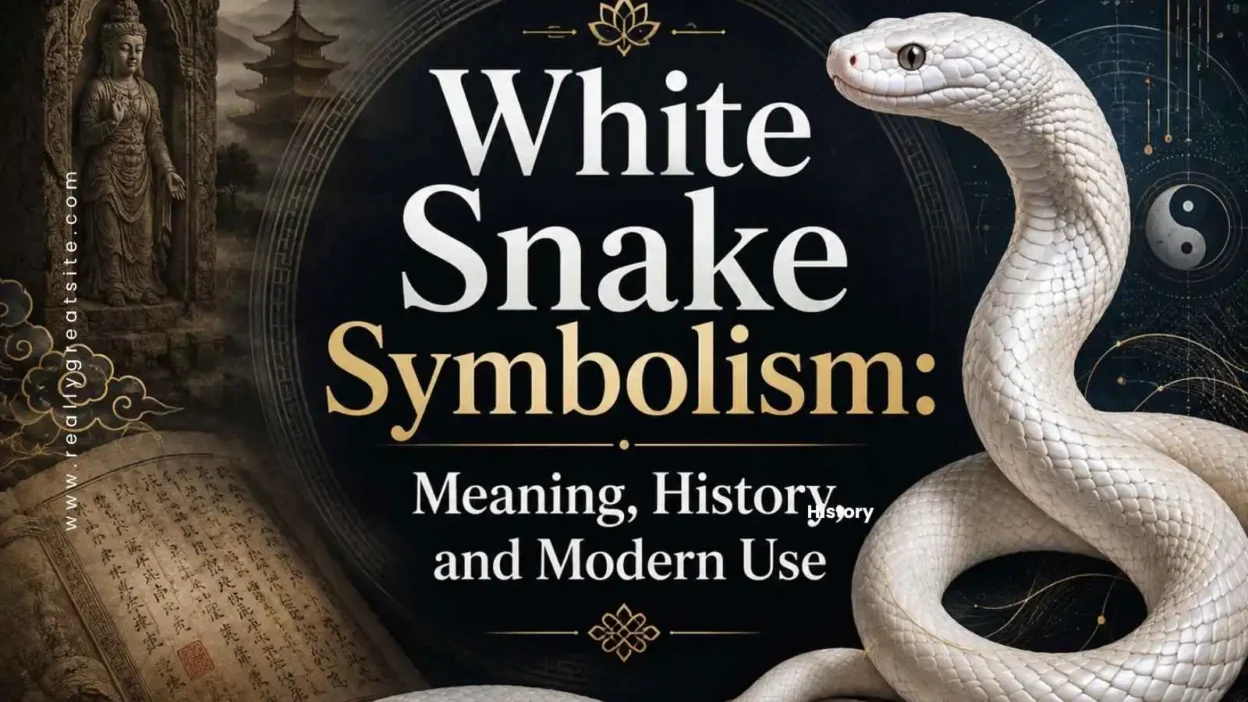
White snake symbolism represents a fascinating combination of transformation, healing, mystery, and renewal. Across cultures, the image of a white snake has carried different meanings, from spiritual protection and wisdom to danger and deception. In modern American culture, people often view the white snake as a symbol connected with personal change, intuition, and overcoming challenges.
The meaning of this symbol depends greatly on cultural background and personal interpretation. A white snake appearing in artwork, tattoos, stories, or dreams may represent growth and adaptation, while older traditions may connect it with sacred creatures, supernatural beings, or moral lessons.
Understanding the symbolism behind a white snake helps explain why this image continues to appear in mythology, fashion, decorative art, and personal expression. Its meaning is not fixed; instead, it has evolved as different societies have given it new interpretations.
Quick Answer
White snake symbolism commonly represents transformation, healing, and personal renewal in modern American culture, especially in tattoos, art, and spiritual-inspired designs. Historically, white snakes have also been associated with wisdom, protection, sacred power, and supernatural beliefs in various traditions.
TL;DR
- White snakes symbolize transformation and personal growth.
- Ancient cultures connected them with wisdom and sacred forces.
- Americans often view them as renewal symbols.
- Snake imagery appears widely in tattoos and art.
- Meanings change across cultures and traditions.
What a White Snake Represents Today
In contemporary American culture, a white snake often represents change, resilience, and a new beginning. The snake itself has long been connected with transformation because it sheds its skin and appears renewed. Adding the color white introduces additional associations with purity, peace, clarity, and healing.
Many people choose white snake imagery because it combines two contrasting ideas: the snake’s association with survival and adaptation, and the color white’s connection with innocence or spiritual cleanliness.
The symbol may appear in personal artwork, tattoos, jewelry designs, and fantasy-inspired media. For many people, it represents leaving behind an older identity and embracing a different stage of life.
Ancient Roots and Early Symbolism
The snake has been an important symbol in human cultures for thousands of years. Its ability to shed skin, move silently, and survive in different environments made it a natural symbol of renewal and hidden knowledge.
White snakes developed additional meanings because unusual-colored animals were often considered special or rare. In many traditional societies, rare creatures were connected with supernatural qualities or important messages.
Ancient interpretations varied widely. Some communities respected snakes as protectors or wise beings, while others viewed them as dangerous creatures connected with temptation or chaos.
The white snake’s meaning was shaped not only by the animal itself but also by beliefs about color, nature, and the unknown.
White Snake Symbolism in American Culture
In the United States, white snake imagery does not have one single accepted meaning. Instead, Americans often interpret it through personal beliefs, popular culture, and artistic expression.
Many people associate white snakes with:
| Context | Meaning in the USA | Common Associations | Notes |
| Tattoos | Transformation and strength | Change, survival, identity | Often chosen after major life changes |
| Art and Decor | Mystery and elegance | Nature, fantasy, beauty | Used for visual impact |
| Spiritual Designs | Renewal and intuition | Healing, balance, reflection | Personal beliefs influence meaning |
| Stories and Media | Power or danger | Fantasy, magic, symbolism | Meaning depends on the character |
Unlike some traditional symbols with widely recognized American meanings, the white snake is usually interpreted individually. A person may choose it because it represents overcoming hardship, embracing change, or exploring hidden parts of themselves.
The Connection Between Snakes and Transformation
The strongest symbolic association of snakes comes from their natural process of shedding skin. This physical change has made snakes a common representation of renewal and rebirth.
A white snake can emphasize this idea by suggesting a cleaner transition or a fresh start. Someone recovering from a difficult experience might connect with the image because it reflects the idea of becoming a different version of oneself.
This symbolism appears frequently in modern tattoos. People often select snake designs after personal milestones, such as ending a difficult period, starting a new chapter, or developing a stronger sense of identity.
The transformation meaning does not suggest becoming a completely different person. Instead, it often represents growth while carrying lessons from previous experiences.
Spiritual and Religious Interpretations
White snakes appear in several religious and spiritual traditions, but their meanings are not identical.
In some Asian traditions, white snakes are connected with spiritual beings, wisdom, and supernatural stories. The famous Chinese legend of the White Snake describes a white snake spirit who transforms into a woman and explores themes of love, devotion, sacrifice, and human experience.
In some spiritual interpretations, white represents purity and higher awareness, while the snake represents knowledge and transformation. Together, the image may symbolize spiritual development or hidden wisdom.
However, religious interpretations differ. In some Western Christian traditions, snakes are often associated with temptation because of the biblical story of the serpent in the Garden of Eden. A white snake may therefore be interpreted differently depending on personal beliefs.
White Snake Meaning in Mythology and Folklore
Folklore around white snakes often presents them as unusual creatures with special abilities. Their rare appearance made them common characters in legends and supernatural stories.
The White Snake legend from Chinese folklore is one of the best-known examples. The story presents the white snake as a complex figure rather than simply good or evil. It explores themes such as love, loyalty, sacrifice, and the relationship between humans and supernatural beings.
European folklore also contains stories about magical snakes and serpentine creatures. In these traditions, snakes could represent hidden knowledge, guardianship, or danger.
These stories show that snake symbolism has always included multiple interpretations. The white snake often sits between opposing ideas: protection and threat, wisdom and temptation, nature and mystery.
White Snake Symbolism in Chinese Culture and the White Snake Legend
Chinese culture has one of the most recognized traditions connected with white snake symbolism through the famous White Snake legend. The story, known as the tale of the White Snake, presents the creature as a complex figure connected with love, transformation, loyalty, and the relationship between humans and supernatural beings.
In this tradition, the white snake is not simply viewed as dangerous. Instead, it represents a powerful being capable of learning, changing, and experiencing human emotions. The story explores themes such as devotion, sacrifice, and the challenges between different worlds.
The legend has influenced Chinese literature, opera, television, and modern entertainment. Its popularity shows how a symbol can develop deeper meanings beyond fear or mystery.
For many people familiar with Chinese traditions, the white snake represents transformation and emotional complexity. It shows that symbols can contain both positive and challenging meanings depending on the story and cultural background.
Psychological Meaning of White Snake Imagery
From a psychological perspective, symbols often reflect personal emotions and experiences. A white snake may represent a person’s relationship with change, uncertainty, or self-discovery.
Because snakes are often associated with adaptation, people may use the image to express their ability to survive difficult situations. The color white can add feelings of calmness, balance, or emotional renewal.
Some people are naturally drawn to snake imagery because it represents qualities they admire, such as independence, intelligence, patience, or resilience.
The interpretation depends on the individual. A symbol that feels empowering to one person may feel unsettling to another because snakes carry different emotional associations.
White Snake Dream Meaning and Common Interpretations
Dreams about white snakes often attract attention because the image combines two powerful symbols: the snake and the color white. In many modern interpretations, a white snake dream may represent change, self-discovery, healing, or a situation that requires careful attention.
A calm white snake in a dream may suggest personal growth, emotional balance, or a new phase of life. Some people interpret it as a reminder to trust their instincts and recognize opportunities for positive change.
A threatening white snake may reflect uncertainty, hidden concerns, or feelings about a situation that seems unclear. Because snakes can represent both wisdom and danger, the meaning often depends on the emotions experienced during the dream.
Common interpretations include:
| Dream ScenarioPossible Symbolic Meaning | |
|---|---|
| Seeing a white snake | Personal change or new awareness |
| A peaceful white snake | Healing, wisdom, or emotional balance |
| A white snake attacking | Fear, conflict, or hidden worries |
| Holding a white snake | Confidence and control over change |
| A white snake shedding skin | Renewal and personal transformation |
Dream symbolism is personal rather than universal. A white snake dream may reflect individual experiences, memories, fears, or hopes rather than a fixed message.
Why People Choose White Snake Tattoos
White snake tattoos have become popular because they combine visual beauty with personal meaning. The design can be elegant, dramatic, or symbolic depending on the style.
Common tattoo meanings include:
- Personal transformation after hardship
- Strength and emotional survival
- Wisdom gained through experience
- Independence and confidence
- Protection or spiritual connection
Artists may combine white snakes with flowers, moons, crystals, or other natural elements to create a specific message. For example, a white snake with flowers may emphasize renewal and beauty, while a white snake with darker imagery may highlight mystery or overcoming challenges.
Tattoo meaning is ultimately personal. The same design may represent completely different experiences for different people.
White Snake Symbolism in Tattoos: Designs and Personal Meanings
White snake tattoos often attract people because they combine a striking visual design with strong symbolic possibilities. The image can represent personal experiences, inner strength, or important changes in someone’s life.
Many people choose white snake tattoos to express:
- A fresh start after a difficult period
- Personal growth and emotional healing
- Wisdom gained from life experiences
- Independence and confidence
- Adaptation during times of change
The surrounding design elements can also influence the meaning. A white snake with flowers may highlight beauty, renewal, and balance. A white snake with a moon or celestial elements may suggest mystery, intuition, or reflection.
Unlike traditional symbols with one accepted meaning, tattoo symbolism is highly personal. The same white snake design can represent different stories depending on the person wearing it.
White Snake Symbolism in Fashion, Design, and Decor
Modern design often uses snake imagery because it creates a balance between elegance and boldness. A white snake design can appear sophisticated because the color creates a clean, minimal appearance.
In home decor, white snake patterns may be used in artwork, sculptures, or decorative objects. Designers often use the image because it connects natural forms with fantasy or luxury aesthetics.
Fashion also uses snake imagery to communicate confidence and individuality. The symbol can suggest independence, creativity, or a connection with nature.
These modern uses usually focus more on visual appeal and personal style than traditional symbolism.
Positive and Negative Meanings Associated With White Snakes
White snakes can represent both positive and negative ideas depending on the cultural setting.
| Positive Interpretations | Negative Interpretations |
| Healing and renewal | Deception or hidden danger |
| Wisdom and knowledge | Fear of the unknown |
| Protection | Temptation |
| Personal growth | Uncertainty |
The contrast exists because snakes have always carried mixed symbolism. They can be seen as creatures of survival and intelligence, but also as animals that people traditionally feared.
A balanced interpretation recognizes that symbols are shaped by context. The image itself does not have one universal message.
White Snake Symbolism vs Other Snake Colors
Snake symbolism changes when different colors are used. The color often adds another layer of meaning to the animal’s traditional associations.
| Snake Color | Common Symbolic Associations |
|---|---|
| White Snake | Renewal, wisdom, healing, transformation |
| Black Snake | Mystery, protection, hidden power, fear |
| Green Snake | Nature, growth, balance, renewal |
| Red Snake | Passion, energy, danger, strong emotions |
| Golden Snake | Wealth, success, power, prosperity |
These meanings are not universal rules. Cultural traditions, personal beliefs, and artistic choices all influence interpretation.
The white snake stands apart because it often combines the snake’s connection with change and survival with the color white’s associations with clarity, peace, and new beginnings.
Common Misunderstandings About White Snake Symbolism
One common misunderstanding is that every white snake represents the same spiritual meaning. In reality, interpretations differ significantly across cultures and individuals.
Another misconception is that snake symbols are always negative. While some traditions associate snakes with danger, many others connect them with healing, wisdom, and renewal.
Modern internet discussions sometimes simplify symbols into fixed meanings. However, symbolism is usually more complex because it develops through history, storytelling, religion, and personal experience.
Understanding the background of a symbol helps prevent oversimplified interpretations.
How White Snake Symbolism Has Changed Over Time
The meaning of the white snake has changed as societies changed. Earlier traditions often focused on supernatural beliefs, sacred stories, and connections between humans and nature.
Modern interpretations tend to emphasize personal identity, emotional growth, and artistic expression. A person today may choose a white snake image not because of an ancient belief but because it represents their own journey.
This shift shows how symbols remain relevant by adapting to new cultural environments. The white snake continues to carry older associations while gaining new personal meanings.
FAQs
A white snake may symbolize spiritual growth, renewal, wisdom, and transformation. However, spiritual interpretations vary depending on cultural and religious beliefs.
A white snake tattoo often represents personal change, resilience, healing, or a new beginning. Many people choose it to mark an important life transition.
A white snake can represent both positive and negative ideas. Some traditions view it as a symbol of wisdom and protection, while others connect snakes with danger or temptation.
In Chinese folklore, the white snake is connected with the White Snake legend, which explores themes of love, sacrifice, transformation, and supernatural identity.
Snakes are connected with transformation because they shed their skin and appear renewed. This natural process inspired many cultures to associate them with rebirth and change.
No. The meaning changes across cultures, religions, and personal experiences. A white snake may represent different ideas depending on the context.
White snakes were often considered unusual because their color made them rare in nature. Many cultures connected rare animals with mystery, spiritual importance, or powerful stories.
Conclusion
White snake symbolism reflects a combination of transformation, renewal, wisdom, and mystery. In modern American culture, people often use the image to represent personal growth, resilience, and change, while older traditions connect it with sacred stories and supernatural beliefs.
The meaning of a white snake depends on the person, culture, and situation where the symbol appears. Whether used in tattoos, artwork, fashion, or storytelling, the image continues to represent the human desire to adapt and evolve.
White Snake Symbolism remains meaningful because it connects an ancient natural image with modern ideas about identity, healing, and personal transformation.

[…] egret’s white plumage is central to its meaning. In American visual culture, white often suggests cleanliness, peace, innocence, simplicity, or a […]
[…] White smoke often symbolizes resolution, announcement, cleansing, or spiritual clarity. In Catholic conclave imagery, it signals that a new pope has been chosen. […]