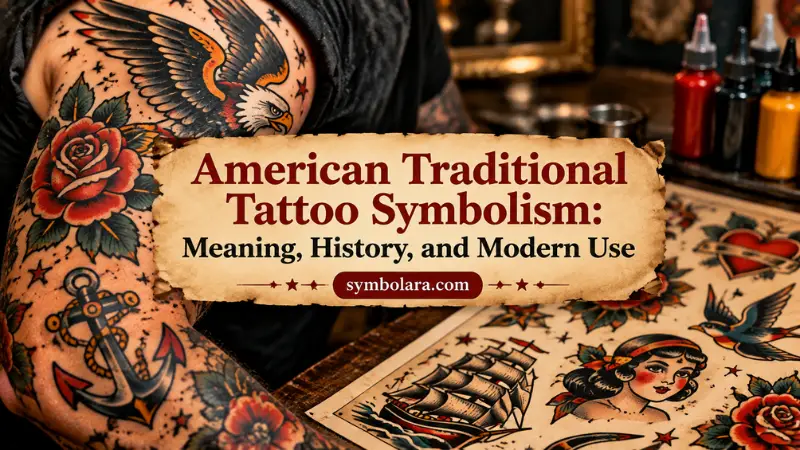
American traditional tattoos are known for bold outlines, limited colors, and recognizable images such as roses, anchors, eagles, ships, daggers, hearts, and swallows. These designs developed from early 20th-century tattoo culture in the United States and became closely linked with sailors, workers, military members, and people expressing personal identity.
People often search for american traditional tattoo symbolism because these tattoos are more than decorative artwork. Each image carries common meanings shaped by history, personal experiences, and cultural traditions. Today, people choose these designs to represent loyalty, love, courage, independence, memories, or important life events.
Modern tattoo artists continue using these classic designs because their clear shapes remain easy to recognize and adapt. From traditional tattoo shops to contemporary fashion and social media, these images still appear as a way for people to tell personal stories through body art.
Quick Answer
American traditional tattoo symbolism usually represents personal values such as loyalty, love, freedom, strength, remembrance, and life experiences. These meanings developed from early American tattoo culture, especially among sailors, soldiers, and working communities during the late 1800s and early 1900s.
TL;DR
- Bold lines and simple colors define traditional tattoo style.
- Sailors helped popularize many classic tattoo designs.
- Roses often represent love, beauty, or remembrance.
- Anchors commonly suggest stability and commitment.
- Eagles became linked with American identity and freedom.
- Modern artists adapt old designs for personal stories.
What Makes an American Traditional Tattoo Easy to Recognize?
American traditional tattoos have a distinct visual style that separates them from many other tattoo forms. The designs usually feature thick black outlines, solid color areas, and simple shading rather than realistic details.
Common colors include red, yellow, green, blue, and black. Artists often avoid complex gradients because traditional tattooing developed around techniques and equipment that favored strong shapes that remained clear over time.
Popular images include:
- Roses with green leaves and red petals
- Anchors with ropes or chains
- Swallows flying with open wings
- Ships crossing waves
- Eagles with spread wings
- Daggers, hearts, and banners
- Skulls and flames
The placement of these tattoos can also affect their meaning. A small rose on the wrist may represent personal affection, while a large eagle across the chest may express pride, independence, or connection to national imagery.
Why People Choose These Tattoos for Personal Meaning
Many people choose traditional tattoo designs because the images communicate ideas quickly. A viewer can often recognize the subject without needing an explanation, which gives these tattoos a direct visual language.
A sailor might choose an anchor because it connects with the sea or a desire for stability. Someone might choose a rose to remember a loved one or represent romance. A person with a dagger tattoo may connect it with overcoming difficulties or personal protection.
The meaning is not fixed. A tattoo’s interpretation depends on the person wearing it, their experiences, and the story behind the design.
Traditional tattoo culture also values permanence. Because tattoos remain on the body, many people select symbols connected to important memories, relationships, achievements, or personal beliefs.
How American Traditional Tattoo Style Began
The roots of American traditional tattooing connect to maritime culture and international tattoo traditions. Sailors traveling across oceans encountered tattoo practices in places such as Polynesia and Southeast Asia, where body marking had long cultural histories.
During the late 19th and early 20th centuries, tattooing became more visible in American port cities. Sailors often received tattoos during their travels or at tattoo shops near naval bases and shipping areas.
One major figure in American tattoo history was Norman Collins, who worked in Honolulu during the mid-20th century. His designs helped shape many features associated with modern American traditional tattooing, including bold lines and nautical imagery.
Other early tattoo artists also contributed to the style’s development. Because many tattooers learned through apprenticeships, designs were passed between generations and gradually became part of a shared visual tradition.
The Role of Sailors, Soldiers, and Working Communities
American traditional tattoos became strongly associated with sailors and military communities because tattoos often marked experiences connected with travel, service, and personal milestones.
During the early 1900s, sailors commonly received tattoos representing places they visited, ships they served on, or hopes for safe journeys. Swallows, for example, became associated with sailors because the bird was believed to represent travel and returning home.
Military members also used tattoos to express loyalty, remembrance, and connections to their units or country. Symbols such as eagles, flags, and patriotic imagery became common choices.
Working-class communities also helped shape traditional tattoo culture. For many decades, tattoos existed outside mainstream fashion and were often connected with groups whose jobs involved physical labor, travel, or risk.
Common Symbols and Their Meanings in American Culture
Different traditional tattoo images developed commonly recognized meanings. However, these meanings are not strict rules. People often change or personalize them.
| Context | Meaning in USA | Common Associations | Notes |
| Sailor tattoos | Travel and experience | Anchors, ships, swallows | Connected with maritime history |
| Memorial tattoos | Love and remembrance | Hearts, roses, dates | Often created for loved ones |
| Military designs | Service and loyalty | Eagles, flags, military symbols | Personal meanings vary widely |
| Personal identity | Individual values | Daggers, animals, banners | Often adapted by modern artists |
Why Roses Became One of the Most Popular Traditional Tattoo Designs
The rose is one of the most recognizable images in American traditional tattooing. Its meaning often connects with love, beauty, relationships, and memory.
Sailors frequently chose roses because the flower represented people and places they left behind. A rose tattoo could remind someone of a partner, family member, or home while they traveled.
The design also worked well with traditional tattoo techniques. The flower’s petals, leaves, and strong color contrast created a clear image that remained recognizable.
Today, rose tattoos appear in many styles, but the traditional rose remains popular because it combines simple artwork with personal meaning.
Why Anchors Represent Stability and Commitment
Anchor tattoos are among the oldest American traditional designs. Their connection with sailors made them symbols of the sea, travel, and returning home.
Over time, the anchor gained broader meanings. Many people now associate it with stability, loyalty, and staying grounded during difficult periods.
Some people combine anchors with other images, such as roses, names, or banners, to create a more personal message. For example, an anchor with a loved one’s name may represent a relationship that provides support.
The Meaning Behind Eagles, Flags, and Patriotic Images
Eagles became common in American traditional tattoos because the bird appears frequently in American national imagery. The eagle has long been used in government symbols, military designs, and public art.
In tattoos, an eagle may represent freedom, pride, courage, or connection to the United States. However, the meaning depends on the individual. Some people choose eagle designs for personal reasons unrelated to politics or national identity.
Flags and patriotic designs also appear in traditional tattooing. They may represent family history, military service, personal memories, or cultural connection.
How Different Cultures Influenced American Traditional Tattoo Designs
American traditional tattooing developed inside the United States, but its visual language was shaped by global tattoo traditions. Sailors played an important role because their travels introduced them to different forms of body art.
Polynesian tattoo practices influenced many Western tattoo traditions through encounters between sailors and Pacific Island communities. Polynesian tattoos often carried family, social, and cultural meanings that were different from the decorative approach later used in many American designs.
Japanese tattoo art also influenced American tattoo artists. During the late 19th and early 20th centuries, some Western tattooers admired Japanese techniques, including detailed composition, storytelling, and careful use of imagery. American traditional artists adapted certain ideas while creating their own recognizable style.
These influences do not mean American traditional tattoos have the same meanings as tattoos from other cultures. Each tradition developed within its own social setting, and symbols can carry different messages depending on where and how they are used.
The Emotional Meaning Behind Wearing Traditional Tattoos
For many people, tattoos function as personal reminders rather than simple decorations. A traditional design can represent a memory, relationship, achievement, challenge, or personal value.
A person with a swallow tattoo may connect it with travel, returning home, or a major life change. Someone with a heart tattoo may use it to honor a relationship or remember someone important.
The visible nature of tattoos also affects their meaning. Choosing to permanently place artwork on the body can represent a decision to keep a personal story close.
At the same time, not every traditional tattoo has a serious personal meaning. Some people choose these designs because they appreciate the artwork, history, or visual style.
How American Traditional Tattoos Are Used Today
American traditional tattoos remain common in modern tattoo shops, but their audience has expanded. They are no longer limited to sailors, soldiers, or specific communities.
Today, people use these designs in many ways:
- Personal tattoos connected to life events
- Fashion statements and artistic choices
- Memorial designs for loved ones
- Matching tattoos between friends or family members
- Creative combinations of traditional and modern styles
Many contemporary tattoo artists combine traditional elements with newer techniques. A classic rose may appear with realistic shading, unusual colors, or modern compositions while still keeping the bold outline style.
Social media has also increased interest in traditional tattoo art. Artists share their work globally, allowing people to discover classic designs and new interpretations.
Traditional Tattoos in Fashion, Media, and Popular Culture
Traditional tattoo imagery appears frequently in clothing, artwork, advertising, and entertainment. The style has become recognizable beyond tattoo communities.
Movies, television shows, and music scenes have often used traditional tattoo imagery to represent characters connected with rebellion, adventure, travel, or independence. However, these portrayals sometimes simplify the actual history of tattoo culture.
Fashion brands and artists also use traditional tattoo-inspired designs because the bold artwork works well on clothing, posters, and digital graphics.
The popularity of these images has helped preserve the style while also changing how people view tattoos. Many designs that were once associated with small communities are now part of mainstream visual culture.
Common Misunderstandings About Traditional Tattoo Symbolism
One common misunderstanding is that every traditional tattoo has one universal meaning. In reality, meanings change depending on the person, location, and time period.
For example, a dagger tattoo may represent protection, conflict, overcoming hardship, or simply appreciation for the design. The image alone does not reveal the wearer’s full story.
Another misunderstanding is that traditional tattoos belong only to sailors or older generations. While sailors played an important role in the style’s development, people from many backgrounds now choose these designs.
Some critics have also confused historical tattoo symbols with modern uses of similar images. A design’s original meaning and a person’s current reason for choosing it may not always be the same.
How American Traditional Tattoo Meaning Changed Over Generations
The meaning of traditional tattoos has shifted as American society changed. In the early 1900s, many tattoos were connected with travel, military life, and working communities.
By the middle of the 20th century, tattoo culture became associated with different groups, including motorcycle communities and counterculture movements. These connections influenced public opinions about tattoos.
Later, tattoos became more accepted in workplaces, media, and everyday fashion. Younger generations often view traditional designs as a combination of historical artwork and personal expression.
The symbols themselves remain familiar, but the reasons people choose them continue to change. A modern person may select a traditional design for artistic appreciation, family memory, cultural connection, or personal identity.
Why American Traditional Tattoos Still Matter in Modern Culture
American traditional tattoos continue to attract people because they combine clear artwork with flexible meanings. A rose, anchor, eagle, or ship can connect someone with history while still representing a personal story.
The style also shows how visual traditions survive through adaptation. Tattoo artists continue teaching classic techniques while creating new designs for modern clients.
For many wearers, a traditional tattoo is a way to carry a meaningful image that connects their present life with a larger artistic tradition.
FAQs
No. Sailors helped popularize many traditional designs, but people from many backgrounds now choose this style. Modern wearers often select these tattoos for personal memories, artwork, or individual meanings.
The meaning depends on the design and the person wearing it. Images such as roses, anchors, and swallows often have positive associations, but any tattoo can carry different meanings based on personal experience.
Some designs may connect with religious or spiritual ideas, but the style itself is not a religious practice. For example, crosses or sacred imagery may have personal meanings for some people but not for everyone who uses them.
Bold outlines developed partly because early tattoo equipment and techniques worked well with strong shapes. The style also helped designs remain clear and recognizable over time.
Roses, anchors, swallows, hearts, and eagles are among the most recognizable traditional tattoo images. Their popularity comes from both historical use and their ability to represent many personal ideas.
Yes. Many younger tattoo enthusiasts appreciate the connection between classic tattoo history and modern artistic expression. Artists often combine traditional designs with newer styles to create fresh versions.
Yes. A symbol’s meaning depends on cultural background and local traditions. An image that represents one idea in American tattoo culture may carry a different message elsewhere.
Conclusion
American traditional tattoo symbolism reflects a long connection between artwork, personal stories, travel, and cultural change. These designs developed through American tattoo history, especially among sailors and working communities, but their meanings have continued to expand.
Today, american traditional tattoo symbolism represents many ideas, including love, loyalty, independence, memory, and personal identity. A person choosing a traditional tattoo often combines a familiar image with a story that belongs to their own life.
The lasting appeal of these designs comes from their ability to remain recognizable while allowing each wearer to create a personal meaning. A simple rose, anchor, or eagle can carry decades of artistic tradition while still representing one person’s experience.