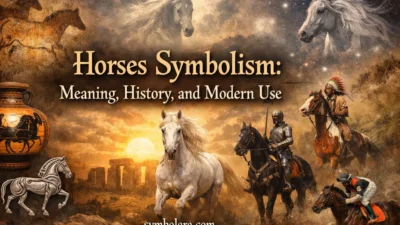

A black horse with a glossy coat, flowing mane, and strong posture often creates a striking image. In art, stories, tattoos, and personal designs, the color black changes how people view the horse. While a white horse is often linked with purity or celebration, a black horse is commonly connected with independence, strength, mystery, and personal identity.
People search for black horse symbolism because the image appears in many places: Western artwork, fantasy stories, clothing designs, tattoos, and even business logos. In the United States, the black horse is often used to represent confidence, freedom, determination, and a connection with nature rather than one fixed meaning.
Quick Answer
A black horse commonly symbolizes independence, strength, freedom, and personal transformation in modern American culture. Its meaning comes from the long relationship between horses and human societies, combined with the color black’s associations with authority, night, and the unknown.
TL;DR
- Black horses often represent freedom and independence.
- Horses became important symbols through travel and warfare.
- Black coats gained meanings from art and folklore.
- Americans use the image in tattoos and designs.
- Meanings vary by personal and cultural context.
What Does a Black Horse Look Like and Where Is It Seen?
A black horse has a coat that ranges from a soft charcoal shade to a rich, glossy black. True black horses have black hair throughout their bodies, including their mane and tail, although sunlight can sometimes reveal brown or reddish tones in some animals.
Black horses appear in many settings across the United States. They can be seen on ranches, in equestrian competitions, in historical reenactments, and in popular media. Their appearance often gives them a bold visual presence, which is why artists and designers frequently choose them for dramatic scenes.
In Western culture, horses already carry strong associations with movement, travel, and partnership. Adding a black coat creates a different feeling. The image may suggest a horse that is independent, serious, or connected to a wild landscape.
The breed itself can also influence how people view the animal. A black Friesian horse, with its long mane and elegant movement, is often used in films and photography because of its distinctive appearance. A black American Quarter Horse may create a different impression because of its connection with ranch work and rodeo traditions.
Why Do People Associate Black Horses With Strength and Freedom?
The modern meaning of a black horse often comes from the relationship between horses and human independence. For thousands of years, horses allowed people to travel farther, work across large areas, and move through difficult landscapes.
In American culture, horses became closely connected with the idea of freedom. Images of riders crossing open land, ranch horses working on farms, and wild horses running across western landscapes helped create this connection.
The black horse adds another layer. The color black is often associated with confidence, seriousness, and authority in clothing, design, and visual art. When combined with a horse, these ideas can create an image of controlled strength rather than simple aggression.
Many people who choose a black horse image are not expressing one exact belief. A tattoo owner, for example, might see it as a reminder of independence after a difficult life change. Someone else might choose it because they admire horses or prefer the visual style.
Where Did the Symbolism of Black Horses Begin?
The exact origin of black horse symbolism is not fully settled because different societies developed their own meanings around horses and colors. However, historians can trace several important connections between dark-colored horses and human traditions.
In many European traditions, black horses appeared in folklore, literature, and artwork. Their dark appearance sometimes connected them with night, mystery, or powerful figures. These meanings were often shaped by stories rather than by the animals themselves.
During the Middle Ages, horses were strongly connected with knights, battles, and social status. A dark horse could appear in paintings or stories as a serious or impressive animal. However, there was no single universal meaning attached to black horses.
The phrase “dark horse” also developed in English as a way to describe an unexpected winner or someone who succeeds despite not being widely recognized. This expression later became common in American politics, sports, and everyday language. A “dark horse candidate,” for example, refers to someone who was not considered a leading choice at first but gains attention later.
This phrase does not specifically mean a black-colored horse, but it helped strengthen the connection between dark horses and ideas of surprise, independence, and hidden ability.
How Did Horses Become Important Symbols in American Culture?
Horses have played a major role in American history. Before automobiles became common, horses were essential for transportation, farming, communication, and military movement.
During the 18th and 19th centuries, horses were central to life in rural communities. Farmers depended on them for work, while travelers used them to cross growing towns and open land. The image of a horse became linked with self-reliance and movement.
The American West created some of the strongest horse-related images in popular culture. Movies, paintings, and books often showed riders on horseback moving through deserts, plains, and mountains. A black horse in these settings could represent a lone traveler, a determined character, or a strong connection with the landscape.
Events such as rodeos and horse shows continue this connection today. While black horses are not the main symbol of these events, their appearance often attracts attention because of their visual contrast and elegance.
Black Horse Meaning in American Tattoos and Personal Designs
Tattoos are one of the most common modern uses of black horse imagery. People often select horse designs because they want to represent personal values rather than follow a traditional meaning.
A black horse tattoo may represent:
- Personal freedom after overcoming challenges
- Independence and self-confidence
- A love for animals and riding
- A connection to rural life
- A desire for a bold personal symbol
The design style also changes the message. A realistic black horse may focus on beauty and admiration for the animal. A running horse may suggest movement or change. A simple outline design may represent a personal memory or quiet connection.
Some tattoo artists combine black horses with other images to create layered meanings. When paired with mountains, the horse may represent adventure and a connection with exploration. Floral designs can create a balance between strength and beauty, while moon or star imagery often connects the symbol with nighttime themes and imagination.
The meaning belongs mainly to the person wearing the tattoo. The same design can represent different experiences for different people.
Black Horses in American Art, Fashion, and Popular Culture
Black horses appear frequently in American visual culture because their appearance creates a strong contrast against many backgrounds. Artists often use them in paintings, photography, and digital artwork to create scenes that feel bold or dramatic.
In Western art, a black horse may appear beside a rider, open fields, or mountain landscapes. These images often connect with ideas of exploration and personal independence. The meaning usually depends on the surrounding details rather than the horse color alone.
In fashion, horse imagery is often connected with equestrian style. Boots, jackets, belts, and accessories may include horse designs because riding traditions have influenced American clothing for generations. A black horse design can give these items a more classic or refined appearance.
Popular culture has also shaped how people view black horses. Films, novels, and fantasy stories often use dark-colored horses for memorable characters. Sometimes the horse belongs to a hero, while in other stories it creates a sense of mystery or danger. These fictional uses influence how audiences interpret the image, even when the meaning is different from real-world horse traditions.
What Does a Black Horse Represent in American Personal Expression?
For many Americans, symbols are chosen because they reflect a personal story. A black horse may represent a life experience, a personal goal, or a quality someone wants to remember.
A person who has recovered from a difficult period may choose a black horse image to represent endurance and moving forward. Someone who enjoys horseback riding may choose it simply as a connection to a favorite animal.
The symbol is also common among people who value independence. Horses have long represented movement and the ability to travel freely, so the image can communicate a desire for personal choice and self-direction.
However, a black horse does not always represent seriousness or struggle. Many people choose it because they admire the animal’s appearance, grace, and connection with nature.
How Different Cultures Have Viewed Black Horses
The meaning of black horses changes between cultures because horses have played different roles in local traditions.
In some European folklore, black horses were connected with nighttime stories and supernatural characters. These associations came from legends and storytelling traditions rather than from the animals themselves.
In Celtic traditions, horses held important cultural roles. Certain stories included unusual horses connected with otherworldly places, although meanings varied between different sources and regions.
In some parts of Central Asia, horses were closely connected with travel, identity, and daily survival. Horse colors could have personal or cultural meanings, but interpretations were not always the same across communities.
In Japanese art and traditions, horses have appeared in religious and cultural settings, including painted works and ceremonial practices. Black horses have sometimes appeared in these contexts, but their meaning depends on the specific tradition.
Because cultures developed their own stories about horses, there is no single worldwide definition of a black horse. The meaning comes from the relationship between the animal, the color, and the people using the image.
Why Do People Feel Connected to Black Horse Imagery?
People often connect with horse symbols because horses represent qualities that many admire: movement, loyalty, independence, and cooperation.
A horse is also an unusual symbol because it combines strength with sensitivity. Horses are large and physically capable animals, but they also respond closely to human emotions and communication.
A black horse can communicate a more serious or confident image than a horse shown in lighter colors. Some people associate it with quiet confidence rather than attention-seeking.
In psychology and personal expression, symbols often work as reminders. A person may use a black horse image as a visual reminder of a goal, a memory, or a personal quality they value.
The meaning comes from the relationship between the person and the symbol. There is no universal emotional response that applies to everyone.
Modern Uses of Black Horse Symbolism
Today, black horse imagery appears in many areas of American life.
Tattoos and Body Art
Black horse tattoos remain popular because the design works well in many styles. Artists may create realistic portraits, running horses, minimalist outlines, or detailed scenes with landscapes.
Home Decor
Horse artwork is common in homes with Western, farmhouse, or rustic design styles. A black horse painting may be used as a statement piece because the dark color creates visual contrast.
Jewelry and Accessories
Horse-shaped jewelry, necklaces, rings, and charms are often chosen by riders and animal lovers. A black horse design may create a more elegant or modern look.
Branding and Logos
Businesses sometimes use horses in logos because they suggest qualities such as reliability, movement, and tradition. A black horse may be selected when a company wants a bold visual identity.
Social Media and Digital Art
Online creators use black horse images in photography, illustrations, and profile designs. The image often works well because it is visually recognizable and easy to adapt into different artistic styles.
| Context | Meaning in USA | Common Associations | Notes |
| Tattoo designs | Personal strength and independence | Life changes, confidence, memories | Meaning depends on the owner’s story |
| Western artwork | Connection with land and freedom | Ranch life, riders, open spaces | Often influenced by American frontier imagery |
| Fashion items | Classic style and confidence | Boots, jackets, accessories | Usually focuses on appearance rather than symbolism |
| Business logos | Trust, movement, tradition | Equestrian themes, reliability | Companies choose meanings that fit their identity |
| Home decoration | Nature and personal taste | Rustic interiors, animal art | Often chosen for visual appeal |
Common Misunderstandings About Black Horse Meaning
One common misunderstanding is that black horses always represent something negative. This idea comes partly from stories where dark animals appear in frightening or dramatic scenes. However, the color black does not automatically create a negative meaning.
Another misunderstanding is that all black horse symbolism comes from one ancient tradition. In reality, meanings developed across many different societies, stories, and artistic traditions.
Some people also connect black horses with bad luck because of certain legends. These ideas are cultural beliefs, not facts about horses or their behavior.
A real black horse is simply an animal with a specific coat color. Symbolic meanings come from human interpretation, not from the horse itself.
How Black Horse Meanings Changed Over Generations
The meaning of black horses has shifted as society changed.
In earlier periods, horses were practical necessities. Their value came from transportation, farming, trade, and military use. Symbolic meanings often developed from these everyday relationships.
During the 19th and early 20th centuries, American stories about the frontier increased the connection between horses and independence. Paintings, novels, and later movies helped shape the image of the free rider and the open landscape.
Modern interpretations are more personal. Today, people may choose a black horse image for tattoos, artwork, or fashion without following older folklore meanings.
Social media has also changed how symbols spread. A design that once belonged to one cultural setting can now be seen and reinterpreted by people around the world.
The result is a symbol with many possible meanings. For one person, it may represent freedom. For another, it may simply represent admiration for a beautiful animal.
FAQs
Black horse symbolism can have both positive and negative interpretations depending on the context. In modern American use, it is often connected with independence, confidence, and personal expression rather than being automatically negative.
A black horse appears in some religious artwork and texts, but meanings vary by tradition. Many modern uses, such as tattoos and decorations, are cultural or personal rather than religious.
A black horse tattoo often represents freedom, strength, personal change, or a connection with horses. The exact meaning depends on the person’s reason for choosing the design.
True black horses are less common than many other coat colors, although they are found in several horse breeds. Some breeds are especially known for producing striking black horses.
Dream interpretations differ widely. Some people view a black horse dream as representing independence or change, while others see it simply as a personal image connected to memories and emotions.
Black horses are often used in movies because their appearance creates a strong visual impression. Filmmakers may choose them for heroes, dramatic scenes, or fantasy settings because they stand out on screen.
Conclusion
A black horse can represent independence, confidence, freedom, and personal expression, but its meaning depends on the person and culture using the image. The history of the animal, the color, and human storytelling all shaped how people understand black horse symbolism today.
From American ranch traditions to modern tattoos and artwork, the black horse continues to appear because it combines a familiar animal with a striking visual style. A simple image of a dark-coated horse can carry different meanings, whether it reminds someone of a personal journey, a love of animals, or the open landscapes connected with American history.