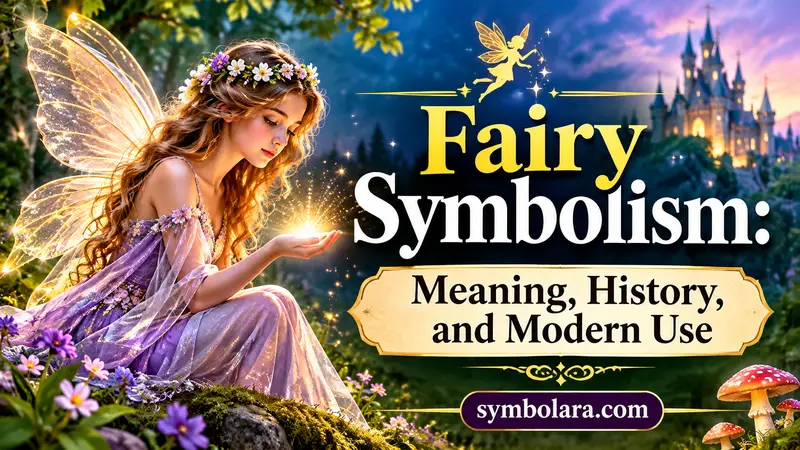
A fairy is often pictured as a small, human-like figure with delicate wings, bright clothing, and a connection to nature. Some look gentle and friendly, while others appear strange, serious, or even frightening. These different images reflect the many ways fairies have appeared in stories and folklore.
Fairy symbolism covers several ideas, including imagination, freedom, nature, transformation, and the possibility of things beyond ordinary experience. The meaning often depends on the fairy’s appearance, the story behind it, and the culture using the image.
In the United States, fairies appear in children’s books, fantasy movies, garden decorations, jewelry, tattoos, and seasonal artwork. Some people see them as signs of creativity and childhood wonder, while others connect them with independence and a love of the natural world.
Quick Answer
Fairy symbolism most commonly represents imagination, freedom, nature, transformation, and childhood wonder in modern American culture. Its historical roots come mainly from European folklore, especially the traditional beliefs and stories of Ireland, Scotland, Wales, and England, where fairies could be helpful, dangerous, or unpredictable supernatural beings.
TL;DR
- Fairies commonly represent imagination, freedom, creativity, and nature.
- European folklore shaped many familiar fairy traditions.
- Victorian artists helped create the delicate, winged fairy image.
- American popular culture often presents fairies as friendly magical characters.
- Fairy tattoos and jewelry can express individuality and personal growth.
- Traditional stories also portray fairies as unpredictable and sometimes dangerous.
What Does a Traditional Fairy Look Like?
There is no single appearance shared by all fairies. Their descriptions have changed across different stories, regions, and periods.
The familiar modern image is a small human-like figure with transparent wings, pointed ears, delicate features, and colorful clothing. Many illustrations show fairies carrying flowers, sitting on mushrooms, or flying through forests.
However, older European accounts often describe fairies differently. Some appear almost human in size, while others take unusual forms or remain difficult to recognize. A fairy might live in a green hill, appear near a stream, or enter a human home under unusual circumstances.
Several design details have become especially recognizable:
- Wings: Often represent freedom, movement, and the ability to travel between places.
- Flowers and leaves: Connect fairies with gardens, forests, and seasonal change.
- Small size: Creates an association with delicate things and hidden worlds.
- Pointed ears: Common in modern fantasy artwork, although not a universal feature of traditional folklore.
- Glowing light: Frequently used in illustrations to suggest enchantment or an unusual presence.
The appearance of a fairy therefore tells only part of its story. A winged figure in a children’s illustration may suggest friendship, while a fairy from an older folk tale may represent something that humans should approach carefully.
What Do Fairies Symbolize in Modern American Culture?
In contemporary American culture, fairies usually have positive associations. They often stand for imagination, personal freedom, creativity, and a connection with nature.
Imagination and childhood wonder: Fairies remind many adults of childhood stories, picture books, and make-believe games. Their presence suggests that ordinary places can become interesting through imagination.
Freedom and independence: A fairy with wings can represent the desire to make personal choices, explore new opportunities, and live without unnecessary restrictions. This interpretation appears frequently in jewelry and tattoo designs.
Nature and environmental appreciation: Fairy illustrations often include flowers, trees, butterflies, mushrooms, and small animals. These details connect the figure with gardens and natural surroundings.
Transformation and new beginnings: Fairies frequently appear in stories where ordinary characters experience unexpected changes. Because of this, they can represent personal development, fresh starts, and changes in perspective.
Creativity and artistic expression: Writers, illustrators, musicians, and designers use fairy imagery to suggest imaginative thinking. The figure offers a way to express ideas that realistic images may not communicate as easily.
Not every modern interpretation is positive, however. Traditional stories sometimes portray fairies as deceptive, troublesome, or dangerous. That contrast remains an important part of their cultural history.
Where Did Fairy Beliefs Originate?
The exact origin of fairy beliefs is difficult to establish. Similar supernatural beings appear in different European traditions, and their stories developed over many generations.
The English word fairy has a history connected to the Old French word faerie. Earlier forms were associated with enchantment, supernatural influence, and the realm or activities of fairy beings. The word eventually became closely associated with the creatures themselves.
Medieval European literature helped establish many familiar ideas. Stories described supernatural women, unusual encounters, enchanted places, and beings who could influence human lives.
Irish and Scottish folklore became especially important in the development of fairy traditions. In these regions, stories described supernatural communities associated with hills, fields, lakes, and other parts of the landscape.
Welsh and English traditions also contributed different fairy characters and beliefs. Some stories presented fairies as beautiful visitors, while others described them as difficult neighbors who could punish people for breaking certain customs.
It is important not to treat all these traditions as one fixed belief system. Local stories differed, and people did not always agree about what fairies looked like or how they behaved.
How Did Medieval and Celtic Folklore Shape Their Meaning?
In medieval and later Celtic folklore, fairies were not simply tiny creatures with wings. They were often connected with a separate supernatural community that could interact with the human world.
Irish traditions include stories about the Aos Sí, a supernatural people associated with ancient mounds and other places in the landscape. The term is often discussed in connection with fairy beliefs, although the beings and traditions involved are more complex than the modern children’s image suggests.
Scottish folklore includes accounts of the Sìth, a term associated with fairy beings and their otherworldly communities. Different stories describe encounters with these beings as fortunate, unsettling, or harmful.
A recurring theme was the importance of respecting boundaries. People were sometimes warned against disturbing certain hills, taking objects from unusual places, or behaving carelessly around locations associated with fairies.
These stories reflected concerns about the natural environment, community customs, illness, misfortune, and events people could not easily explain.
Fairies could also reward kindness or punish disrespect. This gave them a moral role in some traditional stories, although their behavior was not always predictable or fair by human standards.
As a result, older fairy traditions often represented the uncertainty of life and the need to respect things outside human control.
How Did Victorian Art Create the Modern Winged Fairy?
The familiar image of a tiny fairy with delicate wings became especially popular during the Victorian period of the nineteenth century.
Artists, writers, and illustrators increasingly presented fairies as beautiful, small, human-like figures. Their work helped turn older folklore into a visual style that audiences could easily recognize.
One important influence was the growth of fairy painting in Britain. Artists such as Richard Dadd and John Anster Fitzgerald created detailed works featuring supernatural figures, unusual landscapes, and fantastical scenes.
The Victorian interest in nature, gardens, children’s literature, and imaginative illustration also encouraged fairy imagery.
Literature played a major role. In J. M. Barrie’s Peter Pan, first performed as a stage play in 1904, Tinker Bell became one of the best-known fairy characters in English-language popular culture. The 1911 novel helped introduce the story to a wider reading audience.
Disney’s animated Peter Pan (1953) later made Tinker Bell an especially recognizable character in American entertainment.
This period helped shift the familiar fairy image toward small wings, bright clothing, sparkling surroundings, and a generally friendly personality. It did not erase older traditions, but it gave modern audiences a more consistent visual picture.
Why Are Fairies Important in American Culture?
Fairies became familiar in the United States through European immigration, children’s literature, theater, illustration, and later film and television.
American publishers helped bring European fairy tales to new audiences. Stories by writers such as the Brothers Grimm and Hans Christian Andersen became common parts of children’s reading, even though their original collections contained different kinds of supernatural characters.
Fairies also became a regular feature of American entertainment. Disney’s Tinker Bell, fantasy films, illustrated storybooks, and television programs helped establish them as recognizable characters.
Their role in American culture extends beyond entertainment.
At Halloween, fairy costumes offer an alternative to traditional scary characters. Children and adults may dress as winged fairies, woodland figures, or fantasy characters using glitter, flower decorations, and colorful clothing.
Fairy gardens have also become popular decorative projects. People create miniature landscapes using small houses, tiny doors, stones, plants, and miniature furniture. These arrangements turn ordinary garden spaces into imaginative settings.
In fashion, fairy-inspired designs appear in floral accessories, delicate necklaces, pastel clothing, and nature-themed prints.
For many Americans, these images communicate a personal interest in fantasy and creativity rather than a belief in literal supernatural beings.
What Do Fairies Represent Emotionally and Psychologically?
Fairy imagery can appeal to people because it creates a contrast with everyday responsibilities and familiar surroundings.
A fairy may represent the freedom to imagine a different kind of life. Its wings suggest movement, while its connection with forests and flowers creates an image of a place away from crowded streets and demanding routines.
For adults, fairy designs can also bring back positive childhood memories. A small fairy figurine might remind someone of a favorite bedtime story, a family garden, or a special childhood gift.
Others connect with the image because it allows them to express qualities they value but do not always show openly.
For example:
- A person who enjoys drawing may choose fairy imagery to express creativity.
- Someone who loves gardening may connect it with flowers and natural beauty.
- A person entering a new stage of life may use it to represent change.
- Someone who values independence may choose a winged fairy as a personal reminder of freedom.
There is no single psychological meaning that applies to everyone. Personal memories, family traditions, and individual experiences shape how someone responds to the image.
How Do Fairies Appear in Tattoos and Jewelry?
Fairy tattoos and jewelry are popular ways to use the image as a form of personal expression.
The design can communicate different ideas depending on its details.
Fairy tattoos: A flying fairy may represent independence, imagination, or a desire for new experiences. A fairy sitting on a flower may suggest a connection with nature. Some people choose a fairy silhouette to remember childhood or honor someone who encouraged their creativity.
Fairy necklaces: Small winged pendants often represent freedom, hope, and personal individuality. A necklace featuring a fairy beside a flower may place more emphasis on natural beauty.
Fairy earrings: These designs are often decorative and may appeal to people who enjoy fantasy-inspired fashion. Small wings, stars, and floral details are common choices.
Fairy rings: A circular design can suggest continuity, personal identity, or a connection with fantasy traditions. The meaning depends on the wearer rather than a fixed historical rule.
Some people also combine fairy images with butterflies, moons, stars, or mushrooms. These combinations create a broader fantasy theme, although each added symbol may introduce a different interpretation.
What Do Fairy Gardens and Home Decorations Represent?
Fairy gardens are miniature outdoor or indoor displays designed to resemble small imaginary worlds.
A typical arrangement may include a tiny wooden door, miniature house, small bridge, stones, moss, flowers, and decorative figures. Some people place them beneath trees or around the base of garden plants.
In American homes, these displays often represent creativity, playfulness, and an appreciation for gardening.
They also offer a simple activity that families can enjoy together. Children can help arrange miniature objects, choose plants, and create stories about the small setting.
Fairy decorations inside the home serve a similar purpose. Figurines, wall art, lamps, and decorative boxes can add a fantasy theme to bedrooms, reading corners, and craft spaces.
The meaning is usually personal. A fairy garden may represent a parent’s effort to create a special place for a child, while another person may simply enjoy the artistic challenge of building a miniature landscape.
How Do Fairies Appear in Books, Movies, and Popular Entertainment?
Books and screen entertainment have had a major influence on how Americans understand fairies.
Tinker Bell from Peter Pan remains one of the best-known examples. Her character helped popularize the image of a small, winged fairy associated with magic, loyalty, and playful behavior.
Other stories have presented fairies in more complicated ways.
In Shakespeare’s A Midsummer Night’s Dream, published in the late sixteenth century, fairy characters such as Oberon and Titania are rulers of a supernatural community. Their actions influence the events surrounding the human characters.
Modern fantasy books and films have expanded these ideas. Fairies may appear as powerful rulers, forest guardians, mischievous visitors, or members of separate magical societies.
This variety matters because popular entertainment has not created one universal fairy personality. Some characters are friendly, others are morally uncertain, and some are openly hostile.
For American audiences, these stories provide different ways to think about imagination, nature, responsibility, and the relationship between humans and unfamiliar worlds.
How Do Different European Traditions Interpret Fairies?
Although modern fairy images are widely shared, regional folklore has preserved different interpretations.
| Context | Meaning in USA | Common Associations | Notes |
| Irish folklore | Connection with older European traditions | Hills, supernatural communities, unusual encounters | The Aos Sí are not simply identical to modern winged fairies. |
| Scottish folklore | Interest in traditional fairy stories | Sìth, fairy hills, caution, supernatural visitors | Accounts vary considerably by region and storyteller. |
| Welsh folklore | Connection with local legends and traditional stories | Tylwyth Teg, enchanted places, unusual encounters | Welsh fairy traditions have their own distinct characteristics. |
| Victorian literature | Fantasy, beauty, and imaginative storytelling | Delicate wings, flowers, tiny figures | Nineteenth-century artwork shaped the familiar modern appearance. |
| American entertainment | Childhood wonder and fantasy | Tinker Bell, fairy costumes, children’s books | Film and publishing helped popularize friendly fairy characters. |
These traditions should not be treated as interchangeable. A character from an Irish folk story may have a different background and role from a fairy in a modern American animated movie.
Are Fairies Always Considered Good?
No. The friendly fairy is common in modern children’s entertainment, but older folklore includes many less welcoming characters.
Some traditional stories describe fairies who mislead travelers, steal objects, cause illness, or punish people who ignore local customs.
The Scottish tradition of the bean-nighe, for example, describes a supernatural washerwoman associated with death and warnings of approaching misfortune. She is sometimes discussed alongside fairy beings, although she is a distinct figure rather than a standard winged fairy.
Other stories describe helpful fairies who offer gifts, assist people, or reward good behavior.
This difference explains why older fairy traditions cannot be reduced to the idea that fairies always bring luck or happiness.
Modern artwork often removes the frightening elements to create images suitable for children’s books, decorations, and fashion. That change reflects a shift in storytelling, not the full history of European folklore.
Why Do People Choose Fairy Images for Personal Expression?
Fairy imagery gives people a flexible way to express interests and personal values.
Unlike symbols with one widely recognized public meaning, fairies can represent different things depending on the design.
A person may choose a fairy because they enjoy fantasy novels. Someone else may connect it with a childhood memory or a family member who loved fairy tales.
For others, the image represents a preference for creative living. A fairy surrounded by plants may express an appreciation for gardening, while a figure with large wings may communicate independence.
This flexibility also explains why fairy designs appear in different age groups. Children may enjoy the playful appearance, teenagers may use the imagery in fashion or artwork, and adults may choose it for personal memories or decorative interests.
The meaning does not need to be explained to everyone. Sometimes the value of a design comes from the experience or memory it represents to its owner.
How Has the Meaning of Fairies Changed Across Generations?
The interpretation of fairies has changed considerably over time.
In older European communities, fairy beliefs were connected with local traditions, unusual experiences, natural locations, and concerns about misfortune. These beings were not always treated as fictional characters.
During the medieval and early modern periods, written stories and plays helped bring supernatural figures into literature. Their roles varied, from enchanted visitors to rulers of separate worlds.
The Victorian period introduced a major visual change. Artists and illustrators increasingly presented fairies as small, beautiful, winged figures.
During the twentieth century, children’s entertainment made this image more familiar in the United States. Tinker Bell, illustrated books, animated films, and fantasy stories encouraged a friendly interpretation.
In the twenty-first century, social media, fantasy fashion, handmade decorations, and online craft communities have introduced additional uses.
Younger audiences may encounter fairies through fantasy games, illustrated content, fairy gardens, or personal fashion. Older generations may connect them with childhood books, traditional fairy tales, and family memories.
By 2025–2026, the image continues to serve both decorative and personal purposes. Its meaning is less tied to a single folklore tradition and more closely connected with individual creativity, fantasy, and personal expression.
FAQs
Is a fairy a symbol of good luck?
Fairies are sometimes associated with good fortune in modern decorations, gifts, and popular stories. However, older European folklore does not present every fairy as lucky or helpful. Their behavior depends on the particular tradition and story.
Does a fairy have a religious meaning?
A fairy is not a universal religious symbol, and fairy traditions should not automatically be treated as religious beliefs. Some historical accounts connect supernatural beings with local spiritual traditions, but modern fairy jewelry and decorations are generally used for artistic or personal reasons.
What does a fairy with no wings symbolize?
A wingless fairy may emphasize its human-like appearance, connection with nature, or traditional folklore background. The design may also reflect an artistic choice rather than a specific established meaning.
What does a black fairy symbolize?
A black fairy design may represent individuality, fantasy, mystery, or an interest in darker forms of storytelling. Its meaning depends on details such as clothing, facial expression, background, and the person’s reason for choosing it.
What does a fairy holding a flower mean?
A fairy holding a flower often combines two familiar images of natural beauty and imagination. Depending on the flower, the design may also suggest affection, remembrance, friendship, or personal growth.
Are fairy gardens connected to traditional European folklore?
Modern fairy gardens take inspiration from European stories about supernatural beings living in natural places. However, the miniature houses, decorative doors, and tiny furniture commonly used today are modern craft traditions rather than a standard feature of historical fairy beliefs.
Why are fairies associated with children?
Fairies became common characters in children’s literature, illustrated books, toys, and animated entertainment. Their small size, colorful appearance, and imaginary settings make them suitable for playful storytelling, although historical fairy stories were not written exclusively for children.
Conclusion
Fairy symbolism represents imagination, freedom, nature, creativity, and transformation in much of modern American culture. Its history, however, is more complicated than the familiar image of a small figure with wings. European folklore includes fairies who could help people, challenge them, or create unexpected problems.
Over time, literature, Victorian artwork, and American entertainment changed how these beings were presented. Today, they appear in tattoos, jewelry, gardens, books, fashion, and home decorations, often carrying meanings shaped by personal experience.
A small fairy figure on a necklace or in a garden may look like a simple decoration, but it can also preserve a childhood memory, express an artistic interest, or remind someone to make room for imagination in everyday life.