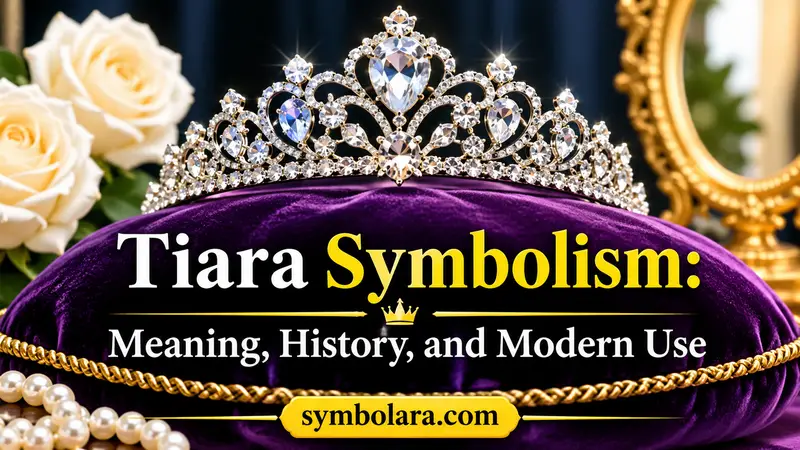
A tiara is a decorative headpiece usually worn across the front or top of the head. Often made with precious metals, pearls, crystals, or gemstones, it is closely associated with royalty, weddings, formal celebrations, and special occasions. Its shape can be simple and delicate or large enough to attract attention across a room.
Tiara symbolism is closely connected to royalty, dignity, beauty, confidence, and recognition. People often search for its meaning because they have seen one in a royal photograph, wedding, movie, dream, or piece of jewelry. Although tiaras once belonged mainly to royal families and wealthy households, they now appear in American weddings, beauty pageants, birthday celebrations, fashion, and personal accessories.
The meaning depends on who wears the headpiece and why. For one person, it represents elegance and tradition. For another, it is a reminder to celebrate personal achievements or feel confident without needing anyone’s approval.
Quick Answer
Tiara symbolism most commonly represents royalty, elegance, self-confidence, beauty, status, and personal recognition in modern American culture. Historically, these associations developed through royal courts, ancient head ornaments, and European traditions in which decorated headpieces displayed authority, wealth, and social position.
TL;DR
- Tiaras commonly represent royalty, dignity, elegance, and self-worth.
- European royal courts helped establish their association with status.
- American weddings use them to express celebration and personal style.
- Birthday tiaras often represent confidence and being celebrated.
- Modern fashion has made them accessible beyond royal families.
- Their meaning depends on the wearer and occasion.
What Does a Tiara Look Like?
A traditional tiara is a curved ornamental headpiece designed to sit on the head, often near the forehead or hairline. Unlike a full crown, it usually does not completely surround the head. Many designs have raised decorations that create a small arch above the hair.
Common materials include:
- Gold and silver
- Diamonds and other gemstones
- Pearls and crystals
- Platinum and other precious metals
- Glass stones and imitation jewelry
Some tiaras feature floral patterns, leaves, stars, arches, or pointed shapes. Others use repeated diamond settings to create a balanced and symmetrical appearance.
The design affects how people interpret the piece. A diamond tiara may suggest formal luxury, while a small pearl headpiece can communicate grace and simplicity.
Tiaras are commonly seen at royal ceremonies, weddings, beauty pageants, formal dances, and historical costume events. Modern versions also appear in children’s birthday parties and fashion photography.
What Does a Tiara Symbolize Today?
The most familiar meanings are royalty, elegance, confidence, beauty, and recognition. However, these associations are not identical. Each one reflects a different reason people choose to wear or display the headpiece.
Royalty and leadership
A tiara is strongly connected to royal families. It can represent authority, responsibility, and membership in a royal household. Its association with queens and princesses makes it a recognizable sign of royal identity.
Elegance and beauty
Decorative stones, carefully arranged details, and graceful shapes make the headpiece a common symbol of formal beauty. It is often chosen when someone wants an outfit to feel more special.
Confidence and self-worth
In modern American culture, a tiara can represent the idea of recognizing your own value. Expressions such as wearing a crown or treating yourself like royalty use royal imagery to encourage confidence.
Achievement and recognition
Beauty pageant winners, festival queens, and competition winners may receive tiaras as visible signs of success. In these settings, the headpiece represents an achievement that other people recognize.
Celebration and happiness
A birthday tiara or party headpiece can mark a special day. It gives the wearer a central role in the celebration and communicates that the occasion deserves attention.
Where Did Tiaras Originally Come From?
The history of the tiara is connected to several older forms of head ornaments. The exact origin of the modern tiara is not tied to one inventor or a single historical event.
Ancient civilizations used decorated headbands, diadems, and other ornaments to identify rulers, religious figures, and people of high social standing. These objects were not always identical to modern tiaras, but they helped establish the connection between decorated headwear and authority.
In ancient Greece, the diadem was an important symbol of leadership. It was generally a band worn around the head, sometimes decorated with precious materials. Greek and later Hellenistic rulers used such head ornaments to communicate their position.
Ancient Persia also used elaborate royal headwear. The word tiara has historical connections to Persian head coverings, although the forms and meanings changed as the term traveled through different languages and periods.
Roman rulers later adopted and adapted several forms of ceremonial headwear. Across these societies, the broader idea remained recognizable: special head ornaments could distinguish rulers and important individuals from the general population.
The modern decorative tiara developed through a much longer process involving European court fashion and changing jewelry styles.
How European Royal Courts Changed Its Meaning
European royal courts played a major role in establishing the tiara as a symbol of aristocratic status and formal elegance.
During the eighteenth century, wealthy European women increasingly wore elaborate jewelry and decorative headpieces at court events. These accessories were part of a larger fashion culture in which clothing, hairstyles, and jewelry communicated wealth and social position.
The nineteenth century brought another important change.
During the Victorian era, tiaras became closely associated with royal weddings, court appearances, and formal portraits. Queen Victoria’s marriage in 1840 helped strengthen the public association between bridal fashion, royal jewelry, and ceremonial elegance.
As photography and illustrated publications became more common, royal jewelry reached audiences far beyond palace walls. People could see how monarchs and aristocratic women dressed for important occasions.
The tiara gradually became more than a decorative accessory. It came to represent a particular image of royalty: refined, wealthy, formal, and connected to tradition.
Why Are Tiaras Associated With Queens and Princesses?
The connection comes from centuries of royal fashion and public ceremony.
Queens and princesses have worn tiaras during official portraits, state occasions, diplomatic gatherings, and formal celebrations. Because these events receive public attention, their jewelry often becomes part of their recognizable image.
For example, British royal collections contain tiaras that have been passed between generations. Some pieces are closely associated with particular royal marriages or family traditions.
The Cambridge Lover’s Knot Tiara is one recognizable example. It is associated with the British royal family and became widely recognized through its use by Diana, Princess of Wales, and later Catherine, Princess of Wales.
These associations explain why a tiara can communicate more than personal beauty. It may also represent family heritage, public responsibility, continuity, and a position within a royal institution.
However, wearing one does not automatically make someone royal. Today, the headpiece is available in many styles and price ranges, allowing people outside royal families to use its traditional visual language.
What Does a Tiara Mean in American Culture?
In the United States, tiaras have a broader meaning than they traditionally held in European royal households.
America does not have a hereditary monarchy, so the headpiece is generally connected to celebration, fashion, personal achievement, and playful royalty rather than actual political authority.
Several familiar American traditions have helped shape its meaning.
Weddings
Brides sometimes wear tiaras to create a formal appearance or add a royal touch to their wedding outfit. The accessory can represent celebration, romance, and the importance of the marriage ceremony.
Beauty pageants
Tiaras are recognizable awards in many American pageant traditions. Winners may receive one alongside a sash, trophy, or title. Here, it represents recognition, presentation skills, competition, and accomplishment.
Birthday celebrations
A birthday girl may wear a tiara during her party, especially for milestone birthdays. The accessory makes her the center of attention and turns an ordinary birthday outfit into something festive.
Prom and formal dances
Some students wear decorative tiaras to prom or homecoming events. These accessories are often chosen to complement a dress rather than communicate royal status.
Popular entertainment
Movies, television shows, and children’s stories frequently use tiaras to identify princess characters. This has helped make the headpiece familiar to American children and adults, even when they have never seen an actual royal ceremony.
In American life, the tiara is therefore less about inherited position and more about choosing to celebrate a particular moment.
How Do Different Tiara Designs Change Their Meaning?
The shape, materials, and decorative details can influence what a tiara communicates.
A delicate pearl design may feel traditional and understated, while a large crystal headpiece may look theatrical or celebratory.
Here are some common design associations:
| Context | Meaning in USA | Common Associations | Notes |
| Bridal tiara | Romance and formal elegance | Marriage, beauty, celebration | Often coordinated with the wedding dress |
| Birthday tiara | Being celebrated | Happiness, confidence, attention | Common at milestone birthday parties |
| Pageant tiara | Achievement and recognition | Competition, success, public presentation | Usually awarded to a winner |
| Crystal tiara | Glamour and luxury | Formal fashion, beauty, sophistication | Often used for evening events |
| Floral tiara | Natural beauty and femininity | Flowers, spring, youth | Popular for outdoor weddings and festivals |
| Costume tiara | Playfulness and imagination | Princess characters, fantasy, dress-up | Common in children’s entertainment |
These associations are flexible rather than fixed rules. A person may choose a tiara simply because they like its appearance, without attaching any particular meaning to it.
Why Do People Emotionally Connect With Tiaras?
A tiara can change how someone feels about an occasion because it makes an ordinary outfit look ceremonial.
The head is also an important part of personal appearance. Accessories worn there are easy for others to notice, which makes them useful for expressing identity and style.
For some people, wearing a tiara creates a feeling of confidence. It can serve as a reminder that they deserve attention and appreciation, especially during an event that celebrates their achievements.
For others, the appeal is connected to childhood memories. A person who grew up watching princess movies or playing dress-up may associate tiaras with imagination, happiness, and carefree experiences.
There is also a social aspect. When a birthday group gives someone a tiara, the gesture communicates affection and makes that person feel included in the celebration.
The emotional meaning is not necessarily connected to wealth or status. A simple plastic tiara can create the same feeling of being celebrated as an expensive jewelry piece.
What Does Wearing a Tiara Communicate About Personal Identity?
Wearing a tiara can be a form of self-expression. It allows someone to present themselves in a particular way, whether that means looking elegant, playful, glamorous, or confident.
In modern American fashion, some people use royal imagery to challenge traditional expectations about who deserves recognition.
For example, a woman might wear a small tiara to her birthday dinner as a lighthearted statement that she is celebrating herself. A pageant contestant may wear one to show pride in a competition she has won.
The accessory can also communicate an interest in vintage fashion, royal history, or traditional jewelry.
Importantly, not everyone who wears a tiara wants to appear wealthy or important. Sometimes it is simply a fun accessory that makes an outfit feel different.
Its meaning comes from the situation, the wearer’s intention, and how other people understand the gesture.
How Are Tiaras Used in Modern Fashion and Pop Culture?
Tiaras have moved beyond royal ceremonies and become part of mainstream fashion and entertainment.
Bridal fashion: Designers create headpieces with crystals, pearls, silver details, and floral shapes. Some brides choose them instead of traditional veils or wear both together.
Fashion photography: Photographers use tiaras to create a royal, vintage, glamorous, or fantasy-inspired appearance. They can make an editorial photograph look more dramatic without changing the clothing.
Social media: Birthday photographs, wedding portraits, and themed photo shoots often feature tiaras. The accessory can help establish the mood of an image immediately.
Music and entertainment: Performers may wear oversized headpieces during concerts, award shows, or promotional appearances. These designs are often chosen for visual impact rather than traditional royal meaning.
Costume design: Movies and television programs use tiaras to distinguish princesses, queens, and wealthy characters. Their design can help audiences understand a character’s position before the character speaks.
Everyday accessories: Smaller and less expensive versions are available for parties, festivals, and casual celebrations.
This wider use has made the tiara more accessible. It is no longer limited to expensive jewelry collections or formal royal events.
What Does a Tiara Represent in Weddings and Special Celebrations?
Weddings are among the most recognizable occasions for wearing a tiara in the United States.
A bride may choose one because it adds decoration near the face and complements an elegant hairstyle. The headpiece can also create a traditional bridal appearance inspired by European royal weddings.
Different styles produce different effects.
- A pearl tiara often suits classic or vintage wedding dresses.
- A crystal tiara adds sparkle to formal evening celebrations.
- A floral headpiece works well with garden and outdoor wedding themes.
- A minimalist metal tiara can complement a modern bridal outfit.
Beyond weddings, tiaras appear at quinceañeras, milestone birthdays, school pageants, and themed celebrations.
At a quinceañera, for example, a tiara may be part of the celebrant’s formal outfit. Its role is connected to the occasion’s recognition of a young woman’s transition into a new stage of life, although family and regional customs vary.
These events show how a once-exclusive royal accessory has become part of personal milestones and family traditions.
What Are Common Misunderstandings About Tiaras?
Several assumptions about these headpieces can lead to confusion.
A tiara and a crown are not exactly the same.
A crown is generally a more complete headpiece that may surround the head. A tiara is usually an open ornamental piece worn across the front or top. However, everyday language and jewelry terminology sometimes overlap.
Not every tiara represents royal authority.
A pageant winner, bride, or birthday celebrant can wear one without having any royal connection.
Tiaras are not always expensive.
Although historical royal examples may contain valuable gemstones, modern versions are also made with glass crystals, imitation pearls, and affordable metals.
A tiara does not have one universal meaning.
Its interpretation changes with the occasion. A ceremonial royal tiara communicates something different from a child’s birthday accessory.
Wearing one does not necessarily show vanity.
Some people wear tiaras for fun, cultural celebrations, personal style, or emotional reasons. Judging the wearer based only on the accessory ignores the context.
Understanding these differences makes it easier to separate historical associations from modern personal expression.
How Has the Meaning Changed Across Generations?
The meaning of the tiara has shifted as fashion, entertainment, and social customs have changed.
In earlier royal settings, the headpiece was closely connected to wealth, inherited status, and formal position. Its materials and craftsmanship could distinguish members of royal and aristocratic families.
During the nineteenth and early twentieth centuries, royal weddings and public portraits helped establish the tiara as an image of formal feminine elegance.
In the mid-to-late twentieth century, movies, television, beauty competitions, and children’s entertainment made the accessory familiar to a much larger audience.
By the 2000s and 2010s, affordable fashion jewelry and online shopping made decorative headpieces easier to find. People could wear them for birthdays, parties, weddings, and personal photographs.
In 2025–2026, the accessory continues to serve both traditional and playful purposes. Some people prefer understated bridal jewelry, while others choose oversized designs for social media photographs or themed celebrations.
Younger generations may associate a tiara with confidence, self-celebration, or princess culture rather than inherited wealth.
The central change is clear: its meaning has moved from an accessory strongly associated with social position to one that people can choose for personal reasons.
What Does a Tiara Symbolize in Art and Creative Expression?
Artists and designers often use tiaras to communicate a character’s role without lengthy explanations.
In a painting, a decorated headpiece can suggest royal identity, privilege, or ceremonial importance. A damaged or fallen tiara may be used to suggest the loss of status or a change in a character’s circumstances.
In children’s illustrations, a small sparkling tiara often helps identify a princess or fairy-tale character. Its appearance can create an immediate connection to stories about royalty and imagination.
Fashion illustrators may use tiaras differently. They can represent glamour, personal ambition, or an exaggerated sense of luxury.
The accessory also works as a visual contrast. A character wearing a simple outfit and an elaborate tiara may represent someone who values individuality over social expectations.
Because its appearance is widely recognized, artists can use a tiara to communicate several ideas quickly. The surrounding scene determines which interpretation makes the most sense.
FAQs
Is a tiara considered a positive or negative symbol?
A tiara is generally viewed positively because it is associated with beauty, celebration, recognition, and confidence. However, in certain stories or artistic settings, it may represent privilege, vanity, or excessive concern with social status.
Does a tiara have a religious meaning?
A tiara is not exclusively a religious object. However, certain historical headpieces have appeared in religious and ceremonial settings, and the papal tiara was a distinctive three-tiered headpiece historically associated with the Pope. It should not be confused with ordinary decorative jewelry.
What is the difference between a tiara and a diadem?
A diadem traditionally refers to a band or head ornament associated with rulers and authority. A modern tiara is generally more decorative, often featuring raised arches and gemstones. The terms have sometimes overlapped in historical descriptions.
Why do little girls often wear tiaras?
Children often associate tiaras with princess stories, fairy tales, birthday parties, and imaginative play. Wearing one allows them to participate in a familiar fantasy role and feel special during celebrations.
Can an unmarried woman wear a tiara?
Yes. A tiara is not reserved for married women or brides. It can be worn at formal events, birthdays, pageants, costume parties, or simply as a fashion accessory.
What does a broken tiara represent in artwork?
A broken tiara may represent lost status, disappointment, damaged pride, or the end of a particular chapter. The interpretation depends on the surrounding artwork and whether the breakage is shown as accidental or intentional.
Why do pageant winners receive tiaras instead of ordinary trophies?
A tiara creates a recognizable visual symbol of the winner’s title and achievement. Unlike a trophy that is usually displayed or held, a tiara can be worn during photographs, ceremonies, and public appearances, making the recognition visible.
Conclusion
Tiara symbolism is mainly connected to royalty, elegance, beauty, confidence, and recognition. Its historical associations developed through ancient head ornaments and European royal traditions, where decorated headpieces helped communicate authority, wealth, and social position.
In modern American culture, its meaning has expanded. Brides wear tiaras to complement their wedding outfits, pageant winners receive them as awards, and people use them at birthdays and special celebrations. Others simply enjoy their decorative appearance.
A tiara no longer needs to belong to a queen or princess to make an occasion feel special. Sometimes, a small headpiece is simply a way of celebrating a personal achievement, marking an important day, or enjoying a moment in which someone deserves to feel noticed.