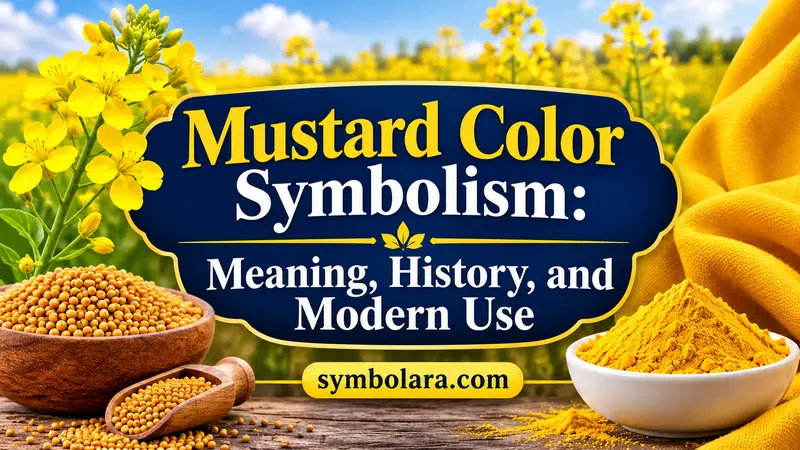
Mustard is a warm shade of yellow with noticeable brown or golden undertones. It looks different from the bright yellow found on school buses or summer flowers. Instead, it has a muted, earthy appearance that brings to mind autumn leaves, vintage clothing, golden fields, and familiar kitchen spices.
Mustard color symbolism often relates to warmth, confidence, creativity, comfort, and practicality. However, its meaning can change depending on where it appears. A mustard-colored sweater may suggest a relaxed vintage style, while a mustard wall can make a room feel welcoming and comfortable.
In American culture, this shade has a recognizable place in fall decorations, home interiors, fashion, and retro design. Its popularity has also changed over time, moving between periods of strong fashion interest and quieter use as a supporting color.
Understanding its background helps explain why this particular shade can feel both nostalgic and modern.
Quick Answer
Mustard color symbolism commonly represents warmth, confidence, creativity, comfort, and individuality in modern American culture. Its associations developed from the broader history of yellow pigments, natural dyes, harvest traditions, and the use of golden-yellow shades in clothing, decoration, and everyday objects.
TL;DR
- Warmth: Suggests comfort, friendliness, and a welcoming atmosphere.
- Confidence: Communicates individuality without using an extremely bright color.
- Creativity: Connects with artistic expression and unconventional design.
- Nostalgia: Recalls 1960s and 1970s American fashion and interiors.
- Autumn: Brings to mind falling leaves, harvests, and seasonal decorations.
- Practicality: Its earthy appearance makes it useful in everyday clothing and interiors.
What Does Mustard Yellow Actually Look Like?
Mustard yellow sits between golden yellow, ochre, and brownish yellow. It usually has a slightly dull or earthy appearance rather than the clean brightness of lemon yellow.
The exact shade varies. Some versions look golden and sunny, while others have stronger brown, olive, or orange undertones.
Common variations include:
- Golden mustard: A warm yellow with noticeable golden tones.
- Dark mustard: A brownish yellow that looks mature and subdued.
- Muted mustard: A softer shade often used in clothing and home decoration.
- Olive mustard: A yellow-green variation with an earthy appearance.
- Bright mustard: A more noticeable yellow that works well as an accent color.
This shade appears in many everyday places, including sweaters, curtains, upholstered furniture, ceramic dishes, wallpaper, and seasonal decorations.
Its appearance is also affected by lighting. Under warm indoor lights, it can look more golden or orange. In natural daylight, its brown and green undertones may become easier to notice.
That flexibility is one reason designers use it in both traditional and modern spaces.
What Does Mustard Color Symbolize Today?
In contemporary American culture, this shade has several common associations. Most are connected to its warmth, muted appearance, and relationship with familiar natural colors.
Warmth and Comfort
One of its strongest associations is emotional warmth.
Unlike sharp, bright yellow, mustard has a softer appearance. It can make a room feel relaxed and inviting without creating the visual excitement of a more intense shade.
For example, a mustard throw blanket on a living room sofa can make a space feel more comfortable during colder months.
This association also makes the color popular in cozy clothing, especially sweaters, scarves, and jackets.
Confidence and Individuality
Mustard can communicate confidence because it attracts attention without looking overly flashy.
Someone wearing a mustard jacket or dress may appear expressive and comfortable with personal style. The shade is noticeable, but it does not depend on extreme brightness.
This makes it appealing to people who want something different from common neutral colors.
Creativity and Originality
Artists and designers often use mustard to add personality to a visual composition.
It works particularly well with dark blue, forest green, cream, charcoal, and burgundy. These combinations can create a distinctive appearance without making the overall design feel chaotic.
In this setting, the shade can suggest imagination, experimentation, and artistic independence.
Nostalgia and Familiarity
Mustard also brings back memories of earlier design periods, especially the 1960s and 1970s.
Vintage furniture, patterned wallpaper, old advertisements, and retro kitchen accessories often used similar yellow-brown shades.
For some Americans, it recalls the appearance of a parent’s childhood home or furniture from an older family house.
Where Did Mustard Yellow Get Its Name?
The name comes from mustard, the familiar condiment made from mustard seeds.
Prepared mustard can have a yellow, golden, or brownish appearance, depending on the seeds, ingredients, and preparation method. The color name describes a similar range of warm yellow-brown shades.
However, the history of the pigment is older than the modern color label.
People used yellow earth pigments, including ochres, long before mustard became a familiar color description in fashion and interior design.
Yellow ochre comes from naturally occurring iron-rich earth. It was used in paintings, decoration, and other forms of visual expression across many periods.
The condiment and the color share a visual connection, but they do not have the same history.
The modern shade is better understood as part of a larger family of golden, earthy yellows that gained different names as clothing, printing, and interior design developed.
How Did Mustard Develop Its Historical Associations?
The history of this shade is connected to the broader cultural history of yellow.
In ancient and medieval societies, yellow pigments came from natural sources such as minerals, plants, and certain organic materials. Yellow ochre was especially useful because it was widely available and relatively durable.
Its appearance in historical art depended on the materials, region, and artistic purpose.
During the Renaissance, yellow pigments appeared in paintings, religious artworks, clothing, and decorative objects. Their meanings were not universal. Yellow could suggest gold, light, wealth, or honor, but it could also be associated with jealousy or betrayal in certain European artistic traditions.
Mustard itself did not carry all these meanings automatically.
During the 18th and 19th centuries, improvements in textile production and synthetic dyes expanded the range of yellow shades available to manufacturers and consumers.
As fashion became more accessible, earthy yellows appeared in clothing, household fabrics, and decorative products.
By the 20th century, muted yellow-brown shades had become recognizable parts of several popular design styles.
The important distinction is that the symbolic associations came from the larger history of yellow and earthy pigments, while the modern identity of mustard developed through fashion, food, and interior decoration.
Why Is Mustard Associated With American Autumn?
Autumn is one of the easiest settings in which to understand this shade.
During fall, American landscapes contain many colors that resemble mustard yellow. Leaves change from green to golden yellow, orange, and brown. Fields become less green, and dried grasses develop warm earthy tones.
These natural changes help connect the shade with seasonal transitions.
It is particularly common in American fall decorations, including:
- Thanksgiving table arrangements.
- Decorative pillows and blankets.
- Artificial autumn leaves.
- Seasonal wreaths.
- Ceramic pumpkins.
- Fall-themed tablecloths.
Its relationship with harvest traditions also contributes to its meaning.
Thanksgiving decorations frequently combine mustard-like yellow with burnt orange, dark red, brown, and cream. Together, these colors suggest crops, warm meals, changing weather, and family gatherings.
However, mustard is not an official Thanksgiving color. Its popularity comes from its visual relationship with the natural colors of the season.
For many people, it simply looks like fall.
What Does Mustard Represent in American Fashion?
American fashion has used mustard in different ways over several decades.
During the 1960s and 1970s, earthy colors became especially recognizable in clothing and interior design. Mustard appeared alongside olive green, rust, brown, and burnt orange.
These combinations matched the period’s interest in natural textures, relaxed clothing, and bold geometric patterns.
Corduroy pants, knitted sweaters, patterned dresses, and jackets often featured similar shades.
Today, the color continues to appear in contemporary wardrobes.
A mustard sweater with dark jeans creates a relaxed outfit. A mustard coat can become the main feature of an otherwise neutral look. Accessories such as handbags, scarves, and shoes offer a smaller way to use it.
Its fashion associations often include:
- Individuality and personal expression.
- Vintage and retro influences.
- Relaxed confidence.
- Seasonal style.
- Appreciation for earthy colors.
It is also useful for people who enjoy wearing color but prefer something less intense than bright yellow.
What Emotional Feelings Does This Shade Create?
Color perception is influenced by personal experience, culture, lighting, and surrounding colors. Mustard does not create the same reaction in everyone.
Still, several emotional associations appear frequently in design and everyday use.
A sense of comfort: Its connection with warm foods, autumn fabrics, and natural materials can make it feel familiar.
A feeling of optimism: Its yellow base retains some of the cheerful associations commonly linked with sunlight and brightness.
A sense of stability: The brown and earthy undertones make it look less energetic than pure yellow.
Creative independence: Because it is less common than basic black, white, or gray, wearing it can communicate a willingness to experiment.
Nostalgic feelings: People who associate it with older furniture, family photographs, or vintage clothing may experience a sense of familiarity.
These reactions are not fixed psychological rules. A person who dislikes yellow may find the shade unpleasant, while someone who enjoys warm colors may find it welcoming.
Personal memories matter as much as the color itself.
What Does Mustard Mean in American Home Decoration?
Interior designers often use mustard as an accent because it can introduce warmth without overwhelming an entire room.
It works especially well with natural materials such as wood, leather, cotton, linen, and woven fabrics.
A mustard-colored armchair in a room with cream walls can create a noticeable focal point. Similarly, mustard cushions can add warmth to a charcoal or navy sofa.
Some common combinations include:
| Color Combination | Meaning in USA | Common Associations | Notes |
| Mustard and navy | Confidence and balance | Traditional interiors, tailored clothing | Navy reduces the brightness of yellow. |
| Mustard and forest green | Connection with nature | Botanical designs, earthy rooms | Works well with wood and natural fabrics. |
| Mustard and cream | Comfort and simplicity | Cozy bedrooms, relaxed living spaces | Creates a softer appearance. |
| Mustard and charcoal | Modern individuality | Contemporary furniture, graphic design | Provides noticeable contrast. |
| Mustard and rust | Nostalgia and seasonal warmth | Vintage interiors, autumn decoration | Recalls popular 1970s color palettes. |
The amount of color matters, too.
Using mustard on a small cushion creates a different effect from painting all four walls. Smaller details are often easier to change as decorating preferences develop.
Why Do Artists and Designers Choose Mustard?
Artists and designers use this shade because it can perform several visual roles.
It can attract attention, create contrast, or connect different parts of a composition.
In illustration, mustard can represent sunlight, dry grass, old paper, or warm indoor lighting. In poster design, it can create a retro appearance when paired with dark brown or black lettering.
Graphic designers also use it in branding.
A business that wants to communicate creativity, friendliness, or an appreciation for traditional craftsmanship may choose mustard as part of its visual identity.
However, the shade is not automatically suitable for every brand.
A technology company that wants to appear highly modern and minimal may prefer cooler colors. A restaurant, clothing company, or handmade-products business might find mustard more appropriate.
Its success depends on the message, audience, and surrounding visual elements.
Does Mustard Have a Different Meaning in Tattoos and Jewelry?
Mustard-colored tattoos and jewelry are less common than traditional black, gold, silver, or brighter yellow designs. However, the shade can still communicate personal meaning.
In tattoos, muted yellow may appear in flowers, sun designs, autumn leaves, vintage illustrations, and nature-inspired artwork.
Someone might choose it to represent:
- A connection with autumn.
- A favorite period in fashion or design.
- Optimism and personal growth.
- A memory associated with a particular object or place.
- An appreciation for unusual colors.
Mustard-colored gemstones and jewelry are also sometimes used to create an earthy appearance.
Yellow gemstones such as citrine and yellow sapphire may share some visual qualities, although their actual colors vary considerably. A mustard-colored jewelry setting or enamel detail can create a more vintage look than a bright yellow design.
The personal meaning is more important than any universal interpretation. A small yellow flower tattoo, for example, might represent a specific family memory rather than a general idea of happiness.
Is Mustard Always a Positive Color?
No. Like other colors, mustard can have positive and negative associations.
Its positive meanings commonly include warmth, creativity, confidence, and comfort.
However, yellow has also carried less favorable associations in some historical and cultural settings.
In parts of European art and literature, yellow was sometimes used to suggest jealousy, deception, illness, or social disapproval. These associations were not consistent across all periods or communities.
Mustard’s brown undertones can also make it look dull, dated, or unpleasant when used poorly.
For example, a large amount of muddy yellow-brown in a room with little natural light may create a heavy appearance rather than a welcoming one.
In fashion, an unsuitable shade may make an outfit look less balanced, especially when combined with other colors that have similar undertones.
These reactions are matters of context and taste, not evidence that the color has an inherently negative meaning.
What Are the Most Common Misunderstandings About Mustard?
Several misconceptions appear when people discuss the meaning of this shade.
Misunderstanding 1: Mustard and bright yellow mean exactly the same thing.
They share some associations, but their visual effects differ. Bright yellow generally attracts attention more quickly, while mustard has a more subdued, earthy appearance.
Misunderstanding 2: Mustard is always a symbol of autumn.
Autumn is a common association in the United States, but the shade also appears in spring clothing, modern furniture, artwork, and branding.
Misunderstanding 3: It always represents happiness.
Its yellow base can suggest optimism, but its brown undertones can communicate restraint, nostalgia, or seriousness.
Misunderstanding 4: The color has one universal cultural meaning.
Color meanings change across societies and historical periods. Even within the United States, individual experiences can influence how people interpret it.
Misunderstanding 5: Mustard is an outdated design choice.
Its popularity has changed over time, but it continues to appear in contemporary fashion, home decoration, and graphic design.
Understanding these differences makes it easier to interpret the color without assigning meanings that do not fit the situation.
How Has Its Meaning Changed Across Generations?
The associations connected with mustard have shifted as American fashion and design preferences have changed.
During the 1960s and 1970s, earthy colors became especially visible in homes and clothing. Mustard was part of a recognizable palette that included avocado green, burnt orange, chocolate brown, and rust.
For people who grew up during this period, the shade may bring back memories of patterned sofas, wooden furniture, and older family kitchens.
During the 1980s and 1990s, some interior trends moved toward different palettes. Bright colors, pastels, cooler neutrals, and more restrained contemporary styles received attention in different design settings.
Mustard did not disappear, but it became less central in some mainstream decorating trends.
During the 2000s and 2010s, interest in mid-century furniture, vintage clothing, and retro interiors helped bring earthy colors back into wider design conversations.
By the 2020s, mustard had become a familiar choice in modern interiors, seasonal fashion, and online design inspiration.
Younger Americans may associate it with vintage aesthetics, creative personal style, and carefully designed living spaces rather than simply remembering it from older homes.
The color has not developed one new meaning. Instead, each generation has added its own experiences to its existing associations.
How Is Mustard Used in American Culture in 2025–2026?
In 2025–2026, mustard remains useful across several areas of American visual culture.
Social Media and Personal Aesthetics
Platforms such as Pinterest and Instagram feature earthy color combinations in interior decoration, clothing inspiration, and lifestyle photography.
Mustard often appears with beige, dark green, brown, and cream in vintage-inspired visual styles.
These combinations can suggest a relaxed, carefully arranged appearance without relying on bright colors.
Seasonal Marketing
American retailers frequently use warm yellow shades in fall product displays, home accessories, clothing collections, and Thanksgiving-related decorations.
The color helps create a seasonal mood that feels connected to harvest and changing weather.
Clothing and Accessories
Mustard remains an option for sweaters, coats, handbags, scarves, and footwear.
It is especially useful as an accent in outfits built around neutral colors.
Contemporary Interiors
Modern homes use it in occasional furniture, cushions, artwork, lampshades, and decorative ceramics.
It can bring warmth to spaces dominated by gray, white, and natural wood.
Branding and Packaging
Food businesses, independent clothing labels, and creative companies sometimes use mustard to communicate familiarity, warmth, or a handcrafted appearance.
Its connection with the condiment can also make it visually appropriate for certain food-related designs.
These uses show that the shade remains relevant without needing to be the main color in every design.
When Should You Use Mustard in Everyday Life?
The best way to use mustard depends on the result you want.
For clothing, consider using it as a single statement piece. A mustard cardigan, for example, can add color to an outfit built around black pants and a white shirt.
For home decoration, start with small accessories before committing to larger surfaces. A cushion, rug, or decorative vase can introduce the shade without changing the entire room.
For artwork, mustard can work as a background or supporting color, particularly when paired with navy, dark green, or burgundy.
For branding, consider whether your audience connects the shade with the qualities your business wants to communicate.
There is also a practical point: mustard is not equally flattering or attractive in every lighting condition. Before choosing clothing, paint, or fabric, look at the actual material in both natural and indoor light.
The same shade can appear noticeably different depending on its surroundings.
FAQs
Is mustard yellow considered a lucky color?
Mustard yellow does not have one widely recognized meaning as a lucky color in American culture. Some people associate it with optimism, success, and abundance because of its relationship with gold and sunlight. Personal and cultural traditions can create additional meanings.
Does mustard yellow have a spiritual meaning?
There is no single established spiritual meaning for mustard yellow. Some modern spiritual or personal interpretations connect yellow shades with awareness, confidence, and mental clarity, but these associations depend on the particular belief system rather than a universal tradition.
What does wearing mustard yellow say about your personality?
Wearing this shade may communicate confidence, creativity, and a preference for distinctive clothing. It can also suggest an interest in vintage fashion or earthy color combinations. However, clothing choices alone cannot reliably reveal someone’s personality.
Is mustard yellow suitable for weddings?
Yes. Mustard can work well in wedding decorations, especially for fall celebrations. It pairs nicely with burgundy, cream, sage green, and dark brown, making it suitable for table arrangements, bridesmaid accessories, flowers, and invitations.
What colors should you avoid combining with mustard?
There are no strict color rules, but combining mustard with several muddy brown or dull yellow shades can make a design look visually heavy. If you want more contrast, use navy, cream, forest green, or charcoal to create a clearer balance.
Does mustard yellow symbolize wealth?
It can suggest wealth or abundance because of its resemblance to gold. However, mustard is generally less directly associated with luxury than metallic gold. In modern interiors, it is more commonly used to communicate warmth, comfort, and individuality.
Is mustard yellow a warm or cool color?
Mustard is generally classified as a warm color because it has yellow, golden, and often brown or orange undertones. Some olive-leaning variations may appear slightly cooler, but the typical shade belongs to the warm side of the color spectrum.
Conclusion
Mustard color symbolism is mainly connected with warmth, comfort, confidence, creativity, nostalgia, and individuality. Its earthy appearance separates it from brighter yellow shades, giving it a more relaxed and familiar character.
Its modern associations developed through the wider history of yellow pigments, natural materials, American fashion, and changing interior design trends. From 1970s furniture to contemporary clothing and autumn decorations, the shade has continued to find new uses.
Ultimately, its meaning depends on how people use it and what they associate with it. A mustard sweater can express personal style, a mustard-colored living room can create a welcoming atmosphere, and a fall decoration can recall the familiar sights of Thanksgiving. Its appeal comes from that ability to feel noticeable without losing its connection to everyday life.