
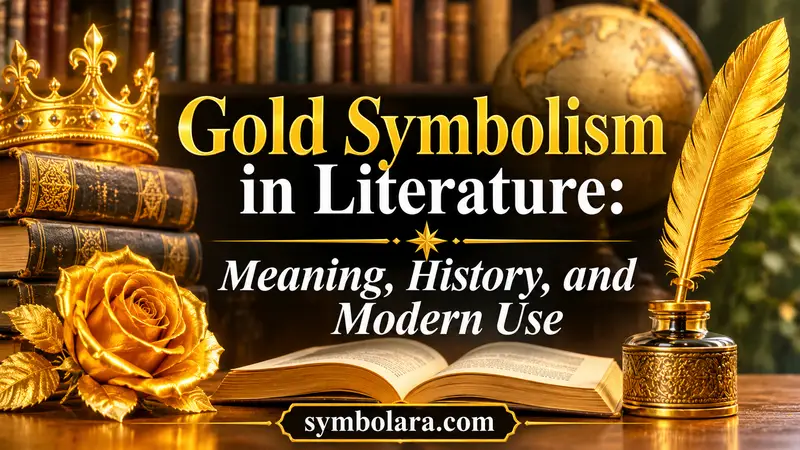
Gold has a special place in literature because it can represent both great beauty and serious danger. A golden crown may suggest royal authority, while a golden object in a story about greed may reveal a character’s desire for wealth. Even a simple description of golden sunlight can create a feeling of hope, warmth, or a new beginning.
Gold symbolism in literature helps readers understand ideas that go beyond the objects, colors, and characters described on the page. Writers use gold to suggest wealth, success, purity, beauty, temptation, power, and corruption. Its meaning depends on the story, the character who values it, and what happens around it.
In American books, films, poetry, and popular storytelling, gold often reflects the country’s complicated relationship with success and money. From stories about the California Gold Rush to modern novels about fame and social status, it can represent both the promise of a better life and the cost of pursuing it.
Quick Answer
Gold symbolism in literature most commonly represents wealth, power, success, beauty, purity, and ambition, but it can also suggest greed and corruption. These associations developed through gold’s historical value as a rare metal used in royal objects, religious art, currency, jewelry, and trade.
TL;DR
- Gold often represents wealth, status, achievement, and social power.
- Golden light can suggest hope, knowledge, beauty, and renewal.
- Royal crowns connect gold with authority and leadership.
- Greedy characters may treat gold as a source of temptation.
- American literature connects gold with opportunity and material ambition.
- Modern writers use gold to question the meaning of success.
What Does Gold Look Like in Literary Descriptions?
Gold is a yellow-colored metal with a bright surface and a distinctive shine. In literature, however, the word describes more than the actual metal. Writers also use it for objects, natural scenes, clothing, and light that share its warm yellow appearance.
Common literary descriptions include:
- Golden crowns: Symbols of royalty, leadership, and authority.
- Gold coins: Signs of wealth, trade, reward, and financial ambition.
- Golden hair: Often associated with beauty, youth, and physical attraction.
- Golden sunlight: A description that can create feelings of comfort, hope, or happiness.
- Golden fields: Images of harvest, abundance, and the changing seasons.
- Gold jewelry: Objects that may represent family history, social position, love, or personal value.
A writer might describe an ordinary afternoon as golden to create a warm atmosphere. Another might describe a room filled with gold objects to show a wealthy character’s lifestyle.
The same color can create very different impressions depending on the setting. A golden sunset may feel peaceful, while a gold-covered palace may suggest excessive luxury.
What Does Gold Represent in Literature Today?
Gold has several common meanings in modern writing. Some are positive, while others reveal the problems that come with wealth and ambition.
1. Wealth and Financial Success
Gold is strongly associated with money because it has served as a valuable trading metal and store of wealth across many societies.
In a novel, a character who collects gold coins may be trying to gain financial security or improve their social position. A wealthy family surrounded by gold decorations may also represent privilege and economic influence.
However, writers do not always present wealth as something admirable. Gold can reveal the difference between having money and living a satisfying life.
2. Power and Social Status
Gold often appears in descriptions of kings, queens, rulers, and powerful families.
A golden throne, for example, can communicate authority before a character even speaks. It tells readers that the person sitting on it has control, influence, and a respected position.
This association also appears in fantasy literature. Golden armor, royal jewelry, and decorated castles often help establish a character’s rank within an imaginary kingdom.
3. Purity and Perfection
Gold does not rust or tarnish easily under ordinary conditions. Its resistance to corrosion has helped connect it with lasting value and purity.
Writers sometimes use gold to describe something that seems untouched, flawless, or especially valuable.
A golden heart, for instance, usually describes someone who is kind and generous. The phrase does not mean the person is wealthy. It describes their character as something precious.
4. Beauty and Attraction
Gold attracts attention because of its brightness and warm appearance.
In poetry and fiction, golden hair, golden flowers, and golden clothing can describe physical beauty. Such descriptions may also help create an idealized image of a person or place.
Writers sometimes use this association to question appearances. A beautiful golden object may look valuable but turn out to be useless, stolen, or connected to a harmful decision.
5. Greed and Corruption
Gold can also represent the desire to own more than someone needs.
When a character becomes obsessed with collecting gold, the metal may represent greed, selfishness, and poor judgment.
This meaning appears in many stories about treasure hunting. The characters begin with a reasonable goal, such as finding a fortune, but their desire for wealth can gradually damage their relationships and sense of responsibility.
6. Hope and Achievement
Gold medals, prizes, and awards make gold a natural sign of accomplishment.
In literature, a golden object may represent a goal that a character has worked hard to reach. It can stand for recognition after years of effort or the reward that follows a difficult journey.
However, a writer may also ask whether the reward is worth the sacrifices made to obtain it.
Where Did Gold Symbolism Begin?
The literary meaning of gold developed from its real-world value. Long before modern novels and printed books, people used gold for jewelry, ceremonial objects, decorations, and displays of authority.
Its rarity, appearance, and resistance to corrosion made it especially desirable.
Gold in Ancient Egyptian Culture
Ancient Egypt provides one of the clearest historical examples of gold’s cultural importance.
Egyptian rulers and wealthy individuals used gold in jewelry, burial objects, and decorative works. The metal’s lasting appearance made it suitable for objects connected with royal status and life after death.
Gold was also associated with the Egyptian sun god Ra in religious imagery. Some Egyptian beliefs connected gold with the divine and the enduring nature of the gods.
These associations later influenced how readers and writers understood gold as a sign of royalty, permanence, and sacred importance.
Gold in Ancient Greek Stories
Greek mythology contains several famous stories involving gold.
One example is the Golden Fleece, the object sought by Jason and the Argonauts. It represented a difficult prize connected with kingship, adventure, and the right to rule.
The story shows how gold could represent more than financial value. It could also stand for a goal that required courage, planning, and cooperation to achieve.
Another well-known example is the myth of King Midas. After receiving the ability to turn objects into gold, he discovers that his wish creates serious problems. Even food becomes impossible to enjoy when everything he touches turns into metal.
The story presents a clear warning: wealth can become harmful when someone values it more than ordinary human needs.
Gold in Medieval European Writing
During the Middle Ages, gold remained important in royal courts, churches, manuscripts, and religious artwork.
Illuminated manuscripts sometimes used gold leaf to decorate letters, borders, and important figures. The bright material helped separate sacred subjects from ordinary scenes.
In medieval literature, gold could suggest royal authority, generosity, spiritual value, or temptation. Its meaning depended on the writer’s purpose.
For example, a generous ruler giving gold to others might represent responsible leadership. A character who hoards treasure could represent selfishness.
How Did Gold Become a Symbol of American Ambition?
The California Gold Rush of 1848–1855 helped shape America’s relationship with gold.
After gold was discovered at Sutter’s Mill in California in January 1848, thousands of people traveled west hoping to find wealth. The discovery attracted miners, merchants, workers, and families from different parts of the United States and other countries.
Gold became connected with the idea that a person could change their life through hard work and opportunity.
This idea entered American literature in several ways:
- The dream of finding a fortune in unfamiliar territory.
- The belief that personal effort could lead to financial independence.
- The risks of pursuing wealth without considering the consequences.
- The conflict between individual ambition and community responsibility.
The Gold Rush also exposed serious problems, including violence, displacement of Native communities, environmental damage, and unfair treatment of immigrant miners.
As a result, American stories about gold can carry two different messages. It may represent freedom and opportunity, but it can also reveal exploitation and the human cost of greed.
What Does Gold Symbolize in Famous Literary Works?
Writers use gold in different ways depending on the themes of their stories. Looking at well-known works makes these differences easier to understand.
The Great Gatsby by F. Scott Fitzgerald
In The Great Gatsby, F. Scott Fitzgerald examines wealth, social class, and the American Dream.
The novel’s world contains expensive homes, fashionable clothing, luxurious parties, and characters who measure success through material possessions.
Gold-colored imagery fits this setting because it suggests luxury and social status. Yet the novel does not present wealth as a guarantee of happiness.
Jay Gatsby’s fortune allows him to enter a wealthy social world, but it cannot give him complete control over his past or his relationships.
The contrast between appearance and reality is central to the novel. Wealth may look attractive from a distance, but it does not necessarily create a meaningful life.
The Merchant of Venice by William Shakespeare
Shakespeare uses gold in the casket test in The Merchant of Venice.
Portia’s suitors must choose among three caskets made of gold, silver, and lead. The gold casket carries an inscription promising what many people desire.
The Prince of Morocco chooses gold because he believes the most valuable-looking object must contain the greatest reward.
His decision is incorrect.
The scene questions the habit of judging value through appearance. Gold represents outward attraction and the desire for status, while the correct choice requires a different kind of judgment.
King Midas and the Golden Touch
The myth of King Midas is one of the clearest examples of gold representing greed.
Midas receives the ability to turn everything he touches into gold. At first, he believes this gift will make him extremely wealthy.
The problem becomes clear when ordinary objects, including food, become unusable. In some versions of the story, his daughter is also turned into gold.
The myth teaches that financial wealth cannot replace love, health, food, or human relationships.
It also shows why gold can have a negative meaning even when it appears beautiful.
The Golden Fleece in Greek Mythology
The Golden Fleece represents a difficult goal that requires courage and determination.
Jason’s journey to obtain it involves dangerous challenges and complicated relationships. The object becomes a sign of achievement, leadership, and the risks involved in pursuing a valuable prize.
Unlike the Midas story, where gold becomes a burden, the Golden Fleece is presented as a goal worth seeking within the story’s heroic framework.
Together, these examples show that gold does not have one fixed literary meaning.
How Is Gold Used in American Literature and Popular Culture?
American writers often use gold to explore the relationship between money, identity, and success.
The metal appears in stories about wealthy families, ambitious individuals, historical migration, and people trying to improve their circumstances.
A few familiar examples show how these meanings work.
The American Dream: Gold can represent the hope of becoming successful through personal effort. However, some writers question whether wealth is a fair measure of achievement.
The Western genre: Gold mines, mining towns, and treasure discoveries are common features of Western stories. They create opportunities for adventure while introducing conflicts over land and ownership.
Sports stories: Gold medals represent the highest level of achievement in many competitions. They communicate discipline, training, and public recognition.
Family stories: A gold wedding band or inherited necklace may represent relationships, memories, and family history rather than financial status.
Political and historical writing: Gold rush accounts can explore migration, economic change, and conflicts over natural resources.
In American storytelling, gold often becomes a way to discuss what people are willing to sacrifice to achieve their goals.
How Do Other Cultures Interpret Gold?
Gold has documented cultural importance in several parts of the world. Its meanings are not identical, although wealth, authority, celebration, and sacred use appear in many traditions.
Chinese Cultural Traditions
In Chinese cultural traditions, gold is commonly associated with prosperity, good fortune, and wealth.
Gold-colored decorations, ingot-shaped ornaments, and gifts are especially visible during Lunar New Year celebrations.
The color combination of red and gold is also common in festive decorations because both colors carry positive associations in many Chinese settings.
Indian Cultural Traditions
Gold has an important place in Indian jewelry, weddings, and family traditions.
Gold ornaments are often given during marriage celebrations and passed between generations. In many families, they represent family support, financial security, and continuity.
Gold is also used in religious settings, although specific meanings differ across communities and traditions.
Ancient Egyptian Traditions
Ancient Egyptian gold objects were associated with kingship, religious imagery, and beliefs about the afterlife.
This historical connection helps explain why gold became a familiar feature of royal and sacred descriptions in later European literature.
These examples show that cultural context matters. A golden wedding necklace, a Chinese New Year decoration, and a royal crown may all use the same metal while communicating different ideas.
Why Does Gold Have Such Strong Emotional Associations?
Gold attracts attention through its appearance, but its emotional meaning also comes from what people associate with owning or receiving it.
A gold ring may remind someone of a marriage. A gold medal may bring back memories of years of practice. A family necklace may represent a relative who has passed away.
These personal connections help explain why writers use gold when describing important moments.
There are several common emotional associations:
- Pride: Receiving a gold award can create a feeling of accomplishment.
- Security: Gold jewelry or coins may represent financial protection.
- Admiration: Golden objects often attract attention because of their appearance.
- Nostalgia: Inherited gold pieces can remind people of family members and earlier generations.
- Envy: Seeing someone with expensive gold jewelry may create feelings of comparison.
- Disappointment: Discovering that wealth cannot solve a personal problem can change how a character views gold.
The meaning also depends on the person who owns the object. A necklace may be priceless to someone because it belonged to a grandparent, even if its market value is low.
That difference between personal and financial value gives writers useful ways to develop characters and relationships.
What Does Gold Mean in Literature When It Appears as Light or Nature?
Gold does not always appear as jewelry, coins, or treasure. Writers frequently use it to describe sunlight, autumn leaves, flowers, and other parts of nature.
These descriptions create a different set of associations.
Golden sunlight: Morning or evening sunlight can suggest comfort, hope, or a peaceful moment. A writer may use it to mark the end of a difficult period.
Golden autumn leaves: Trees changing color in September and October can represent maturity, aging, and the passage of time.
Golden wheat fields: These images may suggest harvest, food, prosperity, and the rewards of labor.
Golden flowers: Flowers such as sunflowers can represent warmth, admiration, and happiness, depending on the surrounding description.
Golden skies: A sky filled with golden light may create a sense of wonder, celebration, or transition.
For example, a story that describes a golden field just before harvest may connect the color with patience and the results of hard work.
In a story about an aging character, golden autumn leaves may instead suggest that an important stage of life is coming to an end.
The natural setting changes the emotional effect of the color.
What Is the Difference Between Gold as a Positive and Negative Symbol?
Gold can represent admirable qualities, but it can also reveal selfish behavior. Readers should consider what a character does with gold rather than assuming that every golden object has a positive meaning.
| Context | Meaning in USA | Common Associations | Notes |
| Royal crowns | Authority and leadership | Status, responsibility, privilege | May question whether a ruler deserves power |
| Gold medals | Achievement and recognition | Competition, discipline, victory | Often represents years of effort |
| Inherited jewelry | Family connection and memory | Love, tradition, personal history | Emotional value may exceed its price |
| Treasure in adventure stories | Opportunity and ambition | Risk, discovery, greed | The search may reveal a character’s weaknesses |
| Golden sunlight | Hope and comfort | Renewal, peace, optimism | Often creates a warm atmosphere |
| Gold-covered objects | Luxury and excess | Wealth, display, social inequality | May criticize materialism |
A golden medal awarded to a hardworking athlete usually carries a positive meaning. A character who steals gold from others may represent the opposite.
The metal itself does not determine whether the meaning is good or bad. The surrounding events and choices do.
Why Do Writers Use Gold to Represent Greed?
Gold is useful in stories about greed because it offers a clear object of desire.
A character can want more gold, hide it, fight over it, or risk everything to obtain it. These actions allow writers to show changes in personality through behavior rather than simply describing someone as selfish.
King Midas is a clear example. His desire for gold becomes a problem because he fails to consider how the gift will affect everyday life.
Treasure stories use a similar idea. At first, finding gold may seem like a reasonable goal. As the characters become more obsessed, their relationships may weaken and their decisions may become reckless.
Gold can also represent inequality. A wealthy character may live in a gold-decorated mansion while workers struggle to meet basic needs.
In this case, the metal becomes a way to discuss the difference between wealth and fairness.
How Has Gold’s Literary Meaning Changed Over Time?
The meaning of gold has developed as societies have changed their relationships with money, government, religion, and personal success.
In ancient societies, gold was closely connected with rulers, religious objects, and burial traditions. Its rarity made it a visible sign of wealth and authority.
During the medieval period, gold became a familiar feature of royal objects, religious manuscripts, and ceremonial art. Writers could use it to suggest both earthly status and spiritual importance.
During the Renaissance, writers increasingly used gold in stories about human desire, appearance, and moral judgment. Shakespeare’s casket scene is one example of how a golden object could represent an attractive but misleading choice.
In nineteenth-century America, the Gold Rush connected the metal with migration, economic opportunity, and the promise of a better life. At the same time, writers and historians examined the violence and inequality associated with the search for wealth.
During the twentieth century, American literature often used gold to question consumer culture, social class, and the American Dream. Fitzgerald’s The Great Gatsby is an important example of this shift.
In the twenty-first century, gold continues to appear in stories about luxury, fame, personal achievement, family history, and materialism.
The main change is not that gold has lost its older meanings. Instead, writers now have more ways to question the relationship between financial value and personal worth.
How Is Gold Symbolism Used in Modern Books, Tattoos, and Art?
Modern writers and artists continue to use gold because its appearance is easy to recognize and its cultural associations are familiar.
However, the intended meaning often changes according to the medium.
In Modern Fiction and Poetry
Authors may describe a golden room, necklace, or landscape to establish a character’s surroundings.
A golden object can also become a recurring detail. When it appears at important moments, readers may connect it with a character’s changing goals or beliefs.
For example, a character who begins by admiring an expensive gold watch may later reject it after discovering that its owner used wealth to control others.
In Tattoos
Gold-inspired tattoo designs can communicate several ideas:
- A golden sun may represent optimism and a fresh start.
- A gold crown may suggest confidence, authority, or self-respect.
- A golden butterfly may represent change and personal growth.
- Gold-colored lettering may emphasize a meaningful name or personal achievement.
The intended meaning usually comes from the person’s own experience rather than a universal rule.
In Jewelry and Fashion
Gold jewelry remains associated with celebration, luxury, and personal style.
In the United States, gold necklaces, bracelets, earrings, and wedding bands appear in everyday fashion as well as formal events.
Some people choose gold because it has a warm appearance. Others prefer it because a particular piece reminds them of a family member or an important occasion.
In Social Media and Branding
Gold is commonly used in digital designs, logos, award graphics, and promotional images.
A gold-colored background or border may suggest a premium product or special recognition. Social media creators also use gold medal graphics and trophy images to celebrate milestones.
However, using gold does not automatically communicate quality. In some advertising, it may simply be a visual way to make a product appear more expensive.
What Are the Common Misunderstandings About Gold?
Gold has many familiar associations, but several assumptions about its meaning can lead to incorrect interpretations.
Misunderstanding 1: Gold always represents goodness.
Gold can represent greed, corruption, vanity, or unfair privilege. King Midas demonstrates how a desire for wealth can become destructive.
Misunderstanding 2: Gold always represents financial success.
A golden sunset or golden heart does not suggest that someone has money. The color can describe beauty, kindness, or a positive emotional experience.
Misunderstanding 3: Gold has the same meaning in every culture.
Cultural traditions differ. Gold may represent family security in one setting, royal authority in another, and festive prosperity in another.
Misunderstanding 4: Every golden object in literature has a hidden meaning.
Sometimes a writer uses gold simply to describe appearance. Readers should look for repetition, contrast, character behavior, and the larger theme before deciding that an object represents something more.
Misunderstanding 5: Gold and yellow always mean the same thing.
Although they are related colors, gold usually suggests value, luxury, or achievement more strongly. Yellow can have different associations, including happiness, caution, illness, or jealousy.
How Can You Identify Gold Symbolism When Reading a Story?
You do not need special literary training to recognize the meaning of gold. A few simple questions can help you understand why a writer included it.
- What is golden? Is it jewelry, a crown, a natural scene, a prize, or something else?
- Who owns or values it? A wealthy ruler may view gold differently from a poor traveler.
- What happens around it? Does the object bring happiness, create conflict, or cause disappointment?
- Does it appear more than once? Repeated descriptions may connect gold with an important theme.
- Does appearance match reality? A beautiful golden object may hide a problem or reveal a false promise.
- How does the character change? Their attitude toward gold may reveal a change in priorities.
Consider a fictional story about a young athlete who wins a gold medal but loses contact with close friends while pursuing recognition.
The medal initially represents hard work and success. Later, it may become a reminder of what the athlete sacrificed.
The meaning develops as the story progresses. This is one reason readers should examine gold within the full context of a literary work.
FAQs
Is gold symbolism in literature positive or negative?
It can be either. Gold often represents success, beauty, generosity, and achievement, but it can also represent greed, vanity, and corruption. The story’s events determine which meaning is most important.
Does gold symbolize love in literature?
Gold can represent lasting affection when it appears in wedding rings, inherited jewelry, or meaningful gifts. However, it is not a universal symbol of romantic love. Silver, flowers, and other objects may carry that role depending on the story.
What does a golden heart mean in a story?
A golden heart describes someone who is kind, caring, and generous. The phrase focuses on moral character rather than money or social position. It is usually a positive description.
Why do poets describe memories as golden?
Golden memories are usually happy or treasured experiences from the past. The description can also suggest nostalgia, especially when the speaker recognizes that the moment cannot return.
What does a golden crown symbolize?
A golden crown commonly represents royal authority, leadership, and social rank. In some stories, it can also represent responsibility or the burden of ruling. A crown taken by force may suggest ambition and political conflict.
Is gold associated with the American Dream?
Yes. Gold became closely connected with the American Dream through the California Gold Rush and later stories about financial opportunity. However, American writers have also used it to question whether wealth truly leads to happiness or equality.
What is the difference between gold symbolism and golden imagery?
Gold symbolism occurs when gold represents an idea beyond its physical appearance, such as greed or achievement. Golden imagery uses the color or appearance to help readers picture something, such as golden sunlight or golden leaves. A single description can serve both purposes.
Conclusion
Gold symbolism in literature covers much more than wealth and luxury. It can represent authority, beauty, achievement, hope, family connections, greed, and the desire for a better life. Its meaning depends on the object, the character, the cultural setting, and the events surrounding it.
From the Egyptian royal objects and the Greek story of King Midas to Shakespeare’s caskets and Fitzgerald’s wealthy characters, gold has helped writers examine the difference between appearance and real value. American literature adds another layer through its connection with the Gold Rush, social class, and the promise of financial success.
Gold remains useful in storytelling because people still face the same basic question: What makes something truly valuable? A golden medal, an inherited ring, or a treasure chest may look precious, but the choices people make around these objects often reveal far more about their character.

[…] symbolism in literature often appears when a character faces something larger than personal experience. The water may […]