
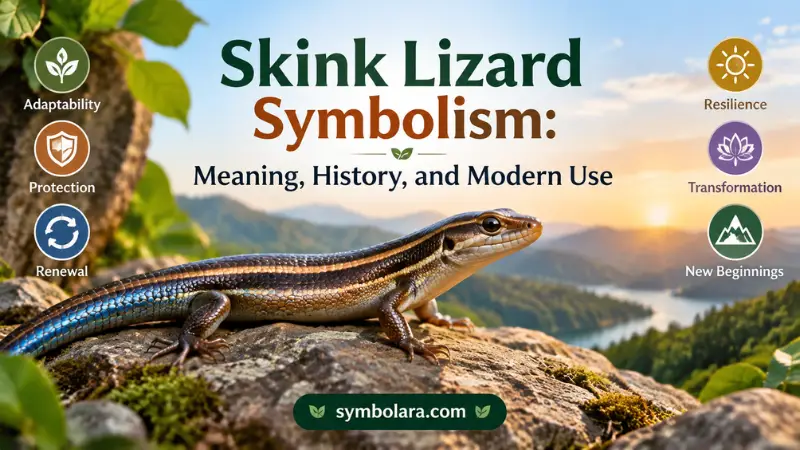
Skinks are small, smooth-scaled lizards found in many parts of the world, including regions of the United States. Unlike many reptiles with rough appearances, skinks often have shiny bodies, short legs, and quick movements that help them disappear into soil, leaves, and garden spaces. Their ability to adapt and survive in different environments has led people to connect them with ideas such as flexibility, protection, renewal, and quiet strength.
People often look up Skink Lizard Symbolism because they want to understand why this small reptile appears in tattoos, artwork, nature discussions, and personal expressions. In American culture, skinks are usually viewed through a connection with nature, survival, and the ability to adjust to changing surroundings rather than through strong folklore traditions.
Although skinks do not have the same widespread symbolic history as animals like snakes, wolves, or birds, their natural behaviors have inspired modern interpretations. Their role in ecosystems and their unusual ability to live close to humans have shaped how many people view them today.
Quick Answer
Skink lizards commonly symbolize adaptability, survival, protection, and connection with nature in modern American interpretations. These meanings come mainly from the skink’s behavior, including hiding skills, environmental adaptation, and survival abilities rather than from a large body of traditional folklore.
TL;DR
- Skinks represent adaptability and survival in modern symbolism.
- Their smooth bodies inspire ideas of flexibility and movement.
- Many Americans connect skinks with gardens and natural spaces.
- Skinks have limited traditional folklore compared with larger reptiles.
- Modern uses include tattoos, art, and nature themes.
What Does a Skink Look Like and Where Is It Found?
Skinks are a type of lizard belonging to the family Scincidae, which includes more than 1,500 species around the world. They are known for their long, smooth, shiny scales and cylindrical bodies. Many species have small or reduced legs, while some appear almost snake-like because their limbs are less noticeable.
In the United States, people may encounter skinks in forests, gardens, rocky areas, and suburban landscapes. The five-lined skink, one of the best-known American species, is recognized by the blue tail often seen in young individuals. These lizards are common in parts of the eastern and central United States.
Skinks usually avoid direct conflict. They hide under logs, rocks, leaf litter, and other natural materials. Some species can detach their tails when threatened, allowing them to escape predators while the lost tail later grows back partially.
These physical traits are the main reason people associate skinks with survival, recovery, and adjustment.
Why Do People Associate Skinks With Adaptability?
The strongest modern meaning connected to skinks comes from their ability to adjust to different conditions. They can live in forests, deserts, grasslands, and even human-made environments depending on the species.
A skink does not survive by being the largest or strongest animal. Instead, it depends on awareness, speed, hiding ability, and careful movement. Because of this, people often use the skink as a symbol of finding solutions during difficult situations.
For someone choosing a skink image for personal reasons, it may represent:
- adjusting to new environments
- staying calm during challenges
- using intelligence instead of force
- recovering after setbacks
- moving forward quietly
This interpretation is mostly a modern symbolic reading based on animal behavior rather than a documented belief system.
The Historical Background of Skink Symbolism
Unlike dragons, snakes, or turtles, skinks do not have a large record of symbolic meaning in major historical traditions. Many ancient cultures recorded meanings for animals they considered important in religion, mythology, or storytelling, but small lizards often received less attention.
Some cultures did recognize lizards generally as symbols connected with survival, regeneration, and the natural world. These broader lizard associations sometimes influence how people view skinks today. However, it is important to separate general lizard symbolism from specific historical beliefs about skinks.
The exact origin of skink-specific symbolism is difficult to identify because most meanings developed through modern observation rather than written traditions.
During the 19th and 20th centuries, increased interest in natural history changed how many people viewed reptiles. Scientists, collectors, and nature writers helped introduce reptiles as important parts of ecosystems instead of creatures associated only with fear or danger.
Today, skinks are more often appreciated as small wildlife species that contribute to healthy environments.
Skink Lizards in American Nature and Everyday Life
In the United States, skinks are mainly connected with outdoor spaces. Gardeners, hikers, and wildlife enthusiasts often recognize them as harmless reptiles that help maintain natural balance.
Skinks eat insects and other small creatures, which makes them welcome visitors in many gardens. Seeing a skink near a home may remind people of a healthy outdoor environment where native wildlife can survive.
Common American associations include:
- backyard nature observation
- wildlife photography
- gardening
- environmental awareness
- appreciation for local species
Unlike animals used in national symbols or holiday traditions, skinks do not have a major role in American celebrations. Their meaning usually appears through personal interests, artwork, and nature-focused communities.
What Emotional Meanings Are Connected to Skinks?
People often choose animal symbols because they see parts of their own experiences reflected in nature. The skink’s behavior creates several emotional associations.
Quiet confidence
Skinks rarely attract attention through size or appearance. Their survival depends on awareness and patience. Some people connect this with the idea that success does not always require being noticeable.
Recovery after change
Many skinks can lose and regrow their tails. Although the replacement is not identical to the original, this process has encouraged symbolic connections with healing and recovery.
Independence
Skinks usually move alone and rely on their own instincts. This can represent self-reliance and personal growth.
These meanings are personal interpretations rather than universal rules. A skink symbol can represent different ideas depending on the person using it.
How Skink Imagery Appears in Modern Tattoos and Art
Skink designs are less common than popular reptile tattoos such as snakes, lizards, or dragons. However, people who choose skink imagery often do so because of its connection with nature and individuality.
A skink tattoo may include:
- realistic details showing scales and body shape
- woodland backgrounds
- plants, rocks, or leaves
- colorful tails inspired by young five-lined skinks
- minimalist outlines
Nature lovers may choose a skink because it represents appreciation for smaller creatures that are often overlooked.
Artists may also use skinks to create designs focused on ecosystems, biodiversity, and the relationship between humans and wildlife.
Skinks in Cross-Cultural Animal Understanding
Unlike some reptiles that appear frequently in myths and traditional stories, skinks have limited documented symbolic roles across cultures. Most cultural interpretations focus on lizards in general rather than skinks specifically.
In some Indigenous traditions, lizards have been viewed as animals connected with survival, observation, and living close to the earth. However, these beliefs vary widely between communities, and they should not automatically be assigned to every lizard species.
Skinks are more often understood through their natural qualities:
- living quietly within their environment
- responding quickly to danger
- adapting to different habitats
- contributing to local ecosystems
Because skinks are found in many regions, people from different places may develop personal meanings based on their own encounters with them rather than following one shared tradition.
Why a Small Lizard Can Represent Personal Growth
Many people connect with smaller animals because they reflect experiences that feel realistic and relatable. A skink does not represent dominance or control. Instead, it represents qualities that are easier to observe in everyday life.
Someone who connects with a skink may see it as a reminder to:
- stay flexible during life changes
- pay attention before making decisions
- protect personal boundaries
- recover from unexpected problems
- value quiet progress
For example, a person moving to a new city might choose a skink image because the animal represents adjusting to a new environment. Another person might connect with it after overcoming a difficult period and seeing the skink’s ability to recover as a fitting image.
The meaning comes from the relationship between the person and the symbol, not from a single fixed definition.
Common Misunderstandings About Skink Symbolism
Because skinks are reptiles, some people mistakenly connect them with the same negative ideas sometimes attached to snakes or other reptiles. This can create confusion about their symbolic meaning.
A few common misunderstandings include:
“All lizards have the same symbolism”
Lizards are a large and diverse group of animals. A gecko, iguana, monitor lizard, and skink have different behaviors and cultural associations. General lizard meanings do not always apply directly to skinks.
“Skinks have a famous ancient meaning”
There is little evidence that skinks had a major symbolic role in ancient civilizations. Most current interpretations developed from observation of their behavior and appearance.
“Seeing a skink always has a spiritual message”
Some individuals may personally view animal encounters as meaningful, but there is no scientific evidence that seeing a skink predicts future events or carries a universal message.
Understanding these differences helps separate personal symbolism from documented cultural traditions.
How Skink Symbolism Has Changed Over Time
The way people view skinks has shifted as attitudes toward reptiles have changed.
In earlier periods, many reptiles were misunderstood or feared because people had limited knowledge about their behavior. Small lizards were sometimes ignored or grouped together with animals considered dangerous.
During the growth of modern biology and wildlife conservation, reptiles became better understood as important parts of ecosystems. Skinks began to be viewed as useful animals that control insect populations and reflect environmental health.
In recent decades, nature photography, wildlife education, and social media have introduced more people to lesser-known animals. This has helped skinks move from being overlooked backyard creatures to symbols of biodiversity and natural connection.
Younger generations often approach animal symbolism through personal identity, artwork, and environmental interests rather than strict traditional meanings.
Skink Symbolism in Fashion, Jewelry, and Home Design
Skink imagery is not a mainstream fashion symbol, but it appears in smaller nature-focused communities.
Examples include:
- handmade reptile jewelry
- wildlife-themed artwork
- nature-inspired clothing designs
- decorative illustrations
- educational materials
A skink design in jewelry may communicate appreciation for unusual animals or a connection with outdoor life. A home decoration featuring a skink may reflect an interest in gardening, conservation, or local wildlife.
The meaning usually depends on the design style. A realistic skink image often highlights nature appreciation, while a simple artistic version may focus more on personal identity.
Skink Symbolism Compared With Other Reptiles
Different reptiles often carry different symbolic associations. Comparing them helps explain why skinks have their own modern interpretation.
| Context | Meaning in USA | Common Associations | Notes |
| Tattoo design | Adaptability and recovery | Nature, personal change, resilience | Often chosen by people who prefer uncommon animal symbols |
| Garden encounters | Healthy environment and wildlife presence | Balance, insects control, outdoor awareness | Skinks are often welcomed because they eat small pests |
| Jewelry and artwork | Individuality and nature connection | Creativity, wildlife appreciation | Less common than snake or dragon designs |
| Wildlife education | Ecosystem importance | Conservation, learning, biodiversity | Used to introduce people to local reptiles |
| Personal symbolism | Quiet strength and adjustment | Patience, flexibility, survival | Meaning depends on the individual’s experience |
Do Skinks Have a Place in Pop Culture?
Skinks do not have the same level of recognition in movies, games, and popular stories as larger reptiles. Dragons, snakes, and dinosaurs appear much more often in entertainment.
However, interest in unusual animals has grown through wildlife programs, online communities, and nature content. Some people discover skinks through videos, photography, or reptile-keeping communities.
In these spaces, skinks are often presented as interesting animals with unique behaviors rather than as creatures with dramatic symbolism.
Their smaller size can actually make them appealing because they represent overlooked parts of the natural world.
Does Skink Symbolism Have a Religious Meaning?
Skink symbolism does not have a widely recognized religious meaning in major modern religious traditions.
Some religions and cultural systems include lizards or reptiles in stories and teachings, but these references usually involve specific species or broader reptile categories rather than skinks.
A person may personally connect a skink with their beliefs, but that interpretation comes from individual reflection rather than a common religious tradition.
FAQs
Skink symbolism is usually viewed positively because it focuses on adaptation, survival, and connection with nature. Negative interpretations often come from general fears about reptiles rather than from skinks themselves.
A skink tattoo may represent flexibility, recovery, independence, or appreciation for wildlife. The meaning depends on the person’s reason for choosing the design.
There is no widely documented belief that skinks bring luck. Some people may personally consider seeing wildlife a positive experience, but this varies by individual.
Some modern interpretations connect skinks with transformation because certain species can lose and regrow their tails. This idea comes from observing their biology rather than from traditional symbolism.
Most skinks found in the United States are harmless to people. They generally avoid humans and prefer hiding or escaping when threatened.
Skinks help ecosystems by eating insects and serving as part of local food chains. Their presence can indicate a functioning natural environment.
Lizard symbolism is a broader category that may include many species with different meanings. Skink symbolism focuses more on traits such as quiet movement, adaptability, and survival.
Conclusion
Skink Lizard Symbolism is mainly connected with adaptability, survival, and a close relationship with the natural world. Unlike some famous animal symbols, skinks do not have a large collection of traditional myths or established meanings. Their modern interpretations come mostly from observing how they live, move, and adjust to their surroundings.
For many Americans, the skink represents qualities that are easy to recognize in everyday experiences: staying flexible, recovering after change, and finding ways to move forward. A small lizard hiding among leaves or rocks can remind people that even less noticeable creatures have an important place in nature.


