Cicadas are known for their loud summer songs, transparent wings, and unusual life cycle. In many parts of the United States, people notice cicadas when they emerge from the ground after years of underground growth, covering trees and filling warm evenings with sound.
Many people search for cicada symbolism because the insect’s rare appearance and transformation from underground nymph to flying adult create strong associations with change, renewal, patience, and new beginnings. Today, cicadas appear in tattoos, artwork, jewelry, and personal designs that reflect different life experiences.
The meaning of the cicada has changed across cultures and generations. Some traditions connected it with long life and rebirth, while modern Americans often view it as a reminder of growth, personal change, and returning after difficult periods.
Quick Answer
Cicada symbolism commonly represents transformation, renewal, patience, and personal growth because of the insect’s long underground life followed by its short period above ground. Historically, cicadas were associated with rebirth and longevity in cultures such as ancient China and Greece.
TL;DR
- Cicadas often represent change and personal transformation.
- Their life cycle inspired ideas of renewal and rebirth.
- Ancient China linked cicadas with purity and long life.
- Greek traditions connected cicadas with music and immortality.
- Americans use cicada designs in art and tattoos.
- Modern meanings focus on growth and resilience.
What Does a Cicada Look Like and Where Is It Found?
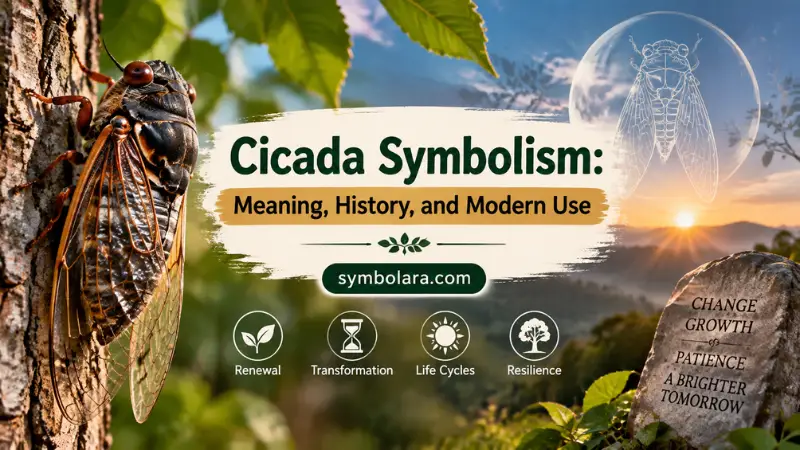
A cicada is a large insect with a rounded body, clear wings, and wide eyes. Most species have brown, green, or black coloring that helps them blend into trees and soil. Their most recognizable feature is the loud buzzing or clicking sound males create to attract mates.
Cicadas spend most of their lives underground as nymphs. They feed on fluids from tree roots before climbing out of the soil, shedding their outer skin, and becoming winged adults.
The United States has several types of cicadas, including annual cicadas that appear every year and periodical cicadas that emerge every 13 or 17 years. These rare appearances often attract public attention because large groups can suddenly cover forests, parks, and neighborhoods.
This unusual life pattern is one reason people connect cicadas with waiting, preparation, and major life transitions.
Why Cicadas Are Often Linked With Change and Renewal
The main modern meaning connected with cicadas comes from their dramatic transformation. A cicada begins life hidden underground and later appears in a completely different form with wings and a new purpose.
For many people, this represents personal change. Someone who moves to a new city, starts a different career, or begins a new stage of life may connect with the cicada as a reminder that growth can happen quietly before becoming visible.
The insect also represents timing. A cicada does not rush its development. It follows a natural cycle that may take more than a decade before reaching adulthood. Because of this, some people use cicada imagery to express patience and trust in their own progress.
In modern American culture, these meanings are usually personal rather than tied to a single belief system.
The Historical Roots of Cicada Meanings
Cicadas have been symbols for thousands of years, especially in East Asian and Mediterranean cultures. However, their meanings were not identical everywhere.
In ancient China, jade cicada carvings were placed with the dead during certain periods. Archaeological evidence shows that these objects were connected with ideas of purity, renewal, and the continuation of life. The exact beliefs varied between dynasties and regions.
Chinese scholars also viewed the cicada as a symbol of a person rising above ordinary concerns. Because the insect emerges from the earth and appears with wings, writers used it as a metaphor for personal improvement.
In ancient Greece, cicadas were connected with music because male cicadas produce songs. Greek stories and poetry sometimes associated them with artistic inspiration, singing, and a life beyond ordinary human limits.
These historical examples show that the cicada became meaningful because of observable traits: its song, unusual life cycle, and ability to transform.
Cicadas in American Culture and Everyday Life
In the United States, cicadas are mostly known as a natural event rather than a traditional symbol. When periodical cicadas emerge, communities often organize outdoor activities, educational programs, and nature events to observe them.
The 13-year and 17-year cicada cycles have become memorable moments in American environmental culture. Families, teachers, and children often use these events to learn about insects, ecosystems, and natural timing.
Artists also use cicadas because the insect represents a temporary but noticeable appearance. A cicada design can suggest making the most of a short opportunity or appreciating a rare moment.
Some Americans associate cicadas with summer memories. The sound of cicadas calling from trees can remind people of childhood evenings, vacations, outdoor gatherings, and warm weather.
How Cicada Tattoos Express Personal Stories
Cicada tattoos have become a popular way to represent personal change. The meaning depends on the person wearing the design, but several themes appear often.
A cicada tattoo may represent:
- Recovering after a difficult period
- Starting a new chapter
- Becoming a different version of oneself
- Waiting for the right moment to grow
- Appreciating temporary experiences
Design choices can also change the message. A realistic cicada with detailed wings may focus on nature and transformation, while a simple line drawing may represent a quieter personal reminder.
Some tattoo designs include flowers, moon shapes, trees, or geometric patterns. These additions can create extra meanings connected with nature, cycles, or personal identity.
Cicadas in Art, Jewelry, Fashion, and Modern Media
Cicadas appear in many forms of creative expression because their shape is easy to recognize and their life cycle offers several interpretations. Artists often focus on the insect’s wings, sound, or emergence from the ground.
In jewelry, cicada designs are sometimes created as pendants, earrings, or decorative pieces. A person may choose a cicada necklace or charm to represent a personal milestone, such as finishing school, recovering from a challenge, or beginning a new stage of life.
Cicada imagery also appears in paintings, illustrations, and home decorations. Some artists highlight the insect’s natural details, while others use it as a visual symbol of seasonal change. A cicada placed among flowers or trees may suggest a connection with summer and outdoor experiences.
On social media, cicada images often appear during major emergence years. Photos and videos of large cicada groups become popular because the event feels unusual and temporary. Many people share these moments as examples of nature’s cycles rather than as supernatural signs.
Why People Feel Connected to Cicadas
People often connect with cicadas because their life cycle reflects experiences that many people understand. The insect spends years developing out of sight before appearing in a visible form.
This pattern can remind people of personal growth that happens privately. A person may work for years on education, skills, health, or creative goals before others notice the results.
The cicada’s short adult life also encourages reflection on time. After spending many years underground, the insect has only a brief period to fly, sing, and reproduce. Some people interpret this as a reminder to value important moments.
Psychologically, symbols work because people attach their own memories and experiences to familiar images. A cicada may represent patience for one person and freedom for another.
Cicada Meanings in Different Cultures
Cicada symbolism appears in several documented cultural traditions, although meanings differ depending on the time and place.
Ancient China: Purity and Renewal
In ancient China, cicadas were connected with ideas of renewal and continued existence. Jade cicada carvings were used in burial practices during certain historical periods. These objects reflected beliefs about transformation and the continuation of life after death.
The cicada’s ability to leave its old outer shell was an important reason it became associated with change and renewal.
Ancient Greece: Music and the Arts
Ancient Greek writers connected cicadas with singing because male cicadas produce loud sounds. Some Greek stories described cicadas as creatures connected with music and artistic expression.
Their songs made them a natural symbol for creativity and performance.
Japan: Summer and Temporary Beauty
In Japan, cicadas are strongly connected with summer. Their sounds are a familiar part of seasonal life, especially in warmer months.
Japanese literature and art often use cicadas to represent the passing nature of time. Their brief appearance above ground fits ideas about appreciating moments that do not last forever.
What Cicadas Represent in Modern American Identity
In modern America, cicadas are usually interpreted through personal experience rather than formal tradition. People often choose cicada imagery because it matches their own stories.
For some, a cicada represents a comeback after a difficult period. The insect’s movement from darkness underground into sunlight can reflect overcoming obstacles.
For others, it represents preparation. The years spent underground suggest that important progress may happen slowly before anyone sees the results.
Cicadas can also represent individuality. Unlike common symbols such as hearts or stars, cicadas have a more specific connection with nature and unusual life cycles.
Common Misunderstandings About Cicada Symbolism
Because symbols change between cultures, cicadas are sometimes given meanings that do not have strong historical support.
One common misunderstanding is that every culture views cicadas as a sign of luck or fortune. Some traditions did connect cicadas with positive ideas, but meanings varied widely.
Another misunderstanding is that cicadas always represent spiritual rebirth. While some historical traditions used cicadas in connection with ideas of renewal, many modern interpretations are simply personal or artistic.
Cicadas are also sometimes confused with locusts because both insects can appear in large numbers. However, they belong to different insect groups and have different life cycles. Cicadas do not destroy crops in the same way locust swarms can.
Understanding the actual biology of cicadas helps separate traditional symbolism from modern assumptions.
How Cicada Symbolism Has Changed Over Time
The meaning of cicadas has shifted as societies changed their relationship with nature.
In ancient China, cicadas were connected with burial customs and ideas about renewal. In ancient Greece, their songs influenced connections with music and artistic expression.
Later, cicadas became more associated with seasonal experiences and natural observation. In the United States, their periodic appearances became events that brought communities together through science education and outdoor activities.
Today, many people view cicadas through a personal lens. A tattoo, artwork, or decoration may represent growth, waiting, change, or simply an appreciation for nature.
The symbol has moved from shared cultural traditions toward individual expression while keeping its connection to transformation and cycles.
Cicada Symbolism in Different Modern Contexts
| Context | Meaning in USA | Common Associations | Notes |
| Tattoo designs | Personal change and new chapters | Growth, recovery, transformation | Meaning depends on the wearer’s experience |
| Jewelry | A reminder of patience or milestones | Achievement, memories, personal goals | Often chosen after major life events |
| Nature events | Appreciation of natural cycles | Summer, science, community learning | Common during 13-year or 17-year emergences |
| Artwork and decor | Connection with nature | Seasonal change, creativity, outdoor life | Often combined with plants or landscapes |
| Fashion designs | Individual style and identity | Unusual beauty, uniqueness | Used less commonly than traditional symbols |
Why Cicadas Remain Interesting to People Today
Cicadas continue to attract attention because they combine several qualities that people notice: unusual timing, dramatic transformation, and a strong connection to the natural world.
A cicada does not appear every day, and some species remain hidden for more than a decade before emerging. That rare pattern makes people curious and encourages them to attach personal meanings to the insect.
For many Americans, seeing cicadas is not only about symbolism. It is also about remembering a specific summer, a childhood experience, or a shared community moment.
FAQs
Cicada symbolism is usually viewed positively because many interpretations focus on growth, renewal, patience, and change. However, some people may connect cicadas with noise, temporary disruption, or the uncomfortable process of change because large groups can be overwhelming during emergence periods.
Cicadas do not have one universal religious meaning. Some historical traditions used cicada imagery in connection with ideas about life, death, and renewal, but these meanings depended on specific cultures and time periods rather than representing a single religious belief.
Cicadas are linked with transformation because they change from underground nymphs into winged adults. This visible transition from one form to another has inspired people to use the insect as a symbol for personal growth and new stages of life.
A cicada tattoo often represents a personal experience rather than a fixed meaning. Many people choose it to symbolize overcoming challenges, entering a new phase, waiting for the right moment, or appreciating a temporary period in life.
Periodical cicadas spend most of their lives underground before emerging in large groups. Scientists believe these long cycles help them avoid many predators and allow large numbers to appear at once, increasing their chances of survival.
Some cultures have connected cicadas with positive ideas such as longevity and renewal, but there is no universal belief that cicadas bring luck. In modern America, people usually view them as symbols of nature, change, or personal meaning rather than signs of fortune.
Conclusion
Cicadas have gained meaning because of their unusual life cycle, distinctive sound, and rare appearances. From ancient cultural traditions to modern personal expression, the insect has represented ideas such as renewal, patience, creativity, and change.
Cicada symbolism today is often connected with personal growth and the idea that important changes can develop quietly before becoming visible. A cicada tattoo, artwork, or simple encounter with the insect may remind someone of a difficult period they overcame or a new chapter they began.
Whether viewed through history, nature, or personal experience, cicadas remain a symbol that connects ordinary moments with larger ideas about time, growth, and transformation. Their appearance in American neighborhoods, forests, and creative designs shows how a small insect can become part of personal stories and shared memories.