
A Blood Moon is a total lunar eclipse in which the Moon appears reddish or copper-colored as sunlight passes through Earth’s atmosphere before reaching the lunar surface. Because of its unusual appearance, Blood Moon symbolism has developed around ideas of change, reflection, mystery, and transformation across many cultures.
In modern American culture, people often view a Blood Moon as a meaningful natural event rather than simply an astronomical occurrence. It appears in photography, art, tattoos, spiritual discussions, and popular media because its dramatic appearance encourages people to think about cycles, endings, and new beginnings.
The meaning of a Blood Moon depends heavily on cultural background and personal interpretation. Some traditions connect it with warnings or major transitions, while others see it as a symbol of renewal, emotional awareness, and connection with nature.
Quick Answer
Blood Moon symbolism commonly represents change, transformation, and important life transitions in modern American culture, especially in spiritual, artistic, and personal contexts. Historically, many cultures connected the red lunar appearance with omens, renewal, or significant events.
TL;DR
- Blood Moons symbolize change, cycles, and transformation.
- Ancient cultures linked red moons with signs and events.
- Americans often view them as spiritual or artistic symbols.
- Lunar eclipses represent endings and new beginnings.
- Tattoos use Blood Moons for personal transformation.
- Scientific meaning differs from cultural interpretations.
What a Blood Moon Looks Like and Why It Stands Out
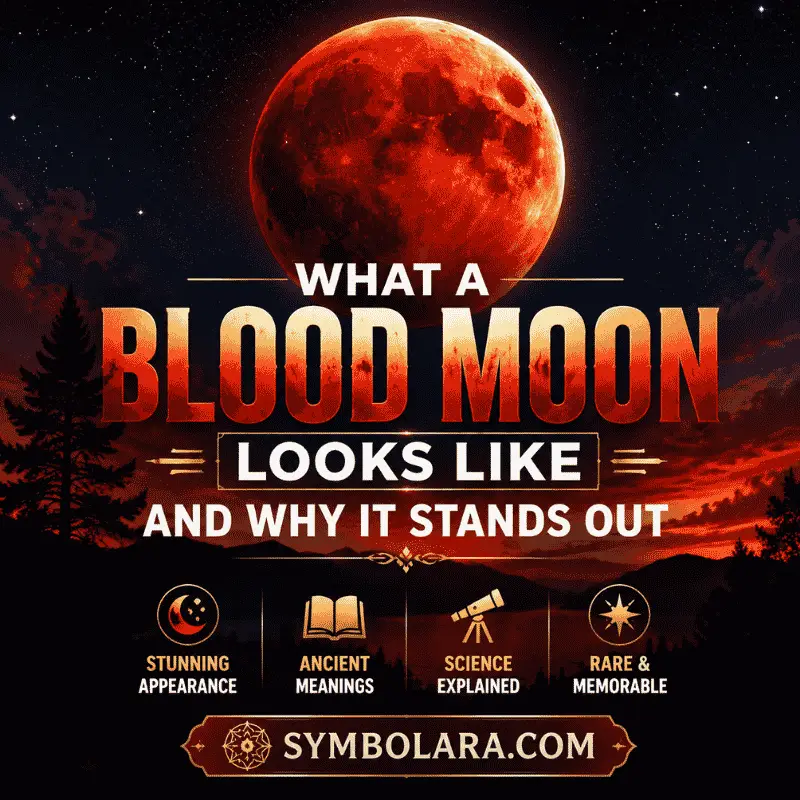
A Blood Moon occurs during a total lunar eclipse when Earth moves between the Sun and the Moon. Instead of disappearing completely, the Moon often takes on a reddish-orange appearance because Earth’s atmosphere filters sunlight.
The red color comes from a process called Rayleigh scattering, the same effect that creates colorful sunsets. Blue wavelengths scatter more easily, while red wavelengths pass through the atmosphere and reach the Moon.
Unlike a normal full moon, a Blood Moon creates a rare visual experience. Its unusual color has made it a natural symbol connected with unusual moments, personal reflection, and dramatic change.
What It Commonly Means in the United States
In the United States, Blood Moon symbolism is often shaped by a mixture of astronomy, popular culture, spirituality, and personal belief. Many Americans associate the event with transformation because an ordinary part of nature temporarily changes appearance.
Common interpretations include:
| Context | Meaning in the USA | Common Associations | Notes |
|---|---|---|---|
| Personal growth | Change and renewal | Life transitions, reflection | Often used in spiritual discussions |
| Art and design | Mystery and beauty | Night imagery, creativity | Popular in visual media |
| Tattoos | Transformation | Strength, rebirth | Usually personal rather than traditional |
| Religion and folklore | Signs or important events | Prophecy, warnings | Depends on belief system |
For many people, the Blood Moon represents a reminder that change is part of natural cycles. It does not have one fixed meaning, and interpretations vary widely.
Ancient Roots and Early Symbolism
Before modern astronomy explained lunar eclipses, many societies developed stories and beliefs around unusual lunar events. A Moon turning red could appear frightening or significant because it broke the expected pattern of the night sky.
Some ancient cultures viewed eclipses as warnings connected with rulers, disasters, or major changes. Others saw celestial events as moments when the relationship between humans, nature, and the universe became especially important.
These interpretations were influenced by the limited scientific knowledge available at the time. A rare red Moon naturally invited explanations based on mythology, religion, and cultural traditions.
Over time, scientific understanding changed how many people viewed eclipses, but symbolic interpretations continued in art, storytelling, and personal beliefs.
Blood Moon Meaning in Religious Traditions
Religious interpretations of lunar eclipses vary. Some traditions have associated unusual celestial events with messages, spiritual reflection, or moments of importance.
In some Christian discussions, Blood Moons have been connected with biblical passages mentioning the Moon appearing like blood. These interpretations are debated and differ among religious communities.
Other spiritual traditions view lunar events as opportunities for meditation, renewal, or observing natural cycles. The meaning usually depends on the individual’s beliefs rather than the eclipse itself.
It is important to separate traditional interpretations from scientific facts. A Blood Moon is an astronomical event, while symbolic meanings come from human culture and experience.
Cross-Cultural Interpretations Around the World
Different societies have created their own explanations for lunar eclipses.
In some Indigenous traditions, the Moon holds important connections to timekeeping, seasons, animals, and community life. Lunar events may be viewed as moments requiring attention or respect.
Some Asian cultures historically associated eclipses with stories about cosmic conflicts or disruptions. These stories often reflected attempts to explain unusual events before scientific explanations became available.
Across cultures, one common theme appears: a changing Moon often represents a disruption of normal patterns. That idea helped create associations with transition, uncertainty, and renewal.
Emotional and Psychological Meaning of the Blood Moon
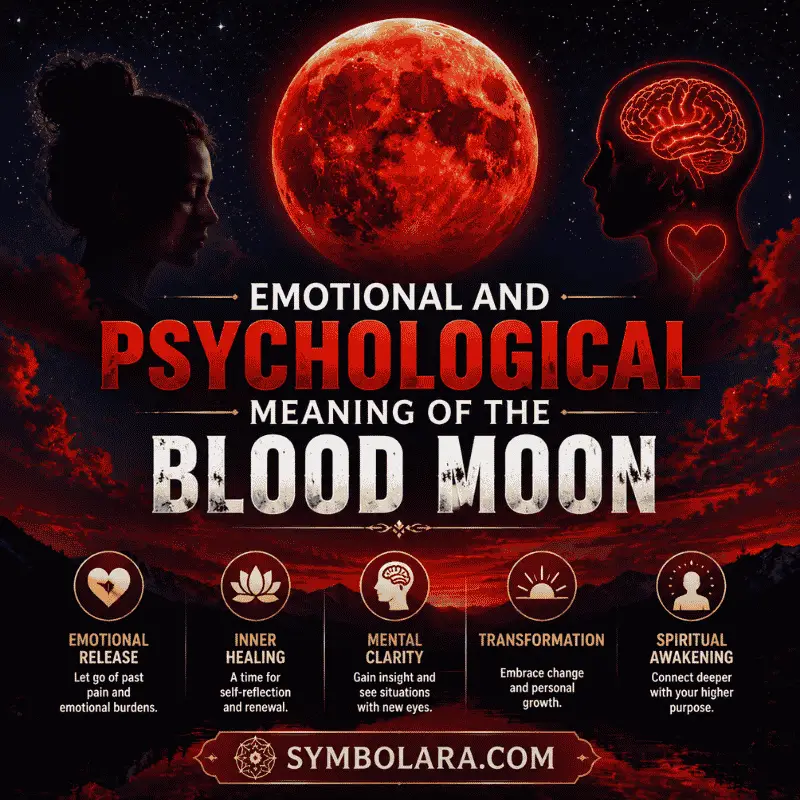
People often respond emotionally to rare natural events because they create moments of pause. A Blood Moon can encourage feelings of wonder, curiosity, and reflection.
Psychologically, symbols connected with cycles can represent personal experiences such as:
- leaving behind an old stage of life
- accepting change
- starting something new
- reflecting on personal choices
The red appearance can also influence interpretation. In color psychology, red is often associated with strong emotions, energy, urgency, and attention. This helps explain why the Blood Moon feels visually meaningful to many people.
However, these meanings come from human associations rather than any proven effect of the eclipse itself.
Why Blood Moons Appear in Tattoos and Personal Style
Blood Moon tattoos are popular among people who want a symbol connected with transformation and individuality. The image often combines the Moon with other elements such as wolves, forests, oceans, stars, or geometric designs.
Common tattoo meanings include:
- personal change
- overcoming challenges
- emotional strength
- connection with nature
- acceptance of life cycles
Unlike traditional symbols with fixed meanings, tattoo symbolism is usually personal. The same Blood Moon design may represent completely different experiences for different people.
Blood Moon Symbolism in Art, Media, and Design
Artists and creators frequently use the Blood Moon because its appearance creates a dramatic atmosphere. It often appears in fantasy artwork, movies, books, album covers, and digital illustrations.
In storytelling, a red Moon may suggest:
- a turning point in a character’s journey
- a mysterious setting
- a major event approaching
- conflict or transformation
The symbol works well visually because it combines a familiar object, the Moon, with an unusual color that immediately attracts attention.
Modern Spiritual and Wellness Interpretations
Modern spiritual communities often use the Blood Moon as a symbol for reflection and personal intention. Some people view lunar events as opportunities to think about goals, habits, relationships, or emotional changes.
Common modern practices connected with lunar symbolism include journaling, meditation, and personal rituals. These practices are based on individual beliefs rather than scientific evidence.
For many Americans, the appeal comes from using natural events as reminders to slow down and consider personal growth.
Common Misunderstandings About the Symbol
Because Blood Moons look unusual, they have sometimes been surrounded by exaggerated claims and predictions. Throughout history, some groups interpreted eclipses as warnings of disasters or major events.
Modern science shows that a Blood Moon is a predictable astronomical event. It does not cause disasters or provide evidence of future events.
Understanding this difference allows people to appreciate the cultural symbolism while recognizing the scientific reality behind the phenomenon.
How the Meaning Has Changed Over Time
The interpretation of Blood Moons has shifted as human knowledge has developed. Earlier societies often connected celestial events with supernatural explanations because the causes were unknown.
Today, many people combine scientific understanding with personal symbolism. Someone may know exactly why a Blood Moon occurs while still finding emotional or artistic meaning in its appearance.
This combination of knowledge and interpretation allows the symbol to remain relevant in modern culture.
Blood Moon Symbolism in American Popular Culture
In the United States, Blood Moons appear in entertainment, photography, social media, and seasonal events. Images of red lunar eclipses are often shared because they create a sense of rarity and visual excitement.
The symbol is especially common in:
- fantasy themes
- Halloween imagery
- nature photography
- spiritual artwork
- creative branding
Its popularity comes from its ability to represent both a real scientific event and a personal idea about change.
Positive and Negative Associations of the Blood Moon
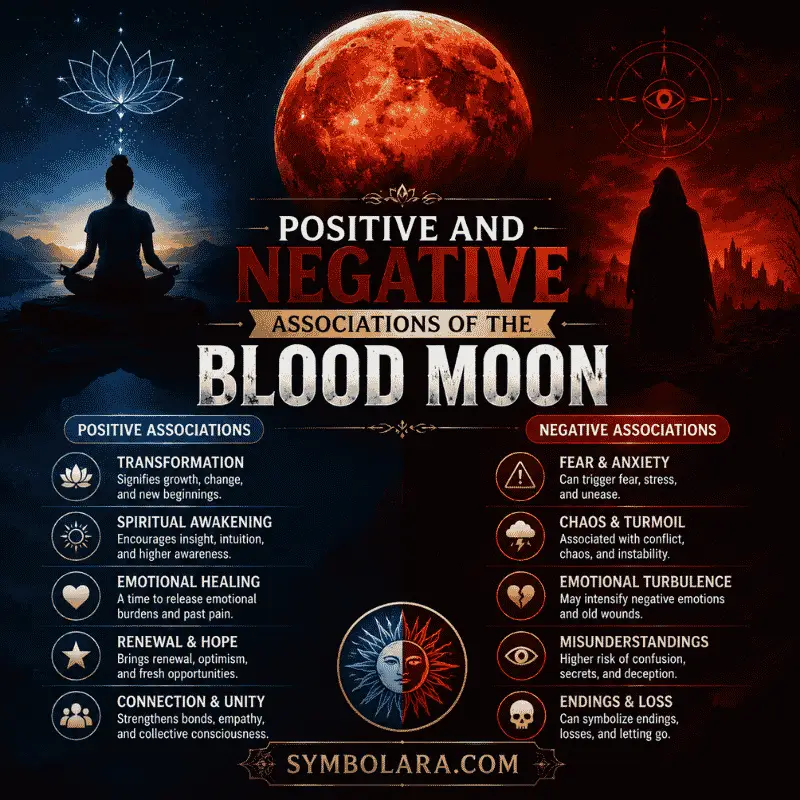
A Blood Moon can carry different meanings depending on the context.
Positive associations often include:
- renewal
- transformation
- awareness
- creativity
- personal growth
Negative associations may include:
- fear
- uncertainty
- warnings
- disruption
Neither interpretation is universal. The meaning depends on cultural background, personal experience, and the way the symbol is presented.
FAQs
Spiritually, a Blood Moon is often associated with transformation, reflection, and life transitions. Many people use it as a symbolic moment for personal awareness rather than viewing it as a fixed message.
A Blood Moon is not inherently good or bad. Historically, some cultures viewed eclipses as warnings, while modern interpretations often focus on change, renewal, and natural cycles.
A Blood Moon tattoo often represents personal transformation, resilience, or a major life change. The exact meaning depends on the person wearing the design.
The term comes from the reddish color the Moon can take during a total lunar eclipse. Earth’s atmosphere filters sunlight, allowing red light to reach and illuminate the Moon.
Some religious traditions connect Blood Moons with important spiritual ideas or interpretations of sacred texts. These meanings vary between different faith communities.
In American culture, Blood Moons are commonly seen as symbols of change, curiosity, creativity, and connection with nature. They are also popular in art and entertainment.
Total lunar eclipses happen periodically, but the exact appearance and visibility depend on location and timing. Their unusual appearance makes them memorable events.
Conclusion
A Blood Moon is both a scientific event and a cultural symbol. Across different societies, it has represented change, uncertainty, reflection, and renewal because its unusual appearance interrupts the ordinary rhythm of the night sky.
Today, Blood Moon symbolism is often understood in the United States as a representation of transformation and personal meaning rather than a prediction of future events. Whether seen in art, tattoos, or spiritual practices, it remains a reminder that change is a natural part of life.
The lasting appeal of the Blood Moon comes from the way it connects a real astronomical phenomenon with human curiosity, imagination, and the desire to find meaning in the world around us.
[…] great deal of Western art developed through religious image traditions, so symbolic meaning in art is often tied to sacred history. Christian icons and devotional images were not created as simple decoration. They were made to […]
[…] damaged ecosystems, or concern about environmental loss. In that sense, coral has joined a group of modern symbols that carry both aesthetic appeal and ethical […]
[…] A third misunderstanding is assuming that every spiritual meaning comes from an ancient tradition. Many modern interpretations are contemporary, personal, or artistic. That does not make them false, but it does mean they should not be presented as universal ancient beliefs. […]