
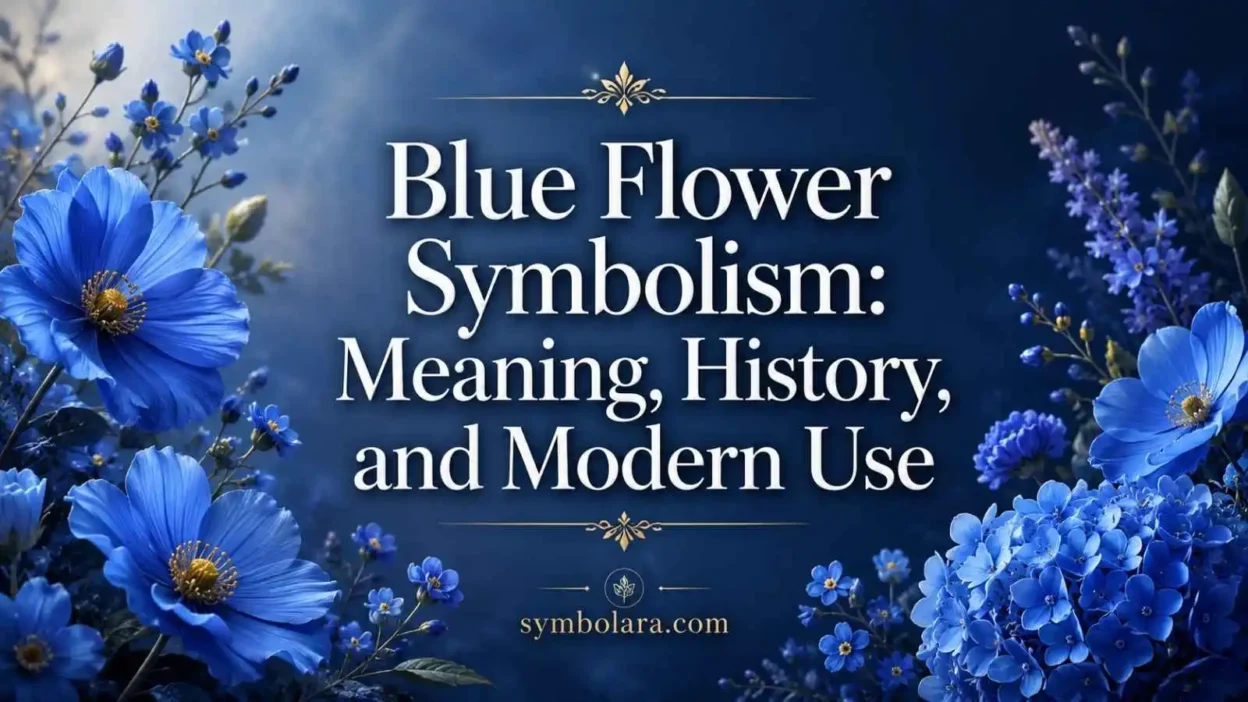
Blue Flower Symbolism often begins with a simple reaction: blue flowers feel unusual. A red rose, a yellow daffodil, or a white lily may seem familiar, but a true blue bloom catches the eye because it feels quieter, cooler, and less common in everyday floral design.
In the United States, people often connect blue flowers with calm, loyalty, remembrance, sincerity, longing, and the search for something rare. They appear in wedding bouquets, sympathy arrangements, tattoos, garden design, home decor, and social media imagery when someone wants beauty with restraint instead of loud emotion.
The meaning is not the same in every setting. A blue forget-me-not can suggest memory and devotion. A blue rose may point to mystery or the impossible. A blue hydrangea can feel peaceful, formal, or apologetic depending on the occasion. Understanding the symbol means looking at both the flower and the color.
Quick Answer
Blue Flower Symbolism commonly represents calm, loyalty, remembrance, and the longing for something rare in modern American culture. Historically, blue flowers have also been connected with Romantic-era yearning, Victorian flower language, spiritual aspiration, and the idea of beauty that feels difficult to reach.
TL;DR
- Blue flowers often mean calm, loyalty, and remembrance.
- Their rarity adds mystery and emotional restraint.
- Romantic literature tied them to longing and ideals.
- In U.S. weddings, blue suggests fidelity and devotion.
- Tattoos often use blue flowers for memory or uniqueness.
- Artificial blue flowers can change the intended meaning.
What Blue Flowers Look Like and Where People See Them
A blue flower may be pale sky blue, dusty blue, cornflower blue, deep indigo, blue-violet, or almost purple. Many flowers sold as “blue” are actually lavender, periwinkle, or violet-blue because true blue is uncommon in petals. That slight uncertainty is part of the symbol’s appeal: blue flowers often look as if they sit between reality and imagination.
Americans encounter blue flowers in gardens, florist arrangements, wedding bouquets, sympathy sprays, greeting cards, botanical prints, tattoos, jewelry, wallpaper, and digital art. Popular examples include forget-me-nots, cornflowers, delphiniums, hydrangeas, bluebells, morning glories, irises, bachelor’s buttons, and blue hyacinths.
The meaning depends on the species. A blue rose usually feels more imaginative than natural. A blue hydrangea feels graceful and composed. A forget-me-not feels intimate and personal. Because of this, blue flowers are not one single symbol; they are a family of symbols shaped by color, rarity, and occasion.
What Blue Flowers Commonly Mean in the United States
In modern U.S. culture, blue flowers most often communicate calm affection, loyalty, remembrance, sincerity, and gentle emotional distance. They are less direct than red flowers and less cheerful than yellow flowers. Their message is quieter.
Blue is widely associated with trust, stability, peace, and seriousness in American design and public life. When that color appears in a flower, the softness of the bloom changes the tone. The result is emotional but controlled. A blue flower can say, “I care,” without the intensity of a red rose or the celebration of a bright mixed bouquet.
This is why blue flowers work well in situations where people want beauty without exaggeration. They are common in sympathy designs, reflective tattoos, calm bedroom decor, wedding accents, and gifts meant to feel thoughtful rather than flashy.
| Context | Meaning in the USA | Common Associations | Notes |
| Weddings | Fidelity and lasting love | “Something blue,” devotion, trust | Often used in bouquets, ribbons, or floral accents |
| Sympathy | Remembrance and peace | Memory, comfort, quiet grief | Forget-me-nots and blue hydrangeas are common choices |
| Tattoos | Personal memory or rare identity | Loss, loyalty, individuality | Meaning depends heavily on flower type |
| Home Decor | Calm and refinement | Serenity, order, softness | Popular in bedrooms, bathrooms, and cottage-style design |
| Gifts | Thoughtful affection | Sincerity, respect, restraint | Less romantic than red, more intimate than yellow |
Why the Color Blue Changes Floral Meaning
A flower already carries associations with growth, beauty, fragility, affection, and seasons. Blue adds a different emotional layer: coolness, distance, calm, trust, and sometimes sadness. Together, they create a symbol that feels tender but not overly sentimental.
Blue flowers are often interpreted as peaceful because blue recalls the sky, still water, shade, and open space. These natural associations make blue blooms feel restful. At the same time, English includes phrases such as “feeling blue,” so the color can also suggest melancholy or loneliness.
That tension matters. A blue flower is rarely just happy or sad. It often holds both feelings at once: love and distance, hope and loss, beauty and restraint. This is why blue flowers are especially effective in art, memorial designs, and personal tattoos.
Blue Flower Symbolism by Color Shade: Light Blue, Dark Blue, and Indigo Meanings
Blue flowers do not all create the same emotional impression. The shade of blue can change how people interpret the symbol.
Light blue flowers often represent peace, innocence, gentleness, and emotional healing. Their softer appearance connects them with calm spaces, new beginnings, and quiet affection. Light blue hydrangeas and pale blue delphiniums are often chosen when someone wants a graceful and peaceful floral style.
Dark blue flowers usually feel deeper and more serious. Navy and deep indigo tones can suggest loyalty, wisdom, mystery, and emotional strength. These shades often appear in formal designs because they create a feeling of elegance and stability.
Indigo or blue-violet flowers often sit between blue and purple symbolism. They may suggest imagination, spirituality, creativity, and inner reflection. Because indigo feels less common in nature, it can also represent individuality and uniqueness.
The shade does not replace the flower’s meaning, but it adds another emotional layer. A blue flower’s message comes from the combination of species, color intensity, and personal context.
The Role of Rarity in Blue Flower Meaning
True blue flowers are relatively uncommon compared with red, yellow, white, pink, and orange blooms. Many plants that appear blue rely on complex pigment chemistry, light perception, soil conditions, or blue-purple compounds. Hydrangeas, for example, can shift color depending on soil chemistry.
Because blue flowers are harder to find in nature, people often associate them with rarity, uniqueness, and the unusual. A blue flower can feel like something discovered rather than something expected. This gives it a symbolic connection to private dreams, uncommon love, and identities that do not fit ordinary categories.
This rarity also explains why artificial blue flowers can feel different from naturally blue ones. A dyed blue orchid or dyed blue rose may still be beautiful, but its symbolism often moves toward fantasy, theatricality, or manufactured mystery rather than natural calm.
Romantic Roots: Longing, Ideals, and the Unreachable
One of the most important historical meanings of the blue flower comes from German Romantic literature. In the early 1800s, the blue flower became a symbol of longing, love from afar, artistic desire, and the search for an ideal that cannot be fully possessed.
This meaning still influences how many people read blue flowers today, even when they do not know the literary background. A blue flower can suggest wanting something beyond ordinary life: a perfect love, a lost home, a spiritual truth, a creative calling, or a version of the self that has not yet arrived.
The Romantic meaning is not simply “sadness.” It is more specific. It is the ache of reaching toward beauty, meaning, or love that feels real but distant. That is why blue flowers often appear in poetry, fantasy imagery, dreamlike illustrations, and tattoos about personal transformation.
Blue Flower Symbolism in Literature, Art, and Poetry
Blue flowers have appeared in literature and art because they naturally suggest emotions that are difficult to express directly. Their unusual color allows artists to represent dreams, distance, imagination, and emotional searching.
The most famous literary connection comes from German Romanticism, where the blue flower represented a search for meaning, beauty, and an ideal beyond ordinary life. Over time, writers and artists adopted the image to explore themes of creativity, love, memory, and personal growth.
In paintings and modern visual art, blue flowers often create a dreamlike mood. They can represent quiet beauty, loneliness, hope, or a world that feels slightly different from everyday reality.
Because blue flowers balance natural beauty with rarity, they remain popular symbols in poetry, fantasy artwork, book covers, and personal creative expression.
Victorian Flower Language and Secret Messages
In the 19th century, flower meanings became especially popular in Europe and North America through floriography, often called the language of flowers. People used bouquets, flower types, colors, and arrangements to suggest emotions that were difficult to say openly.
Blue flowers fit naturally into that world because their meanings were often subtle. Forget-me-nots became associated with remembrance and faithful affection. Bluebells could suggest humility or constancy in some traditions. Cornflowers and bachelor’s buttons carried associations that shifted between love, hope, delicacy, and single life.
Modern readers should be careful not to treat every Victorian flower meaning as a fixed universal code. Flower dictionaries often disagreed with one another. Still, the broader pattern is clear: blue flowers were useful for communicating memory, loyalty, quiet devotion, and feelings held at a distance.
Common Blue Flowers and Their Specific Meanings
Different blue flowers carry different emotional messages. The color matters, but the species matters too.
Forget-me-nots are the clearest symbol of remembrance. Their name makes the meaning easy to understand, and their small blue petals give the message a gentle, intimate tone. They are often connected with memory, faithful love, grief, and keeping someone close in thought.
Blue hydrangeas often symbolize apology, gratitude, calm, or composed emotion. In American floral design, they can feel elegant and formal, especially in weddings, coastal decor, and sympathy arrangements.
Cornflowers, also called bachelor’s buttons, suggest simplicity, rural beauty, hope, and old-fashioned charm. Their vivid blue makes them popular in wildflower gardens and cottage-style arrangements.
Blue delphiniums often symbolize openness, dignity, and aspiration because of their tall, upward-growing form. They are common in wedding arches, formal arrangements, and garden borders.
Blue roses usually symbolize mystery, impossibility, fantasy, or unattainable love. Since roses do not naturally occur in a true bright blue in the same way many people imagine, blue roses often feel more symbolic than botanical.
Most Popular Blue Flowers and Their Symbolic Meanings
Blue flowers come in many forms, and each variety carries its own symbolic associations. The flower type often matters more than the color alone.
- Forget-me-not: Represents remembrance, lasting connections, and keeping someone in your thoughts.
- Blue hydrangea: Often associated with gratitude, apology, understanding, and calm emotions.
- Blue rose: Symbolizes mystery, imagination, rarity, and something difficult to achieve.
- Blue lotus: Connected with renewal, spiritual reflection, and transformation in some traditions.
- Blue iris: Often represents wisdom, faith, dignity, and hope.
- Delphinium: Associated with openness, inspiration, ambition, and positive energy.
- Cornflower: Linked with simplicity, natural beauty, loyalty, and traditional charm.
- Bluebell: Often connected with humility, gratitude, and gentle beauty.
Choosing a blue flower based only on color can miss the deeper message. A person selecting flowers for a wedding, memorial, tattoo, or gift should consider both the blue shade and the flower’s traditional associations.
Blue Flowers in American Weddings
Blue flowers have a natural place in American weddings because of the “something blue” tradition. In that context, blue is usually connected with fidelity, devotion, trust, and good fortune. Flowers make the tradition visible without requiring the bride or couple to wear a strongly blue outfit.
Blue hydrangeas, delphiniums, tweedia, cornflowers, muscari, and blue thistles are common wedding choices. Some couples use them as small accents in mostly white bouquets. Others build an entire palette around dusty blue, navy, slate blue, or blue-and-white floral design.
The modern meaning is less superstitious than it once was. Many couples now use blue flowers because the color feels personal, coastal, elegant, nontraditional, or emotionally calm. The symbolism remains, but it is often blended with style.
Are Blue Flowers a Good Gift? Meaning Behind Giving Blue Blooms
Blue flowers can make meaningful gifts because they communicate emotion in a quieter way than traditional red or pink flowers. They often suggest thoughtfulness, trust, appreciation, and a special connection.
For a friend, blue flowers may express support, respect, or a wish for peace. For a romantic partner, they can represent loyalty, a unique bond, or a love that feels different from ordinary romance.
Blue flowers also work well as remembrance gifts. A bouquet containing forget-me-nots or blue-toned flowers may honor a shared memory or show continued care after a loss.
The best blue flower gift depends on the relationship and occasion. A blue rose may feel mysterious and artistic, while blue hydrangeas may feel elegant and comforting. The meaning becomes strongest when the flower choice matches the personal story behind the gift.
Blue Flowers in Sympathy, Mourning, and Remembrance
Blue flowers are often appropriate for mourning because they communicate memory without dramatic display. They do not carry the same intensity as red roses or the same brightness as yellow flowers. Instead, they offer a feeling of quiet presence.
Forget-me-nots are especially tied to remembrance. Blue hydrangeas and blue irises can also appear in sympathy arrangements because they feel peaceful and dignified. In memorial tattoos, blue flowers may represent someone who is gone but still emotionally present.
In the United States, blue is not the primary color of mourning in the way black is. Still, blue flowers can support grief rituals because they suggest steadiness, reflection, and love that continues after separation.
Blue Flower Tattoos and Personal Identity
Blue flower tattoos are popular because they can carry personal meaning without looking harsh or overly obvious. A blue flower tattoo may represent memory, resilience, loyalty, calm strength, or the feeling of being different from the crowd.
A blue rose tattoo often points to mystery, impossible love, fantasy, or a person who sees themselves as rare. A forget-me-not tattoo may honor a loved one, a childhood memory, or a promise not to forget a difficult part of life. A blue lotus tattoo may suggest renewal, spiritual growth, or rising from emotional darkness.
Placement also changes the message. A small blue flower on the wrist can feel intimate and memorial. A large blue floral design on the shoulder or back can feel expressive and identity-based. In tattoo culture, the symbol works best when the flower type is chosen deliberately.
Blue Flowers in Home Decor, Fashion, and Design
In American interiors, blue flowers often create a mood of calm order. They appear in wallpaper, bedding, ceramic patterns, curtains, framed prints, table linens, and cottage-style decor. A blue floral pattern can feel traditional, coastal, vintage, or clean depending on the shade.
Pale blue flowers tend to soften a room. Navy or indigo floral designs feel more formal. Dusty blue flowers often appear in farmhouse, French country, and wedding-inspired decor. Blue-and-white floral ceramics are especially associated with classic design because the contrast feels crisp and familiar.
In fashion, blue flowers can suggest gentleness without sweetness. A blue floral dress, scarf, or embroidered detail often feels less romantic than pink and less dramatic than red. It communicates taste, calm, and a slightly nostalgic mood.
Emotional and Psychological Meaning
Emotionally, blue flowers often symbolize controlled feeling. They do not hide emotion, but they do not shout it either. This makes them useful for people who want to express care, grief, or devotion in a restrained way.
Psychologically, the color blue is commonly linked with calm, trust, stability, and introspection. Flowers add vulnerability and softness to those qualities. A blue flower can therefore represent someone who is loyal but private, sensitive but composed, hopeful but realistic.
The symbol can also express loneliness. A single blue flower in art or photography may suggest solitude, distance, or longing. In that context, the flower is not merely decorative; it becomes a visual shorthand for an emotion that is difficult to name.
Cross-Cultural Meanings of Blue Flowers
Blue flower meanings vary across cultures and historical traditions. Within Western Romantic literature, the blue flower became closely associated with longing and the pursuit of an unreachable ideal. Victorian flower language also gave certain blue flowers meanings connected to memory, fidelity, and quiet affection.
Ancient Egyptian symbolism offers another perspective, where the blue lotus or blue water lily represented rebirth, the sun, renewal, and sacred experiences. Its daily opening and closing cycle made it a powerful image of life, death, and return.
In some Christian art and devotional traditions, blue is associated with heaven, purity, and the Virgin Mary, though specific flowers may carry different meanings. In Japanese and Korean popular flower symbolism, blue flowers may suggest sincerity, hope, rarity, or impossible love depending on the species and modern context.
The safest way to interpret blue flowers across cultures is to avoid assuming one universal meaning. The shared pattern is that blue flowers often feel rare, calm, spiritual, or emotionally distant, but the exact message depends on tradition.
Blue Flowers in Spiritual and Religious Symbolism
Spiritually, blue flowers often point upward or inward. The color blue is associated with sky, water, contemplation, truth, and distance. Flowers add the idea of growth, blooming, and temporary beauty.
A blue lotus may suggest awakening or renewal. Meanwhile, the blue iris can symbolize dignity, faith, or a connection between earth and heaven. Because it opens with the morning light, the blue morning glory is often associated with new beginnings. These meanings are symbolic rather than fixed rules.
In modern American spiritual spaces, blue flowers are often used for meditation rooms, altar decor, grief rituals, and personal reflection. They are chosen less for doctrine and more for atmosphere: calm, sincerity, healing, and emotional clarity.
Blue Flowers in Digital Culture and Pop Imagery
Online, blue flowers appear often in profile images, aesthetic mood boards, wallpapers, grief posts, romantic edits, and fantasy-themed art. They are popular because they look gentle but unusual. A blue flower can make an image feel dreamy without becoming overly bright.
In digital culture, the symbol often means softness, sadness, elegance, or rare beauty. Blue roses are especially common in fantasy art and fan culture because they suggest a love or identity that feels impossible, magical, or separate from ordinary life.
Social media has also loosened older meanings. A blue flower emoji, graphic, or image may not carry a formal flower-language message. It may simply create a mood: calm, pretty, wistful, clean, or quietly romantic.
Common Misunderstandings About Blue Flowers
The biggest misunderstanding is that all blue flowers mean the same thing. They do not. A blue rose, blue lotus, blue hydrangea, and forget-me-not can carry very different meanings.
Another misunderstanding is that blue flowers are always sad. They can symbolize sadness, but they also symbolize trust, peace, devotion, rarity, and hope. Context decides whether the feeling is mournful, romantic, spiritual, or decorative.
A third misunderstanding involves artificial color. Dyed blue orchids, roses, and carnations can be visually striking, but their meaning is different from naturally blue or blue-toned flowers. They often suggest fantasy, novelty, or manufactured beauty rather than natural symbolism.
Finally, some people overstate historical meanings. A flower meaning from one old dictionary, one country, or one religious tradition should not be treated as universal. Symbolism is strongest when it respects context.
Controversies, Distortions, and Misuse
Blue flowers are usually positive or reflective symbols, but a few uses require care. Certain specific flowers, especially the cornflower, have had political associations in parts of Europe. That history does not define every cornflower arrangement in the United States, but it shows why context matters.
Modern commercial use can also distort the symbol. A dyed blue rose may be sold as “rare” even though the color was created artificially. A blue lotus product may be marketed with exaggerated claims that simplify or misuse ancient symbolism.
These distortions do not erase the older meanings. They simply remind readers to separate botanical reality, cultural history, and marketing language. A blue flower can still mean remembrance, longing, loyalty, or peace, but the specific flower and setting should guide interpretation.
How Blue Flower Meaning Has Changed Over Time
The meaning of blue flowers has moved through several stages. In older traditions, individual flowers carried meanings linked to myth, religion, medicine, folklore, or courtship. In Romantic literature, the blue flower became a symbol of longing and the unreachable ideal.
During the Victorian era, flower language made blue blooms part of a coded emotional vocabulary. In modern America, that code is much looser. People choose blue flowers because they feel calm, rare, elegant, memorial, spiritual, or visually distinctive.
Today, the meaning is more personal than rule-based. A blue flower can honor someone who died, mark a wedding promise, express quiet love, decorate a peaceful room, or symbolize a private dream. The old meanings still echo, but modern use gives people more freedom.
FAQs
A blue flower usually symbolizes calm, loyalty, remembrance, longing, or rare beauty. The exact meaning depends on the flower type, such as forget-me-not for memory, blue rose for mystery, or hydrangea for peace and sincerity.
Blue flowers can be romantic, but they are usually less direct than red flowers. They often suggest faithful love, distant love, quiet devotion, or a bond that feels rare rather than passionate in an obvious way.
A blue flower tattoo often represents memory, uniqueness, calm strength, loyalty, or longing. A blue rose tattoo may suggest mystery or impossible love, while a forget-me-not tattoo often honors remembrance.
Blue flowers can suggest sadness, especially in memorial art or lonely imagery, but sadness is not their only meaning. They can also symbolize peace, trust, fidelity, hope, and emotional steadiness.
In weddings, blue flowers often connect to fidelity, loyalty, and the “something blue” tradition. Many couples also choose them for style reasons because blue floral accents feel elegant, calm, and slightly nontraditional.
True bright blue roses do not occur naturally in the way red, pink, white, or yellow roses do. Most vivid blue roses sold by florists are dyed, which is why they often symbolize fantasy, mystery, or the impossible.
Spiritually, blue flowers often suggest peace, contemplation, truth, renewal, or connection to the sky and water. In some traditions, specific blue flowers such as the blue lotus carry meanings linked to rebirth or awakening.
Conclusion
Blue flowers carry a meaning that is calm but not empty, emotional but not loud. They often symbolize loyalty, remembrance, longing, peace, and the beauty of something rare. Their meaning comes from the meeting point between the flower’s softness and the color blue’s associations with trust, distance, and reflection.
Blue Flower Symbolism is especially meaningful in modern American culture because it fits many personal moments: weddings, memorials, tattoos, decor, gifts, and digital self-expression. It gives people a way to express feeling with restraint.
A blue flower does not say everything at once. It leaves room for memory, hope, and private meaning.
[…] meaning of cherry blossoms has changed as the flower moved across cultures and historical moments. In Japan, it developed through seasonal customs, […]
[…] often post it with captions about patience, timing, moonlight, or beauty that does not last. The flower’s short bloom also fits the emotional style of modern visual culture, where a brief clip can make a natural event feel […]
[…] meaning of this flower comes from a mix of Greek mythology, Victorian flower language, gardening traditions, and modern […]