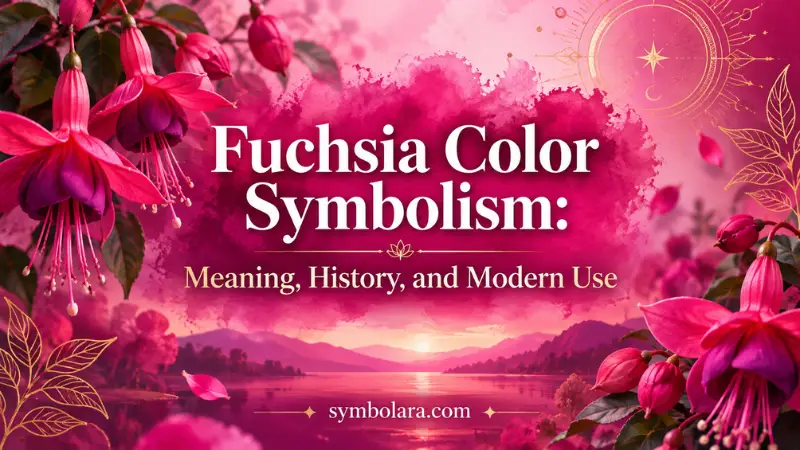
Fuchsia is a striking color that sits between bright pink and purple. You might recognize it in a vibrant evening dress, a flower arrangement, or a bold accent wall. Its cheerful appearance makes it difficult to overlook.
In modern American culture, fuchsia color symbolism is commonly associated with confidence, creativity, individuality, passion, and joyful self-expression. The shade combines the warmth often connected with pink and the imaginative qualities people sometimes associate with purple.
The color’s history is just as interesting as its appearance. Its name comes from a flowering plant, while its popularity grew alongside developments in synthetic dyes, fashion, and modern design.
Today, fuchsia appears in clothing, cosmetics, weddings, home decor, and digital artwork. Its meaning changes with the setting, but it often communicates a willingness to stand out rather than blend into the background.
Quick Answer
Fuchsia color symbolism represents confidence, creativity, joy, passion, and individuality in modern American culture. Its bright pink-purple appearance encourages associations with bold self-expression, while its historical identity developed from the fuchsia flower and nineteenth-century synthetic dyes.
Today, Americans use the color to communicate excitement, celebrate personal style, and introduce a playful touch to fashion, art, and interior design.
TL;DR
- Confidence: Fuchsia suggests boldness and comfortable self-expression.
- Creativity: Its unusual brightness encourages imaginative design.
- Joy: The lively shade often creates a cheerful impression.
- History: Its name comes from a flowering plant.
- Modern use: Fashion, weddings, cosmetics, and home decor feature fuchsia.
- Digital color: Standard web fuchsia uses the hex code #FF00FF.
What Does Fuchsia Look Like?
Fuchsia is a vivid pink-purple color that falls between hot pink and violet in everyday descriptions. It contains noticeable red and blue qualities, creating a shade that feels warmer than many purples but cooler than some bright pinks.
The standard digital version has the hexadecimal color code #FF00FF.
On a computer screen, this color uses the following RGB values:
- Red: 255
- Green: 0
- Blue: 255
This means red and blue light appear at full intensity while green is absent.
In clothing, paint, and printed materials, however, fuchsia can describe several related shades. Some appear more pink, while others lean toward purple.
The color is commonly seen in flowers, lipstick, handbags, party decorations, and graphic artwork.
A bright fuchsia dress may appear playful and confident. A softer version used in bedroom decor can create a warmer, more romantic atmosphere.
Its meaning therefore depends partly on its intensity, surroundings, and the other colors paired with it.
For example, fuchsia beside black creates a dramatic contrast. Against cream or beige, the same shade can feel more welcoming.
This versatility helps explain why designers continue using it for both attention-grabbing statements and smaller decorative details.
Why Fuchsia Represents Confidence and Individuality
Confidence is one of the strongest modern associations with fuchsia.
The color attracts attention because it is highly saturated and visually distinct. Someone wearing a bright fuchsia jacket or carrying a matching handbag may appear comfortable expressing a personal style.
That association makes fuchsia appealing to people who enjoy being noticed.
However, confidence does not always mean seeking attention. For some individuals, choosing an unusual color simply represents feeling comfortable with their preferences.
Fuchsia is also connected with several other ideas.
Creativity: The combination of pink and purple qualities gives artists an expressive color that works well in imaginative designs.
Passion: Its warmth and intensity can suggest enthusiasm, affection, or excitement about something important.
Independence: Choosing fuchsia instead of a more conventional neutral shade may communicate a willingness to make personal choices.
Playfulness: The color often appears in cheerful decorations, accessories, and informal celebrations.
These meanings are cultural interpretations rather than permanent characteristics of the color.
A fuchsia scarf does not prove that someone is outgoing. Likewise, a person who dislikes bright colors is not necessarily less confident.
The symbolism becomes meaningful when the color reflects someone’s intentions or experiences.
For example, a person who previously avoided bright clothing might choose fuchsia for a special occasion to celebrate becoming more comfortable with their appearance.
In that setting, the color represents a personal milestone.
How the Fuchsia Flower Gave the Color Its Name
The name fuchsia comes from a flowering plant known for its hanging blossoms.
Many fuchsia flowers display combinations of pink, red, purple, and white. Their unusual shapes and bright colors made them popular ornamental plants.
The flower’s botanical name honors Leonhart Fuchs, a sixteenth-century German physician and botanist.
Fuchs lived from 1501 to 1566 and became known for his work describing and illustrating plants.
French botanist Charles Plumier later named the genus Fuchsia in his honor.
Plumier described the plant in a work published in 1703, following his botanical travels in the Caribbean.
The plant became better known among European gardeners during the eighteenth and nineteenth centuries.
As fuchsias gained popularity in gardens, their distinctive colors became familiar to people interested in flowers and decorative plants.
The relationship between the flower and the color helps explain some modern associations.
Flowers often appear in celebrations of affection, beauty, and appreciation. Because fuchsia developed its color identity from these blossoms, people may connect the shade with similar emotions.
However, the flower and the color should not be treated as identical symbols.
A fuchsia blossom might carry a personal meaning connected to gardening or a family memory.
The color itself can communicate confidence or creativity even when no flower appears in the design.
This distinction matters when discussing the shade’s historical development.
The Synthetic Dye Revolution of the 1800s
Fuchsia’s history changed significantly during the nineteenth century.
Before synthetic dyes became commercially successful, fabric makers relied heavily on coloring materials obtained from plants, insects, minerals, and other natural sources.
Some bright shades were difficult or expensive to produce consistently.
Developments in synthetic chemistry changed the textile industry.
In 1856, British chemist William Henry Perkin discovered mauveine, an early commercially successful synthetic dye.
His work encouraged further experiments with brilliant artificial colors.
A few years later, French chemist François-Emmanuel Verguin developed a reddish-purple dye known as fuchsine.
The dye was patented in 1859.
Its name was associated with the fuchsia flower, whose vivid coloring offered a recognizable comparison.
The dye became closely connected with the name magenta, introduced in connection with the Battle of Magenta, fought in northern Italy on June 4, 1859.
This development helped make striking pink-purple shades more accessible for textiles and decorative goods.
The historical change also influenced how people understood fashionable color.
Bright clothing could communicate an interest in new styles and modern manufacturing.
Today, fuchsia may suggest originality or a contemporary outlook. Those associations fit naturally with its history as a striking shade connected to innovations in dye production.
Still, modern confidence-related meanings should not be presented as beliefs shared by everyone in the nineteenth century.
How Fuchsia Changed From Victorian Fashion to Modern Trends
Fuchsia’s popularity has changed with fashion, technology, and cultural preferences.
During the later nineteenth century, synthetic dyes helped expand the range of vivid colors available in clothing.
Bright pink-purple shades could be used in dresses, ribbons, and decorative fabrics.
In the twentieth century, fashion designers continued experimenting with striking colors.
By the 1980s, vivid pinks and purples became familiar elements of bold clothing, accessories, and graphic design.
Fuchsia suited the period’s interest in noticeable colors and dramatic combinations.
Another important moment arrived in 2001, when Pantone selected Fuchsia Rose as its Color of the Year.
Fuchsia Rose was a particular shade, not the same as the standard digital fuchsia color.
During the early 2000s, bright pink clothing and accessories were also common in celebrity fashion and popular youth styles.
The color later experienced renewed attention through the return of early-2000s fashion influences.
In 2022 and 2023, bright pink clothing became especially visible through the Barbiecore trend.
The trend gained attention alongside Valentino’s striking pink fashion collection and the release of the movie Barbie in 2023.
Although Barbie pink, hot pink, and fuchsia are not always the same shade, their visual similarities helped bring attention to bright pink-purple clothing.
By 2025–2026, fuchsia remained a recognizable choice in fashion, beauty products, digital design, and celebrations.
Its meanings had expanded beyond traditional femininity.
People increasingly used vivid pinks to express humor, individuality, nostalgia, and creative freedom.
What Fuchsia Communicates Emotionally
Fuchsia can create an immediate visual impression because of its brightness.
Many Americans associate vivid pink-purple colors with excitement, happiness, celebration, and expressive personalities.
However, color psychology requires careful interpretation.
There is no reliable scientific rule stating that every person will experience the same emotion when looking at fuchsia.
People respond to colors based on their experiences, cultural backgrounds, personal preferences, and surroundings.
For example, someone may associate fuchsia with a happy birthday celebration.
Another person might remember a favorite childhood outfit or a family member who enjoyed bright flowers.
Someone else may find the shade overwhelming in large amounts.
All three responses are possible.
Why the Surrounding Colors Matter
Fuchsia can communicate different moods depending on its surroundings.
When paired with white, it often creates a fresh, cheerful appearance.
With black, it produces a sharper contrast that may feel dramatic.
Beside navy blue, the color can look more polished and restrained.
Combining it with orange or yellow creates a lively arrangement that may suit celebrations or playful artwork.
These effects are not universal emotional laws.
Instead, they reflect common visual associations and design choices.
The amount of fuchsia also matters. A small accent may attract attention without dominating the entire setting.
A room covered in highly saturated fuchsia may feel more intense.
Understanding these differences helps explain why the color can suggest both playful enthusiasm and confident sophistication.
Why Fuchsia Clothing and Makeup Suggest Bold Self-Expression
Fuchsia is a noticeable choice in American fashion because it stands apart from familiar neutrals such as black, gray, beige, and navy.
A person wearing a fuchsia dress may want an expressive appearance for a wedding, dinner, or celebration.
Someone else might use the same color in a small accessory while keeping the rest of an outfit simple.
Both approaches can communicate individuality.
Fuchsia in Clothing
The color works across several clothing styles.
A tailored fuchsia blazer can combine a structured silhouette with a lively shade.
A flowing dress may create a softer impression, particularly when paired with understated jewelry.
Fuchsia sneakers, scarves, and handbags offer smaller ways to introduce the color into everyday outfits.
It is not limited to one gender or age group.
Although bright pinks have often been marketed toward women in the United States, contemporary fashion allows people to use these colors in different ways.
Fuchsia in Makeup
Fuchsia lipstick is a familiar example of how the shade can change someone’s appearance.
Its brightness draws attention to the lips and can create a deliberate contrast with otherwise simple makeup.
Fuchsia nail polish or eyeshadow may suggest playfulness or an interest in experimenting with appearance.
The meaning depends on the person wearing it.
For someone attending a celebration, the color might express happiness. For another, it may simply be a favorite shade.
Fuchsia in Weddings, Birthdays, and Celebrations
Fuchsia appears frequently in festive decorations because it works well with flowers, fabrics, balloons, and colorful table settings.
At weddings, it can be used in bouquets, bridesmaid dresses, floral centerpieces, or invitations.
Couples who choose fuchsia may want an atmosphere that feels joyful, romantic, and welcoming.
The color also pairs naturally with white, gold, blush pink, and greenery.
A summer wedding featuring fuchsia flowers and green leaves can create a fresh garden-inspired look.
For birthday parties, fuchsia balloons and decorations may communicate excitement.
At graduation celebrations, it can represent a lively mood and a sense of accomplishment when chosen by the graduate or family.
However, fuchsia does not carry one nationally recognized meaning for these occasions.
Unlike certain colors associated with specific holidays or established public traditions, fuchsia is usually selected for its visual effect and personal appeal.
Its significance comes from the event and the people involved.
A fuchsia bouquet at a wedding can later become meaningful to someone because it recalls that particular day.
The color itself does not need a fixed historical marriage symbol to hold that memory.
How Fuchsia Changes the Feeling of a Room
Fuchsia can make a noticeable difference in home decoration, even when used in small amounts.
A cream-colored living room may feel calm and neutral. Adding fuchsia cushions, flowers, or framed artwork introduces a brighter visual element.
The same principle works in bedrooms, home offices, and creative spaces.
Designers often use saturated colors as accents because they attract attention.
For example, a fuchsia chair against a pale wall can become a room’s main visual feature.
A patterned rug containing fuchsia may connect several colors within a larger design.
The shade also works with natural materials.
Fuchsia flowers beside wooden furniture can create a pleasant contrast between bright petals and warm surfaces.
Choosing Colors That Work With Fuchsia
Neutral colors such as beige, white, and gray can help balance fuchsia’s brightness. For a more formal look, navy blue creates an elegant contrast. Meanwhile, dark green gives fuchsia a floral appearance, similar to bright blossoms surrounded by leaves. Gold accents add a decorative touch.
The meaning of fuchsia also changes depending on its surroundings. A child’s playroom filled with this vibrant shade may suggest fun and imagination. Creative studios can use it to express experimentation and originality. In bedrooms, softer fuchsia fabrics often create a warm, personal atmosphere.
However, fuchsia does not automatically create happiness or improve mood. Its overall effect depends on lighting, room size, personal preferences, and the surrounding design.
What Fuchsia Means in Branding and Digital Design
Fuchsia has become a recognizable choice for graphic designers because of its brightness.
In digital color systems, standard fuchsia and magenta share the same hexadecimal code: #FF00FF.
This is different from everyday descriptions of fabric or paint colors, where the two names may refer to slightly different shades.
Designers can use fuchsia to make a selected part of a layout stand out.
A bright heading, illustration, or decorative shape may attract attention against a darker background.
Some brands choose similar shades to communicate creativity, excitement, or an unconventional personality.
Beauty, entertainment, and fashion businesses may find these associations useful.
However, color alone cannot establish a brand’s identity.
Typography, imagery, language, and the surrounding design influence how people interpret it.
Readability and Accessibility Matter
A common mistake is assuming that a bright color always makes text easier to read.
Fuchsia text against white may not provide enough contrast for comfortable reading, especially in smaller sizes.
Likewise, white text placed over the brightest digital fuchsia can be difficult for some people to distinguish clearly.
Darker text or a carefully chosen background may provide better readability.
This distinction is important because attracting attention and communicating information are different goals.
A design should not sacrifice clarity simply to appear vibrant.
How Fuchsia’s Meaning Changes Across Different Contexts
Fuchsia does not communicate exactly the same idea in every situation.
Its appearance, surrounding colors, and intended audience all influence its interpretation.
| Context | Meaning in USA | Common Associations | Notes |
| Wedding accessories | Personal celebration | Romance, happiness | Often selected for visual appeal rather than tradition |
| Statement jewelry | Expressive personal style | Originality, confidence | Small accents can change a neutral outfit |
| Children’s artwork | Playful imagination | Experimentation, creativity | Meaning depends on the individual artwork |
| Business presentation | A distinctive visual identity | Modernity, originality | Best used with readable contrasting colors |
| Floral gift | Personal appreciation | Affection, gratitude | The occasion influences the message |
These interpretations show why context matters more than a fixed definition.
A fuchsia necklace received as a birthday gift may become associated with friendship because of the person who gave it.
Meanwhile, the same shade used in an office presentation may simply help identify important visual information.
Neither use establishes a universal meaning.
Personal experience often gives the color its strongest emotional association.
Cultural Meanings and Common Misunderstandings
Fuchsia is frequently associated with confidence and femininity in American fashion, but these ideas are not universal.
Different communities and individuals may interpret pink-purple colors in different ways.
A particular shade might be fashionable in one setting and ordinary in another.
It would be inaccurate to claim that every culture identifies fuchsia with love, spiritual protection, prosperity, or happiness.
Such statements require specific historical evidence.
Is Fuchsia a Traditional Religious Color?
Fuchsia does not have one widely established religious meaning.
Certain religious traditions assign meanings to colors such as purple, red, or pink, but those associations cannot automatically be transferred to fuchsia.
For example, purple has recognized uses within some Christian liturgical traditions.
That does not make bright fuchsia an officially recognized substitute.
Does Fuchsia Represent Femininity?
In modern Western marketing, vivid pinks have often been connected with feminine fashion and beauty products.
However, this association developed through changing social customs and commercial choices.
It is not an inherent characteristic of the color.
People of any gender can wear or use fuchsia.
Does Fuchsia Mean Breast Cancer Awareness?
Pink ribbons are widely associated with breast cancer awareness in the United States, especially during October.
However, fuchsia is not the specific universal shade used for that cause.
A fuchsia ribbon should not automatically be interpreted as a breast cancer awareness symbol without considering the intended context.
Can Fuchsia Have Negative Associations?
Yes. Some people find highly saturated colors distracting or visually overwhelming.
In certain settings, excessive use may create an appearance that feels too busy.
These reactions do not make fuchsia a negative symbol. They demonstrate that color preferences and visual needs vary.
FAQs
Some people personally associate fuchsia with compassion, emotional openness, or self-acceptance. However, there is no universally established spiritual interpretation of the shade, and these meanings should be understood as individual beliefs rather than proven effects.
Fuchsia may suggest enthusiastic affection, romantic excitement, and expressive feelings. Compared with pale pink, it often creates a stronger visual impression, making it suitable for someone who wants to communicate lively rather than understated romance.
In standard digital color systems, fuchsia and magenta are identical, sharing the hex code #FF00FF. In fashion, printing, and everyday descriptions, the terms may refer to slightly different pink-purple shades, and the distinction is not always consistent.
There is no widely established American tradition that identifies fuchsia specifically as a color of financial prosperity or good luck. Individuals may associate it with successful celebrations or happy experiences, but the color itself does not predict future outcomes.
People may associate a preference for fuchsia with creativity, confidence, and enthusiasm. However, favorite colors cannot reliably determine personality traits, and someone’s preference may simply reflect aesthetic taste or positive memories.
Hot pink generally describes a vivid pink, while fuchsia often has a more noticeable purple quality. The exact distinction depends on the product, manufacturer, or color system, since everyday shade names do not always follow fixed technical definitions.
A dream featuring fuchsia may reflect recent experiences involving clothing, flowers, celebrations, or other colorful objects. Dream colors do not have scientifically established universal interpretations, so the dreamer’s memories and emotions provide more meaningful context.
Conclusion
Fuchsia color symbolism centers on confidence, creativity, joy, passion, and individuality in modern American culture. Its history connects the colorful fuchsia flower with nineteenth-century synthetic dyes, while fashion and design have introduced new associations over time.
Today, fuchsia appears in clothing, celebrations, home interiors, artwork, and digital media. Its meaning changes depending on the setting, the shade, and the person choosing it. Although some people associate it with romance or femininity, these interpretations are not universal.
A fuchsia dress worn for an important celebration or a bright flower arrangement kept as a personal memory can give the color lasting significance. Its appeal comes not only from how clearly it stands out, but also from the experiences people come to associate with it.