
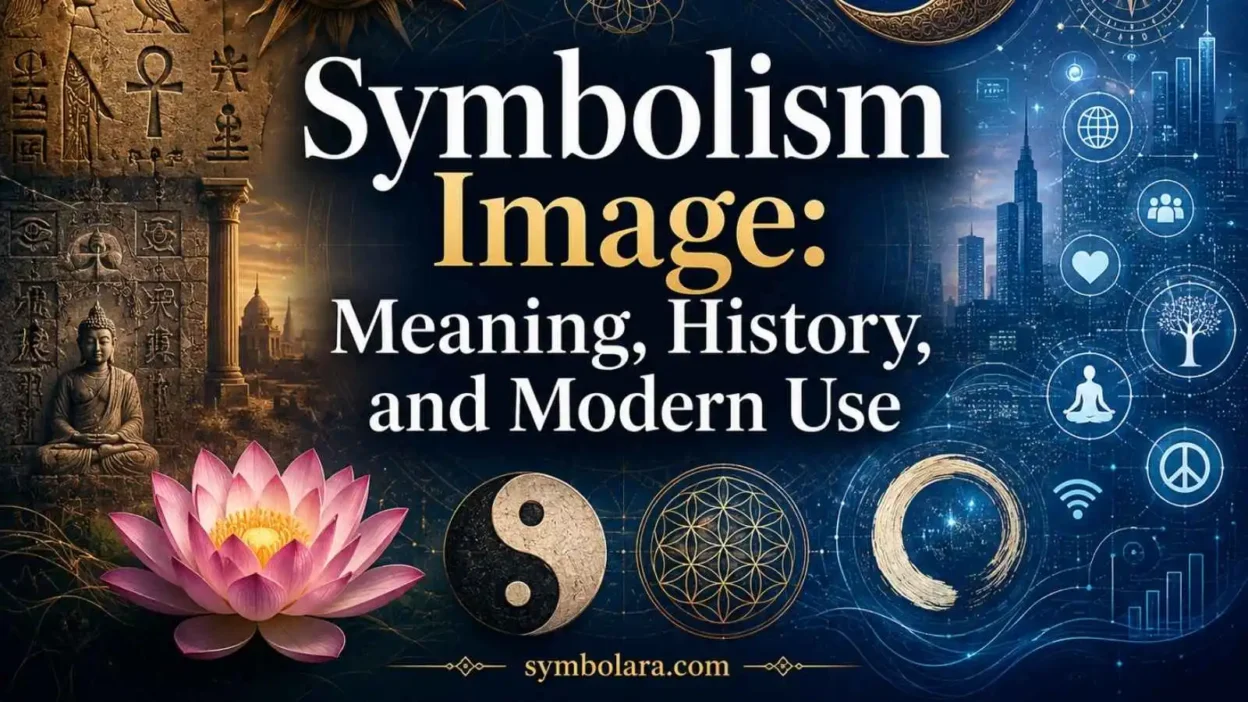
An image can do more than show what something looks like. In everyday American life, Symbolism Image usually refers to the way a visual image stands for a bigger idea, feeling, belief, or identity. A heart can suggest love, a dove can suggest peace, and a flag can suggest nationhood, memory, or belonging.
That matters because people constantly read meaning into images, whether they are looking at paintings, tattoos, logos, religious art, emoji, or memorial designs. The image itself may be simple, but its meaning comes from a mix of visual resemblance, shared convention, history, and emotion.
In the United States, symbolic images are everywhere. They appear in public ceremonies, fashion, sports branding, school mascots, political graphics, social media, and personal style. People may not always call them symbols, but they still respond to them as symbols.
Quick Answer
Symbolism Image commonly symbolizes the use of pictures to represent ideas beyond their literal appearance in modern American culture, especially in art, design, religion, identity, and digital communication. Historically, symbolic images developed because people used visible forms, gestures, and objects to express beliefs, emotions, stories, and shared values that words alone could not fully carry.
TL;DR
• Symbolic images stand for ideas, not just objects.
• Meaning can be natural, conventional, or both.
• History gives images emotional force.
• Americans use symbolic images in public and personal life.
• Digital culture has made symbolic images more immediate.
• Context changes how an image is understood.
What an Image Becomes a Symbol
Not every image is symbolic. A picture of a tree may simply show a tree. It becomes symbolic when people read it as life, endurance, family roots, or seasonal change. In that sense, symbolism begins when an image points beyond itself.
This can happen in different ways. Sometimes the connection feels obvious, as when the sun suggests light, energy, or life. Sometimes the connection is learned, as with a cross, a national flag, or a gender sign. Many symbolic images work through both resemblance and shared agreement at the same time.
Symbolism Image vs Literal Image: Understanding the Difference
The main difference between a literal image and a symbolic image is the level of meaning it carries. A literal image mainly shows what something looks like, while a symbolic image represents an idea beyond its physical appearance.
For example, a picture of a tree in a nature photograph may simply show a tree. However, the same tree in a painting, tattoo, or logo may represent growth, family roots, strength, or connection to nature.
Literal images focus on information and representation. Symbolic images focus on association and interpretation. Many images can work in both ways because people often add meaning based on their experiences and cultural knowledge.
Understanding this difference helps explain why the same picture can feel ordinary in one situation but powerful in another.
Types of Symbolic Images and Their Meanings
Symbolic images appear in many forms, and each type can communicate different ideas depending on its history and cultural setting. Understanding these categories makes it easier to recognize why certain images feel meaningful.
Nature-based symbolic images use elements from the natural world to represent human experiences. Trees may suggest growth and strength, rivers may represent change or movement, and mountains may represent challenges, stability, or achievement.
Animal symbolic images often connect physical traits with human qualities. A lion may represent courage, an owl may suggest wisdom, and a butterfly may represent transformation. These meanings can change between cultures, so context always matters.
Object-based symbolic images use everyday items to express larger ideas. A key may represent opportunity, a ring may suggest commitment, and a candle may symbolize remembrance or hope.
Color-based symbolic images rely on emotional and cultural associations. Red may suggest passion, warning, or power, while white may represent peace, purity, or new beginnings depending on the situation.
Human-made symbolic images include flags, logos, religious signs, and cultural designs. These symbols often gain meaning through shared history, traditions, and repeated use.
Why Humans Rely on Symbolic Images
People think visually as well as verbally. A symbolic image compresses meaning into a form that can be recognized quickly. That is one reason images are so effective in religion, literature, public ritual, protest art, advertising, and digital communication.
Images also help organize memory. A repeated visual form can carry feeling across time. The reason some symbols seem emotionally charged is not only their shape, but also the history attached to them. Repetition in ceremonies, mourning, storytelling, or public life gives an image weight that a brand-new sign does not yet have.
Ancient Roots of Symbolic Imagery
Symbolic images are older than modern writing systems. Human cultures have long used marks, pictographs, sacred objects, animal figures, and patterned designs to record events, identify power, express belief, and tell stories. In many traditions, image and meaning were never treated as separate things; the visual form itself helped make the idea present.
Over time, civilizations built full visual languages around religion, rulership, myth, and death. That long history is one reason symbolic images still feel natural today. Even modern viewers instinctively look for meaning in color, gesture, composition, and repeated motifs.
How Art Turned Images Into Meaning Systems
In art history, image symbolism became especially important when artists wanted to suggest ideas that could not be reduced to literal description. Religious painting, allegorical art, portraiture, literature, and later modern art all relied on viewers recognizing that objects, colors, and repeated forms could stand for larger meanings. The formal study of these meanings is known as iconography, which identifies and interprets symbols, themes, and subject matter in visual art.
The Symbolist movement of the late nineteenth century pushed this even further. Symbolist writers and artists used suggestive forms to communicate emotional and inner experience rather than simple factual description. That helped shape later modern ideas about image-making, mood, and symbolic interpretation in both Europe and the United States.
What It Commonly Means in the United States
In the United States, symbolic images are often read through a practical cultural lens. People want to know what an image says about love, grief, faith, freedom, danger, identity, loyalty, or rebellion. A symbol is often judged by use, not theory.
That is why the same image may appear in very different settings. A rose can suggest romance, remembrance, or political identity depending on context. An eagle can suggest strength, patriotism, state authority, or military tradition. A candle can suggest mourning, prayer, vigil, or hope. Americans often interpret images through public life, personal feeling, and media exposure all at once.
Natural Meaning Versus Learned Meaning
Some symbolic images feel intuitive. Water often suggests cleansing, danger, renewal, or change because people experience water physically and emotionally. A road suggests a journey because movement along a path easily maps onto life decisions.
Other meanings have to be learned socially. A flag means what it means because communities adopt it, honor it, and repeat it in important settings. The same is true for many religious signs, civic emblems, and institutional logos. Once an image is tied to tradition, it gains a kind of emotional authority that may feel natural even when it is historically constructed.
Where Symbolic Images Appear in Daily American Life
Symbolic images are not limited to museums or books. Americans encounter them on memorial walls, graduation announcements, sports uniforms, holiday decorations, protest posters, courtroom seals, cemetery markers, album covers, and smartphone screens.
Digital culture has expanded this habit of visual shorthand. Emoji and pictorial icons are now used across texting, email, and social platforms to express emotion, objects, identity markers, and social tone. In practice, that means modern Americans often communicate symbolic meaning through images dozens of times a day.
Symbolism Image in Branding, Marketing, and Media
Businesses, entertainment companies, and media creators use symbolic images because visuals can communicate messages quickly. A logo, character design, or advertisement often creates an emotional connection before people read any words.
Brands use symbols to show personality and values. A simple shape, color combination, or animal image can suggest reliability, adventure, luxury, innovation, or tradition. Over time, repeated exposure helps audiences connect the image with the brand identity.
Movies and television also rely heavily on symbolic images. A repeated object, color, location, or visual pattern may represent a character’s emotions, personal journey, conflict, or transformation. Viewers often understand these meanings even when creators never explain them directly.
Social media has increased the importance of symbolic imagery. Profile pictures, reaction images, memes, and visual trends allow people to communicate opinions, humor, and identity through images instead of long explanations.
Why Tattoos, Jewelry, and Fashion Use Symbolic Images
Personal style turns symbolic images into identity statements. Tattoos, pendants, patches, and printed clothing let people choose visual forms that stand for memory, loyalty, grief, faith, resilience, or belonging. The image may be small, but the meaning is usually social as well as personal.
That is one reason people ask what a symbol “really” means before getting it tattooed or wearing it. They understand that images are public signals. A snake, an eye, a crown, a cross, a moon, or a butterfly may be chosen for private reasons, but once displayed, the image enters a broader cultural field where other people read it too.
Emotional and Psychological Meaning
A symbolic image works partly because it makes feeling visible. Some images calm, warn, console, or unify before a viewer even explains why. Repetition matters here. When an image is tied again and again to mourning, patriotism, love, danger, or spiritual reverence, people begin to react to it almost instantly.
This does not mean everyone sees exactly the same thing. Personal experience changes interpretation. Someone may see a bird as freedom, another as grief, another as religious hope. Symbolic meaning is shared enough to communicate, but flexible enough to stay alive.
Religion and Sacred Visual Meaning
Religious traditions have used symbolic images to communicate teachings, sacred stories, and spiritual relationships in visual form. In that setting, symbols are not merely decorative. They can function as keys that organize belief, ritual, memory, and reverence. That is one reason religious iconography has been central across world religions.
In the United States, people often meet religious symbols both inside and outside formal worship. A cross may appear in jewelry, tattoos, memorial designs, and public debates. A halo, lotus, lamp, or folded hands image may move from sacred context into mainstream design. That can widen recognition, but it can also flatten meaning when the original tradition is ignored.
Cross-Cultural Meaning Is Not Always the Same
One of the biggest mistakes people make is assuming a symbol means the same thing everywhere. It rarely does. A color, animal, hand gesture, or sacred image may carry very different meanings across religions, regions, and historical periods.
Even when an image appears globally, local traditions still shape interpretation. That is why responsible symbolism writing has to separate broad patterns from universal claims. A viewer in the United States may read an image through pop culture or personal identity, while another culture may read the same image through ritual, ancestry, or sacred order.
How Symbolic Images Change Over Time
Symbolic meaning is not permanent or unchanging. As societies evolve, images can take on new interpretations and associations. Certain meanings may become stronger over time, while others may become commercialized, politicized, or separated from their original cultural context. Today, many symbols are adapted and reused in areas such as entertainment, branding, fashion, and internet culture.
Modern digital life speeds this up. A symbol can move from ancient mythology to fashion, from film to memes, or from activist language to mass marketing in a short time. Contemporary examples show how quickly an image can gain new political or ideological meanings far beyond its first use.
Common Misunderstandings and Misuse
Problems arise when people treat symbolic images as if they had only one permanent meaning. An image may have a respected religious history, a separate artistic history, and a much newer online meaning. Confusing those layers leads to bad interpretation.
Misuse also happens when symbols are stripped of context and presented as exotic decoration, false history, or internet myth. In American culture, symbols are often recycled so quickly that people repeat claims without knowing whether they come from tradition, modern marketing, or social media folklore.
A Quick Comparison of Symbolic Image Contexts
| Context | Meaning in the USA | Common Associations | Notes |
| Religion | Faith, holiness, reverence | Crosses, halos, sacred icons | Meaning depends heavily on tradition |
| Public life | Nation, duty, remembrance | Flags, seals, memorial imagery | Repetition gives symbols emotional force |
| Personal style | Identity, memory, values | Tattoos, jewelry, fashion prints | Meaning may be private and public |
| Art and literature | Mood, theme, hidden ideas | Color, animals, objects, repeated motifs | Context shapes interpretation |
| Digital culture | Tone, emotion, affiliation | Emoji, icons, profile imagery | Meanings change quickly online |
Why Context Matters More Than the Image Alone
A rose in a wedding invitation, a funeral program, a political poster, and a tattoo flash sheet does not mean exactly the same thing. The image stays recognizable, but the setting changes its message. That is true for almost every symbol.
The safest way to read a symbolic image is to ask four questions: where is it used, who is using it, what tradition is behind it, and what audience is expected to understand it? Those questions usually reveal more than the image by itself.
How to Interpret the Meaning of a Symbolic Image
Interpreting a symbolic image requires more than looking at the picture itself. The meaning usually comes from the relationship between the image, the audience, and the situation where it appears.
Start by identifying the basic object or design. Ask what the image literally shows before searching for deeper meaning. A bird is first a bird, a flower is first a flower, and a circle is first a shape.
Next, consider the cultural background. Some meanings come from religion, history, folklore, politics, or popular culture. An image may carry different messages depending on where and when people use it.
Personal experience also affects interpretation. A photograph, tattoo, or object may have a private meaning for one person while carrying a broader cultural meaning for others.
The best interpretation combines historical knowledge, cultural awareness, and the specific context of the image.
Why Symbolic Images Still Matter
Symbolic images still matter because they help people organize meaning quickly in a visually crowded culture. They turn feeling into form, memory into design, and belief into something visible. They also help communities signal continuity across time.
In the United States especially, where public life blends religion, commerce, activism, entertainment, and personal branding, images often carry meaning before words do. That is why symbolic interpretation remains useful not only in art history, but also in everyday life.
Frequently Asked Questions
What does a symbolic image do?
A symbolic image points beyond its literal subject to a larger idea, emotion, value, or identity. It helps people communicate meaning visually, often faster than a full verbal explanation.
Is image symbolism the same as iconography?
Not exactly. Image symbolism is the broader idea that images can carry meaning, while iconography is the formal study and interpretation of symbols, themes, and subject matter in visual art.
Why do people use symbolic images in tattoos?
Tattoos use symbolic images because they let people display memory, belief, protection, grief, ancestry, or personal transformation in a compact visual form. The chosen image often carries both a private story and a public meaning.
Do symbolic images mean the same thing in every culture?
No. Some patterns overlap, but meanings change across religion, history, language, and local custom. A symbol should be interpreted in context rather than treated as universal.
Are emoji a kind of symbolic image?
Yes, in many cases they are. Emoji are digital pictograms used in texting, social media, and email to express emotion, objects, identities, and tone, so they function as modern symbolic images in everyday communication.
Can a symbolic image have both positive and negative meanings?
Yes. A single image may signal comfort in one setting and threat in another. History, audience, politics, religion, and personal experience all affect whether the image feels positive, negative, or mixed.
What makes an image a symbol instead of just a picture?
An image becomes a symbol when people understand it as representing something beyond its literal appearance. Shared meaning, history, and cultural use help create that symbolic connection.
Conclusion
At its core, Symbolism Image is about how people use visible forms to express meanings that go beyond literal appearance. An image becomes symbolic when it gathers shared associations, emotional force, and cultural history.
That is why symbolic images remain so durable. They work in art, religion, fashion, public ritual, and digital life because they give people a fast, memorable way to communicate values, fears, loyalties, and hopes. The image may be simple, but the human meaning behind it rarely is.



[…] color of a snake image can affect how people interpret its symbolism. Color associations are not universal, but certain patterns appear frequently in American design […]
[…] often look for meaning in natural images that appear in dreams. While dream interpretation is personal and not scientifically fixed, certain […]
[…] may appear on sympathy cards, ornaments, jewelry, candles, and framed prints. For many people, the image of a feather feels softer than more direct symbols of […]