
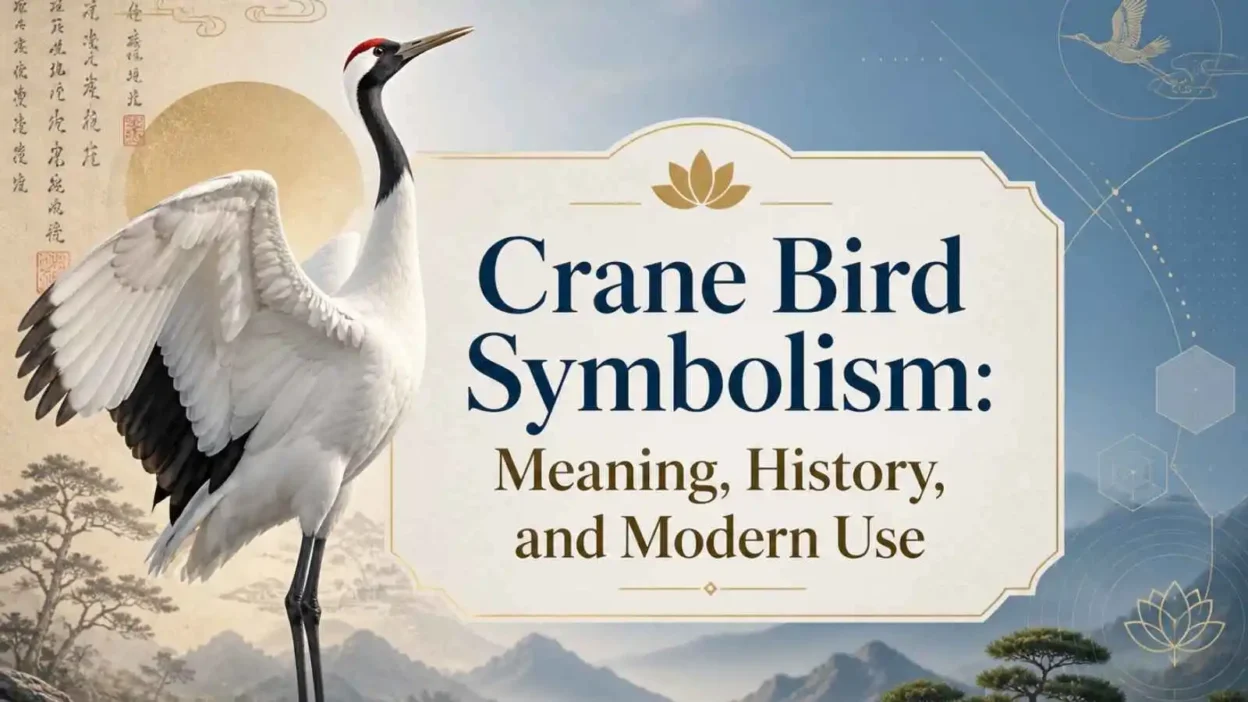
Cranes are some of the most visually striking birds people encounter in art, folklore, design, and nature imagery. With their long legs, upright posture, slow deliberate movements, and dramatic wingspan, they often seem calm, alert, and self-possessed. That physical presence helps explain why Crane Bird Symbolism has become so rich across cultures and still matters in the United States today.
People usually do not ask what a crane symbolizes because they are curious about biology alone. They ask because cranes appear in tattoos, paper art, home decor, wedding details, memorials, and spiritual conversations. In each of those settings, the bird carries a message about how someone wants to be seen or what feeling they want to express.
In modern American culture, the crane usually suggests grace, peace, hope, resilience, and a long view of life. But that is only part of the story. Older traditions also linked cranes with long life, good fortune, marital devotion, watchfulness, and even sacred order.
Quick Answer
Crane Bird Symbolism most commonly represents grace, hope, peace, and longevity in modern American culture, especially in art, memorials, tattoos, and personal design. Historically, cranes have also been associated with long life, good fortune, fidelity, and vigilance in East Asian, European, and religious traditions.
TL;DR
• In the U.S., cranes often suggest hope, peace, and elegance.
• East Asian traditions strongly connect cranes with longevity.
• Some older European traditions linked cranes with vigilance.
• Crane imagery appears in tattoos, weddings, decor, and memorials.
• The meaning changes by culture, context, and artistic style.
What a Crane Looks Like and Why That Matters Symbolically
A crane is a tall bird with a long neck, long legs, and a pointed bill. It moves with unusual control. Even when still, it looks alert. Even when flying, it looks measured rather than frantic. Those visible traits shape symbolic meaning more than people sometimes realize.
A bird that appears balanced and composed easily becomes a symbol of poise. A bird known for pair bonding can become a symbol of loyalty. A bird with a long migratory route can suggest endurance or safe passage. A bird that stands quietly in open landscapes can come to represent peace or reflection.
That is why crane symbolism often begins with appearance before it expands into culture. People read the bird’s body language as much as the bird itself.
What Cranes Commonly Mean in the United States
In the United States, cranes are usually read in a positive way. Most Americans do not connect them first to one fixed religious system. Instead, they read cranes through a mix of visual culture, conservation awareness, Japanese paper crane symbolism, and the bird’s graceful appearance.
The most common American meanings include:
- grace and self-possession
- peace and healing
- hope after hardship
- longevity and good fortune
- fidelity or lasting partnership
- resilience and survival
This modern U.S. reading is practical rather than doctrinal. A crane on a wall print, necklace, or tattoo usually signals a calm, thoughtful identity. It can suggest that someone values endurance without aggression, beauty without flash, or hope without sentimentality.
In recent decades, cranes in the United States have also gained another layer of meaning: conservation. Because the whooping crane became one of North America’s most recognized endangered birds, cranes can symbolize fragility, protection, and recovery.
Ancient Roots and Early Symbolism
Crane symbolism is old, but it was never exactly the same everywhere. Different societies noticed different things about the bird and built meaning from those traits.
In parts of East Asia, cranes came to symbolize long life and auspicious fortune. Their pale feathers, elevated bearing, and legendary association with long lifespan helped make them emblems of longevity. In visual art, they were often paired with pines, tortoises, peaches, or other images connected with endurance and blessing.
In older Mediterranean and European traditions, cranes could represent order, intelligence, and alertness. Ancient and medieval writers were interested in their migration, flock behavior, and supposed watchfulness. Over time, that developed into a symbolic tradition of vigilance.
So from early on, cranes did not just stand for one emotional mood. They stood for admired qualities people believed they saw in the bird: endurance, discipline, beauty, and constancy.
White Crane Symbolism: Meaning and Cultural Importance
White cranes carry some of the strongest symbolic associations because their appearance naturally suggests purity, peace, and elegance. Across many cultures, the white crane became connected with ideas of longevity, spiritual refinement, and harmony.
In East Asian art, white cranes frequently appear as symbols of long life and good fortune. Their bright feathers and graceful movements helped artists portray them as creatures of beauty and balance.
In modern American culture, a white crane often represents peaceful intentions, emotional healing, and hope. People may choose white crane artwork for spaces designed to create a calm atmosphere, such as homes, meditation areas, or wellness environments.
The color white also adds symbolic layers connected with renewal and simplicity. A white crane can suggest a fresh beginning, a peaceful transition, or the ability to move forward after difficult experiences.
However, meanings depend on context. A white crane in traditional artwork may carry historical meanings, while a white crane tattoo or decoration may simply represent elegance, resilience, or personal growth.
Why East Asian Traditions Shaped Modern Crane Meaning
Much of what Americans now assume about crane symbolism came through East Asian traditions, especially Japanese, Chinese, and Korean visual culture.
In Chinese symbolism, the crane became closely tied to long life, immortality, and auspicious status. It often appeared with other longevity symbols and in imagery connected to Daoist immortals. In that setting, the bird does not merely mean “bird of peace.” It points to a larger wish for a long, harmonious, fortunate life.
In Japanese culture, the crane is also strongly associated with longevity, happiness, good fortune, and faithful partnership. That is one reason cranes appear so often in textiles, wedding-related design, seasonal decoration, and paper folding traditions.
In Korean art and decorative culture, cranes likewise appear in longevity symbolism and refined courtly or auspicious imagery. Their repeated appearance across East Asia gave the crane a durable symbolic vocabulary that later traveled widely through museums, design, fashion, stationery, and popular culture in the United States.
Crane Bird Symbolism in Different Cultures Around the World
Crane symbolism changes depending on the culture viewing the bird. Although many traditions admire cranes for their beauty and grace, each society developed its own interpretation based on local beliefs, stories, and artistic traditions.
In Japan, cranes are among the most recognizable symbols of good fortune, peace, and long life. The bird is often connected with the idea that cranes live for many years and remain loyal partners. Because of this, crane imagery appears in weddings, celebrations, and traditional artwork.
In China, cranes have long represented longevity, wisdom, and a connection between the earthly and spiritual worlds. Artists often included cranes in paintings alongside other symbols of endurance and prosperity. The bird became a visual expression of hopes for a healthy and meaningful life.
In Korea, cranes are also linked with longevity and refined beauty. Traditional artwork often used cranes to represent harmony, dignity, and a peaceful existence.
Native American relationships with cranes vary among different nations, but birds often hold important roles in storytelling and nature-based traditions. The meaning of a crane may connect with observation, balance, and respect for the natural world.
In Western traditions, cranes were more commonly associated with patience, intelligence, and vigilance. Their migration patterns and organized flock behavior influenced how people interpreted the bird’s character.
Today, Americans often combine these different meanings. A crane image may represent Japanese-inspired peace, Chinese-inspired longevity, European ideas of awareness, or modern conservation values. This mixture shows how symbols continue to evolve across generations.
The Meaning of the Origami Crane in American Life
For many Americans, the paper crane is the most familiar crane symbol of all. That matters because people often transfer the meaning of the origami crane to the real bird.
In the United States, the origami crane commonly represents hope, healing, peace, and communal care. It often appears in school projects, memorial spaces, hospital support efforts, and public acts of remembrance. The association became especially strong through the global spread of the thousand-paper-cranes tradition and the story of peace cranes connected to Hiroshima memory.
Because of that history, many Americans now see the crane not just as elegant, but as compassionate. A paper crane can mean, “I am thinking of recovery.” It can mean, “I want peace.” It can also mean, “We are trying to make something gentle in response to loss.”
That is a distinctly modern layer of meaning. It does not erase older symbolism about long life or luck, but it adds a civic and emotional dimension that is especially visible in U.S. memorial culture.
Crane Symbolism and Lasting Partnership
Cranes are often used to represent devotion and enduring partnership. This meaning comes partly from observation of crane pair bonding and partly from artistic traditions that show cranes in pairs.
In American settings, this symbolism appears most often in weddings, anniversary gifts, and couple-centered art. A pair of cranes can suggest:
- mutual steadiness
- loyalty over time
- shared direction
- graceful companionship
This is also one reason crane imagery works so well in home decor. It does not feel loud or overly literal. A paired-crane design can quietly imply a stable relationship without using hearts, rings, or direct romantic language.
Still, context matters. A single crane may suggest independence, peace, or introspection. A pair of cranes more often points toward partnership and harmony.
Emotional and Psychological Meaning
Psychologically, cranes often symbolize the kind of calm many people want but do not always feel. The bird’s upright posture and unhurried movement communicate control without stiffness.
That gives crane symbolism emotional value in several ways. It can suggest:
- emotional balance
- maturity
- patience
- quiet confidence
- recovery after upheaval
- distance from chaos
Unlike symbols built around force or conquest, the crane usually communicates strength through restraint. That is one reason people choose it during transitional periods in life. They may not want a symbol of domination. They may want a symbol of composure.
This makes the crane especially meaningful for people drawn to minimalism, reflective spirituality, nature-centered identity, or softer forms of self-expression.
Crane Bird Symbolism in Dreams: Common Interpretations
Seeing a crane in a dream is often interpreted as a symbol of change, patience, balance, or personal growth. Dream meanings are subjective and depend on the dreamer’s experiences, emotions, and cultural background.
A flying crane may represent freedom, progress, or moving toward a new stage of life. Because cranes travel long distances during migration, they are sometimes connected with journeys, transitions, and personal transformation.
A standing crane may symbolize patience, awareness, and the ability to remain calm during uncertain situations. Its still posture can represent taking time to observe before making important decisions.
A pair of cranes in a dream may suggest partnership, loyalty, or emotional connection. Some people associate this image with relationships that require trust and commitment.
A wounded or struggling crane may reflect feelings of vulnerability, recovery, or the need to protect something valuable. In a broader symbolic sense, it can represent overcoming difficulties while maintaining hope.
Dream symbolism is not a fixed science, but cranes often appear as meaningful images because people naturally connect them with endurance, grace, and renewal.
Crane Symbolism in Religion, Folklore, and Moral Tradition
Crane symbolism also appears in religious and moral traditions, though not always in the same way.
In East Asian religious imagery, cranes were often associated with immortals, paradise-like landscapes, and blessed longevity. In these settings, the bird could signal spiritual elevation, not simply earthly luck.
In medieval Europe, cranes took on a different role. They became linked to vigilance and moral alertness. One well-known symbolic image shows a crane holding a stone in one claw while standing guard. The idea was that if it fell asleep, the stone would drop and wake it. Whether or not the behavior was real mattered less than the lesson: remain watchful.
That older moral meaning survives today in limited ways, especially in heraldic or historical art contexts. Most Americans do not think of cranes this way first, but it remains part of the bird’s symbolic record.
Where People Use Crane Imagery Today
Modern crane symbolism shows up in more places than many people notice. It is not limited to bird lovers or traditional art.
You can see crane imagery in:
- tattoos
- jewelry
- wedding invitations
- wallpaper and textiles
- greeting cards
- memorial installations
- museum-inspired fashion
- social media art and prints
The reason it works so well across formats is flexibility. The same bird can look refined in a formal pattern, serene in a wellness brand, heartfelt in a memorial project, or personal in a tattoo.
In American design, cranes are especially popular when someone wants nature imagery that feels elegant rather than rustic. They bridge the gap between wildness and order.
Crane Bird Symbolism in Art and Literature
Artists and writers have used cranes for centuries because the bird combines movement, stillness, and emotional depth. A crane can represent a physical creature while also expressing ideas about time, memory, hope, and human experience.
In traditional paintings, cranes often appear in peaceful landscapes, suggesting harmony between nature and human life. Their tall shape and graceful posture make them visually powerful symbols of balance.
In literature and poetry, cranes are often used to represent journeys and transformation. Their migration patterns create a natural connection with themes of distance, change, and returning home.
Modern artists continue to use crane imagery because the symbol remains flexible. A minimalist crane illustration may communicate calm and simplicity, while a detailed artwork may explore themes of survival, heritage, or emotional healing.
This artistic versatility explains why cranes remain popular in books, paintings, photography, fashion, and digital design.
Why Cranes Appear in Tattoos and Personal Style
Crane tattoos usually symbolize grace, freedom, resilience, peace, or a long and meaningful life. But the exact meaning often depends on style.
A realistic crane tattoo may emphasize natural beauty and self-possession. A Japanese-inspired crane may suggest luck, longevity, or peace. A flying crane can suggest movement, release, or a new chapter. A pair of cranes may signal fidelity or a bond that has survived hardship.
Crane jewelry and clothing work in a similar way. They often communicate refinement with emotional depth. The bird feels thoughtful, not trendy for the sake of trend. That makes it appealing to people who want symbolism that is personal without being obscure.
Because cranes are associated with softness and discipline at once, they can appeal across gender lines and across very different aesthetic styles.
What the Crane Can Mean in Public Life and Conservation
In the United States, the crane also has a public meaning shaped by environmental history. The whooping crane, in particular, became a recognized symbol of endangered wildlife recovery.
That gives crane symbolism a civic layer that many older symbolic birds do not have. In this context, the crane can stand for:
- ecological vulnerability
- the cost of habitat loss
- collective responsibility
- survival against long odds
- hope through sustained protection
This matters because symbolism is not only inherited from myth. It is also created by modern public memory. When a species nearly disappears and then becomes the subject of major recovery efforts, it starts to symbolize more than itself.
For some Americans, then, the crane is not mainly a spiritual or decorative emblem. It is a living reminder that beauty can be endangered and that recovery requires patience.
A Quick Comparison of Crane Meanings
| Context | Meaning in the USA | Common Associations | Notes |
| Origami crane | Hope, healing, peace | Memorials, schools, recovery | Strong modern emotional use |
| Pair of cranes | Fidelity, harmony | Weddings, anniversaries, home art | Often used for partnership |
| East Asian-inspired art | Longevity, luck, blessing | Textiles, prints, decor | Draws from older cultural traditions |
| Tattoo symbolism | Grace, resilience, renewal | Personal identity, life transitions | Meaning depends on design |
| Conservation symbolism | Survival, protection, hope | Whooping crane, wildlife recovery | Strong North American layer |
| Medieval or heraldic use | Vigilance, moral alertness | Historic emblems, manuscripts | Less common in everyday U.S. use |
Common Misunderstandings About Crane Symbolism
One common mistake is assuming cranes always mean peace. Peace is certainly one modern meaning, especially through paper cranes, but it is not the only one and not always the oldest one.
Another misunderstanding is treating all crane symbolism as interchangeable with heron or stork symbolism. These birds may look similar to casual viewers, but their symbolic histories differ. Cranes usually carry stronger associations with longevity, vigilance, and ceremonial grace.
A third mistake is flattening all cultural meanings into one vague statement about “spirituality.” That tends to erase the real differences between traditions. In some contexts the crane suggests immortality. In others it suggests faithful love. In others it means moral watchfulness or ecological survival.
The crane is a flexible symbol, but it is not a blank one.
How Crane Symbolism Has Changed Over Time
The meaning of the crane has shifted as it moved across geography, media, and generations.
Older meanings often centered on status, sacred order, long life, and vigilance. Those meanings were built through folklore, court art, religious imagery, and literary tradition.
Modern meanings, especially in the United States, are more emotional and personal. People now use cranes to express healing, peace, elegance, endurance, and self-definition. Public memorial culture and conservation awareness have pushed the symbol even further toward hope after damage.
That change is important. It shows how symbols survive by adapting. The crane still carries older meanings, but many Americans now encounter it through paper folding, museum gift shops, tattoo culture, interior design, and wildlife storytelling rather than through formal myth or religion.
FAQs
What does a crane bird symbolize most often?
Most often, a crane symbolizes grace, peace, hope, and longevity in modern American use. In older traditions, it can also represent vigilance, good fortune, and faithful partnership.
Is crane symbolism positive or negative?
Crane symbolism is usually positive. While meanings vary by culture and context, the bird is far more often linked with blessing, endurance, calm, and watchfulness than with danger.
What does a crane tattoo mean?
A crane tattoo often means resilience, elegance, freedom, or a desire for a long and balanced life. If the design draws from Japanese or East Asian art, it may also suggest luck, longevity, or peace.
Do cranes symbolize love or marriage?
They can. A pair of cranes is often used to symbolize loyalty, harmony, and lasting partnership, which is why crane imagery appears in wedding-related art and couple-centered decor.
Is the crane a religious symbol?
Sometimes, but not in one universal way. In some traditions it appears in sacred or moral imagery connected with immortality, blessed life, or vigilance, while in modern American use it is often more cultural than strictly religious.
What do paper cranes symbolize?
Paper cranes usually symbolize hope, healing, peace, and heartfelt wishes. In the United States, they are especially associated with memorials, recovery, community support, and acts of remembrance.
Are crane and heron meanings the same?
No. People sometimes confuse them because the birds look similar, but cranes usually carry stronger associations with longevity, vigilance, peace, and ceremonial grace, while herons are often read differently depending on the tradition.
Conclusion
The crane remains meaningful because it combines visible beauty with symbolic range. It can suggest calm, long life, fidelity, healing, vigilance, or recovery, depending on where and how it appears.
In modern American life, Crane Bird Symbolism most often points to grace, peace, hope, and resilience. Older traditions still matter, but the crane continues to live as a modern symbol because it helps people express steadiness in a world that often feels unstable.

[…] stress may feel like a warning. A hawk appearing after a loss may become part of remembrance. The bird’s meaning is shaped by both its behavior and the viewer’s emotional […]
[…] cheerful, which makes it easy to turn into a sign of mood, season, and outlook. Unlike heavier bird symbols tied to power or mourning, the yellow finch usually belongs to a more domestic emotional world: […]