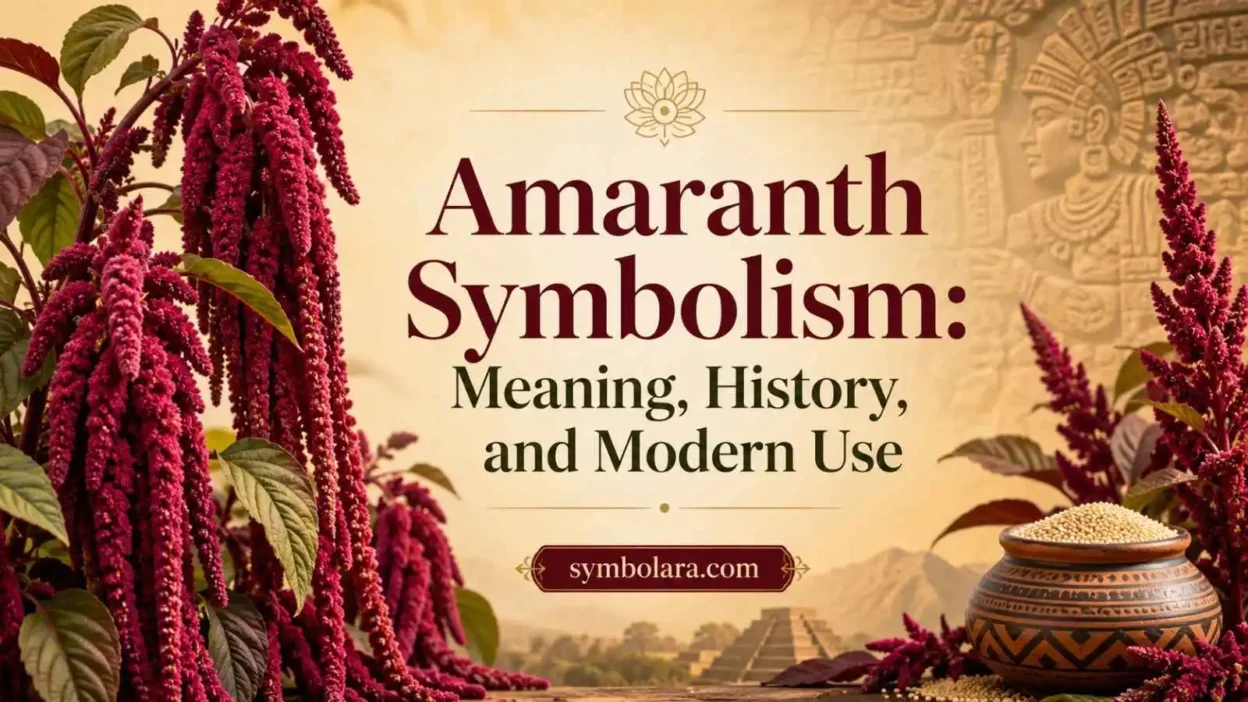
Amaranth Symbolism centers on a striking plant known for flowers that keep their color, seed heads that feed communities, and a name connected to the idea of not fading away. In modern American culture, amaranth can appear as a dramatic wedding flower, a burgundy color, a garden plant, a tattoo idea, or an ancient grain in health-focused kitchens.
People care about its meaning because amaranth carries several layers at once. It can suggest lasting love, memory, endurance, resilience, nourishment, cultural survival, and beauty that remains after time passes.
That range makes amaranth different from many floral symbols. It is not only decorative. It is also edible, agricultural, historical, and tied to both Old World literature and Indigenous American food traditions.
Quick Answer
Amaranth Symbolism commonly represents unfading love, endurance, remembrance, and resilience in modern American culture, especially in flowers, tattoos, weddings, and preserved arrangements. Historically, it has also been associated with immortality, sacred life, nourishment, and cultural continuity because of its long-lasting blooms and ancient use as a food crop.
TL;DR
- Amaranth most often means endurance and unfading love.
- Its name comes from the idea of not withering.
- Ancient cultures valued it as food and ritual material.
- Americans use it in weddings, tattoos, decor, and wellness.
- The amaranth color suggests depth, maturity, and remembrance.
- The synthetic dye named amaranth is separate from the plant.
What Amaranth Looks Like and Where People See It
Amaranth is not one single-looking flower. It belongs to a large plant group that includes upright plume-like varieties, cascading tassel forms, leafy vegetable types, and grain-producing plants. Some varieties have burgundy, crimson, pink, green, bronze, or gold-toned flower clusters. Others are grown more for their leaves or seeds than for show.
The most visually famous ornamental type is often called love-lies-bleeding. Its long, hanging tassels can look like ropes of velvet, which is why florists use it when they want movement rather than a stiff bouquet shape. Upright types, such as prince’s feather, create tall, feathery spikes that feel bold and architectural.
In the United States, people encounter amaranth in several places: wedding installations, dried flower arrangements, fall decor, backyard gardens, health food stores, seed catalogs, tattoo designs, and color palettes. Someone interested in the symbol may be thinking about a flower, a grain, a color, or a personal emblem.
What Amaranth Commonly Means in the United States
In modern American use, amaranth most often symbolizes endurance. The meaning comes from the flower’s visible behavior: it keeps much of its shape and color after drying. A bloom that does not quickly collapse becomes an easy image for love, memory, commitment, or identity that continues under pressure.
That is why amaranth works naturally in wedding symbolism. It can say, “This bond is meant to last,” without relying on overly sweet imagery. It also works in memorial arrangements because its preserved look can suggest remembrance rather than fresh grief.
The grain side adds another layer. As an ancient food crop, amaranth can represent nourishment, survival, and renewal. For many Americans, especially those interested in heirloom crops, Indigenous foodways, gluten-free grains, or sustainable agriculture, amaranth suggests a return to older forms of nourishment that still have value today.
The “Unfading” Root of Its Meaning
The word amaranth is closely tied to the ancient Greek idea of something that does not wither. That linguistic root is one of the biggest reasons the plant became associated with immortality, lasting affection, and permanence.
This does not mean ancient people all used amaranth in one identical way. Plant names moved across languages, species, and literary traditions. Some early references may have described plants related to amaranth or flowers with similar long-lasting qualities. Still, the central idea remained clear: a flower that keeps its form becomes a symbol of what resists decay.
That idea also explains why amaranth appears in poetry and religious imagination. A never-fading flower easily becomes a metaphor for paradise, divine life, memory after death, or glory that outlasts ordinary human time.
Ancient Food, Ritual, and Cultural Continuity
Amaranth was more than a pretty plant in the ancient Americas. In parts of Mesoamerica, it was cultivated as a food crop and used in ceremonial contexts. Its seeds could be toasted, ground, shaped, or mixed with sweeteners. In Mexico, amaranth remains connected to alegría, a sweet made with popped amaranth and honey or syrup.
This history matters because it changes the symbol from a decorative flower into a plant of survival and identity. Amaranth fed people. It traveled through memory, agriculture, and family food traditions. It survived periods when colonial pressure disrupted Indigenous practices and food systems.
For that reason, modern amaranth can symbolize cultural persistence. It can point to the survival of older knowledge even when that knowledge was suppressed or pushed aside. In the United States, this meaning often appears through conversations about Indigenous crops, Mexican heritage, ancestral foods, and the revival of ancient grains.
Greek, Literary, and Religious Associations
In Greek and later European tradition, amaranth became linked with immortality and divine life because of its “unfading” meaning. It was associated in some traditions with Artemis, a goddess connected with wild nature, protection, and transitions. The plant’s lasting quality made it suitable for stories about gods, sacred spaces, and life beyond ordinary decay.
English literature strengthened this association. In religious poetry, amaranth could appear as a flower of paradise or heaven, not because of botany alone but because writers used it as an image of what does not perish.
In American culture, these classical and literary meanings are less familiar than the flower’s general “everlasting” message. Still, they shape the background. When people describe amaranth as a symbol of immortality, they are drawing from a long poetic tradition as much as from the plant itself.
Amaranth Symbolism in Literature and Poetry
Amaranth has a long history as a literary symbol because writers often use plants to express ideas about time, beauty, and human experience. Its association with something that does not fade made it a natural image for permanence and lasting memory.
Poets have used amaranth to represent qualities that survive beyond ordinary life, such as honor, love, spiritual hope, or artistic achievement. The flower’s unusual name and appearance gave writers a way to describe something precious that resists decay.
In English poetry, amaranth sometimes appears alongside images of paradise, eternal beauty, or sacred landscapes. These references usually focus less on the physical plant and more on the idea behind it: something valuable that remains when temporary things disappear.
Today, readers may encounter amaranth symbolism in poems, fantasy writing, botanical art, and creative storytelling. Its meaning continues because the central image is easy to understand a flower that stays.
Amaranth as a Flower of Love and Remembrance
Amaranth’s love symbolism is more serious than playful. Roses often suggest romance, attraction, apology, or celebration. Amaranth suggests lasting devotion, loyalty, and affection that continues after the easy moment has passed.
That makes it especially fitting for anniversaries, long-term partnerships, memorial bouquets, and family keepsakes. It does not say “new crush” as clearly as a bright spring flower might. It says “still here,” “still remembered,” or “not easily erased.”
In remembrance, amaranth has a softer emotional role. It can honor someone without making the arrangement feel cold or formal. Dried or preserved amaranth works well because the material itself performs the meaning: it remains visible after fresh flowers would have faded.
Amaranth Symbolism Compared With Other Enduring Flowers
Amaranth shares some meanings with other symbolic flowers, but its message is distinct. Roses often represent romance and passion, while lotus flowers are commonly associated with renewal, spiritual growth, and transformation. Amaranth focuses more strongly on endurance, memory, and what continues over time.
A dried amaranth arrangement carries its symbolism in a physical way because the flower keeps much of its appearance after harvesting. This makes it especially connected with remembrance and lasting connections.
Compared with delicate flowers that symbolize temporary beauty, amaranth suggests strength beyond a single moment. It can represent love that has matured, memories that remain important, or traditions that survive across generations.
The meaning changes depending on context. A wedding arrangement may highlight commitment, while a memorial piece may emphasize remembrance. A tattoo may focus on personal resilience. The symbol becomes meaningful through the story attached to it.
Meaning by Context in Modern American Culture
| Context | Meaning in the USA | Common Associations | Notes |
| Weddings | Lasting commitment | Devotion, endurance, dramatic beauty | Often used in cascading bouquets and installations |
| Memorials | Remembrance | Memory, honor, continuity | Especially fitting when dried or preserved |
| Tattoos | Personal resilience | Survival, loyalty, identity | Works well with botanical or minimalist designs |
| Food culture | Nourishment and revival | Ancient grains, heritage crops, wellness | Symbolism differs from the ornamental flower |
| Home decor | Warmth and permanence | Autumn, texture, preserved beauty | Popular in dried arrangements and wreaths |
| Color use | Depth and maturity | Burgundy, crimson, elegance | Often feels serious, romantic, or reflective |
Amaranth in Weddings and Romantic Design
Amaranth has become especially visible in modern floral design because of its shape. Hanging amaranthus adds movement to bouquets, ceremony arches, centerpieces, and ceiling installations. It drapes rather than simply fills space.
Symbolically, that movement matters. The plant can make a wedding design feel alive, flowing, and less predictable than a round bouquet of traditional blooms. Burgundy or red amaranth can suggest devoted love, while green amaranth can feel fresh, organic, and quietly unconventional.
For American weddings, amaranth often fits couples who want romance without a polished, overly formal look. It can lean bohemian, garden-inspired, dramatic, gothic, autumnal, or modern depending on color and arrangement style.
Tattoo Meaning and Personal Symbolism
As a tattoo, amaranth often represents resilience, loyalty, remembrance, or survival after hardship. The flower’s “unfading” association makes it meaningful for someone who wants a symbol of endurance without choosing a more common image like a phoenix, anchor, or lotus.
A cascading amaranth tattoo can suggest grief, devotion, or emotional honesty because the hanging form has a slightly mournful beauty. An upright plume can feel more like confidence, growth, and strength. A seed-head design may point toward nourishment, ancestry, or rebuilding.
Color also changes the message. Red or burgundy amaranth tattoos often feel romantic or memorial. Blackwork designs make the symbol quieter and more personal. Green amaranth can suggest renewal, healing, or a grounded connection to nature.
The Color Amaranth and What It Suggests
Amaranth is also the name of a reddish-pink to deep rose color. In design, it often sits between red, pink, burgundy, and purple. That makes it emotionally different from bright red or soft blush.
As a color, amaranth can suggest mature love, elegance, memory, and emotional depth. It is warmer than purple but more restrained than scarlet. In branding, fashion, interiors, and digital design, it can feel romantic without being childish and bold without being loud.
Americans may not always know the color name, but they recognize the mood. Amaranth tones often appear in fall palettes, wedding stationery, lipstick shades, velvet fabrics, floral prints, and moody home accents.
Amaranth Symbolism in Different Colors
The color of an amaranth flower can influence how people interpret its symbolism. Different shades create different emotional impressions, even though the central theme of endurance remains.
- Red or burgundy amaranth: Often suggests deep love, devotion, passion, and remembrance.
- Pink amaranth: Can represent affection, gentleness, and emotional connection.
- Green amaranth: May suggest renewal, nature, growth, and balance.
- Purple-toned amaranth: Often feels connected with creativity, dignity, and mystery.
These meanings come mainly from modern floral design and personal interpretation rather than fixed rules. Color symbolism changes between cultures, traditions, and individual experiences.
When choosing amaranth for flowers, tattoos, or artwork, the shade can help communicate a specific mood. A darker tone may feel serious and reflective, while lighter shades may create a softer and more hopeful impression.
Emotional and Psychological Meaning
Amaranth communicates steadiness. It is not a symbol of sudden joy or quick transformation. Its emotional message is closer to persistence: holding on, remembering, continuing, and staying rooted after stress.
That makes it appealing to people who see beauty in endurance rather than perfection. A fresh flower at peak bloom can symbolize a moment. Amaranth, especially dried amaranth, suggests what remains after the moment passes.
Psychologically, it can also represent identity that survives change. Someone may connect with amaranth after grief, migration, illness, family loss, a long relationship, or a personal rebuilding period. The plant’s meaning is not about avoiding pain. It is about remaining present after it.
Amaranth Symbolism in Dreams: Meaning and Interpretations
Dream interpretations involving amaranth often focus on ideas of endurance, memory, and personal growth. Because the plant is connected with lasting beauty and survival, seeing amaranth in a dream may be interpreted by some people as a reminder to value what remains strong through change.
A blooming amaranth plant in a dream may represent hope, creativity, or a relationship that continues to grow. A dried amaranth flower may suggest memories, past experiences, or something meaningful that continues to influence the present.
These interpretations are personal rather than universal rules. Dream symbolism depends on the dreamer’s emotions, experiences, and cultural background. Someone connected to gardening may see amaranth differently from someone who associates it with a loved one, a cultural tradition, or a personal challenge.
The strongest connection between amaranth and dreams comes from its traditional meaning of “not fading.” For many people, it can represent resilience, emotional strength, and the ability to carry important memories forward.
Cross-Cultural Meanings and Indigenous Contexts
Across cultures, amaranth has developed different meanings because people have used it in many different ways. Greek and European literary traditions often associate the flower with immortality and the idea of something that never fades. Meanwhile, Mesoamerican traditions connect amaranth with food, ceremony, agriculture, and cultural survival.
In parts of Latin America, the symbolism of amaranth extends beyond romance or decoration. The plant represents a practical connection to daily life through crops, traditional sweets, family recipes, and older food traditions. For Mexican and Mexican American communities, amaranth may evoke memories of markets, heritage, and shared cultural experiences rather than only serving as a floral symbol.
This is important for respectful interpretation. Amaranth should not be reduced to one mystical meaning. Its symbolism depends on whether someone is looking at the flower, the grain, the color, or the cultural history behind the plant.
Modern Uses in Decor, Fashion, and Digital Culture
Amaranth appears today in both physical and digital style. Florists use it for texture. Home decorators use dried amaranth in vases, wreaths, autumn tablescapes, and preserved arrangements. Fashion designers and stylists use amaranth tones for warmth, drama, and mature romance.
On social media, amaranth often appears in aesthetic posts related to dark florals, cottagecore, bohemian weddings, botanical tattoos, slow living, and natural interiors. The plant photographs well because its shape is unusual. It can look soft, wild, dramatic, or antique depending on lighting and color.
In wellness culture, amaranth also appears as an ancient grain. There, the symbolism shifts toward nourishment, plant-based eating, and rediscovering older food traditions. This modern use is not the same as floral symbolism, but both meanings share one idea: something valuable can endure across generations.
Common Misunderstandings About Amaranth
One common misunderstanding is treating all amaranth meanings as if they come from one culture. The flower’s “unfading” symbolism, the grain’s Mesoamerican history, and the color’s design meaning overlap, but they are not identical.
Another mistake is confusing the plant with the synthetic dye called amaranth, also known historically as Red No. 2 in the United States. That dye is a manufactured color additive, not the same thing as the amaranth plant, flower, grain, or natural symbolic tradition.
A third misunderstanding is assuming amaranth only means immortality. Immortality is part of its literary history, but modern American use often leans more toward endurance, remembrance, long-term love, and resilience. Those meanings are easier to apply to real life without exaggerating the symbol.
Positive and Negative Symbolism
Amaranth is mostly positive, but it can carry a serious mood. Its positive meanings include loyalty, lasting affection, nourishment, resilience, dignity, and cultural continuity. It can be a beautiful symbol for someone who values commitment, memory, or personal strength.
Its heavier meanings come from its connection with death, mourning, and immortality. In some settings, the drooping form of love-lies-bleeding can feel sorrowful or dramatic. That does not make the symbol negative, but it does make it emotionally weightier than cheerful flowers such as daisies or sunflowers.
The meaning of amaranth depends largely on the context where it appears. A wedding arrangement may use it to represent lasting love, while a memorial display can reflect remembrance. Tattoo designs often connect it with survival and resilience, whereas its use in cooking may highlight nourishment and heritage. As a color, amaranth can suggest maturity, richness, and emotional depth.
How Its Meaning Has Changed Over Time
Amaranth’s meaning has moved through several stages. First, the plant’s physical quality created the idea of not fading. Then poets and religious writers turned that quality into a symbol of immortality and paradise. In the Americas, its role as a crop gave it meanings tied to food, ceremony, and cultural survival.
In modern U.S. culture, these older meanings have become more personal and design-focused. People use amaranth because it looks dramatic, lasts when dried, feels connected to ancient plant traditions, and carries emotional seriousness without needing much explanation.
The symbol has not lost its old meanings. It has become more flexible. Today, amaranth can speak to a bride, a gardener, a tattoo wearer, a person remembering a loved one, a chef exploring heritage grains, or a designer choosing a color with warmth and gravity.
How to Use Amaranth Symbolism Thoughtfully
Use amaranth when the message involves lasting affection, memory, endurance, or renewal. It works well for anniversaries, memorial pieces, preserved bouquets, personal tattoos, autumn decor, and designs meant to feel rooted rather than temporary.
For romantic arrangements, pair it with softer flowers like roses, ranunculus, or peonies to balance its serious tone. Memorial designs often work well with quiet textures, including dried grasses, white blooms, and natural greenery. When choosing a tattoo design, think about which element speaks to you most: the cascading form, upright plume, seed head, or a simple botanical line drawing.
When discussing its cultural history, be specific. Say whether you mean the Greek “unfading” idea, the Mesoamerican food crop, the modern flower, or the color. That care makes the symbolism more accurate and more respectful.
FAQs
Amaranth usually symbolizes endurance, unfading love, remembrance, and resilience. Its meaning comes from both its long-lasting flowers and its history as a plant that has remained useful across cultures and generations.
Yes, amaranth works well in weddings because it suggests lasting commitment and adds dramatic movement to floral designs. Burgundy and red varieties feel romantic, while green varieties feel fresh, natural, and modern.
An amaranth tattoo often means resilience, loyalty, memory, or love that does not fade. The exact meaning depends on the style: cascading forms can feel emotional and memorial, while upright forms can suggest strength and growth.
Amaranth has religious and literary associations with immortality, paradise, and divine life in some Greek and Christian-influenced traditions. In Mesoamerican history, it also had ceremonial importance, so its sacred meanings vary by culture.
Amaranth is not mainly a symbol of death, but it can appear in mourning and remembrance because of its link to immortality and lasting memory. It is better understood as a symbol of what continues after loss.
The amaranth color, usually a deep reddish-pink or burgundy tone, suggests mature love, elegance, warmth, and emotional depth. It is often used when a design needs romance or seriousness without becoming too bright.
No. The synthetic dye called amaranth is separate from the amaranth plant, flower, and grain. Confusing the two can distort the plant’s meaning because the dye belongs to food-coloring history, not botanical symbolism.
Amaranth is one flower commonly associated with lasting beauty and endurance because of its “unfading” meaning. Other flowers may also represent permanence depending on cultural tradition and context.
Conclusion
Amaranth is a symbol of what lasts. Its flowers keep their color, its seeds have fed communities, and its name points back to the idea of not withering. That is why it can represent love, remembrance, resilience, nourishment, and cultural continuity without feeling forced.
In the United States today, Amaranth Symbolism is most often understood through weddings, tattoos, preserved flowers, decor, color palettes, and ancient-grain food culture. Each use gives the plant a slightly different voice, but the central message remains steady.
Amaranth reminds us that beauty is not always fragile. Sometimes it is the thing that stays visible after time has passed.