
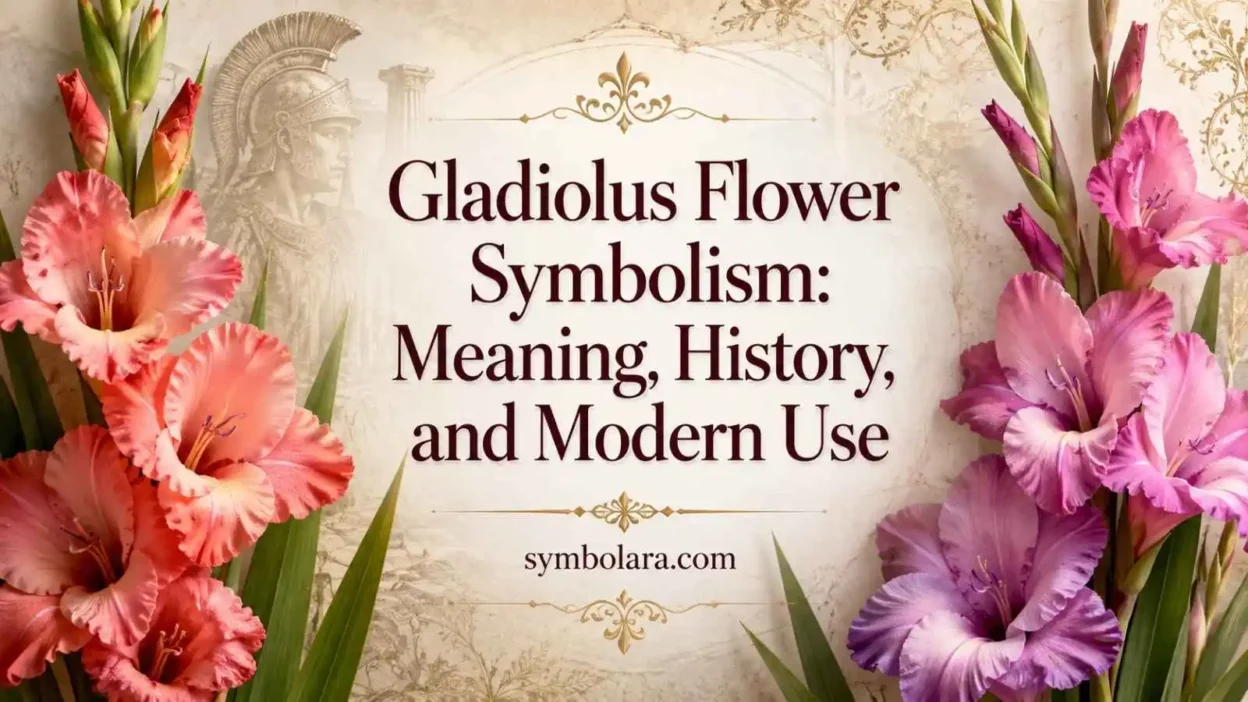
Gladiolus Flower Symbolism begins with a flower that looks bold before anyone explains its meaning. With tall stems, sword-shaped leaves, and rows of funnel-like blossoms, the gladiolus naturally suggests courage, upright character, and emotional strength.
In the United States, people often see gladiolus in summer gardens, funeral sprays, birthday bouquets, anniversary arrangements, and floral tattoos. It is not as instantly romantic as the rose or as solemn as the lily, but it carries a message many people find more personal: stand tall, stay true, and remember what matters.
The flower’s meaning comes from its shape, name, color, seasonal timing, and long use in the language of flowers. Its symbolism is not one fixed rule. A red gladiolus in an anniversary bouquet says something different from a white gladiolus at a memorial service. Still, the central idea remains steady: strength with feeling.
Quick Answer
Gladiolus Flower Symbolism commonly represents strength of character, integrity, honor, and resilience in modern American culture, especially in bouquets for remembrance, encouragement, birthdays, and anniversaries. Historically, its sword-like shape and name connected it with courage, victory, moral firmness, and the idea of love that “pierces” the heart.
TL;DR
- Gladiolus mainly symbolizes strength, honor, and integrity.
- Its name comes from the Latin word for sword.
- Americans use it for remembrance, birthdays, and anniversaries.
- Color changes the message of the flower.
- Tattoos often express resilience and personal courage.
- Modern meanings are flexible, not rigid rules.
What the Gladiolus Looks Like and Why Its Shape Matters
The gladiolus is a tall flowering plant with upright stalks and blossoms arranged along one side of the stem. Its leaves are long, narrow, and blade-like, which explains why many people call it the sword lily. The plant grows from a corm, not a true bulb, and produces dramatic summer blooms in many colors.
That physical form shapes its symbolism. A gladiolus does not look soft, round, or hidden. It rises vertically, often taller than surrounding flowers, and its blossoms open gradually from lower buds to upper ones. This gives the flower a sense of progress, endurance, and upward movement.
In floral design, gladiolus adds height and structure. It can make an arrangement feel formal, ceremonial, or emotionally direct. Because of that posture, people often read it as a flower of backbone, conviction, and dignity rather than casual sweetness.
What It Commonly Means in the United States
In modern American use, gladiolus most often symbolizes strength, integrity, honor, remembrance, and admiration. These meanings appear in sympathy flowers, milestone bouquets, August birthday gifts, and arrangements meant to encourage someone through a difficult period.
The flower’s message is usually positive. It says, “You are strong,” “I respect your character,” or “Your life and actions are remembered.” That makes it useful for situations where ordinary cheerful flowers may feel too light, but heavy mourning flowers may feel too formal.
Americans also associate gladiolus with achievement. Its tall shape and connection with victory make it suitable for graduations, promotions, retirement celebrations, athletic milestones, and recovery gifts. It does not simply celebrate beauty; it honors effort.
| Context | Meaning in the USA | Common Associations | Notes |
| Sympathy flowers | Strength and remembrance | Funerals, memorials, condolence sprays | Often used to honor character |
| August birthdays | Identity and celebration | Birth flowers, summer bouquets | Usually paired with poppies |
| Anniversaries | Enduring love and loyalty | 40th wedding anniversary | Red or pink is common |
| Tattoos | Resilience and moral courage | Personal growth, survival, family memory | Color changes the tone |
| Home decor | Confidence and structure | Tall vases, summer interiors | Adds height and formality |
Why Strength Became the Central Meaning
The gladiolus became a symbol of strength because nearly every part of the plant supports that reading. The gladiolus became a symbol of strength because nearly every part of the plant supports that reading. Its blade-like leaves echo the shape of a sword, while the tall stems rise with a firm, upright posture. The flowers also open along a vertical line, giving the plant the look of a ceremonial standard or banner. Even its name points toward the sword.
This strength is not only physical. In flower symbolism, gladiolus often means strength of character. That phrase matters because it shifts the meaning from aggression to moral steadiness. The flower is not saying “fight everyone.” It is saying “hold your ground.”
That distinction explains why gladiolus works in both joyful and sorrowful settings. At a celebration, it honors perseverance. At a funeral, it honors a life lived with courage. In a tattoo, it can mark survival without turning pain into spectacle.
Ancient Roots and the Sword Lily Name
The word gladiolus comes from Latin and is connected to the idea of a small sword. That origin fits the plant’s narrow leaves and gives the flower one of the clearest shape-based meanings in floral symbolism.
Because the name is related to the same root as “gladiator,” many modern explanations connect the flower with ancient Roman fighters. It is best to treat that connection carefully. The strongest historical link is linguistic and visual: sword-like leaves, a sword-related name, and later symbolic associations with courage and victory.
Over time, that sword image softened. The gladiolus did not become a symbol of violence in ordinary American flower use. Instead, the sword became a metaphor for inner resolve, discipline, and honorable conduct.
From Flower Language to American Bouquets
The language of flowers became especially popular in the nineteenth century, when people used blooms to communicate feelings that social rules made difficult to say directly. Gladiolus fit that system well because its appearance already suggested firmness and emotional impact.
In romantic flower language, gladiolus could suggest infatuation or a heart pierced by love. That meaning comes from the same sword imagery, but it turns the blade into a poetic metaphor. A bouquet of gladiolus could say that someone had made a strong impression.
In the United States today, people rarely follow old flower dictionaries exactly. They choose flowers for color, season, family memory, and visual style. Still, older meanings survive because they give bouquets a more intentional message.
Gladiolus as the August Birth Flower
Gladiolus is widely recognized as one of the birth flowers for August, often paired with the poppy. This seasonal connection makes sense because gladiolus blooms in summer and brings strong color to late-season gardens.
As an August birth flower, it suggests confidence, sincerity, generosity, and resilience. It is a good match for birthday bouquets because it feels bright without being childish. The flower has enough structure to suit adults and enough color to feel celebratory.
For Americans who enjoy birth-month symbolism, gladiolus works much like a birthstone. It gives a personal emblem to people born in August. A small gladiolus charm, print, tattoo, or bouquet can mark identity without needing a long explanation.
Color Meanings of Gladiolus Flowers
Color changes the emotional tone of gladiolus. The flower’s basic meaning remains strength and integrity, but each color points that strength in a different direction.
Red gladiolus usually suggests passion, romantic devotion, and bold love. Pink often expresses admiration, affection, gratitude, or gentle encouragement. White is used for purity, sincerity, spiritual respect, and remembrance, which is why it appears in weddings and memorials. Yellow and orange feel warmer and more social, often linked with friendship, joy, congratulations, and optimism. Purple suggests dignity, elegance, pride, or personal achievement.
These meanings are not strict laws. A person may choose yellow gladiolus simply because it was a grandmother’s favorite flower. In real life, personal memory often matters more than any traditional chart.
Love, Marriage, and the 40th Anniversary
Gladiolus is commonly associated with the 40th wedding anniversary. That milestone gives the flower a very specific romantic role: it represents love that has lasted through pressure, change, and time.
The 40th anniversary is often called the ruby anniversary, so red gladiolus fits especially well. The red color carries passion, while the flower itself suggests loyalty and strength of character. Together, they express a marriage that still has feeling, not just history.
This is why gladiolus can feel more mature than roses in anniversary arrangements. Roses often emphasize romance itself. Gladiolus adds the idea of endurance: the couple has not only loved each other, but also stayed upright through decades of ordinary life.
Mourning, Remembrance, and Sympathy Arrangements
Gladiolus appears often in funeral and sympathy arrangements because it can honor the character of the person who has died. Its message is not only grief. It says the person lived with courage, dignity, or moral strength.
White gladiolus is especially common in memorial contexts because it feels calm and respectful. Pink may soften the arrangement, while red can express deep love or lasting devotion. In standing sprays, gladiolus provides height, which helps create a formal tribute.
The flower also offers comfort to the living. Sending gladiolus after a loss can quietly say, “May you find strength.” That makes it useful when words feel inadequate but silence feels too distant.
Tattoos and Personal Identity
Gladiolus tattoos often represent resilience, self-respect, recovery, and personal courage. People choose the flower after surviving grief, illness, family struggle, emotional hardship, or a major life transition.
The long stem works well for tattoo placement. It can follow the arm, spine, ribcage, shoulder, or leg. A single gladiolus may feel clean and elegant, while a larger design can include names, dates, butterflies, swords, birth flowers, or handwriting.
Color matters in tattoo symbolism. Red can suggest love or passion. White may honor someone who has died. Purple can express dignity. Black-and-gray gladiolus designs often focus on endurance and memory rather than celebration.
Jewelry, Fashion, and Digital Culture
In jewelry, gladiolus usually appears as a birth-flower design or a memorial emblem. A necklace, ring, or bracelet with a gladiolus motif can represent an August birthday, a loved one’s memory, or a private reminder to stay strong.
In fashion and printed design, the flower brings a tall, linear shape that feels elegant and dramatic. It appears in floral dresses, scarves, stationery, wall art, and wedding invitations. Because the blossoms stack upward, gladiolus designs can look graceful without feeling delicate.
On social media, gladiolus is often used in birthday posts, tattoo reveals, garden photography, and remembrance captions. The meaning tends to be simpler there: strength, beauty, growth, or “this flower reminds me of someone.”
Home Decor, Gardens, and Public Displays
In American homes, gladiolus often symbolizes confidence and fresh seasonal energy. A tall vase of gladiolus can change the mood of a room because the flowers draw the eye upward. They suit entryways, dining tables, mantels, and event spaces where height matters.
In gardens, gladiolus brings summer drama. It is often planted along fences, at the back of borders, or in cutting gardens. Its upright form makes it a natural companion to dahlias, lilies, zinnias, and other warm-season flowers.
Public displays use gladiolus for a similar reason. The flower reads clearly from a distance. In ceremonies, churches, banquet halls, and memorial spaces, it gives floral arrangements structure and dignity.
Cross-Cultural Meanings and Regional Associations
Gladiolus symbolism is strongest in Western flower language, but the plant itself has roots across Africa, Europe, the Mediterranean region, and parts of Asia. Different species and hybrids have traveled widely through gardening, trade, and floral design.
In many places, the sword-like form still encourages meanings connected with courage, victory, or endurance. In some cultural contexts, gladiolus may also be valued more for beauty, color, seasonal use, or ceremonial display than for a fixed symbolic message.
For American readers, the safest approach is to avoid assuming one universal meaning. Gladiolus may mean strength in one family, remembrance in another, and August identity in another. Cultural meaning becomes most accurate when tradition and personal context are both respected.
Gladiolus Symbolism in Christianity and Spiritual Traditions
Gladiolus does not have one official universal meaning in Christianity, but some people connect the flower with spiritual ideas such as faith, sacrifice, remembrance, and moral strength. Its upright shape and sword-like leaves can remind believers of courage, conviction, and standing firm in personal values.
In some Christian floral arrangements, gladiolus may appear because of its respectful appearance rather than a specific religious rule. White gladiolus is sometimes chosen for church settings, memorial services, and ceremonies because its color suggests purity, peace, and reverence.
Beyond Christianity, flowers often gain spiritual meaning through local traditions and personal experiences. Some people view gladiolus as a reminder of inner strength, spiritual growth, and perseverance through difficult seasons.
The most accurate interpretation depends on the individual, culture, and occasion. Gladiolus carries symbolic possibilities rather than one fixed spiritual message.
Emotional and Psychological Meaning
Emotionally, gladiolus communicates steadiness. It is a flower for people who want beauty without fragility. Its height and firm line suggest someone who keeps going even when life feels heavy.
That is why it often appeals to people after hard experiences. A gladiolus bouquet can feel like encouragement without sounding sentimental. A tattoo can mark survival without needing to explain every detail. A memorial arrangement can honor grief while still pointing toward courage.
Psychologically, the flower also signals self-respect. It does not lean into softness as its main message. It stands straight, which makes it a fitting symbol for boundaries, discipline, personal standards, and quiet confidence.
Spiritual Meaning of Gladiolus Flower Symbolism
Gladiolus spiritual symbolism is often connected with inner strength, personal growth, protection, and emotional courage. While the flower does not have one universal spiritual meaning across all traditions, many people view its upright shape and sword-like leaves as reminders to stay strong and remain true to personal values.
In spiritual and reflective practices, gladiolus may represent the ability to rise above challenges. Its tall stem can symbolize progress, while its blossoms opening upward may suggest hope, renewal, and movement toward a better future.
Some people also connect gladiolus with protection because of its historical association with swords. This interpretation does not mean physical conflict. Instead, it often represents protecting one’s beliefs, boundaries, loved ones, and personal identity.
Today, people may use gladiolus in meditation spaces, memorial rituals, tattoos, or personal gardens as a reminder of resilience. The spiritual meaning usually comes from individual experience, cultural background, and the emotions attached to the flower.
Common Misunderstandings About Gladiolus
One common misunderstanding is that gladiolus is only a funeral flower. While it is meaningful in memorial arrangements, it is also used for birthdays, anniversaries, weddings, graduations, and garden displays. Its message depends on context.
Another misunderstanding is that sword symbolism makes the flower harsh or aggressive. In modern American use, the sword image usually points to character, courage, and resilience, not conflict.
A third mistake is treating color meanings as absolute. Floral meanings are flexible. A white gladiolus may symbolize remembrance at a funeral, but it can also suggest sincerity or elegance at a wedding. The occasion changes the message.
Gladiolus vs Lily: How Their Symbolism Is Different
Gladiolus and lilies are both popular symbolic flowers, but they communicate different emotional messages. Gladiolus is mainly associated with strength, honor, resilience, and standing tall through challenges. Lily symbolism is more commonly connected with purity, peace, renewal, and spiritual themes.
The difference often appears in floral arrangements. Gladiolus brings height and structure, making it feel bold and ceremonial. Lilies usually create a softer impression with their open petals and strong fragrance.
For memorial flowers, gladiolus may express respect for someone’s character and courage, while lilies often focus on peace, innocence, or the hope of renewal. In celebrations, gladiolus can represent achievement and endurance, while lilies may emphasize beauty and elegance.
Neither flower has only one meaning. Personal memories, colors, and cultural traditions influence how people understand both flowers.
How the Meaning Has Changed Over Time
The meaning of gladiolus has shifted from shape-based symbolism to emotional symbolism. Early associations came from the sword-like leaves and the Latin name. Later flower language added ideas of infatuation, moral character, and being emotionally “pierced.”
In modern America, the meaning has become more personal. People still recognize strength and integrity, but they often attach those ideas to their own stories. A gladiolus might stand for a parent’s courage, a cancer recovery, a long marriage, a military memory, or a birthday identity.
This evolution makes the flower useful today. It has enough tradition to feel meaningful, but enough flexibility to fit private experience.
When to Give Gladiolus Flowers
Gladiolus is a thoughtful choice when you want a bouquet to feel intentional. It works well for someone facing a challenge, celebrating a milestone, grieving a loss, or marking an August birthday.
Pink, yellow, and orange gladiolus work well when you want to encourage someone or brighten their mood. Red or deep pink is better for romance because it suggests passion, admiration, and devotion. For sympathy, white, soft pink, or a restrained mixed arrangement feels respectful and gentle. Purple, yellow, or bright mixed gladiolus suits achievements because it creates a celebratory, confident impression.
Because gladiolus stems are tall, they are best in arrangements where height is welcome. They may feel too formal for a tiny casual bouquet, but they shine in vases, sprays, centerpieces, and statement floral gifts.
Gladiolus Flower Meaning by Occasion
Gladiolus works well as a gift because its symbolism matches many important life moments. The flower often communicates respect, encouragement, admiration, and emotional support.
Common occasions include:
- Graduations: Represents achievement, confidence, and reaching a goal.
- Birthdays: Celebrates identity, especially for people born in August.
- Recovery gifts: Offers a message of strength and encouragement.
- Anniversaries: Represents loyalty, commitment, and lasting love.
- Memorials: Honors someone’s character and lasting impact.
- Career milestones: Recognizes dedication, progress, and success.
The color and arrangement style help shape the message. A bright mixed bouquet may feel celebratory, while a simple white arrangement may feel more respectful and peaceful.
FAQs
The gladiolus symbolizes strength, integrity, honor, remembrance, and resilience. In romantic settings, it can also suggest infatuation or a love that makes a strong emotional impression.
Yes, gladiolus is generally a positive symbol. Even in funeral arrangements, its meaning is respectful and uplifting because it honors courage, character, and lasting memory.
A gladiolus tattoo often means personal strength, survival, dignity, or remembrance. Many people choose it to mark an August birth month, a loved one, or a period of hardship they overcame.
In love, gladiolus can symbolize passion, faithfulness, admiration, and emotional intensity. Red gladiolus is especially connected with romance and long-lasting devotion.
Gladiolus is linked with swords because its name comes from a Latin word associated with a sword, and its leaves are long and blade-shaped. This shape helped create meanings of courage, victory, and strength of character.
Yes, gladiolus is appropriate for funerals and sympathy arrangements. It honors the strength and character of the person who died while offering a message of support to the grieving family.
White gladiolus often represents sincerity, purity, respect, and remembrance. It is common in weddings, memorials, religious services, and formal arrangements.
In art and design, gladiolus often represents confidence, beauty, structure, and emotional strength. Its tall form makes it a popular choice for floral illustrations, patterns, and decorative designs.
Conclusion
Gladiolus is a flower of upright meaning. Its sword-shaped leaves, tall stems, and vivid blossoms make it a natural symbol of strength, honor, integrity, remembrance, and emotional courage.
In the United States, people use it across many parts of life: birthdays, funerals, tattoos, anniversaries, gardens, weddings, and personal keepsakes. Gladiolus Flower Symbolism remains meaningful because it can speak to both celebration and hardship without losing its central message.
At its best, the gladiolus says something simple and steady: beauty can stand tall.
[…] flower language helped establish lilacs as symbols of first love. In that social world, people used flowers to express emotions politely, especially […]